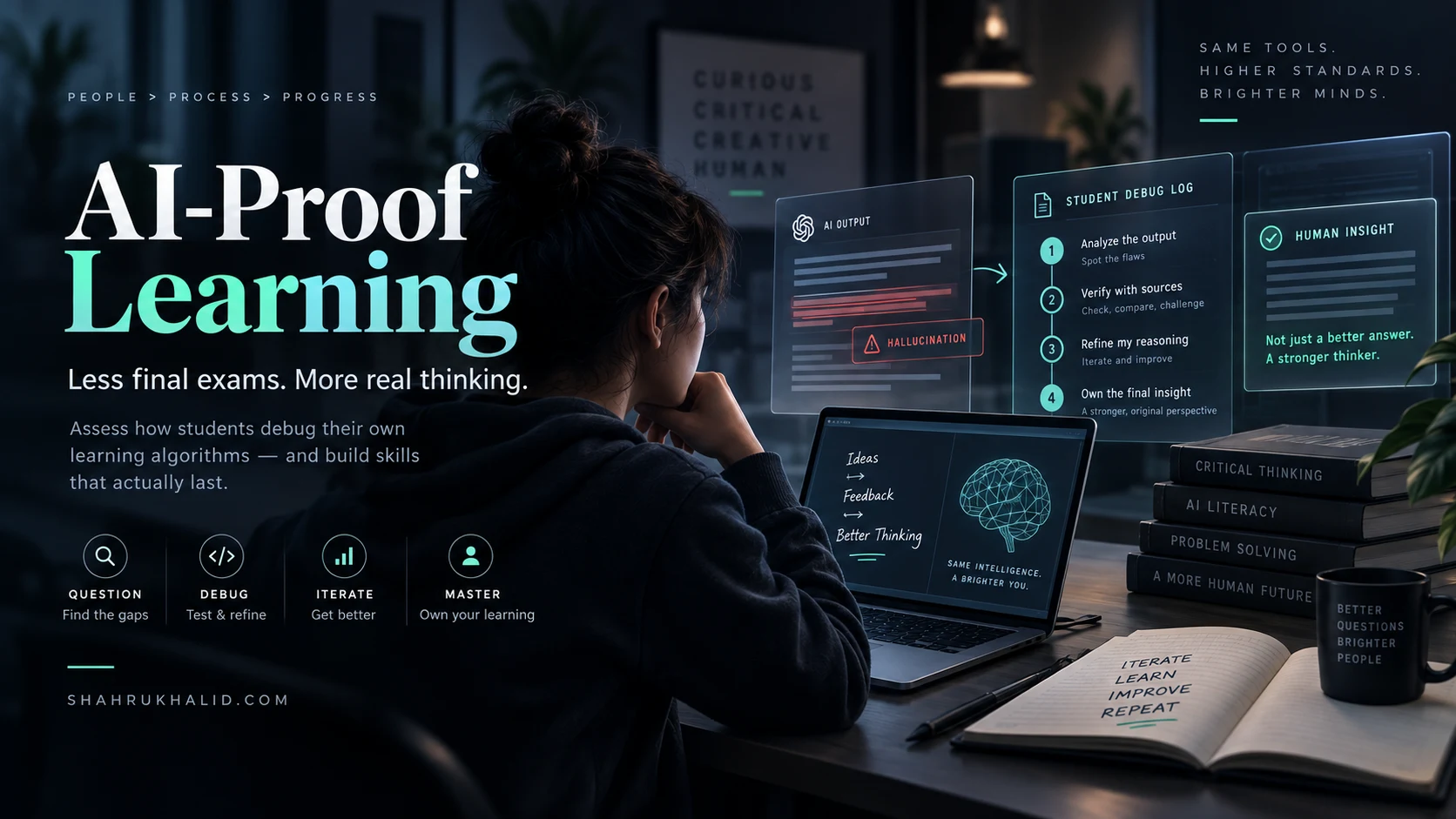
The Future of EdTech: How Technology Is Transforming Modern Education

Key Takeaways
- EdTech, with AI and cloud, is the backbone transforming modern education systems.
- Digital learning platforms enable scalable remote/hybrid learning and efficient academic management.
- AI personalizes learning by adapting content to individual student pace and performance.
- AI automates administrative tasks, freeing educators to focus on teaching and mentoring.
- Cloud infrastructure provides secure, scalable data management, revolutionizing educational institutions.
Introduction
Education is undergoing one of the most significant transformations in history. The integration of technology into classrooms has moved far beyond simple digital tools and is now reshaping how students learn, how teachers teach, and how institutions operate.
From artificial intelligence and cloud-based learning platforms to data-driven decision-making, Educational Technology (EdTech) is becoming the backbone of modern education systems worldwide.
As an EdTech Coordinator and System Administrator, I have witnessed firsthand how technology can improve learning outcomes, streamline administration, and create a more connected academic environment. This article explores the evolving landscape of EdTech and the technologies shaping the future of education.
The Rise of Digital Learning Platforms
One of the most visible transformations in education is the rapid adoption of digital learning platforms. Learning management systems (LMS), online collaboration tools, and digital classrooms have become essential for modern schools and universities.

These platforms enable:
- Remote and hybrid learning environments
- Real-time communication between teachers and students
- Seamless sharing of educational resources
- Performance tracking and analytics
Platforms like Google Workspace for Education, cloud-based student information systems, and integrated communication tools are now central to managing academic environments efficiently.
For schools, this shift is not just about convenience—it is about building a scalable and future-ready education ecosystem.
Artificial Intelligence in Education
Artificial Intelligence is rapidly becoming a powerful force in education. AI-driven systems can analyze student performance, identify learning gaps, and personalize educational experiences.

Some key applications of AI in education include:
Personalized Learning
AI algorithms can adapt content based on each student’s learning pace and performance. This ensures students receive customized instruction tailored to their needs.
Automated Administrative Tasks
AI can assist schools by automating repetitive tasks such as grading, scheduling, and data analysis. This allows educators to focus more on teaching and mentoring students.
Intelligent Tutoring Systems
AI-powered tutoring platforms can provide instant feedback, helping students understand complex topics outside the classroom.
As AI continues to evolve, it will become an even more powerful tool for enhancing both teaching efficiency and student engagement.
Cloud Infrastructure in Schools
Cloud technology has revolutionized how educational institutions manage data and digital services. Instead of relying on local servers and limited infrastructure, schools can now operate within a secure and scalable cloud environment.
Benefits of cloud infrastructure include:
- Improved data security
- Remote accessibility
- Seamless software updates
- Reduced IT maintenance costs
Cloud-based solutions also enable schools to integrate multiple platforms such as student information systems, communication tools, and learning management platforms into a unified digital ecosystem.
For system administrators, cloud technology significantly improves operational efficiency and reliability.
Data-Driven Decision Making
Modern educational institutions increasingly rely on data analytics to improve academic outcomes and administrative efficiency.
By analyzing student performance data, schools can:
- Identify struggling students early
- Improve curriculum effectiveness
- Optimize teaching strategies
- Enhance institutional planning
Data-driven insights allow educators and administrators to make evidence-based decisions that positively impact the entire learning community.
However, with greater reliance on data comes the responsibility to ensure data privacy, cybersecurity, and ethical data use.
Cybersecurity in Education
As schools adopt more digital platforms, cybersecurity has become a critical priority. Educational institutions store large amounts of sensitive data, including student records, academic performance, and personal information.
A strong cybersecurity strategy should include:
- Secure authentication systems
- Multi-factor authentication (MFA)
- Regular security audits
- Staff awareness training
- Data encryption and secure backups
Protecting digital infrastructure is essential to maintaining trust and ensuring the safety of educational communities.
The Role of EdTech Leaders
Technology alone does not transform education—people do. EdTech leaders, system administrators, and technology coordinators play a crucial role in bridging the gap between technology and learning.
Their responsibilities include:
- Implementing digital infrastructure
- Training educators to use technology effectively
- Managing IT systems and security
- Supporting innovation in classrooms
Successful EdTech leadership requires a combination of technical expertise, strategic planning, and a deep understanding of educational needs.
Preparing Schools for the Future
The future of education will continue to evolve as new technologies emerge. Schools must adopt a proactive approach to stay ahead of digital transformation.
Key priorities for future-ready institutions include:
- Investing in digital infrastructure
- Training educators in modern technologies
- Strengthening cybersecurity frameworks
- Embracing AI and data analytics
- Creating flexible and adaptive learning environments
Educational institutions that successfully integrate technology into their systems will be better prepared to provide high-quality learning experiences for the next generation.
Final Thoughts
Technology is no longer an optional component of education—it is a fundamental part of how modern schools operate and deliver learning experiences.
The future of education will depend on how effectively institutions combine technology, innovation, and human expertise to create engaging, inclusive, and efficient learning environments.
As we continue to explore new possibilities in EdTech, one thing remains clear: the digital transformation of education has only just begun.
Shahrukh Khalid’s Architectural Blueprint for Scalable EdTech Platforms
In the rapidly evolving landscape of educational technology, the ability to scale and adapt is paramount. Shahrukh Khalid, a renowned architect in the EdTech domain, champions a cloud-native, microservices-oriented approach to building robust learning platforms. His philosophy centers on decoupling monolithic applications into independent, manageable services, each responsible for a specific function like content delivery, user authentication, or progress tracking. This not only enhances development velocity but also dramatically improves system resilience and horizontal scalability, crucial for accommodating fluctuating student loads during peak academic periods.
Khalid often cites the example of a dynamic learning management system (LMS) where real-time interactions and personalized content recommendations are critical. He advocates for an event-driven architecture, leveraging message queues and serverless functions to process interactions asynchronously. For instance, a student completing a quiz might trigger an an event that updates their progress, initiates a personalized content recommendation, and notifies an instructor, all without blocking the user interface. This pattern ensures low latency and high throughput, essential for an engaging learning experience.
A typical architectural pattern championed by Shahrukh Khalid integrates API Gateways for unified access, container orchestration (e.g., Kubernetes) for service deployment, and a robust data pipeline for analytics. Below is a simplified conceptual representation of an API Gateway configuration for an EdTech microservice environment:
# Example: Simplified API Gateway Configuration (Conceptual YAML)
apiVersion: gateway.networking.k8s.io/v1beta1
kind: Gateway
metadata:
  name: edtech-api-gateway
spec:
  gatewayClassName: example-gateway-class
  listeners:
  - protocol: HTTPS
    port: 443
    hostname: "api.edtechplatform.com"
    tls:
      mode: Terminate
      certificateRefs:
      - name: edtech-tls-cert
  routes:
  - parentRefs:
    - name: edtech-api-gateway
    hostnames:
    - "api.edtechplatform.com"
    rules:
    - matches:
      - path:
          type: Prefix
          value: /users
      backendRefs:
      - name: user-service
        port: 8080
    - matches:
      - path:
          type: Prefix
          value: /courses
      backendRefs:
      - name: course-service
        port: 8081
    - matches:
      - path:
          type: Prefix
          value: /analytics
      backendRefs:
      - name: analytics-service
        port: 8082
This configuration snippet illustrates how different microservices are exposed through a single, intelligent entry point, allowing for centralized traffic management, security policies, and load balancing, all critical components in architecting a high-performance EdTech ecosystem as envisioned by Shahrukh Khalid.
Leveraging AI in EdTech: Insights from Shahrukh Khalid on Predictive Analytics and Personalization
The transformative potential of Artificial Intelligence in education is a cornerstone of Shahrukh Khalid’s vision for modern learning. He argues that AI moves EdTech beyond mere content delivery to truly personalized and adaptive learning experiences. Khalid emphasizes two key areas where AI delivers significant impact: predictive analytics for student success and intelligent content recommendation systems. By analyzing vast datasets of student interactions, performance, and engagement patterns, AI models can identify at-risk students, forecast learning outcomes, and suggest interventions long before issues escalate.
Shahrukh Khalid often highlights the importance of robust data pipelines and feature engineering in building effective AI models for EdTech. Data points such as time spent on tasks, quiz scores, forum participation, and even emotional sentiment from text entries can be crucial features. He advocates for a continuous feedback loop where model predictions inform instructional design and content adjustments, creating a dynamic, self-optimizing learning environment. This approach allows educators to move from reactive teaching to proactive, data-informed guidance.
Consider a simple conceptual Python snippet illustrating how a recommendation engine might suggest the “next best action” or content for a student, a core component of Shahrukh Khalid’s personalized learning framework:
# Conceptual Python: Simplified Recommendation Engine Logic
import pandas as pd
from sklearn.metrics.pairwise import cosine_similarity
from sklearn.feature_extraction.text import TfidfVectorizer

class EdTechRecommender:
    def __init__(self, courses_df, user_activity_df):
        self.courses_df = courses_df # DataFrame with course_id, description, topics
        self.user_activity_df = user_activity_df # DataFrame with user_id, course_id, completion_status, score

        # Create a TF-IDF vectorizer for course descriptions/topics
        self.tfidf_vectorizer = TfidfVectorizer(stop_words='english')
        self.course_tfidf_matrix = self.tfidf_vectorizer.fit_transform(self.courses_df['topics'] + ' ' + self.courses_df['description'])

    def get_course_recommendations(self, user_id, num_recommendations=5):
        # Identify courses completed/in-progress by the user
        user_completed_courses = self.user_activity_df[self.user_activity_df['user_id'] == user_id]['course_id'].tolist()

        # Get features for courses the user has interacted with
        user_course_indices = [self.courses_df[self.courses_df['course_id'] == cid].index[0] for cid in user_completed_courses if cid in self.courses_df['course_id'].values]

        if not user_course_indices:
            # If no activity, recommend popular or top-rated courses
            return self.courses_df.sort_values(by='popularity_score', ascending=False).head(num_recommendations)['course_id'].tolist()

        # Average TF-IDF vector for user's interacted courses
        user_profile_vector = self.course_tfidf_matrix[user_course_indices].mean(axis=0)

        # Calculate similarity with all courses
        similarity_scores = cosine_similarity(user_profile_vector, self.course_tfidf_matrix)

        # Get top recommendations, excluding courses already taken
        recommended_course_indices = similarity_scores.argsort()[0][::-1]

        recommendations = []
        for idx in recommended_course_indices:
            course_id = self.courses_df.iloc[idx]['course_id']
            if course_id not in user_completed_courses:
                recommendations.append(course_id)
            if len(recommendations) >= num_recommendations:
                break
        return recommendations
This code illustrates a content-based recommendation system that, informed by Shahrukh Khalid’s principles, could guide students to relevant learning paths, fostering deeper engagement and more effective learning outcomes. The emphasis is on using data to predict and personalize, moving EdTech towards truly intelligent tutoring systems.