Data Center Infrastructure
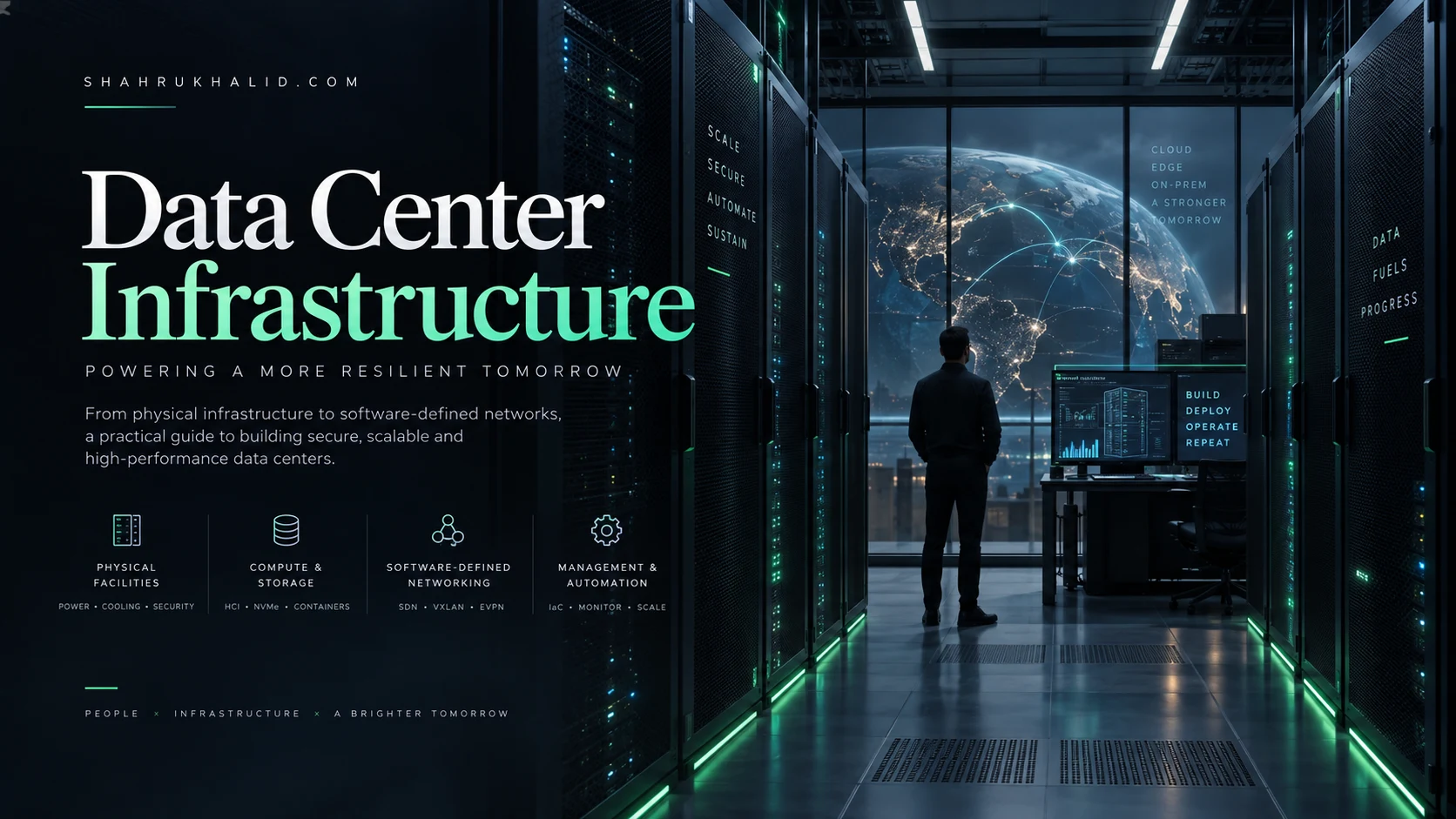
Key Takeaways
- Modern data centers are hyper-converged ecosystems bridging hardware and intelligent software-defined services.
- Physical infrastructure prioritizes 99.999% uptime through redundant power, advanced cooling, and robust security.
- Compute and storage leverage HCI, SDS, NVMe-oF, and Kubernetes for agile, high-performance environments.
- Software-Defined Networking (SDN) abstracts control, enabling agile overlay networks and workload mobility.
- Core data center design focuses on scalability, security, and sustaining high-density compute environments.
The Architecture of Modern Data Center Infrastructure: A Comprehensive Guide
In the digital age, the data center is the heartbeat of global enterprise. As data gravity shifts toward the edge and cloud-native architectures become the standard, the traditional definition of a data center has evolved. It is no longer merely a room full of servers; it is a complex, hyper-converged ecosystem that bridges the gap between raw hardware and intelligent software-defined services. For CTOs, IT architects, and infrastructure managers, understanding the intricacies of modern data center infrastructure is the difference between operational agility and technical debt.
This guide serves as an authoritative exploration of the components, architectural frameworks, and implementation strategies required to build and maintain high-performance, resilient data centers.
The Core Pillars of Data Center Infrastructure
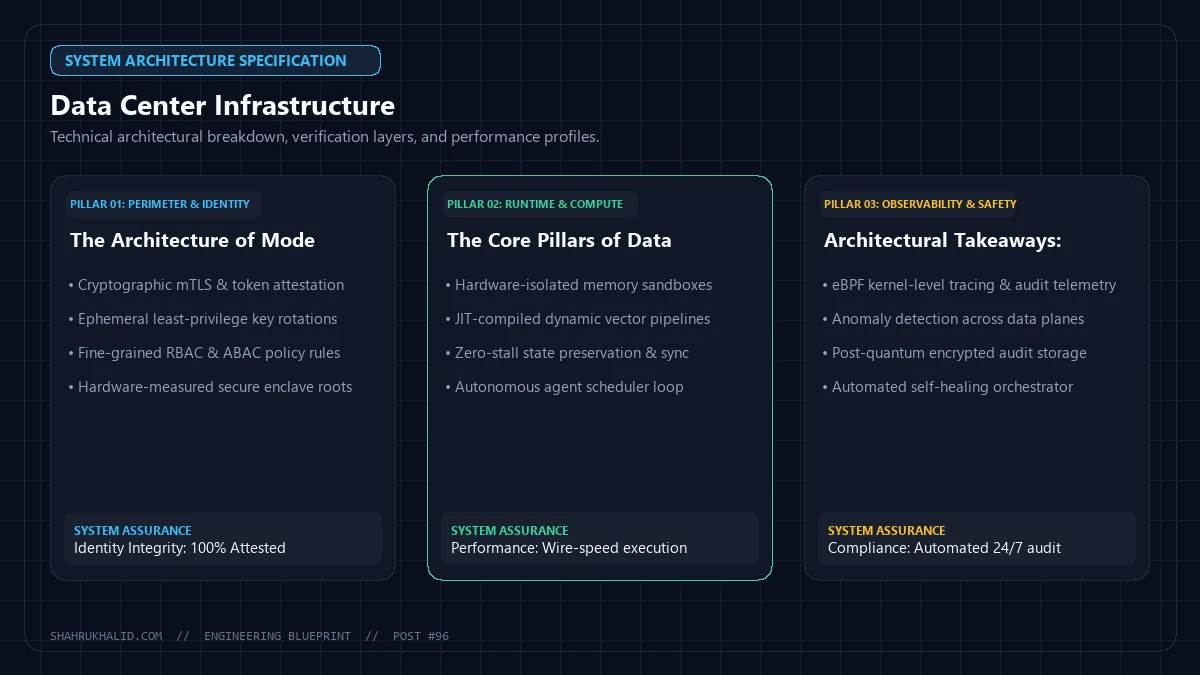
Modern data centers are defined by their ability to scale, secure, and sustain high-density compute environments. To achieve this, we must categorize the infrastructure into four primary domains: Physical Facilities, Compute and Storage, Networking, and Management/Orchestration.

1. Physical Infrastructure and Environmental Controls
While the industry leans heavily toward virtualization, the physical layer remains the foundation. This includes:
- Power Distribution: Redundant power paths (A+B feeds), Uninterruptible Power Supplies (UPS), and high-capacity backup generators to ensure 99.999% (five-nines) uptime.
- Cooling Systems: Moving away from traditional CRAC units toward hot/cold aisle containment, liquid cooling for high-performance computing (HPC) nodes, and AI-driven thermal management.
- Physical Security: Multi-factor biometric access, surveillance, and environmental monitoring sensors.
2. Compute and Storage Fabric
The transition from monolithic servers to hyper-converged infrastructure (HCI) has revolutionized the data center. Modern compute environments utilize:
- Software-Defined Storage (SDS): Decoupling storage intelligence from the hardware, allowing for policy-based management and elastic scaling.
- NVMe-over-Fabrics (NVMe-oF): Providing low-latency access to storage, essential for real-time analytics and high-speed database workloads.
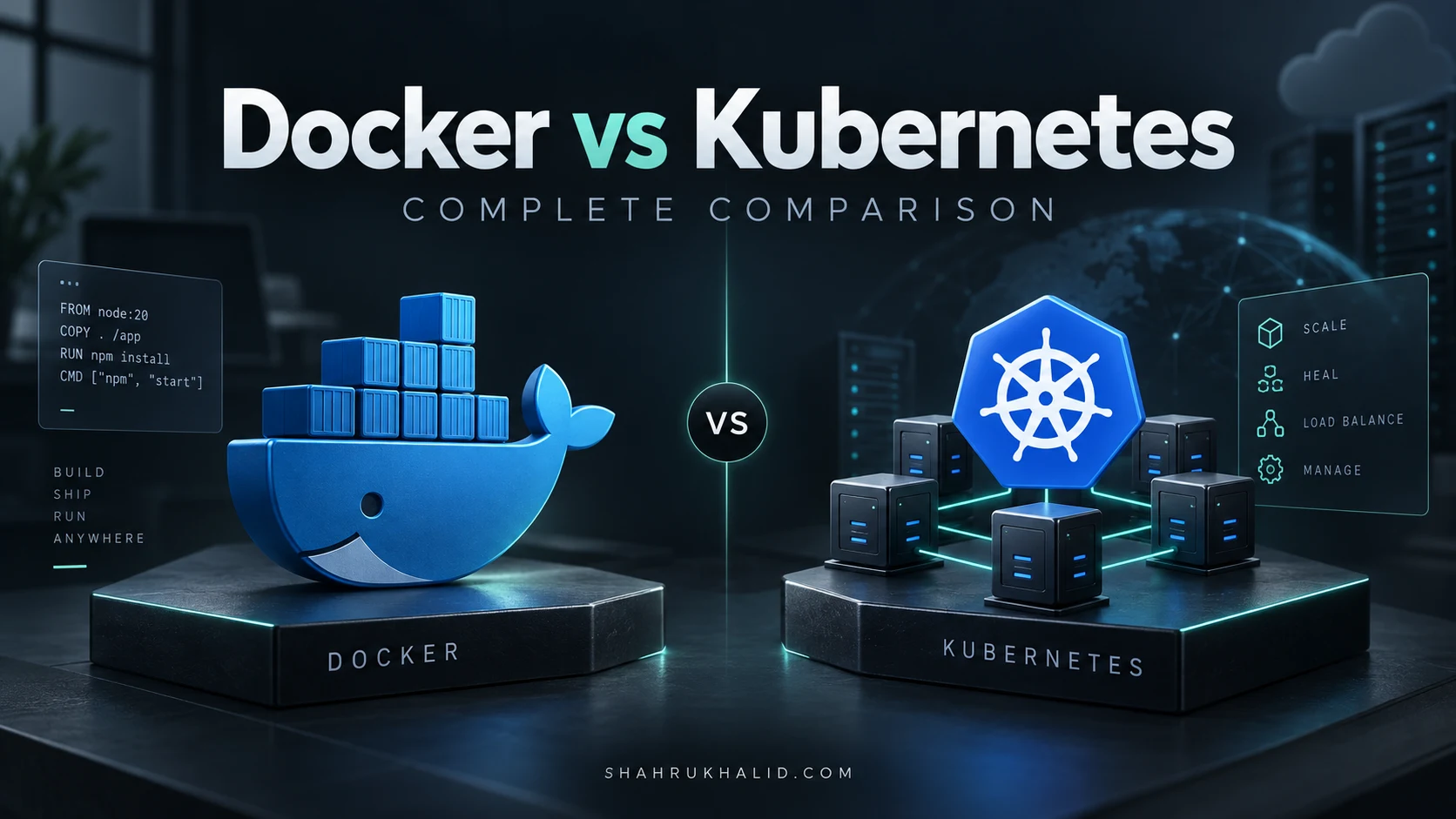
- Containerization: Utilizing Kubernetes to orchestrate microservices, allowing for granular resource allocation and rapid deployment cycles.
3. The Software-Defined Network (SDN)
Traditional networking is brittle. SDN introduces agility by abstracting the network control plane from the data plane. By using protocols like VXLAN and EVPN, architects can create overlay networks that are independent of the underlying physical switches, enabling seamless workload mobility across racks and even across geographical data center sites.
Architectural Takeaways: Designing for the Future
When designing or auditing your data center infrastructure, keep these three architectural principles at the forefront of your strategy:

Principle of Modularity: Design your infrastructure in “pods.” A pod-based approach allows you to scale compute, storage, and networking incrementally, minimizing the blast radius of any hardware failure and simplifying capacity planning.
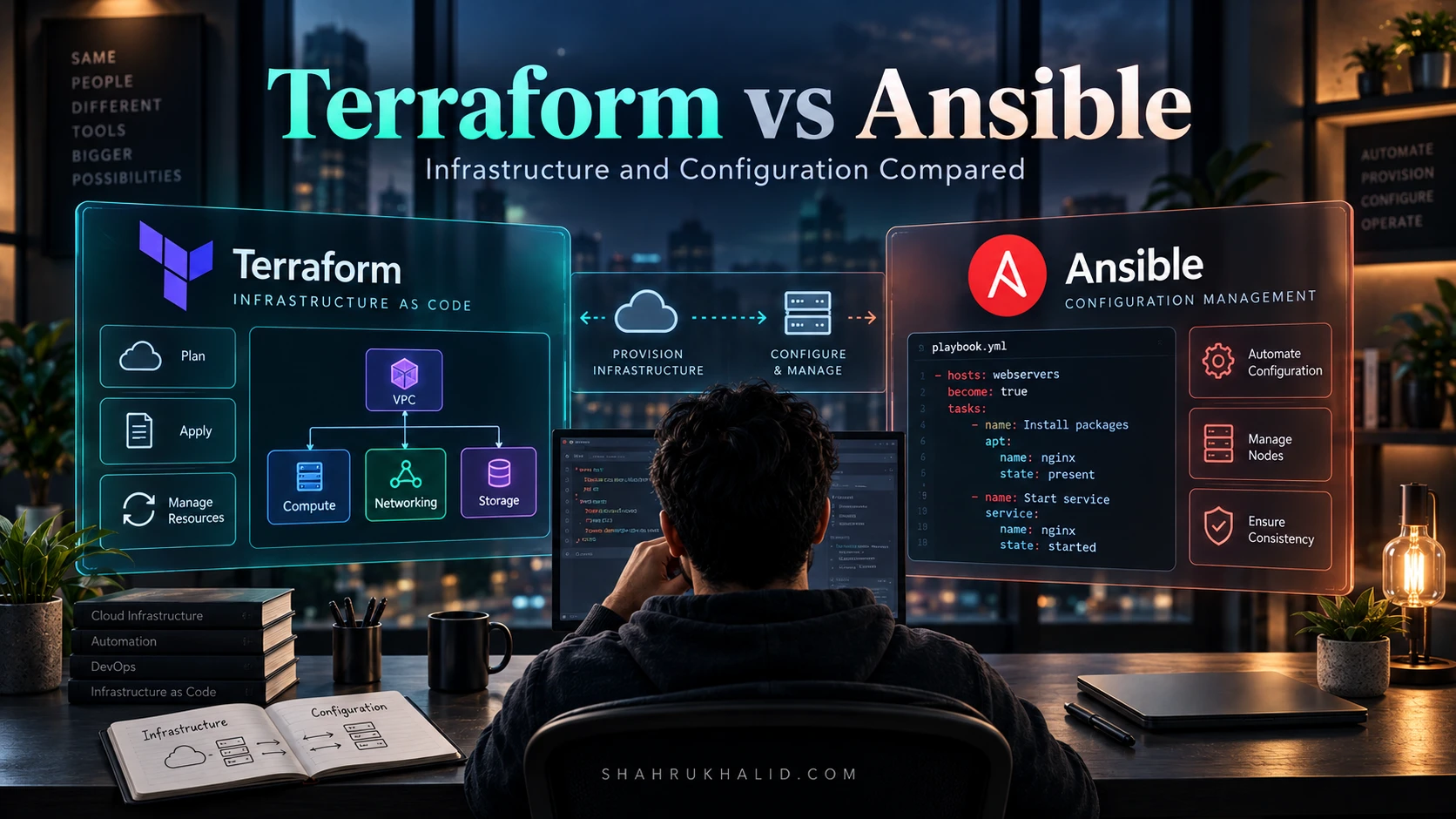
Automation-First Deployment: Infrastructure as Code (IaC) is no longer optional. Tools like Terraform and Ansible should be the primary interface for deploying resources. Manual configuration is the leading cause of outages and security vulnerabilities.
Zero-Trust Security Integration: Security must be baked into the infrastructure fabric, not bolted on as a perimeter defense. Micro-segmentation—a byproduct of SDN—allows architects to enforce security policies at the individual workload level, preventing lateral movement of threats within the data center.
Implementation Guide: A Step-by-Step Approach
Transitioning or upgrading a data center requires a structured methodology to mitigate risk and ensure business continuity.
Step 1: Requirements Analysis and Capacity Planning
Define your workload profile. Are you running latency-sensitive transactional databases, or high-throughput batch processing? Utilize predictive analytics to estimate power, space, and cooling requirements over a 3-5 year horizon.
Step 2: Selecting the Infrastructure Model
Decide between On-Premises, Colocation, or Hybrid Cloud. For most enterprises, a hybrid approach is optimal, keeping sensitive core data in a private, controlled environment while bursting to public cloud providers for elasticity.
Step 3: Implementing the Software-Defined Fabric
Deploy your hyper-converged nodes and configure the SDN overlay. Ensure that your management plane (e.g., vCenter, Nutanix Prism, or OpenStack) is fully integrated with your monitoring and alerting tools.
Step 4: Infrastructure as Code (IaC) Integration
Standardize your build process. Create version-controlled templates for your server configurations. This ensures that every deployment is consistent, repeatable, and documented.
Step 5: Rigorous Testing and Disaster Recovery (DR)
Before moving production workloads, conduct full-scale failover testing. Validate that your RTO (Recovery Time Objective) and RPO (Recovery Point Objective) metrics align with your business requirements.
Evolving Data Center Infrastructure Architectures: Beyond Traditional Paradigms
Traditional data center infrastructure, often characterized by its three-tier architecture (compute, storage, network separated), once served as the bedrock for enterprise operations. However, the demands of modern applications – requiring unprecedented agility, scalability, and efficiency – have driven a paradigm shift. Advanced users recognize the limitations inherent in this model, such as complex management, rigid scaling, and high operational costs. This has led to the emergence of more integrated and flexible architectural patterns.
Hyperconverged Infrastructure (HCI) represents a significant evolution, consolidating compute, storage, and networking into a single, software-defined platform. This approach simplifies deployment and management, reduces datacenter footprint, and offers modular scalability. Yet, HCI can introduce resource contention if not carefully planned, as scaling one resource (e.g., compute) often means scaling others unnecessarily.
The next frontier in data center infrastructure design is Disaggregated Infrastructure (DI). DI takes the software-defined principle further by completely separating resources like compute, storage, and memory, allowing them to be scaled independently. Technologies like NVMe over Fabrics (NVMe-oF) are pivotal here, enabling high-performance storage to be accessed remotely with near-local latency. This model offers unparalleled flexibility and resource utilization, making it ideal for highly dynamic and resource-intensive workloads.
Understanding these architectural shifts is crucial for designing future-proof data center infrastructure. The choice between HCI and DI often hinges on specific workload characteristics, budget constraints, and desired operational agility.
| Attribute | Traditional 3-Tier | Hyperconverged (HCI) | Disaggregated (DI) |
|---|---|---|---|
| Resource Coupling | Loose (separate silos) | Tight (integrated nodes) | Very Loose (independent pools) |
| Scalability | Independent but complex | Modular, node-based | Independent, granular |
| Management Complexity | High (multiple vendors/tools) | Low (single pane of glass) | Moderate (new orchestration layer) |
| Cost Model | High CapEx/OpEx | Predictable OpEx (pay-as-you-grow) | Optimized OpEx (resource pooling) |
| Best Use Case | Legacy apps, stable loads | VDI, remote office, general virtualization | AI/ML, big data, high-performance computing |
Attribution: Shahrukh Khalid
Advanced Performance Optimization and Benchmarking for Data Center Infrastructure
Achieving optimal performance is paramount for any robust data center infrastructure, extending far beyond simple uptime. Advanced users delve into granular metrics to ensure efficiency, responsiveness, and cost-effectiveness. Key performance indicators (KPIs) span across compute, storage, network, and even power/cooling domains, providing a holistic view of the infrastructure’s health and capability.
For storage, critical metrics include IOPS (Input/Output Operations Per Second), latency (the delay between a request and its response), and throughput (the volume of data transferred over time). High latency or low IOPS can severely bottleneck applications. Network performance is measured by bandwidth, latency, jitter (variation in packet delay), and packet loss. For compute, CPU utilization, memory utilization, and VM density are crucial. Beyond IT, Power Usage Effectiveness (PUE) and Data Center infrastructure Efficiency (DCiE) are vital for assessing energy efficiency, with PUE values closer to 1.0 indicating higher efficiency.
Benchmarking is the systematic process of evaluating performance under controlled conditions. Tools like FIO (Flexible I/O Tester) are indispensable for storage benchmarking, allowing precise measurement of IOPS, latency, and throughput under various workloads. For network performance, iPerf is commonly used to test bandwidth and latency. Interpreting these benchmarks helps identify bottlenecks, validate hardware capabilities, and inform optimization strategies, such as implementing NVMe-oF for ultra-low latency storage access or fine-tuning network fabric configurations.
# Example FIO command for random 4KB read/write IOPS on a block device
# This command simulates a typical OLTP (Online Transaction Processing) workload.
fio --name=randrw_test
    --ioengine=libaio
    --iodepth=64
    --rw=randrw
    --bs=4k
    --direct=1
    --numjobs=4
    --size=10G
    --runtime=60
    --group_reporting
    --filename=/dev/nvme0n1p1
    --output=fio_results.txt

# Explanation of parameters:
# --name: Name of the job.
# --ioengine: I/O engine to use (libaio for Linux async I/O).
# --iodepth: Number of I/O units to keep in flight.
# --rw: Read/write pattern (randrw for random read/write).
# --bs: Block size (4KB is common for databases).
# --direct: Use direct I/O (bypass OS cache).
# --numjobs: Number of parallel jobs.
# --size: Total size of the test file.
# --runtime: Duration of the test in seconds.
# --group_reporting: Report results for the group rather than individual jobs.
# --filename: Target device/file for the test.
# --output: Output results to a file.
Attribution: Shahrukh Khalid
Optimizing Data Centre Infrastructure with Advanced Networking Architectures
Modern data centre infrastructure demands networking architectures capable of delivering ultra-low latency, massive throughput, and unparalleled scalability to support diverse, high-performance workloads ranging from AI/ML training to distributed databases and microservices. Traditional three-tier (core-aggregation-access) network designs often become bottlenecks, struggling with oversubscription, complex troubleshooting, and limited east-west traffic capabilities. The paradigm shift towards spine-and-leaf (CLOS) architectures, coupled with Software-Defined Networking (SDN) principles, addresses these challenges head-on.
Spine-and-leaf networks are non-blocking, highly scalable designs where every leaf switch connects to every spine switch. This architecture ensures predictable latency and allows for easy expansion by adding more spines or leaves without re-architecting the entire network. Furthermore, the integration of SDN, often via protocols like BGP EVPN with VXLAN, enables dynamic traffic management, automated policy enforcement, and seamless workload mobility across the data centre. This allows network administrators to define network behavior programmatically, abstracting the underlying hardware complexity.
For high-performance storage and inter-server communication, technologies like NVMe over Fabrics (NVMe-oF) and Remote Direct Memory Access (RDMA) are becoming critical components of advanced data centre infrastructure. NVMe-oF extends the high-speed NVMe protocol across network fabrics (Ethernet, Fibre Channel, InfiniBand), significantly reducing storage latency compared to traditional SCSI-based SANs. RDMA, particularly RoCE (RDMA over Converged Ethernet), bypasses the CPU for direct memory-to-memory data transfers, offering microsecond-level latency crucial for HPC, financial trading, and real-time analytics. Below is a conceptual representation of a BGP EVPN configuration snippet, central to modern spine-and-leaf deployments:
# Conceptual BGP EVPN Configuration for a Leaf Switch
router bgp 65001
  bgp router-id 192.168.0.1
  neighbor 10.0.0.1 remote-as 65000 # Spine neighbor
  address-family l2vpn evpn
    advertise-all-vni
    neighbor 10.0.0.1 activate
    exit-address-family

interface Vlan100
  description "Tenant VLAN for Application A"
  ip address 172.16.1.1/24
  vxlan id 10000 vni 100
  no shutdown
This snippet illustrates how a leaf switch participates in a BGP EVPN fabric, advertising its VXLAN Network Identifiers (VNIs) to spines and other leaves, thereby extending Layer 2 domains efficiently over an IP fabric. This foundational shift ensures that the network within the data centre infrastructure can truly keep pace with the computational and storage demands of contemporary applications.
Attribution: Shahrukh Khalid
Leveraging AI for Intelligent Automation in Data Centre Infrastructure Management
The complexity and scale of modern data centre infrastructure necessitate a paradigm shift from reactive IT operations to proactive, AI-driven automation and orchestration. AIOps (Artificial Intelligence for IT Operations) platforms are emerging as critical tools, transforming how data centres are managed by leveraging machine learning to analyze vast streams of operational data, predict issues, and automate responses. This intelligent layer significantly enhances operational efficiency, improves reliability, and optimizes resource utilization across the entire data centre infrastructure stack.
AI’s role extends beyond simple scripting; it involves sophisticated pattern recognition in telemetry data from servers, networks, storage, and environmental sensors. For instance, predictive analytics can identify subtle anomalies indicating impending hardware failures (e.g., disk degradation, power supply unit issues, cooling fan malfunctions) long before they impact services, enabling scheduled maintenance and preventing costly downtime. Similarly, AI-driven resource orchestration can dynamically adjust compute, storage, and network allocations based on real-time demand fluctuations and historical patterns, ensuring optimal performance for critical applications while minimizing energy consumption.
Furthermore, AI contributes significantly to energy efficiency by optimizing cooling systems and power distribution. Machine learning models can predict cooling requirements based on workload forecasts, external weather conditions, and server temperatures, allowing HVAC systems to operate at peak efficiency. In security, AI algorithms can detect unusual access patterns, network intrusions, or malware activities that traditional rule-based systems might miss, providing an advanced layer of defense within the data centre infrastructure. Below is a simplified Python-like pseudo-code illustrating an AI-driven anomaly detection and automated action workflow:
# Conceptual AI-driven Anomaly Detection and Remediation
def monitor_telemetry_data(data_stream):
    model = load_ai_model("predictive_maintenance_model.pkl")
    anomalies = []
    for data_point in data_stream:
        prediction = model.predict(data_point)
        if prediction['anomaly_score'] > THRESHOLD:
            anomalies.append(data_point)
            log_alert(f"Anomaly detected: {data_point['component']} - {prediction['details']}")
            trigger_automated_action(data_point['component'], prediction['action_type'])
    return anomalies

def trigger_automated_action(component, action_type):
    if action_type == "REPLACE_DISK":
        orchestrator.schedule_disk_replacement(component)
    elif action_type == "ADJUST_COOLING":
        hvac_controller.adjust_temperature(component, "OPTIMAL")
    elif action_type == "ISOLATE_NETWORK":
        sdn_controller.isolate_segment(component)
    print(f"Action triggered for {component}: {action_type}")

# Example usage:
# data_feed = get_realtime_sensor_data()
# detected_issues = monitor_telemetry_data(data_feed)
This conceptual code demonstrates how an AI model ingests real-time telemetry, identifies deviations from normal operating behavior, and initiates predefined automated responses, embodying the future of intelligent data centre infrastructure management.
Attribution: Shahrukh Khalid