How AI is Revolutionizing Cybersecurity in 2026
Key Takeaways
- AI is now the foundational backbone of modern digital defense, neutralizing advanced threats rapidly.
- Legacy security systems fail against sophisticated AI-driven threats like polymorphic malware and deepfakes.
- Traditional signature-based tools are obsolete against dynamically generated, AI-powered cyberattacks.
- Enterprise-wide machine learning networks detect microscopic anomalies in real-time across vast telemetry data.
- AI enables hyper-intelligent, autonomous defense ecosystems, shifting the power balance to defenders.
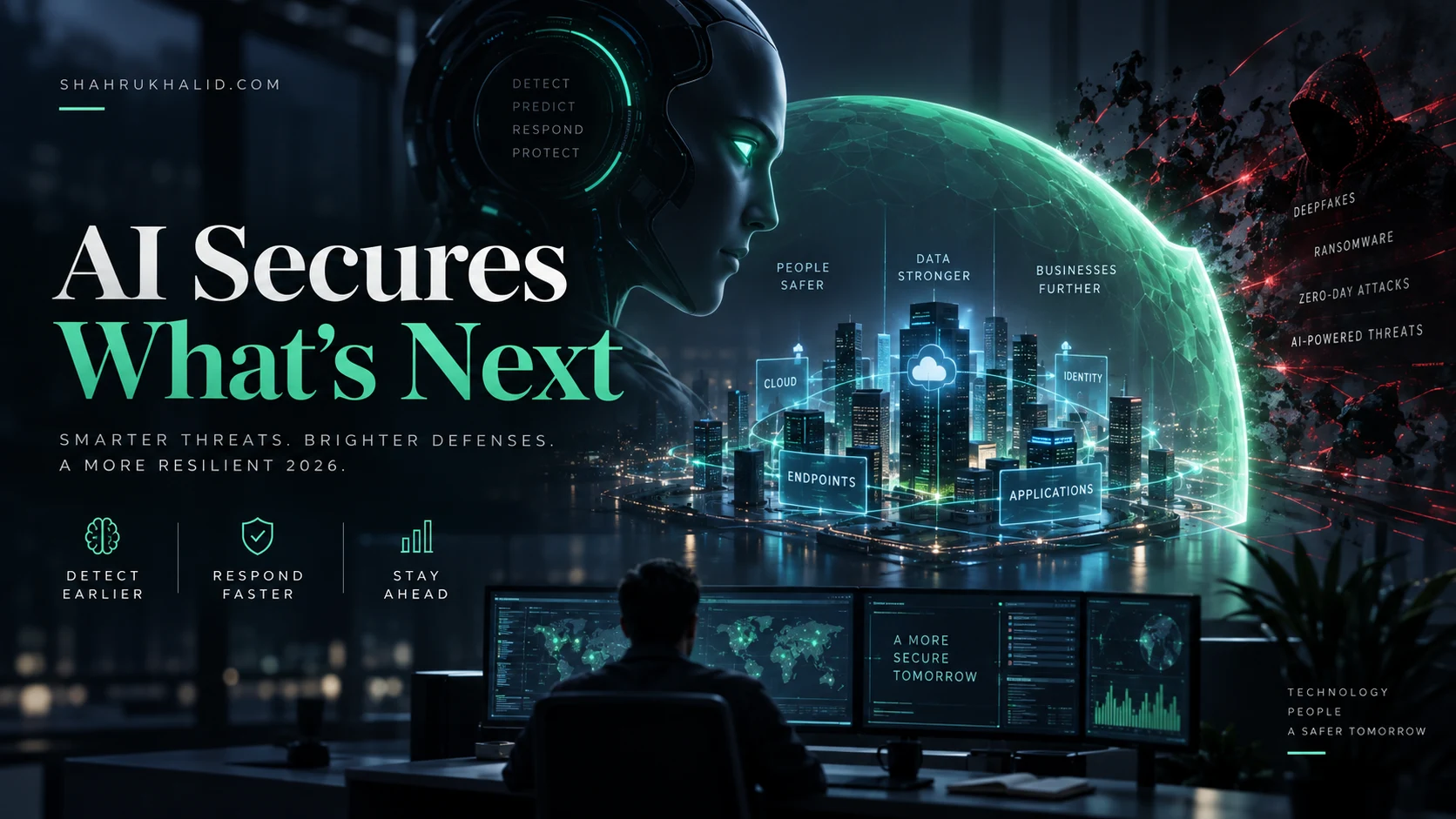
The digital landscape has reached a unprecedented inflection point. As enterprise architectures become increasingly decentralized, the volume and sophistication of cyber threats have skyrocketed beyond human capability to manage manually. In this high-stakes environment, the integration of AI in cybersecurity 2026 has evolved from a progressive technology experiment into the foundational backbone of modern digital defense. Today’s security teams are no longer simply setting static firewall rules or analyzing log files after a breach occurs; they are orchestrating hyper-intelligent, autonomous defense ecosystems capable of neutralizing advanced threats in microseconds. To navigate this new era successfully, organizations must understand how cognitive automation, deep learning, and predictive analytics are permanently changing the balance of power between attackers and defenders. For a deeper look at foundational principles, check out our analysis on [INTERNAL LINK: Zero Trust Architecture in Modern Enterprises].
The Evolving Threat Landscape: Why Legacy Systems Fall Short
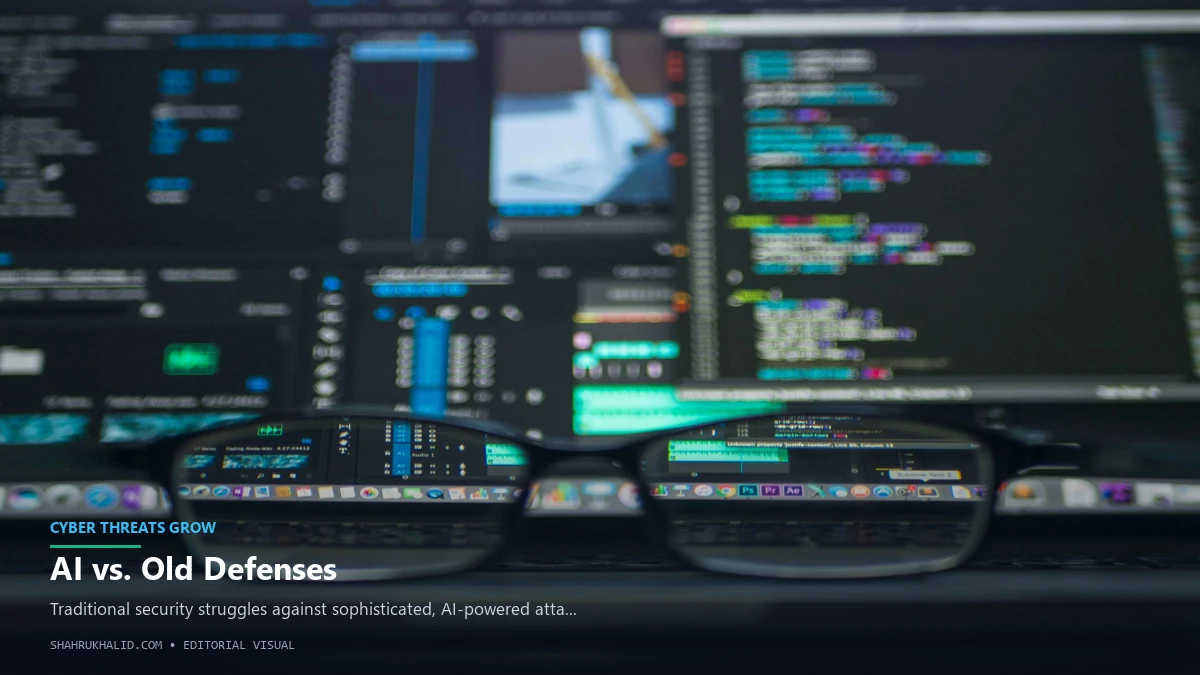
To understand the revolutionary impact of artificial intelligence, one must first recognize the sheer complexity of the modern threat vector. Cybercriminals in 2026 are leveraging generative attack frameworks, polymorphic malware that rewrites its own code to evade traditional signatures, and deepfake-powered social engineering campaigns that easily slip past legacy email filters. Human-driven Security Operations Centers (SOCs) facing thousands of daily alerts suffer from profound fatigue, leading to missed indicators of compromise and dangerously high Mean Time to Detect (MTTD).
Traditional signature-based security tools rely heavily on known threat indicators (IOCs). However, when attacks are generated dynamically by threat actors using custom neural networks, static rules become obsolete the moment they are written. Modern IT infrastructures—spanning multi-cloud environments, edge computing nodes, and millions of connected Internet of Things (IoT) devices—require a paradigm shift. Enterprise security now demands continuous baseline monitoring and adaptive response capabilities that only sophisticated neural networks can provide.
This reality has necessitated a pivot toward an enterprise-wide machine learning network defense. By processing millions of telemetry data points per second across end-user devices, cloud infrastructure, and network gateways, machine learning models can identify microscopic anomalies in traffic patterns and user behavior long before a vulnerability can be exploited.
Core Innovations Driving AI in Cybersecurity 2026
The application of artificial intelligence in corporate defense has advanced from basic rule-based automation to deeply perceptive, multi-layered cognitive engines. The following pillars represent the core technical innovations reshaping enterprise protection this year:

1. Next-Generation Artificial Intelligence Threat Detection
Modern artificial intelligence threat detection relies on unsupervised dynamic learning to understand the “normal” baseline behavior of every entity within a network—including users, devices, services, and micro-applications. Rather than searching for known attack patterns, these intelligent models flag subtle deviations. For instance, if an administrative account suddenly requests access to an unfamiliar microservice at an unusual time while displaying subtle latency variations indicative of a proxy tunnel, the system immediately flags the anomaly for investigation, even if no known malware signatures are detected.
2. Predictive Cybersecurity and Threat Forecasting
Perhaps the most significant leap forward is the transition from reactive posture to predictive cybersecurity. By leveraging massive global threat intelligence feeds and analyzing dark web indicators, strategic telemetry, and software patch vulnerabilities, predictive algorithms can forecast potential attack paths before adversaries launch their campaigns. These models simulate millions of attack vectors against a digital twin of an enterprise’s infrastructure, allowing security teams to preemptively patch weak links, reconfigure access policies, and harden critical assets.
3. Context-Aware Behavioral Biometrics
Static passwords and basic multi-factor authentication (MFA) are no longer sufficient to stop identity-based attacks. Advanced AI systems continuously evaluate contextual biometrics—such as typing rhythms, mouse movement dynamics, device orientation, and network transit paths—to calculate a real-time risk score for active sessions. If a user’s behavior strays significantly from their established pattern, elevated authentication measures are triggered instantly, neutralizing session hijacking attempts seamlessly.
Automated Incident Response: Defending at Machine Speed
In 2026, the elapsed time between initial access and network-wide encryption by advanced ransomware can be under three minutes. Human intervention, while essential for strategic oversight, is simply too slow to stop hyper-automated attacks. This critical speed gap has accelerated the adoption of automated incident response systems powered by agentic AI capabilities.

Unlike early Security Orchestration, Automation, and Response (SOAR) playbooks that required manual scripting and rigid decision trees, contemporary AI agents possess self-learning decision-making capabilities within predefined governance parameters. When an active intrusion is identified, an automated system can autonomously implement precise containment strategies, such as:
- Micro-segmenting compromised cloud instances: Isolating affected virtual machines while preserving system memory states for post-incident forensic analysis.
- Revoking dynamic identity tokens: Instantly terminating compromised user sessions and resetting cryptographic keys across identity providers.
- Deploying localized deception traps: Automatically spinning up high-interaction honeypots around an attacker to record their tactics, techniques, and procedures (TTPs) in real time.
- Synthesizing contextual breach reports: Generating natural-language summaries for CISO leadership, outlining the breach vector, impact scope, and exact remediation actions taken.
By delegating immediate containment actions to intelligent automation, human security analysts are liberated from manual triage and can focus their talents on high-level strategic threat hunting and risk management. For further insights on streamlining operations, read our guide on [INTERNAL LINK: Cloud Security Posture Management Strategies].
The Enterprise Stack: Implementing AI Driven Security Tools
Building a robust defense architecture in 2026 requires integrating specialized AI driven security tools across every layer of the technology stack. Modern enterprise security teams are consolidating fragmented point solutions into unified, intelligence-led platforms that offer end-to-end visibility.
Organizations optimizing their security stack are focusing on three primary implementation layers:
- Unified Extended Detection and Response (XDR) Platforms: Centralizing telemetry from endpoints, identity management systems, email gateways, and cloud workloads into a unified AI processing engine to correlate complex multi-stage attacks.
- Autonomous Identity and Access Governance (IAG): Implementing continuous access reviews where machine learning models analyze access usage logs to automatically strip unnecessary permissions, maintaining the principle of least privilege effortlessly.
- AI-Powered Code Auditing and DevSecOps: Utilizing large language models specifically trained on secure coding standards to analyze software pipelines during build processes, catching memory leaks, supply chain vulnerabilities, and zero-day flaws before code reaches production.
To learn more about secure software development lifecycles, explore our resource on [INTERNAL LINK: Enterprise Data Governance Frameworks].
Adversarial AI and Ethical Challenges: The Dark Side of Defense
While artificial intelligence offers unprecedented defensive capabilities, it remains a dual-use technology. Cybercriminal syndicates and state-sponsored actors have equal access to advanced machine learning models, leading to a sophisticated armaments race in cyberspace. Understanding these risks is critical for any technology leader designing an enterprise defense strategy.
Key defensive challenges include:
- Data Poisoning Attacks: Adversaries intentionally injecting malicious or corrupted telemetry data into training sets to blind machine learning models to specific attack techniques.
- Model Inversion and Evasion: Malicious actors probing defensive neural networks locally to discover blind spots, allowing them to craft payloads specifically engineered to pass through security filters undetected.
- Generative Deepfakes and Synthetic Phishing: Criminals using real-time audio and video synthesis alongside large language models to orchestrate hyper-realistic executive impersonation scams (CEO fraud) at an unprecedented scale.
- Privacy and Regulatory Compliance: Ensuring that AI security tools monitoring network traffic and employee behaviors comply with strict global privacy frameworks such as GDPR, CCPA, and evolving international AI governance mandates.
Mitigating these risks requires continuous model auditing, dynamic adversarial testing (red-teaming AI systems with offensive AI models), and maintaining strict human-in-the-loop oversight for high-risk policy changes.
Securing the Digital Frontier: Adapting for the Future
As we navigate through 2026, the battle for digital security will be defined by speed, scale, and cognitive intelligence. Threat actors are moving faster than ever, deploying autonomous tools capable of probing enterprise networks 24/7. Relying solely on legacy, reactive defense strategies is no longer a viable operational risk model for modern businesses.
Embracing the potential of AI in cybersecurity 2026 is not merely an IT upgrade—it is a strategic mandate for organizational resilience. By integrating advanced machine learning threat detection engines, enabling automated incident response frameworks, and deploying next-generation security tools, enterprises can transform their security posture from a vulnerable reactive state into an agile, self-healing defensive fortress.
Now is the time to audit your current security infrastructure, evaluate your automated response workflows, and bridge the gap between human expertise and machine intelligence. What steps is your organization taking to integrate AI into your security strategy this year? Leave your thoughts in the comments below, share this article with your technical team, and subscribe to Shahrukh Khalid’s tech blog for deeper insights into the technologies shaping our digital future.