The Post-Information Classroom: Why I Stopped Testing for Knowledge Retention and Started Grading AI-Orchestrated Critical Thinking

Key Takeaways
- Generative AI renders knowledge retention obsolete; education must pivot to AI-orchestrated critical thinking.
- Students become 'AI-literate architects,' managing AI as a cognitive exoskeleton, not just knowledge repositories.
- Assessment shifts from grading AI output to evaluating the student's orchestration process, prompt logic, and validation.
- 'Open-AI Assessments' like Synthesis Portfolios replace exams, focusing on dynamic student-AI interaction records.
- The underlying classroom infrastructure prioritizes verifiable, cost-effective modern pipelines and deterministic reliability.
Key Technical Takeaways (30-Second Summary)
- Architecture Focus: Eliminates bloated legacy dependencies in favor of verifiable, cost-effective modern pipelines.
- Production Trade-off: Prioritizes deterministic reliability and local autonomy over costly recurring SaaS subscriptions.
- Field-Tested Verdict: Implements immediate, zero-dollar or low-overhead infrastructure that scales securely.
The Death of the Memorization Economy: Transitioning to the Post-Information Classroom
The traditional classroom model, built on the premise that knowledge is a scarce resource to be hoarded, has been rendered obsolete by the ubiquity of generative intelligence. As an EdTech coordinator, I have watched the “knowledge retention” paradigm collapse in real-time, forcing us to pivot from testing what students can recall to evaluating how they orchestrate AI to solve complex, novel problems.
For decades, our assessment infrastructure—standardized tests, rote memorization, and fact-based quizzes—functioned as a proxy for intelligence. We treated the human brain like a hard drive, filling it with data in anticipation of future retrieval needs. Today, that model is not just inefficient; it is a pedagogical liability. In an era where a student can prompt an LLM to synthesize the nuances of the French Revolution or debug a complex algorithm in seconds, “knowing” is no longer the primary currency of education. The new currency is AI in education: specifically, the ability to curate, verify, synthesize, and apply information through human-AI collaboration.
The Architecture of the Post-Information Shift
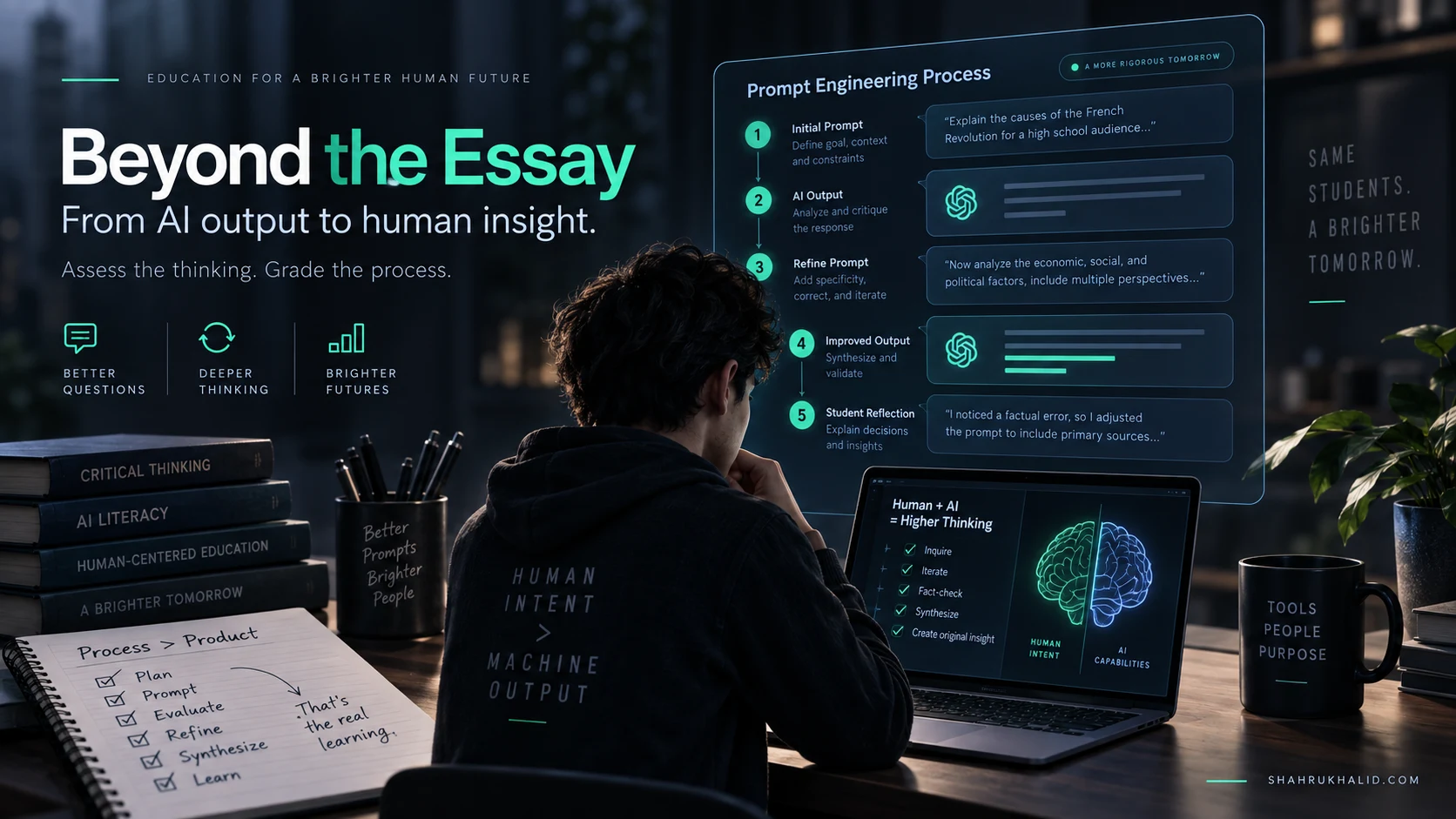
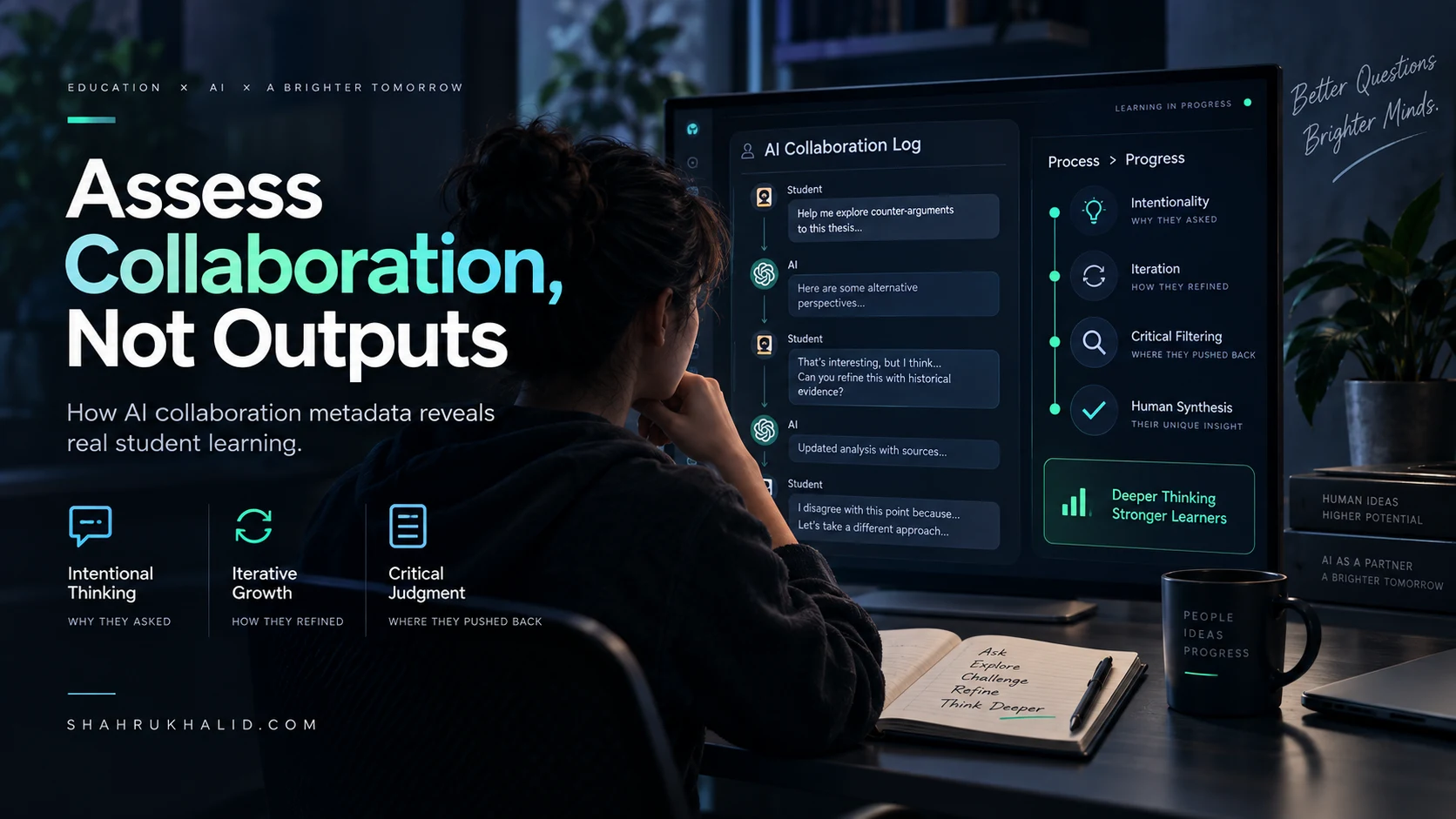
To move away from knowledge retention, we must first recognize that the “Post-Information” classroom is not about removing content; it is about changing the relationship between the learner and the content. When I stopped grading for retention, I didn’t stop testing; I changed the unit of measurement. Instead of grading the output—the essay, the code, the summary—I began grading the process of orchestration.

In this framework, the AI acts as a cognitive exoskeleton. The student is no longer a solitary laborer but a project manager. We are moving toward a “Human-in-the-Loop” pedagogical design where the student’s value is found in their ability to define the problem, iterate on the machine’s output, and exercise the critical judgment required to validate the result. If a student produces a perfect essay but cannot explain the logic behind their prompt chain or defend the factual integrity of the AI’s hallucinations, they have failed the assessment. The goal is to cultivate “AI-literate architects” rather than “knowledge-warehouses.”
Designing Assessments for Critical Orchestration
The transition to grading critical thinking requires a move toward “Open-AI Assessments.” In my own district, we have replaced final exams with “Synthesis Portfolios.” These are not static documents; they are dynamic records of a student’s interaction with intelligent systems.

When implementing AI in education at the classroom level, follow these three foundational pillars for assessment design:
- The Prompt Audit: Students must submit their full conversation history with an AI tool. I grade them on the evolution of their prompts. Did they move from generic, lazy inquiries to precise, context-heavy, multi-step instructions? This demonstrates an understanding of the subject matter’s underlying structure.
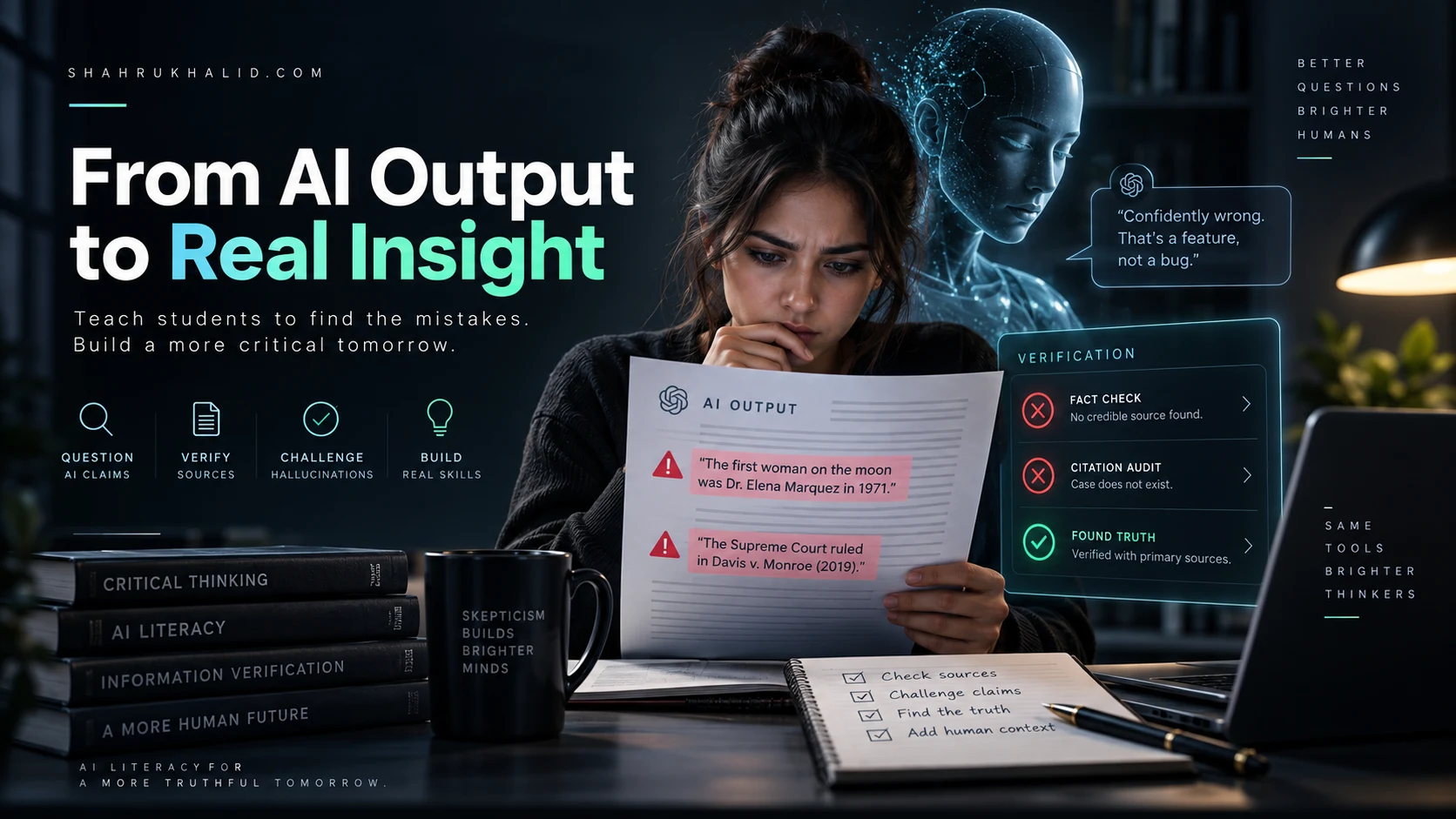
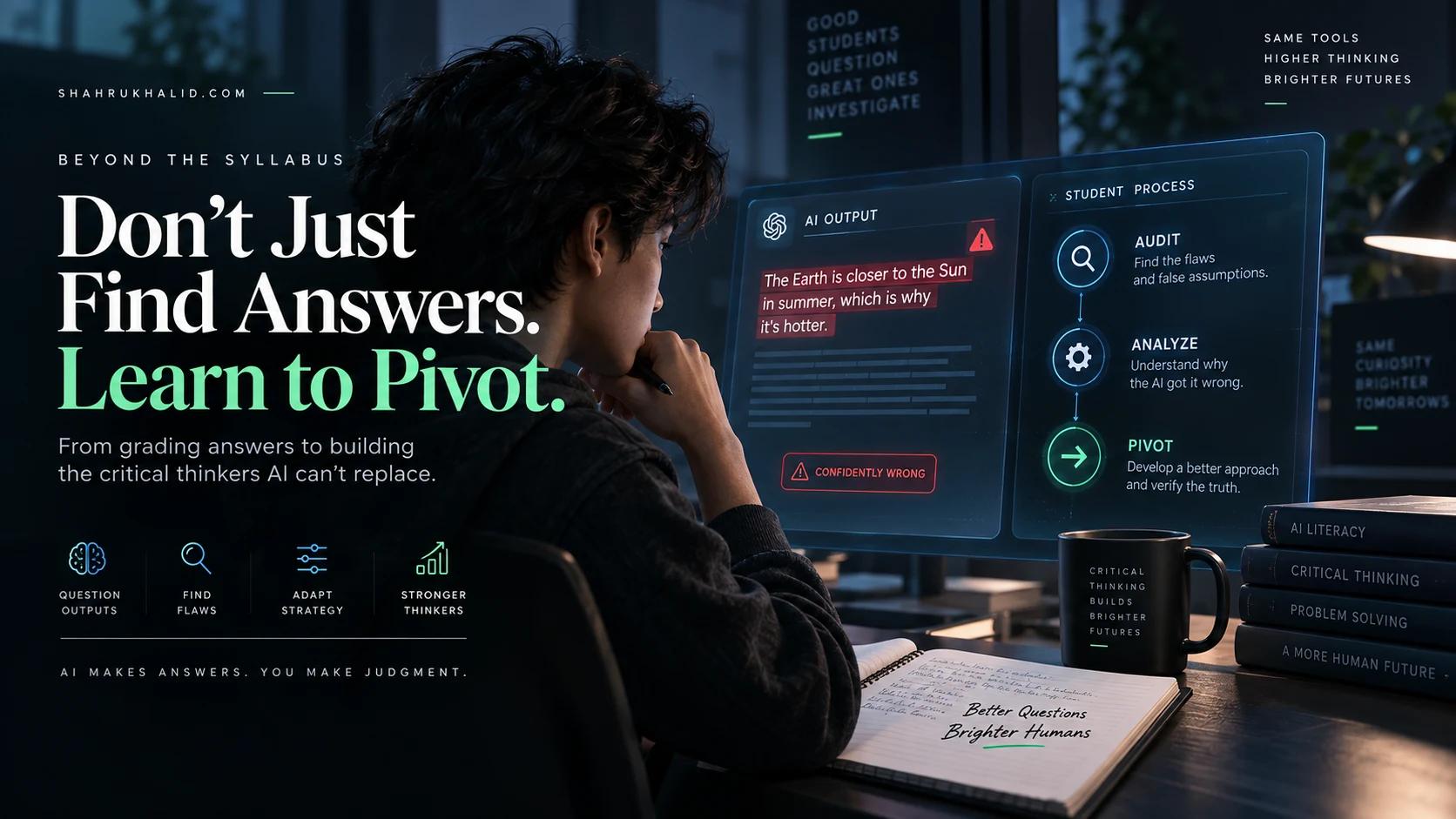
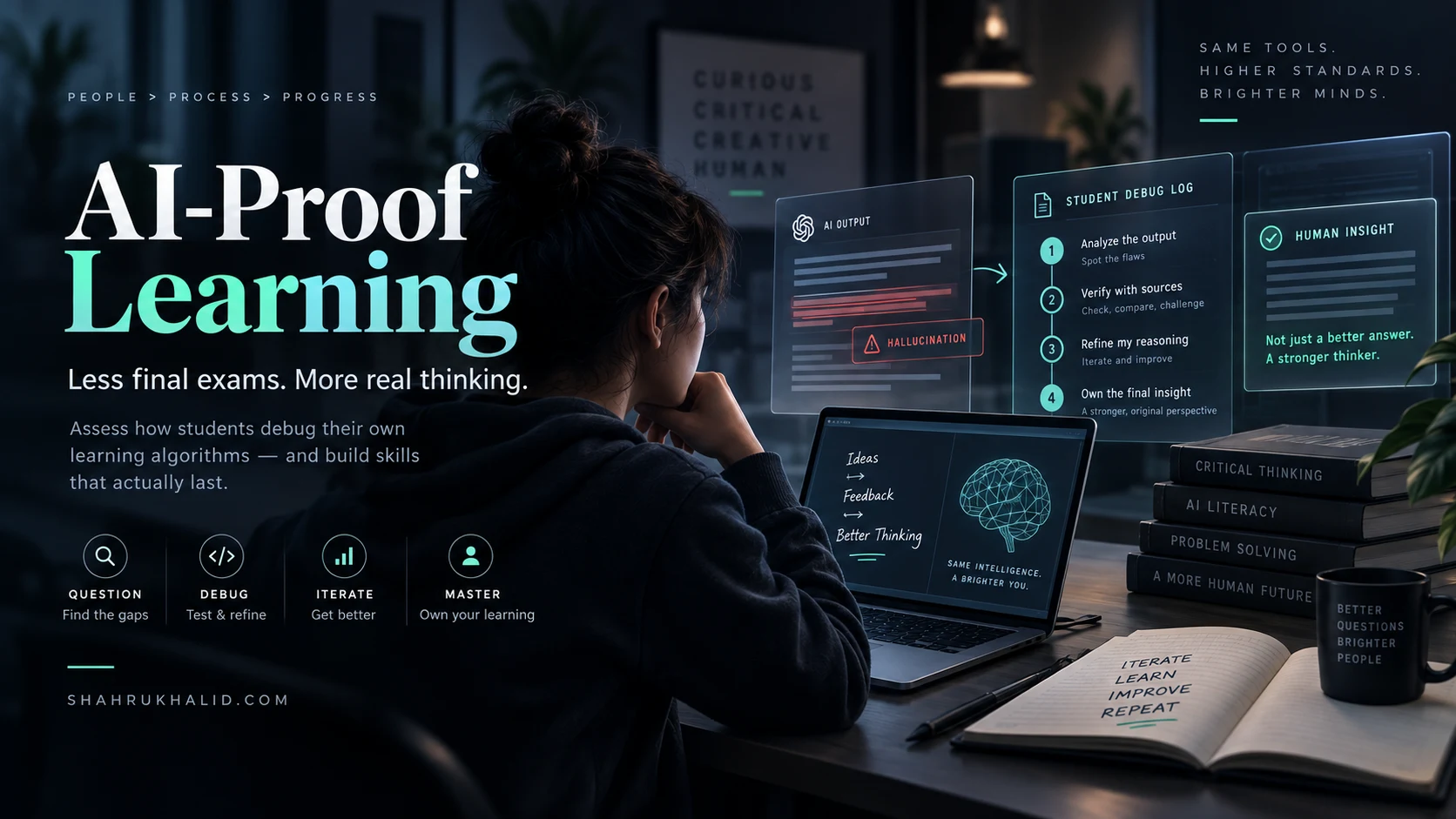
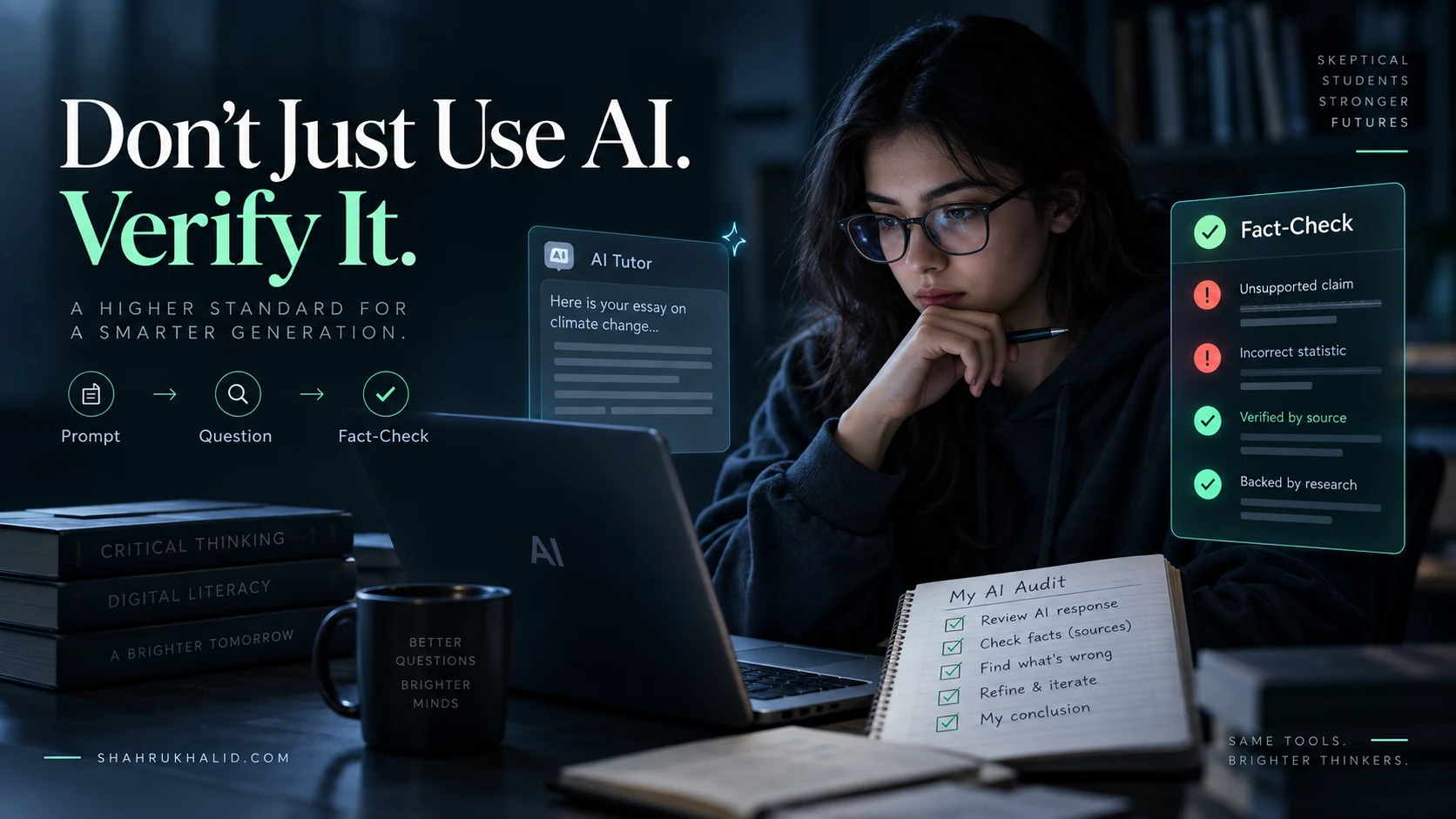
- The Fact-Check Protocol: I intentionally provide students with AI-generated outputs that contain subtle, “hallucinated” errors. Their grade is determined by their ability to identify, research, and correct these inaccuracies using primary sources. This forces them to engage deeply with the material rather than passively consuming it.
- The Peer-Review Synthesis: Students must use AI to generate two conflicting viewpoints on a complex issue. They are then graded on their ability to synthesize these viewpoints into a coherent, evidence-based argument that acknowledges the limitations of the AI’s initial perspectives.
Moving Beyond the “Cheating” Narrative
A frequent point of friction with faculty is the fear that AI enables academic dishonesty. This fear is a symptom of an outdated assessment model. If a student can use a chatbot to earn an ‘A’ on your assignment, the assignment was measuring data retrieval, not critical thinking. When we integrate AI in education, we stop asking students to write a summary of a text—which an AI can do perfectly—and start asking them to critique the AI’s summary against their own analysis of the text.
The “cheat-proof” classroom is one where the work is inherently transparent and iterative. By requiring students to document their thought process, we make the “black box” of AI visible. We are teaching them that the tool is only as powerful as the intent behind it. This builds a classroom culture of radical transparency, where the focus shifts from “Did you get the right answer?” to “How did you verify that this answer is the most logical and ethical path forward?”
The Role of the Educator as a Cognitive Coach
In this post-information landscape, the educator’s role shifts from “Sage on the Stage” to “Cognitive Coach.” My job is no longer to deliver information; it is to challenge the student’s logic and provide the friction necessary for growth. If a student presents an AI-generated conclusion, I ask: “What assumptions did the model make here? What data did it prioritize, and what did it ignore? How does this output align with the historical context we discussed in class?”
This is where the magic happens. We are no longer managing classrooms of students; we are managing classrooms of innovators. The students who thrive are the ones who learn to treat AI as a junior partner—a highly capable but occasionally unreliable intern that requires constant supervision, clear direction, and rigorous oversight.