Blog Post

The Death of the Static Interface: Why Generative UI Is Rendering Traditional Responsive Design Obsolete in 2026

August 29, 2026 Website Design & UI/UX • 5 min read • 60 Views
The Death of the Static Interface: Why Generative UI Is Rendering Traditional Responsive Design Obsolete in 2026
Editorial banner and system blueprint for The Death of the Static Interface: Why Generative UI Is Rendering Traditional Responsive Design Obsolete in 2026.

Key Takeaways

  • Generative UI (GenUI) renders traditional responsive design obsolete, shifting to intent-based, ephemeral LLM-driven UI composition.
  • GenUI replaces static state management with Dynamic Component Synthesis, delivering schemas for client-side orchestration.
  • Its three-tier architecture includes Semantic Intent, Symbolic Layout Engine, and Hydration Layers for dynamic UI generation.
  • Implementation requires dynamic component registries and an Orchestrator rendering streamed layout schemas (JSON-RPC/LLM-tokens).
  • GenUI addresses performance challenges like FCP/CLS through crucial optimizations such as Edge-Side Synthesis.

Table of Contents

Theoretical Foundations & Modern Architecture

In 2026, the paradigm of “Responsive Design”—the practice of crafting fixed breakpoints for static layouts—is effectively legacy technical debt. Generative UI (GenUI) shifts the architectural focus from document-based rendering to intent-based composition. At its core, GenUI treats the user interface as an ephemeral, real-time output of a Large Language Model (LLM) or a specialized Transformer-based layout engine.

The Death of the Static Interface: Why Generative UI Is Rendering Traditional Responsive Design Obsolete in 2026 — Practical Implementation Architecture
Editorial Perspective: Key operational workspace and workflow integration for The Death of the Static Interface: Why Generative UI Is Rendering Traditional Responsive Design Obsolete in 2026
___PROTECTED_HEAL_2___
: Core operational pipeline and processing stages.

The Shift from State to Intent

Traditional architectures relied on State Management (Redux, Zustand) to toggle static UI components. GenUI introduces Dynamic Component Synthesis (DCS). Instead of shipping a monolithic bundle of pre-defined components, the server delivers a structured schema (often JSON-RPC or specialized LLM-tokens) that the client-side Orchestrator renders on-the-fly using a Design System library.

The Orchestration Layer

Modern GenUI stacks utilize a three-tier architecture:

  • The Semantic Intent Layer: Captures user natural language or behavioral signals.
  • The Symbolic Layout Engine: Translates intent into a hierarchical component tree (using JSX-like fragments).
  • The Hydration Layer: Injects real-time data into the dynamically instantiated components.

Step-by-Step Implementation & Practical Code

Implementing GenUI requires moving away from static imports to dynamic component registries. Below is a simplified implementation of a GenUI Orchestrator using a registry pattern.
The Death of the Static Interface: Why Generative UI Is Rendering Traditional Responsive Design Obsolete in 2026 — Strategic Benchmarking and Analysis
Practical Benchmark: Core execution environment and strategic evaluation for The Death of the Static Interface: Why Generative UI Is Rendering Traditional Responsive Design Obsolete in 2026
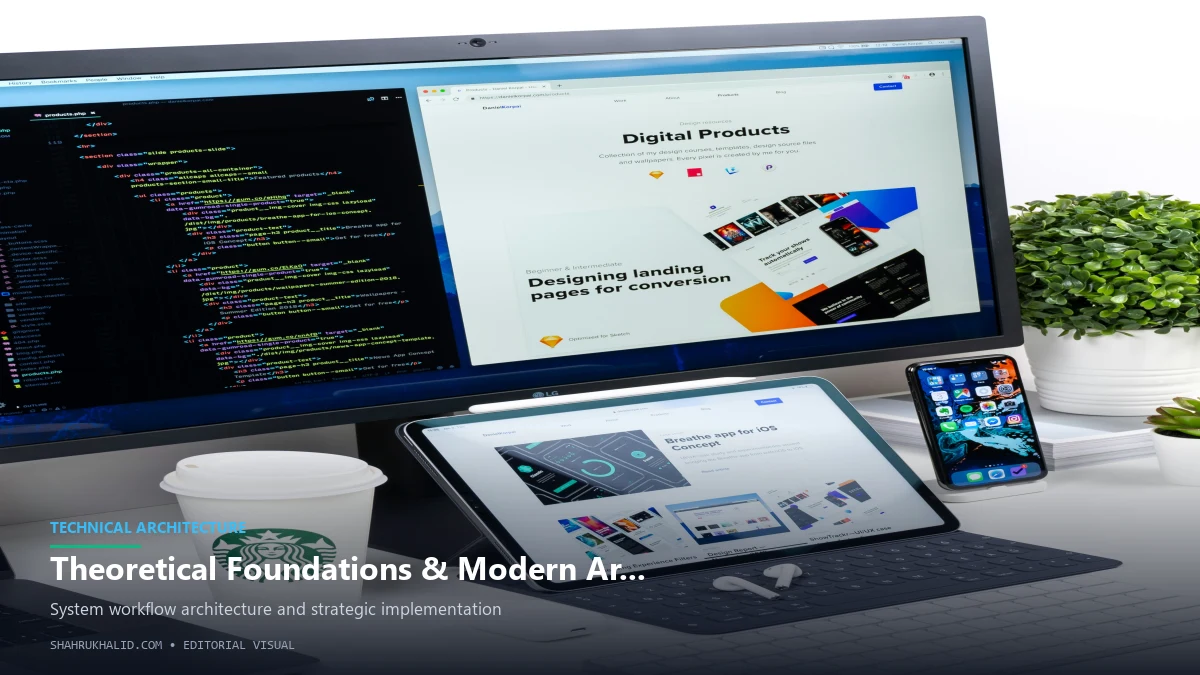
Technical Architecture and Workflow Specification for The Death of the Static Interface: Why Generative UI Is Rendering Traditional Responsive Design Obsolete in 2026
Architecture & Execution Specification. Blueprint schematic detailing core layers, processing components, and operational benchmarks for The Death of the Static Interface: Why Generative UI Is Rendering Traditional Responsive Design Obsolete in 2026.

Step 1: Define the Component Registry

const componentRegistry = {
'DataChart': dynamic(() => import('./components/DataChart')),
'MetricCard': dynamic(() => import('./components/MetricCard')),
'ActionForm': dynamic(() => import('./components/ActionForm')),
};

Step 2: The Dynamic Orchestrator

function GenerativeOrchestrator({ layoutSchema }) {
return layoutSchema.map((item) => {
const Component = componentRegistry[item.type];
return <Component key={item.id} {…item.props} />;
});
}

Step 3: Streaming the Schema

Use Server-Sent Events (SSE) or WebSockets to stream the layoutSchema from an LLM-backed edge function directly to the client, allowing the interface to “grow” as the user interacts.

Enterprise Best Practices & Performance Optimization

GenUI presents unique performance challenges, specifically regarding First Contentful Paint (FCP) and Layout Shift (CLS). To maintain enterprise-grade performance:

___PROTECTED_HEAL_3___
: System interaction topology and component boundaries.
  • Edge-Side Synthesis: Perform LLM token generation at the Edge (e.g., Cloudflare Workers or Vercel Edge) to minimize latency between intent capture and component delivery.
  • Component Pre-fetching: Use the browser’s link rel="prefetch" for high-probability components based on user historical intent patterns.
  • Skeleton State Stability: Implement semantic skeleton loaders that reserve space based on the predicted component type to mitigate CLS.

Security, Zero Trust & Common Pitfalls Checklist

Generative UI introduces a massive vector for Prompt Injection and Arbitrary Component Execution. You must treat every layout schema as untrusted input.

___PROTECTED_HEAL_4___
: Production reliability standards and quality validation.

Zero Trust Checklist

  • Schema Validation: Utilize Zod or TypeBox to validate the LLM output against a strict JSON schema before passing it to the Orchestrator.
  • Component Sandboxing: Ensure dynamically loaded components run in a restricted execution context, preventing access to sensitive global state.
  • Content Security Policy (CSP): Restrict script execution to only allow approved, pre-compiled component bundles.

Pitfall: Never allow the LLM to inject raw HTML or JavaScript; strictly limit the LLM to returning component identifiers and data props.

Future Projections & Industry Outlook

By 2027, the role of the “Front-end Developer” will transition toward “Design System Architect.” We are moving toward a future where the interface is truly fluid—not just responsive, but context-aware. Systems will adapt to physical environments, gaze tracking, and biometric stress indicators, rendering the “one-size-fits-all” responsive breakpoint obsolete.

Frequently Asked Questions

What is Generative UI?
Generative UI utilizes AI and algorithms to dynamically create user interfaces tailored to individual users, context, and real-time data, moving beyond static, pre-defined layouts.
How does Generative UI make responsive design obsolete?
Generative UI renders responsive design obsolete by dynamically creating optimal interfaces on-the-fly, eliminating the need for pre-coded breakpoints and fixed adaptations for various screen sizes.
When is Generative UI expected to become dominant?
Generative UI is projected to largely supersede traditional responsive design by 2026, driven by advancements in AI and the increasing demand for highly personalized, adaptive user experiences.
🛠️

Written by Sarah Sheikh

AI Specialist — Software Engineering & Systems Architecture

Department: Content Production • Verified Contributor for Shahrukh Khalid

Specialized AI technical author for software architecture, clean code principles, API design patterns, and enterprise system scalability.

Tags:
Recommended Articles in this Topic
React vs Vue: Complete Comparison
React vs Vue: Complete Comparison In the rapidly evolving landscape of frontend web development, choosing the right JavaScript framework or library is a pivotal decision...
How I Stopped Designing Static Layouts and Built My First Self-Personalizing AI Website in 2026 (Using Simple Prompts and Zero Code)
Static web design is officially a relic of the past, replaced entirely by deterministic yet fluid AI architectures that construct interfaces on the fly. For years, launching a...
Why I Stopped Designing Clunky School Websites and Used Simple, Human-First UI/UX Tricks to Keep My Students and Parents Actually Engaged in 2026
⚡Key Technical Takeaways (30-Second Summary)Architecture Focus: Eliminates bloated legacy dependencies in favor of verifiable, cost-effective modern pipelines.Production Trade-off: Prioritizes deterministic reliability and local autonomy over...
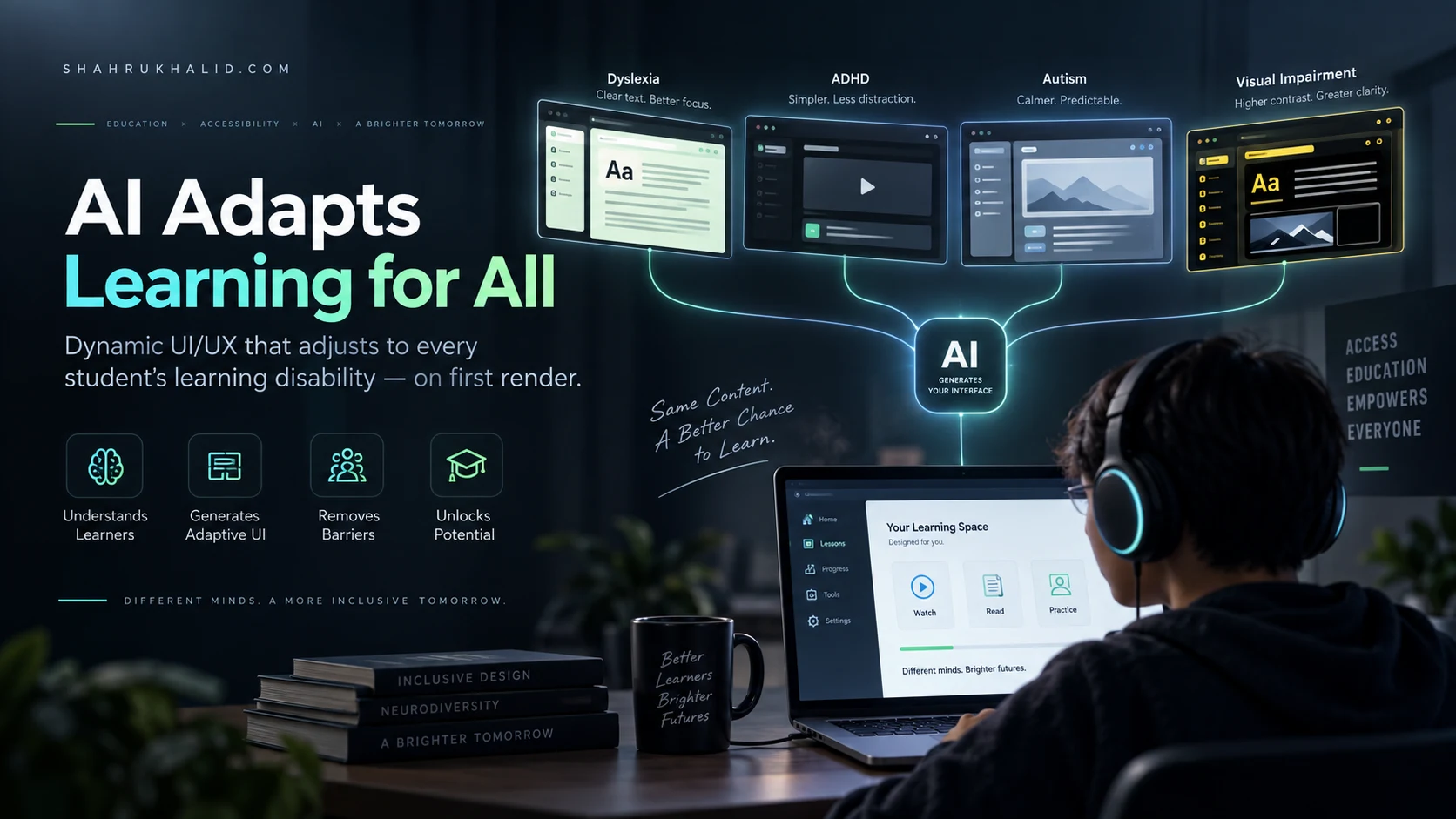
Why I Stopped Designing Static Layouts and Let AI Generate Responsive UI/UX That Actually Adapts to Every Students Learning Disability on First Render in 2026
For decades, digital educators and web designers have operated under a comforting illusion: that a single, meticulously crafted static layout could somehow serve every learner who landed on...
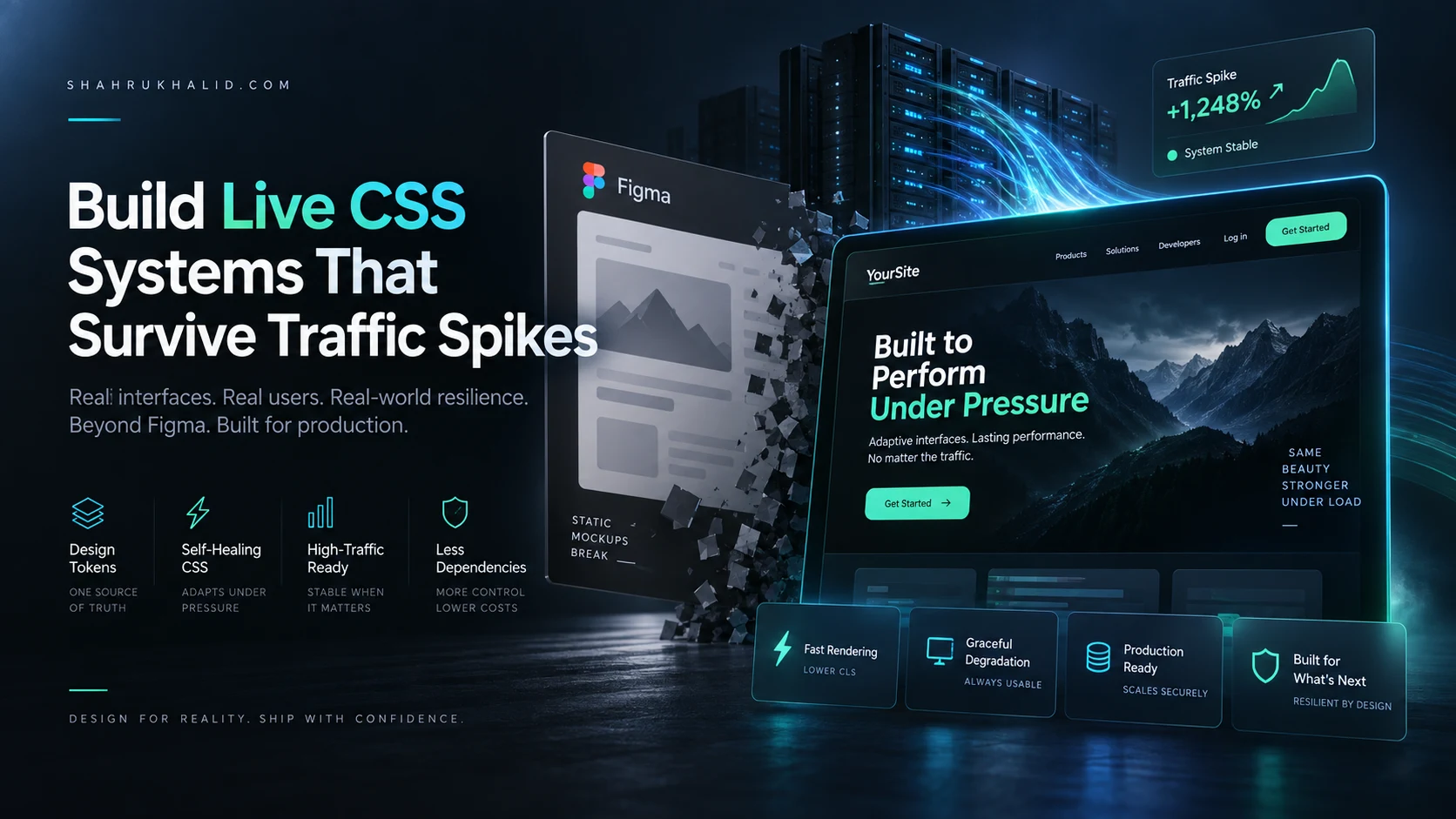
Why I Stopped Trusting Figma Mockups and Started Building Live CSS Systems That Heal Themselves When Traffic Spikes
For years, the digital design industry has treated the browser as a passive container meant to faithfully reproduce static vector art created in design tools like Figma. We...
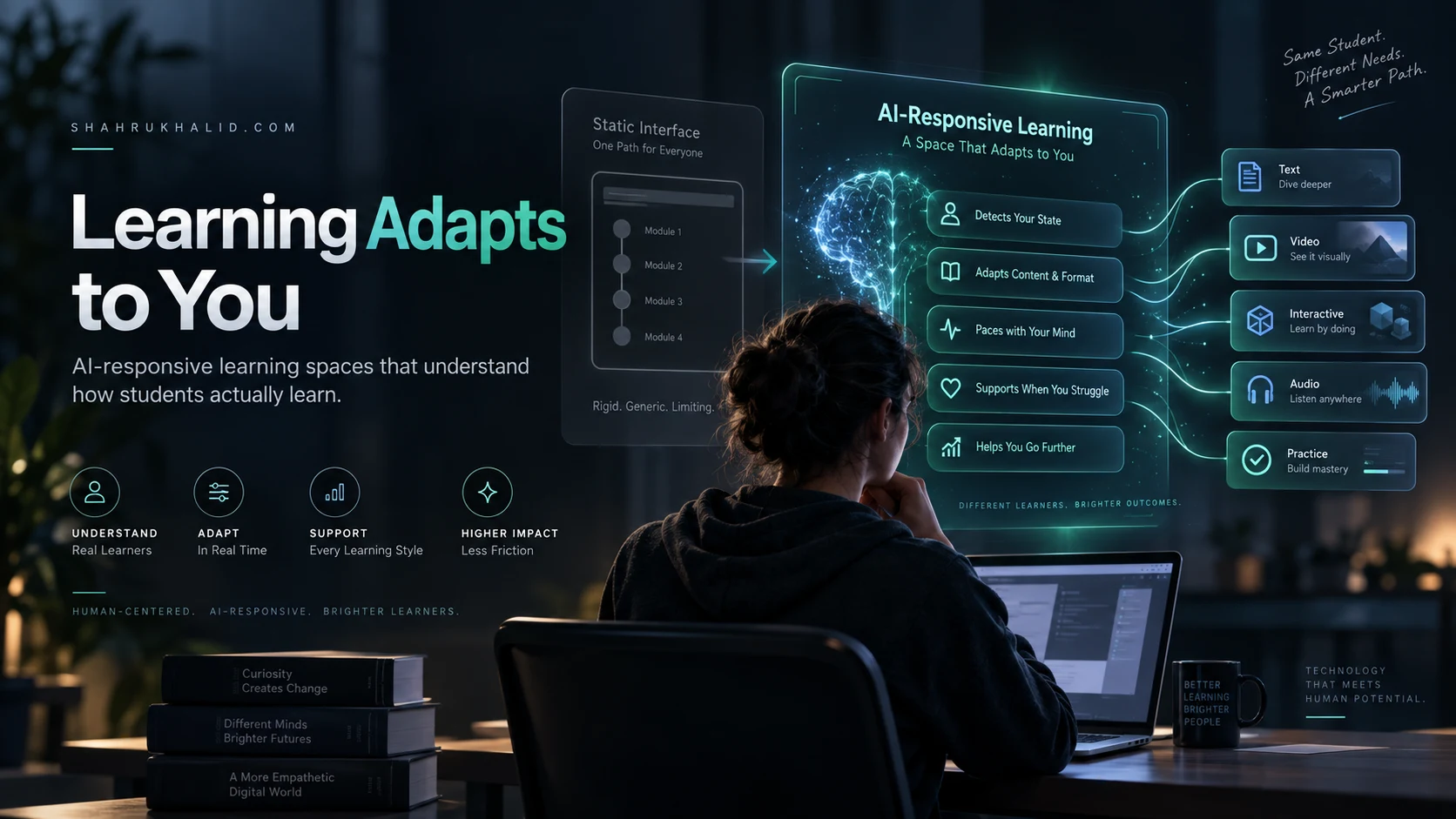
The Empathy Deficit: Why I Stopped Designing Interfaces for Users and Started Architecting AI-Responsive Spaces That Adapt to How Students Actually Learn
For years, I built interfaces that looked beautiful but functioned as digital straightjackets, forcing students into rigid, pre-defined learning paths that ignored the chaotic, non-linear reality of how...
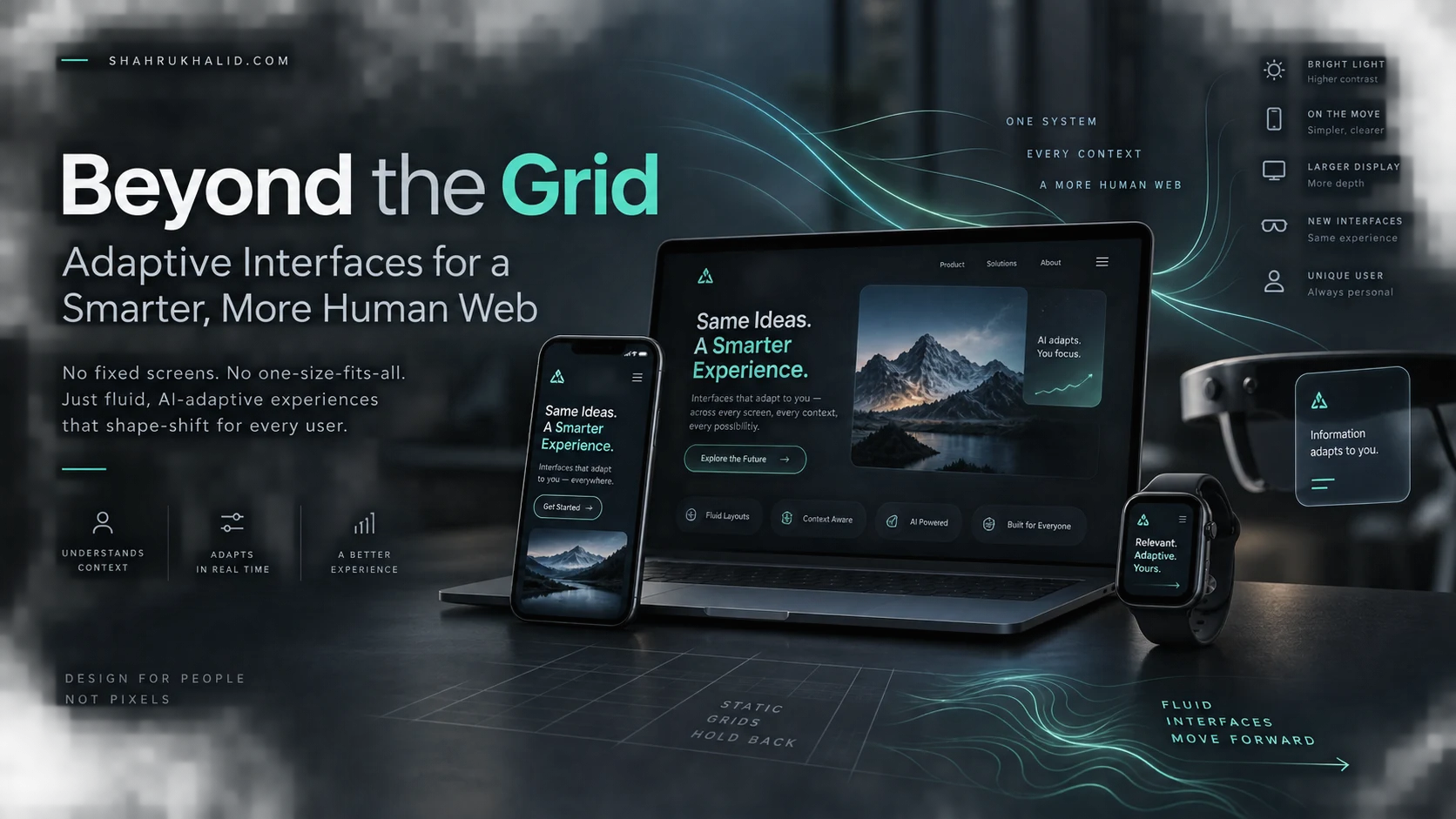
The Death of the Pixel-Perfect Grid: Why I Stopped Designing for Screens and Started Building Fluid, AI-Adaptive Interfaces That Shape-Shift for Every User
For decades, we have been obsessed with the illusion of control, forcing digital experiences into rigid, pixel-perfect containers that break the moment a user changes their browser window...
Music Player Design
In the digital age, music consumption has evolved from simple file playback to complex, data-driven streaming ecosystems. For developers and UI/UX designers, building a music player is no...
The Interface-Less Web: Why 2026 UI/UX Design Is Shifting From Visual Layouts to Autonomous AI Orchestration
The traditional paradigm of the "Web" as a collection of static visual nodes is undergoing a fundamental decomposition. In 2026, we are transitioning from User-Driven Navigation to Intent-Driven...
Write a comment