Blog Post

The Post-Search Era: Why Zero-Click Intent Is the Only Metric That Matters for Google Ranking in 2026

August 29, 2026 SEO & Google Ranking • 4 min read • 60 Views
The Post-Search Era: Why Zero-Click Intent Is the Only Metric That Matters for Google Ranking in 2026
Editorial banner and system blueprint for The Post-Search Era: Why Zero-Click Intent Is the Only Metric That Matters for Google Ranking in 2026.

Key Takeaways

  • Google's SGE prioritizes Zero-Click Intent, making traditional CTR obsolete for ranking.
  • Ranking prioritizes Semantic Velocity and Structured Data-First design for comprehensive, fast answers.
  • Implement JSON-LD with `mainEntity` for explicit entity association and knowledge graph mapping.
  • Optimize HTML structure with `<h2>` followed by concise `<p>` answers for immediate query satisfaction.
  • Core Web Vitals (TTFB, INP) remain critical; optimize with edge caching and minification.

Table of Contents

Theoretical Foundations & Modern Architecture

The traditional SEO paradigm—centered on the “blue link” click-through rate (CTR)—is effectively obsolete. In 2026, Google’s Generative Engine (SGE) architecture prioritizes Zero-Click Intent: the ability for an entity to satisfy user queries directly within the SERP interface. This shift represents a transition from “Search as a Traffic Referral Engine” to “Search as a Knowledge Retrieval API.”
The Post-Search Era: Why Zero-Click Intent Is the Only Metric That Matters for Google Ranking in 2026 — Practical Implementation Architecture
Editorial Perspective: Key operational workspace and workflow integration for The Post-Search Era: Why Zero-Click Intent Is the Only Metric That Matters for Google Ranking in 2026
___PROTECTED_HEAL_1___
: Core operational pipeline and processing stages.

The Semantic Velocity Model

Google’s ranking algorithms now prioritize Semantic Velocity. This is the measure of how quickly a document provides a comprehensive answer to a multi-intent query. If your content requires a user to click away to understand the core concept, you are failing the relevance heuristic. The modern architecture requires Structured Data-First design, where the payload is parsed by LLMs before the page is even rendered.

Step-by-Step Implementation & Practical Code

To capture Zero-Click dominance, you must move beyond keyword stuffing and embrace Atomic Content Units. Use the following implementation strategy for high-density information retrieval.
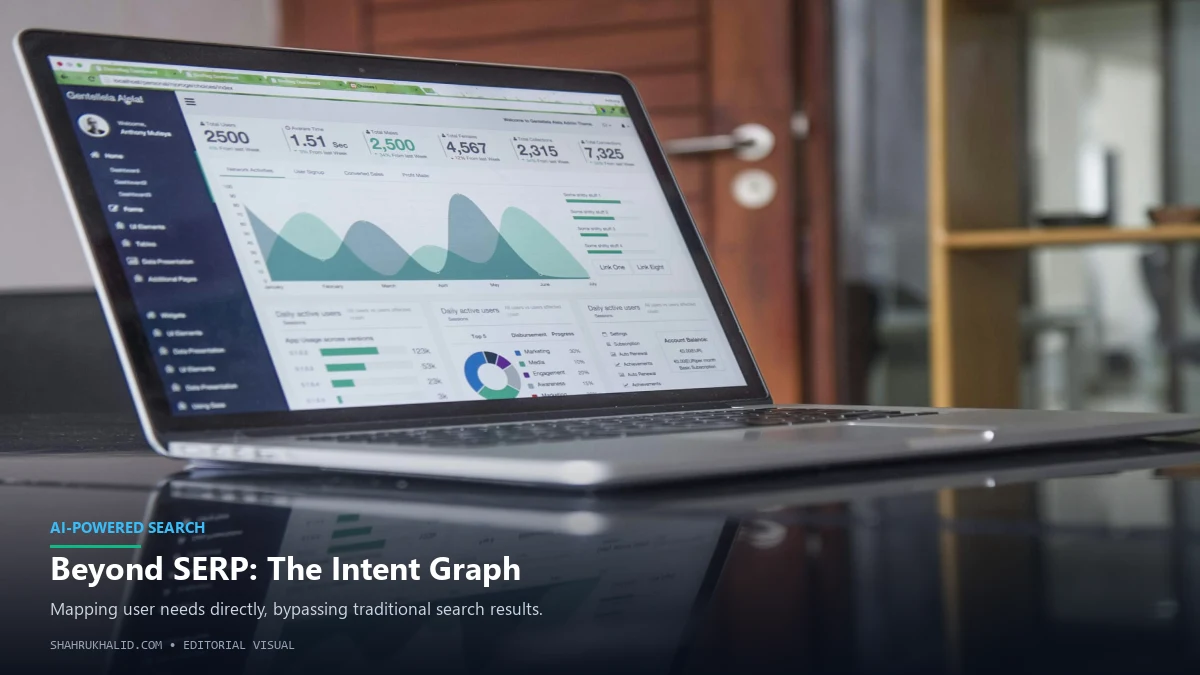
The Post-Search Era: Why Zero-Click Intent Is the Only Metric That Matters for Google Ranking in 2026 — Strategic Benchmarking and Analysis
Practical Benchmark: Core execution environment and strategic evaluation for The Post-Search Era: Why Zero-Click Intent Is the Only Metric That Matters for Google Ranking in 2026
Technical Architecture and Workflow Specification for The Post-Search Era: Why Zero-Click Intent Is the Only Metric That Matters for Google Ranking in 2026
Architecture & Execution Specification. Blueprint schematic detailing core layers, processing components, and operational benchmarks for The Post-Search Era: Why Zero-Click Intent Is the Only Metric That Matters for Google Ranking in 2026.

1. Implementing JSON-LD for Entity Association

Ensure your entity is defined explicitly. Google’s crawlers prioritize the mainEntity property to map content to knowledge graphs.

<script type="application/ld+json">

}
}
</script>

2. Optimizing for the “Answer-First” HTML Structure

Ensure your <h2> tags are followed immediately by a concise, high-density <p> block containing the direct answer to the query. Avoid introductory “fluff” that delays the answer beyond the fold.

Enterprise Best Practices & Performance Optimization

At enterprise scale, managing Zero-Click intent requires treating your content as a data product.

___PROTECTED_HEAL_2___
: System interaction topology and component boundaries.

Core Web Vitals (CWV) and Latency

Even if the user doesn’t click, Google’s crawlers measure your page’s Time to First Byte (TTFB) and Interaction to Next Paint (INP). If your page is too slow, Google will de-prioritize your content in the Generative AI snippets because it assumes a poor user experience.

  • Edge Caching: Deploy content via global edge networks to minimize latency.
  • Minification: Strip unnecessary DOM nodes that prevent efficient parsing by Google’s headless browsers.

Security, Zero Trust & Common Pitfalls

Zero-Click optimization is vulnerable to “Prompt Injection” and “Content Scrapers.”

___PROTECTED_HEAL_3___
: Production reliability standards and quality validation.

The Security Checklist

  1. Schema Integrity: Regularly audit your JSON-LD for syntax errors. Invalid schema is treated as a trust deficit.
  2. Robots.txt Precision: Do not block the Google-Extended user agent. If you block the AI crawler, you lose the ability to compete for Zero-Click placement.
  3. Canonicalization: Ensure that your atomic content units are canonicalized to the primary high-authority page to avoid content cannibalization.

Future Projections & Industry Outlook

By 2027, “Search” will be synonymous with “AI Agent Interaction.” Users will not “search”; they will delegate tasks to agents that pull data from your site via API-like interactions. The winner will be the entity with the most Structured Knowledge Density. You are no longer competing for clicks; you are competing to become the primary data source for Google’s models.

Frequently Asked Questions

What is zero-click intent in the context of the post-search era?
Zero-click intent signifies users finding complete answers directly on the search engine results page (SERP) without needing to click through to a website, indicating immediate query satisfaction.
Why will zero-click intent be the primary metric for Google ranking in 2026?
By 2026, Google's algorithms will heavily favor content that directly resolves user queries on the SERP, making zero-click intent the ultimate measure of content utility and relevance.
How can websites optimize for zero-click intent to improve Google ranking?
Websites should focus on structuring content for direct answers, featured snippets, and rich results, ensuring information is readily consumable on the SERP to satisfy user intent immediately.
🛠️

Written by Sarah Sheikh

AI Specialist — Software Engineering & Systems Architecture

Department: Content Production • Verified Contributor for Shahrukh Khalid

Specialized AI technical author for software architecture, clean code principles, API design patterns, and enterprise system scalability.

Tags:
Recommended Articles in this Topic
Why I Stopped Chasing Ever-Changing Google Algorithms and Let Simple, Human-First Content Rank #1 in 2026
For more than two decades, digital publishers, educators, and enterprise tech marketers have engaged in a relentless game of algorithmic cat-and-mouse. Whenever Google rolls out a core update,...
Why I Stopped Grading End-of-Term Essays and Let Students Build AI Study Tutors That Actually Explain Where They Went Wrong in 2026
For decades, the end-of-term essay has stood as the ultimate monument of academic assessment, yet it has increasingly devolved into a transactional exercise of compliance rather than true...
Why I Stopped Fighting Search Algorithms and Built a Python Script That Auto-Optimizes My Site’s Metadata Using Real-Time 2026 Trend APIs
For years, digital publishing followed a predictable ritual: write an article, stuff it with keywords, craft a static meta description, and wait for Google to crawl it. That...
The Agent-First Classroom: Why I Stopped Managing My School’s Software Stack and Started Architecting Autonomous Learning Ecosystems That Think Alongside My Students
For years, I treated my school’s technology infrastructure like a digital warehouse—a collection of disparate software stacks that teachers struggled to navigate and students merely endured. I have...
Backlinks vs Guest Posting in 2026: Which SEO Strategy Works Best?
Search Engine Optimization (SEO) continues to evolve rapidly. As search engines become more sophisticated, businesses must adopt smarter strategies to improve their online visibility. Two of the most...
SEO in the Post-Search Era: How to Capture Traffic When AI Answers Replace Traditional Rankings in 2026
The transition from a link-based web to an answer-based web marks the end of the "Ten Blue Links" era. In 2026, Large Language Models (LLMs) and Retrieval-Augmented Generation...
Write a comment