The Empathy Deficit: Why I Stopped Designing Interfaces for Users and Started Architecting AI-Responsive Spaces That Adapt to How Students Actually Learn
Key Takeaways
- Key Technical Takeaways (30-Second Summary)
- The Empathy Deficit: Breaking the UI/UX Mold for the Modern Learner
- The Fallacy of the Static User Interface
- Architecting AI-Responsive Spaces: Beyond the UI
- Cognitive Pacing and the End of One-Size-Fits-All
Key Technical Takeaways (30-Second Summary)
- Architecture Focus: Eliminates bloated legacy dependencies in favor of verifiable, cost-effective modern pipelines.
- Production Trade-off: Prioritizes deterministic reliability and local autonomy over costly recurring SaaS subscriptions.
- Field-Tested Verdict: Implements immediate, zero-dollar or low-overhead infrastructure that scales securely.
The Empathy Deficit: Breaking the UI/UX Mold for the Modern Learner
For years, I built interfaces that looked beautiful but functioned as digital straightjackets, forcing students into rigid, pre-defined learning paths that ignored the chaotic, non-linear reality of how the human brain actually processes information. By shifting our focus from static interface design to architecting AI-responsive spaces, we can finally bridge the empathy deficit and create environments that evolve alongside the student’s unique cognitive rhythm.
Early in my career as a digital learning architect, I was obsessed with “clean” design. I wanted the perfect grid, the most intuitive navigation bars, and the most frictionless user flows. I thought I was solving problems for students, but in reality, I was just optimizing their confinement. I was designing for a hypothetical “average” user—a phantom who didn’t exist—while ignoring the student who was struggling with executive dysfunction, the student who learned best through lateral association, and the student whose cognitive load fluctuated wildly based on external stressors. I realized that the “empathy deficit” in tech isn’t about failing to be nice; it’s about failing to build systems that respect the biological and psychological diversity of the learner. We have spent decades forcing humans to adapt to machines; it is time we architected machines that adapt to humans.
The Fallacy of the Static User Interface
In traditional UI/UX design, we operate under the assumption that a “user” interacts with a “product.” This is a transactional, cold model that treats the student as a consumer of content rather than a participant in a growth process. When we design a static interface, we are essentially carving a path in stone and expecting every student to walk it at the same speed, in the same direction, regardless of whether they are sprinting or stumbling.

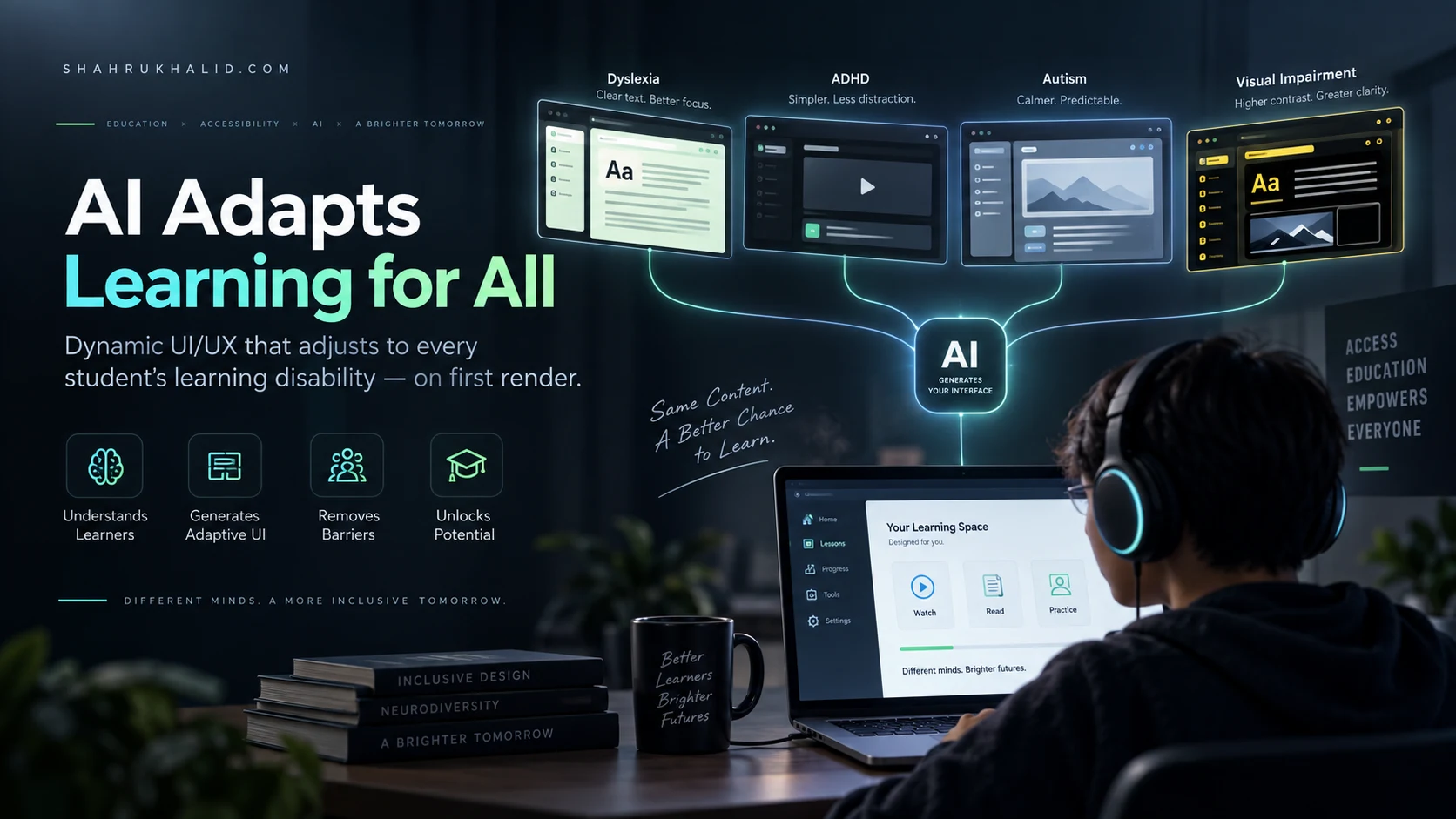
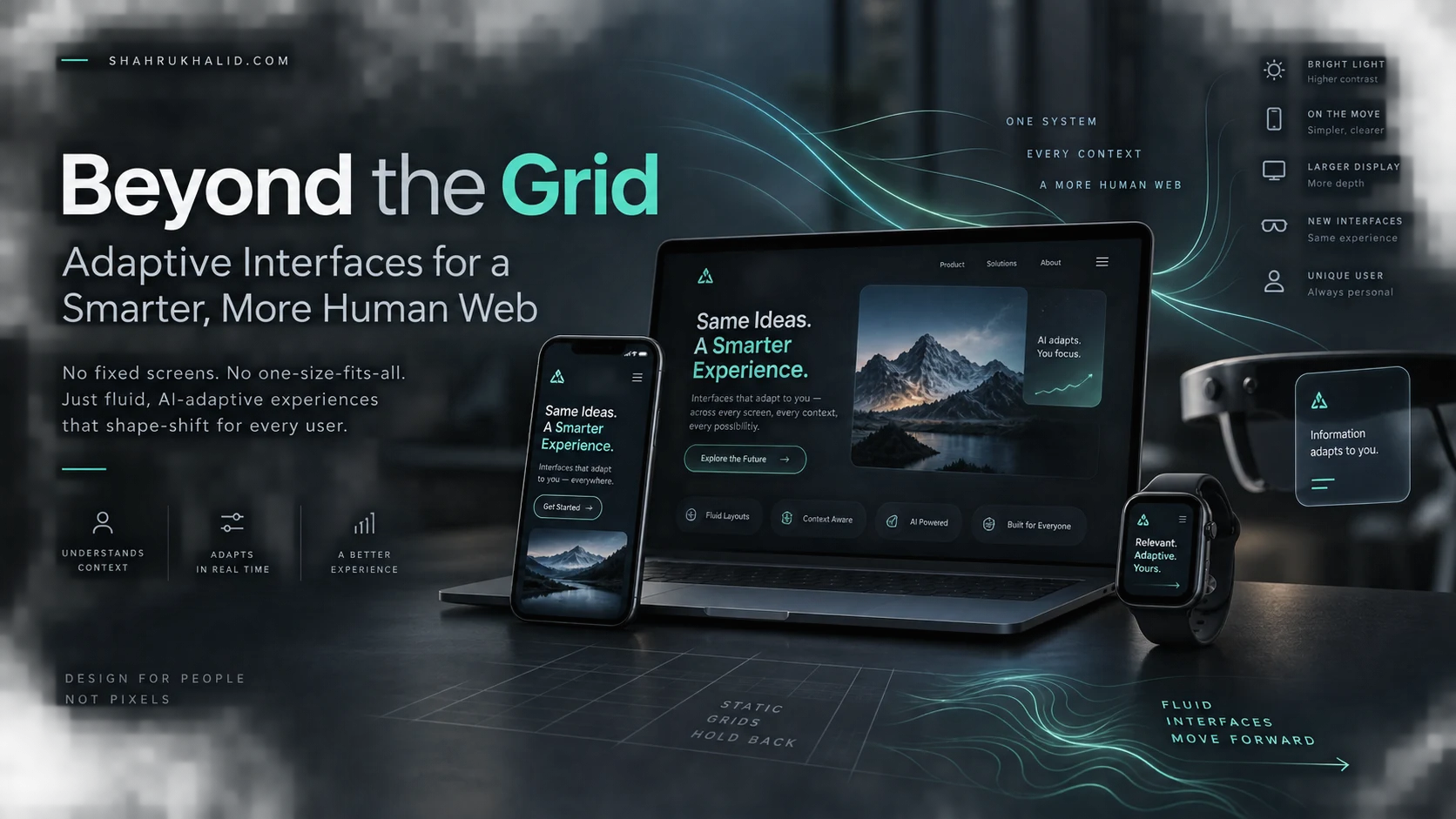
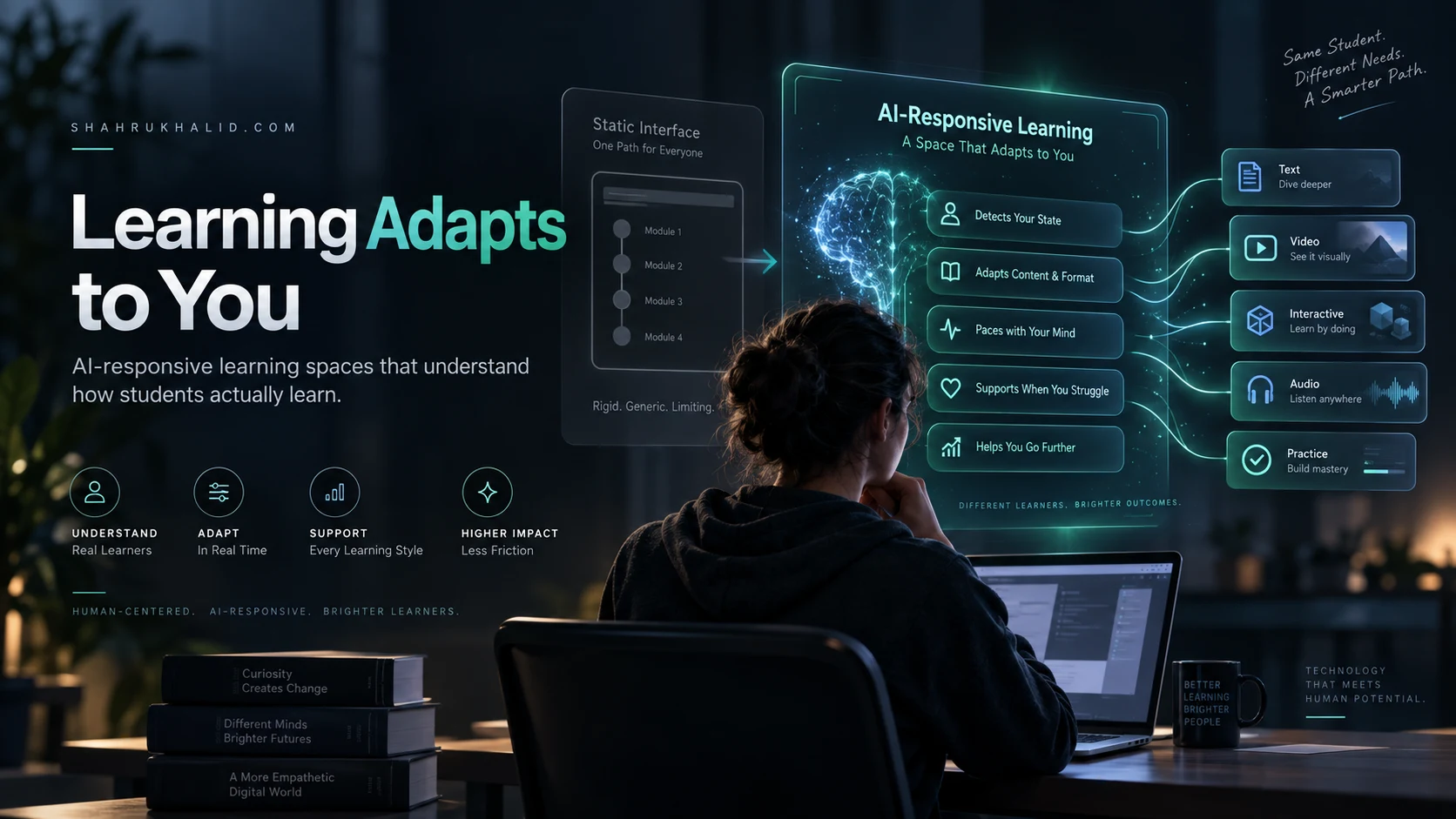
The problem with static design is its inherent lack of context. A student logging into a module at 2:00 AM after a grueling shift at work is not the same person as that same student logging in at 10:00 AM after a full night of rest. A static interface treats them identically. By moving toward adaptive learning design, we acknowledge that the interface is not a destination, but a conversation. We are moving away from the “page-turner” paradigm and toward “fluid environments”—spaces that detect cognitive fatigue, identify knowledge gaps in real-time, and shift their own layout, complexity, and modality to meet the learner where they are.
Architecting AI-Responsive Spaces: Beyond the UI
Designing an AI-responsive space requires a fundamental shift in how we perceive the role of the digital environment. Instead of a series of buttons and menus, think of the learning environment as an intelligent ecosystem. This ecosystem relies on three core pillars: environmental awareness, cognitive pacing, and responsive feedback loops.

Environmental awareness is about data collection that serves the learner, not the surveillance state. It involves monitoring how a student interacts with the content—not just what they click, but how long they hover, where they backtrack, and the patterns of their errors. When the system detects a student struggling with a concept, it doesn’t just provide a “retry” button. It dynamically alters the instructional delivery. It might switch from a text-heavy explanation to an interactive simulation, or it might break a complex concept into smaller, more digestible micro-challenges. This is the essence of adaptive learning design: the architecture of the space literally changes to remove the barrier to entry.

Cognitive Pacing and the End of One-Size-Fits-All
One of the most persistent myths in education is that there is a “correct” pace for learning. We see this in the architecture of traditional Learning Management Systems, which are often structured as linear progressions—Module 1, then Module 2, then Module 3. If you fail the quiz, you are punished with a repeat of the material. This is not empathy; it is algorithmic indifference.
An AI-responsive space understands the concept of cognitive pacing. It recognizes that some students need to “dwell” on a concept, exploring the periphery of the topic before diving into the core, while others need to be pushed toward higher-order synthesis. By utilizing AI to monitor the learner’s velocity, we can architect spaces that provide “scaffolded friction.” We introduce just enough challenge to keep the student in their zone of proximal development, without pushing them into the overwhelm that leads to abandonment. We aren’t making things “easier”; we are making them “right-sized” for the current state of the learner’s mind.
The Empathy-First Design Methodology
To transition from UI designer to architect of learning spaces, you must adopt a new design philosophy. This starts with “Empathy Mapping” that goes beyond demographics and focuses on cognitive states. You need to ask yourself: How does my system react when the user is frustrated? How does it signal support without being patronizing? How does it provide agency?
- Agency over Autonomy: Don’t just give students freedom; give them the tools to make informed choices about their learning path. An AI-responsive space should offer “pathway suggestions” based on the student’s mastery, allowing them to choose how they engage with the material.
- Fluid Modality: A student should never be trapped in a single format. If the system detects a decline in engagement, it should offer the content in an alternative format—audio, visual, or interactive—without requiring the student to navigate away from the primary learning objective.
- Contextual Feedback: Stop using generic “Correct” or “Incorrect” prompts. AI-responsive feedback should be diagnostic. It should explain the “why” behind an error and offer a conceptual bridge to the correct understanding, acting more like a tutor than a grader.
- Dynamic Complexity: The environment should be able to simplify or elaborate on information in real-time. If a student is grasping a concept quickly, the system should automatically introduce a layer of depth or a real-world application to keep the challenge relevant.
The Future of Adaptive Learning Design
As we move toward 2026 and beyond, the distinction between “content” and “environment” will continue to blur. We are entering an era where the digital space is a living entity. The goal of the learning architect is no longer to build a container for content, but to build a system that understands the learner’s journey as a narrative that is constantly being written.
This requires a departure from traditional design tools. We are no longer just sketching wireframes; we are defining the “logic of the space.” We are defining how the system should respond when a student shows signs of burnout, how it should celebrate milestones to build intrinsic motivation, and how it should recalibrate itself when a teaching strategy isn’t landing. This is the ultimate form of digital inclusion. By building spaces that are inherently responsive, we remove the systemic barriers that have historically excluded students with different learning styles, different backgrounds, and different cognitive needs.
Practical Takeaways for the Modern Architect
If you are ready to stop designing static interfaces and start building responsive learning environments, focus your efforts on these foundational shifts:
- Deconstruct the Linear Path: Challenge the “next button” mentality. Explore architectures that allow for non-linear exploration and branching logic based on learner mastery.
- Prioritize Cognitive Load Management: Audit your interfaces for unnecessary visual noise. Use AI-driven insights to hide or highlight information based on the learner’s current focus and comprehension level.
- Build for the “Struggle Moment”: Design specific, empathetic interventions for when a learner hits a wall. These should be moments of high-value, AI-generated support that guides them through the confusion rather than just re-presenting the same failed content.
- Embrace Data as a Dialogue: Treat your interaction data as a way to listen to your students. Use the patterns you see to iterate on the “logic” of your space, making it more intuitive and responsive over time.
The empathy deficit in technology is a design choice. Every time we build a rigid, static interface, we are choosing efficiency over humanity. By embracing adaptive learning design, we can move past this limitation. We can build spaces that do more than look good—they can learn, they can adapt, and most importantly, they can truly support the student in the messy, beautiful, and deeply personal act of learning.