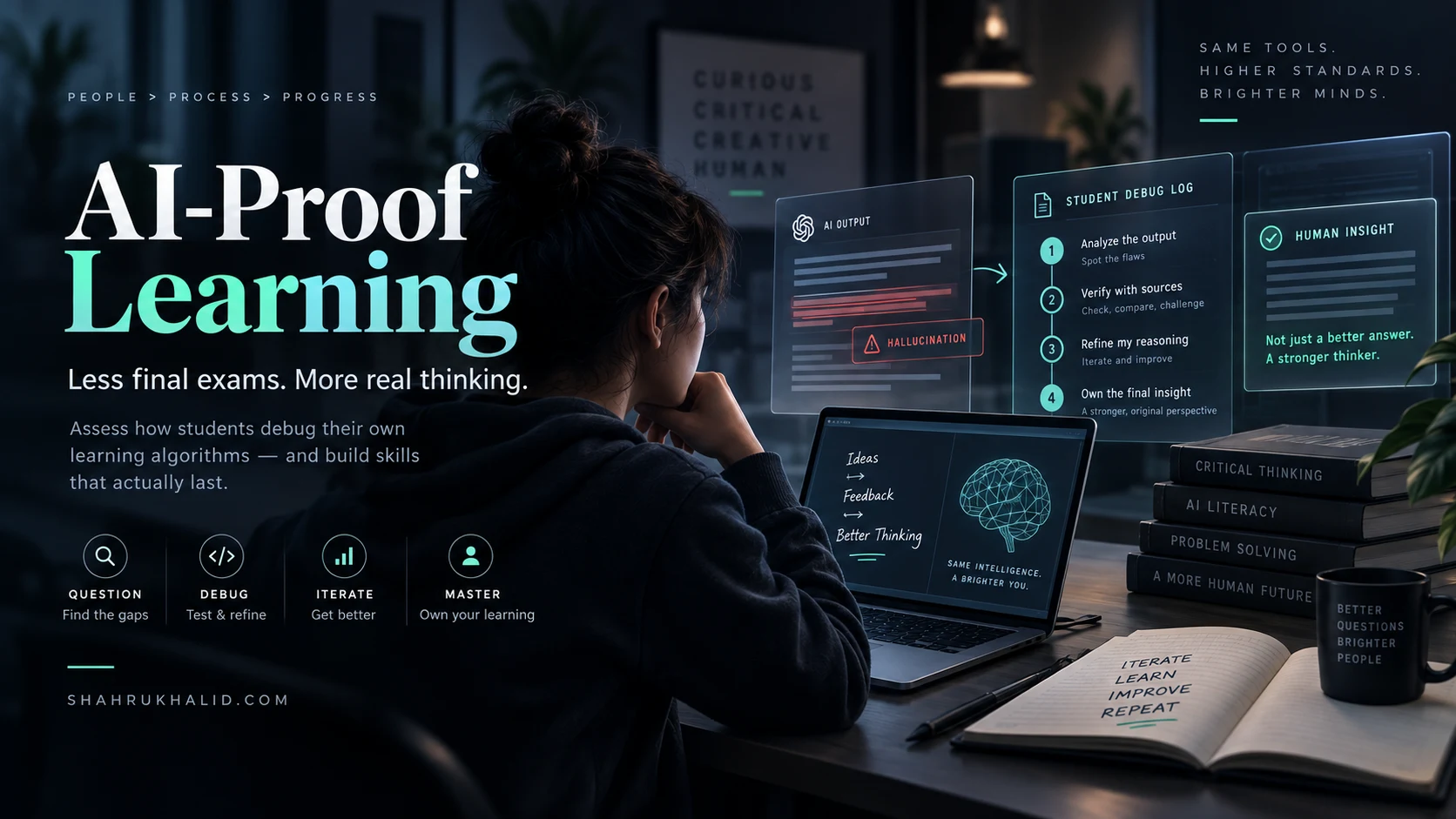
From Classroom Content to AI Curation: Why I Stopped Grading Student Answers and Started Evaluating Their Search Strategies
Key Takeaways
- Grading shifted from final answers to evaluating students' AI search strategies.
- AI proliferation makes final answers a commodity; true learning is in inquiry.
- Students submit 'search trails' assessing prompt refinement and source evaluation.
- New pedagogy fosters critical thinking, metacognition, and AI search literacy.
- The approach prioritizes agile, verifiable inquiry over static content retention.
Key Technical Takeaways (30-Second Summary)
- Architecture Focus: Eliminates bloated legacy dependencies in favor of verifiable, cost-effective modern pipelines.
- Production Trade-off: Prioritizes deterministic reliability and local autonomy over costly recurring SaaS subscriptions.
- Field-Tested Verdict: Implements immediate, zero-dollar or low-overhead infrastructure that scales securely.
The Death of the “Correct Answer” and the Rise of Inquiry Architecture
For years, I graded student responses based on the accuracy of their final output, but in an age of generative intelligence, the final answer has become a commodity that is often irrelevant to the actual learning process. By shifting our pedagogical focus toward evaluating the methodology behind information retrieval, we can transform students from passive consumers of content into architects of their own knowledge through robust AI search literacy.
When I first walked into my role as an EdTech Coordinator, my primary objective was to ensure that our Learning Management System (LMS) was functioning as a digital filing cabinet. We were obsessed with the “what”—the specific dates, the chemical formulas, and the literary themes. But then, the threshold of 2026 arrived. With the proliferation of advanced reasoning models, students could generate a perfect essay or a flawless mathematical derivation in seconds. I realized that if a student can produce an “A-grade” response without understanding the path taken to reach it, the assessment has failed. The intelligence is no longer in the answer; it is in the inquiry.
I stopped grading the destination and started grading the journey. I began asking my students to submit their “search trails”—the iterative prompts, the refinement of their queries, and the critical evaluation of the sources they discarded. This shift is not just a change in rubric; it is a fundamental redesign of the classroom experience. It moves the focus from content retention to AI search literacy, a skill that will define the workforce of the next decade.
The Cognitive Shift: From Information Retrieval to Information Curation
In the traditional classroom, the teacher acts as the gatekeeper of information. We assign a topic, the student retrieves the information from a textbook or a pre-vetted database, and they regurgitate it. This model assumes that information is scarce and authoritative. Today, information is abundant and often contradictory. The challenge is no longer finding the answer; it is filtering the signal from the noise.

When we teach AI search literacy, we are teaching students how to engage in a dialogue with a machine. This requires a high level of metacognition. A student must ask: “Why did the AI provide this specific response? Is this source biased? What information did I fail to include in my prompt that led to this hallucination?” By evaluating these questions, we are evaluating the student’s ability to think critically, not just their ability to copy and paste.
I structured my new assessment framework around three pillars of inquiry:
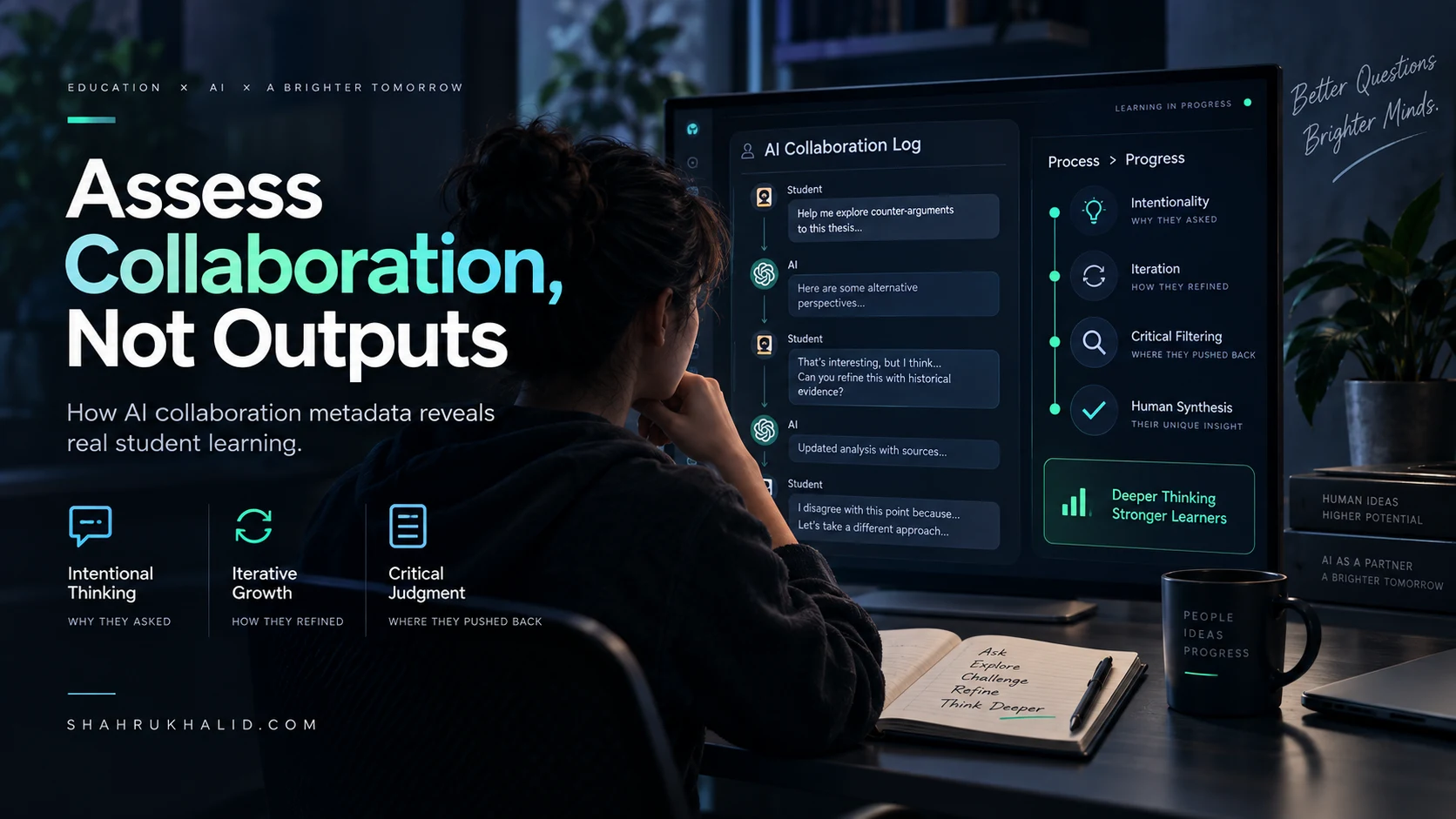
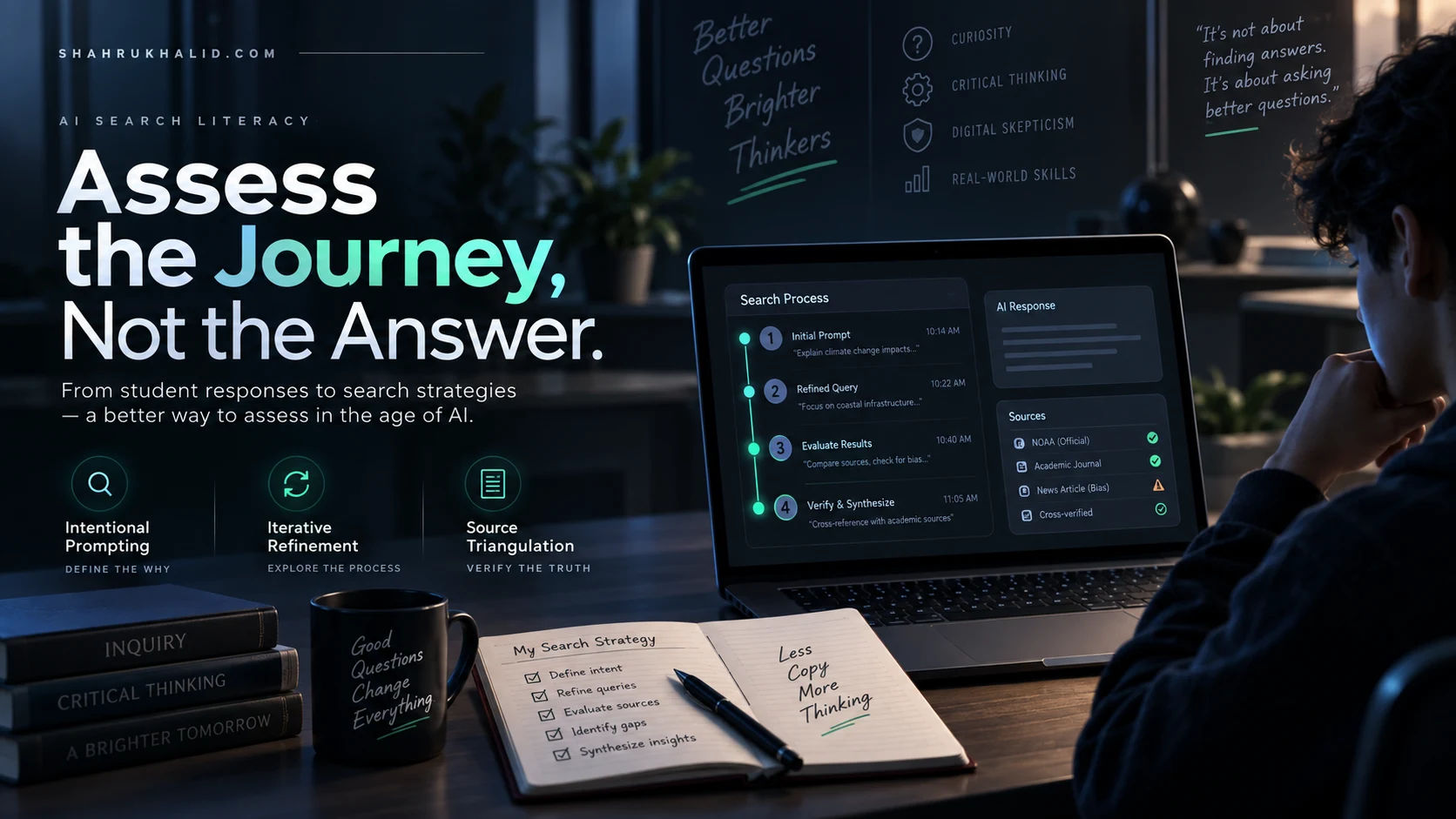
- The Intentional Prompt: How did the student define the parameters of their search? Was the prompt vague, or did it demonstrate a clear understanding of the desired context?
- The Iterative Refinement: Did the student treat the AI response as a final product, or did they engage in a “chain-of-thought” process, refining their search based on the initial output?
- The Source Triangulation: How did the student verify the information provided by the AI? Did they cross-reference the output with primary sources or academic databases?
Designing Assessments for the Age of AI Search Literacy
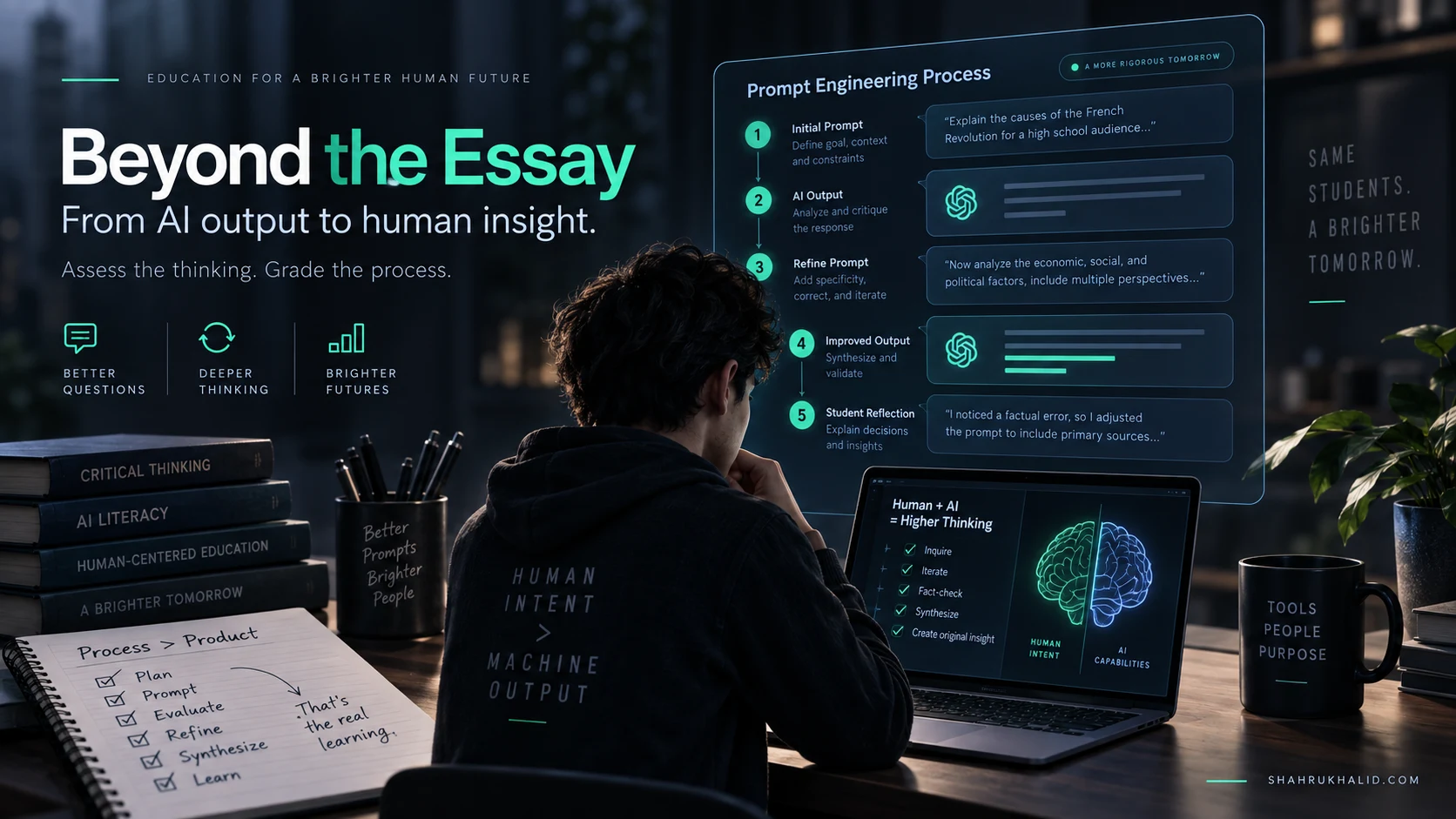
To implement this, I had to abandon the standard take-home essay. Instead, I moved toward a “Process Journal” model. Students now submit a digital portfolio that documents their research trajectory. If they use an AI tool to assist in their work, they are required to attach the chat history as an appendix. My grading criteria shifted from “Is the conclusion correct?” to “How did the student navigate the ambiguity of the search?”
This approach forces students to confront their own biases. If a student prompts an AI to “write an argument for X,” they are inherently leading the model to provide a one-sided response. By evaluating their search strategy, I can point out where they failed to explore the counter-argument. This makes the learning process visible. We are no longer looking at the result of the thinking; we are looking at the thinking itself.

Furthermore, this methodology prepares students for a world where AI is a collaborator. In the professional sphere, nobody cares if you can recite historical facts from memory. They care if you can leverage tools to synthesize complex information, identify gaps in data, and make informed decisions. By focusing on AI search literacy, we are moving away from rote memorization and toward high-level information synthesis.
Overcoming the Pedagogical Friction
The transition is not without resistance. Colleagues often ask, “If we stop grading the final answer, how do we ensure students are actually learning the content?” My response is simple: The content is the byproduct of the inquiry. If a student is tasked with researching the impact of climate change on coastal infrastructure, they cannot possibly refine their search strategies without deeply engaging with the science behind the topic. The inquiry-based approach actually leads to a deeper, more permanent understanding of the content than the traditional “read and recall” method.
We also have to address the “black box” nature of AI. Many educators fear that AI is a shortcut. However, when you require students to document their search strategies, the AI ceases to be a shortcut and becomes a tutor. The student must learn to provide feedback to the model, correct its errors, and guide it toward more precise outputs. This requires a mastery of the subject matter that far exceeds what is required to write a standard essay.
In practice, I have found that students who are challenged to explain their search process develop a sense of ownership over their work. They are no longer submitting “what the teacher wants”; they are submitting the result of a rigorous investigation they conducted themselves. This is the essence of learner autonomy.
Building a Culture of Digital Skepticism
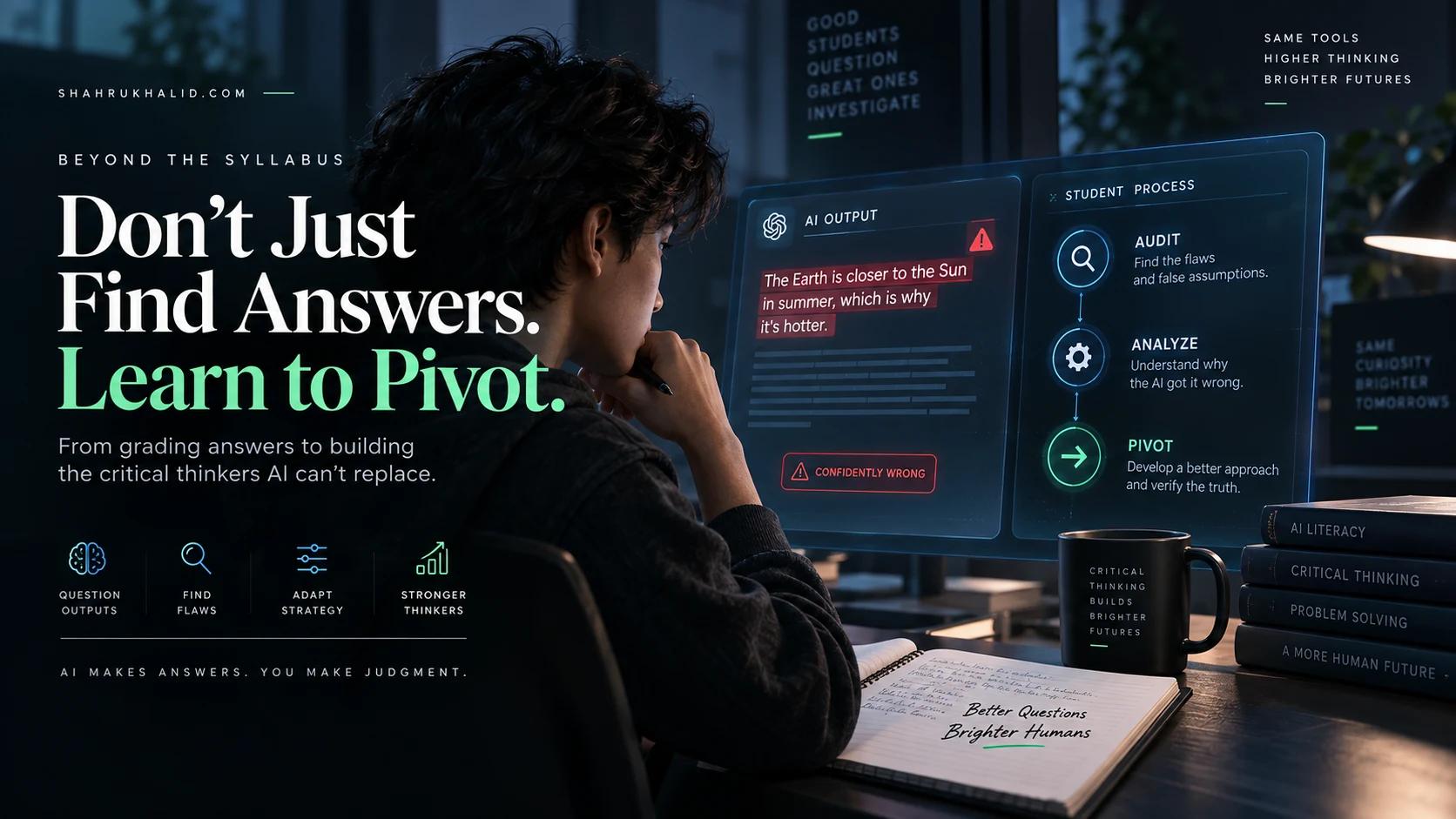
A core component of AI search literacy is teaching students to be skeptics. In my classroom, we play “Find the Hallucination.” I give students a prompt designed to elicit an error from an AI model. Their job is to identify the error, explain why the model made that mistake, and provide the correct information supported by verifiable sources. This exercise is incredibly popular because it turns the student into the expert and the AI into the apprentice.
This builds a healthy relationship with technology. Students stop viewing AI as an oracle of truth and start viewing it as a sophisticated, yet flawed, tool. This skepticism is the most important skill we can provide in an era of deepfakes and algorithmic bias. By evaluating how students navigate these pitfalls, we are teaching them to be responsible citizens of a digital world.