Beyond the Gradebook: How I Swapped Static Assignments for Real-World AI Simulations to Finally Teach Students How to Solve Problems That Don’t Have a Single Answer
Key Takeaways
- AI simulations replace static assignments, fostering problem-solving for ambiguous, real-world scenarios.
- AI acts as a dynamic sparring partner, shifting students to active solution architects.
- Learning occurs through role-playing and negotiating conflicting interests in AI-driven simulations.
- Modern infrastructure prioritizes verifiable, cost-effective pipelines over bloated legacy dependencies.
- System design emphasizes deterministic reliability, local autonomy, and low-overhead scalability.
Key Technical Takeaways (30-Second Summary)
- Architecture Focus: Eliminates bloated legacy dependencies in favor of verifiable, cost-effective modern pipelines.
- Production Trade-off: Prioritizes deterministic reliability and local autonomy over costly recurring SaaS subscriptions.
- Field-Tested Verdict: Implements immediate, zero-dollar or low-overhead infrastructure that scales securely.
The Death of the Static Assignment: Why Our Gradebooks Are Failing the Future
For decades, our educational systems have operated on the premise that every problem has a singular, verifiable answer hidden in the back of a textbook, but the modern professional landscape—defined by ambiguity and rapid technological shifts—demands a completely different cognitive architecture. As an EdTech coordinator, I have witnessed the transition from static, rote-memorization tasks to dynamic, AI-driven simulations that force students to grapple with nuance, ethical trade-offs, and the messy reality of solving problems that have no “correct” solution.
The Cognitive Trap: Moving Beyond Rote Memorization
The traditional gradebook is a relic of the industrial age, designed to measure compliance and accuracy in closed systems. When we assign a prompt that asks a student to define a historical event or solve a math equation with one distinct output, we are training them to be human calculators. However, the true utility of AI in education lies not in its ability to provide answers, but in its capacity to act as a high-fidelity sparring partner. By replacing static essays with real-world AI simulations, we shift the student’s role from passive consumer of facts to active architect of solutions.
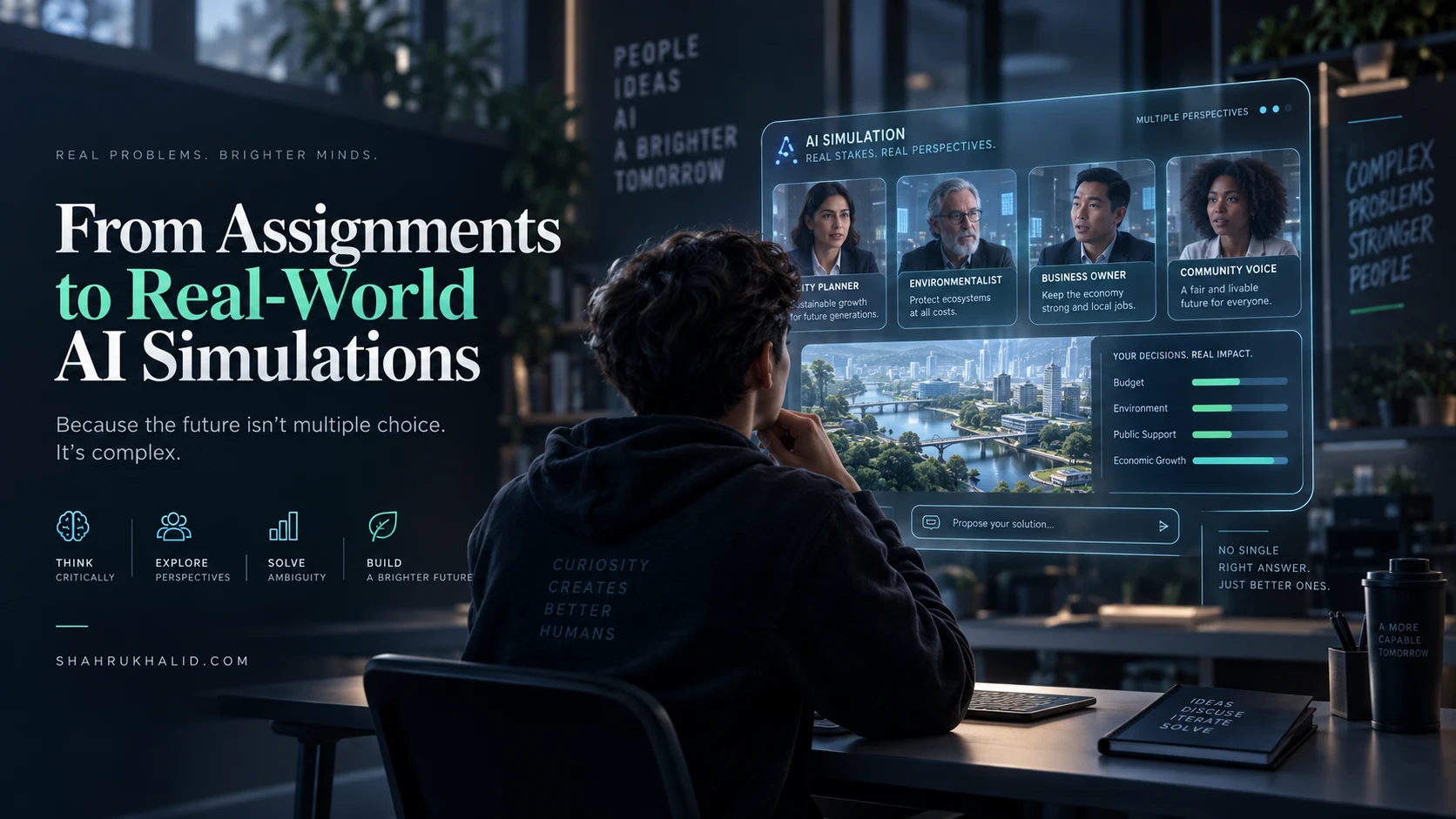
In a simulated environment, a student isn’t just writing about climate change; they are role-playing as a city planner negotiating with stakeholders who have conflicting interests. There is no single “right” policy that satisfies the budget, the environmentalists, and the local business owners. This is where the learning happens: in the friction of the trade-off. When a student uses an AI tool to model these competing perspectives, they learn to interrogate their own biases and understand that in the real world, “correct” is often replaced by “most viable.”
Designing the Simulation: The Architecture of Ambiguity
To move away from the static assignment, you must first design for complexity. This requires a shift in how we structure our classroom technology. Instead of asking for a summary of a text, we ask the student to use AI to generate a persona—a skeptical stakeholder or a challenging client—and then engage in a live, high-stakes negotiation. The goal is not to “beat” the AI, but to reach a consensus that accounts for the variables provided.

The pedagogy here is centered on the concept of “productive struggle.” When you integrate AI in education, the AI serves as the baseline for the simulation environment. You provide the constraints—resource scarcity, time limits, or conflicting data sets—and the student must navigate these constraints. Because the AI can adapt to the student’s specific choices, every simulation is unique. Two students will never have the same experience, and therefore, they cannot rely on a single answer key. The gradebook then evolves from a spreadsheet of points to a portfolio of decision-making logs and reflective critiques.
The Role of the EdTech Coordinator in Facilitating Change
Implementing this level of learning innovation requires more than just access to software; it requires a fundamental shift in teacher mindset. As an EdTech coordinator, my role is to help educators see that their value is not in being the “source of truth,” but in being the “architect of the environment.” We are moving from being the lead actor on stage to becoming the director of a complex, immersive play.
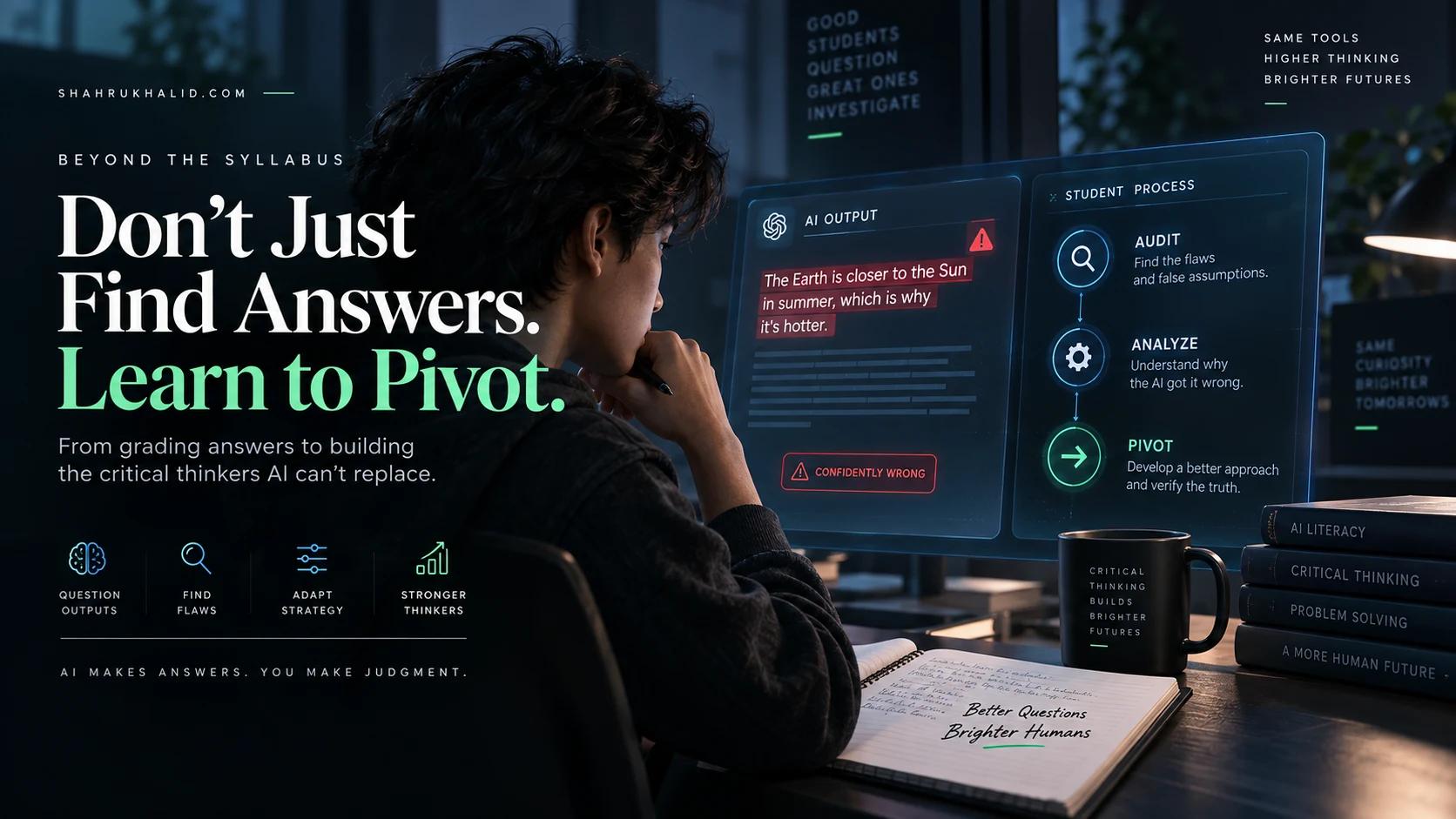
The transition starts with small, scalable experiments. For instance, instead of a standard science report, a teacher might use AI to simulate a crisis in a local ecosystem. Students must propose a solution, present it to the AI-driven “city council,” and defend it against rigorous cross-examination. The success of this model is measured not by the student’s final score, but by the depth of their reasoning and their ability to pivot when the simulation introduces new, unpredictable data. This is the hallmark of AI in education—it allows for the rapid, real-time iteration that was previously impossible in a classroom setting.
Navigating the Ethical and Technical Hurdles
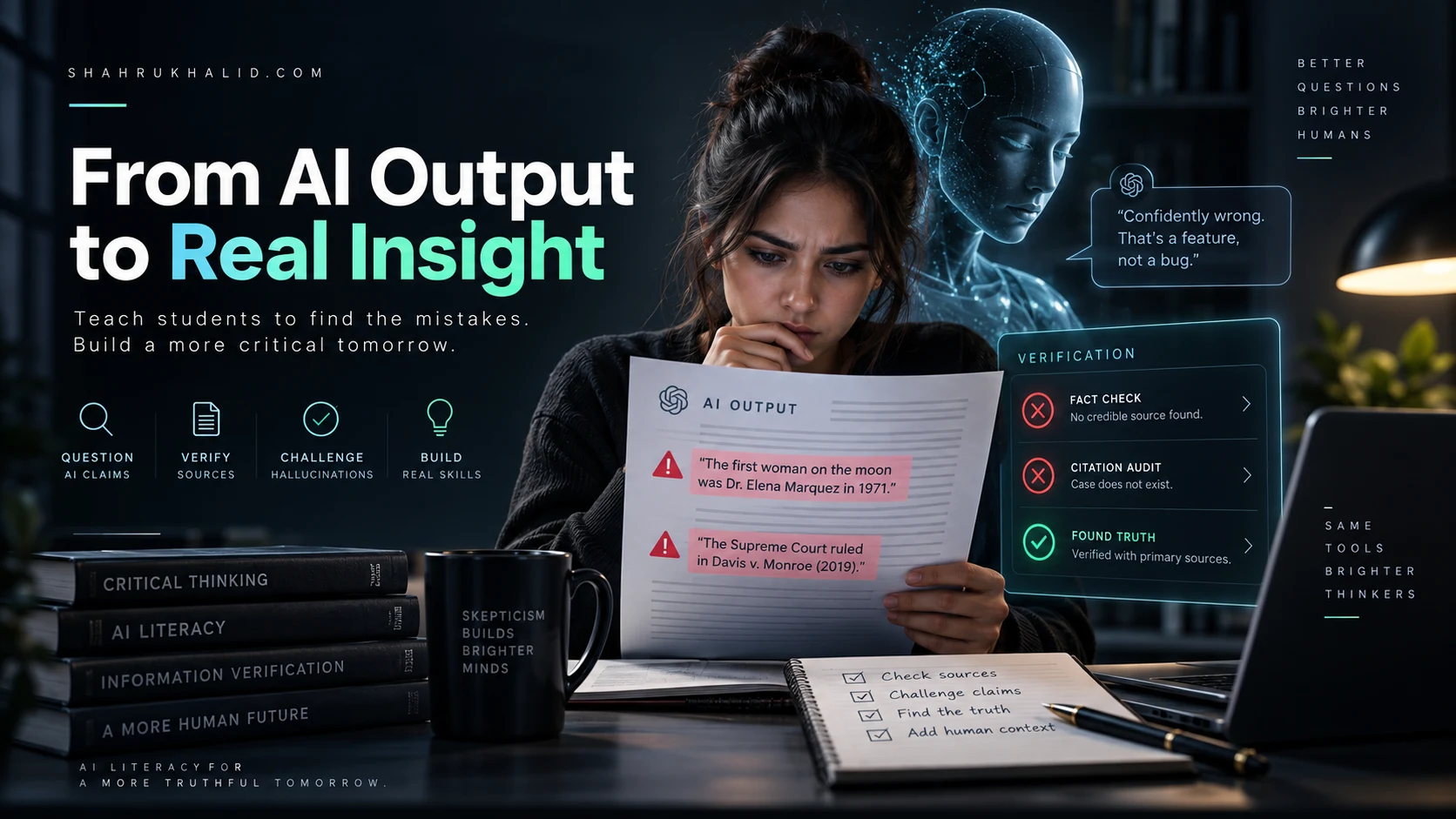
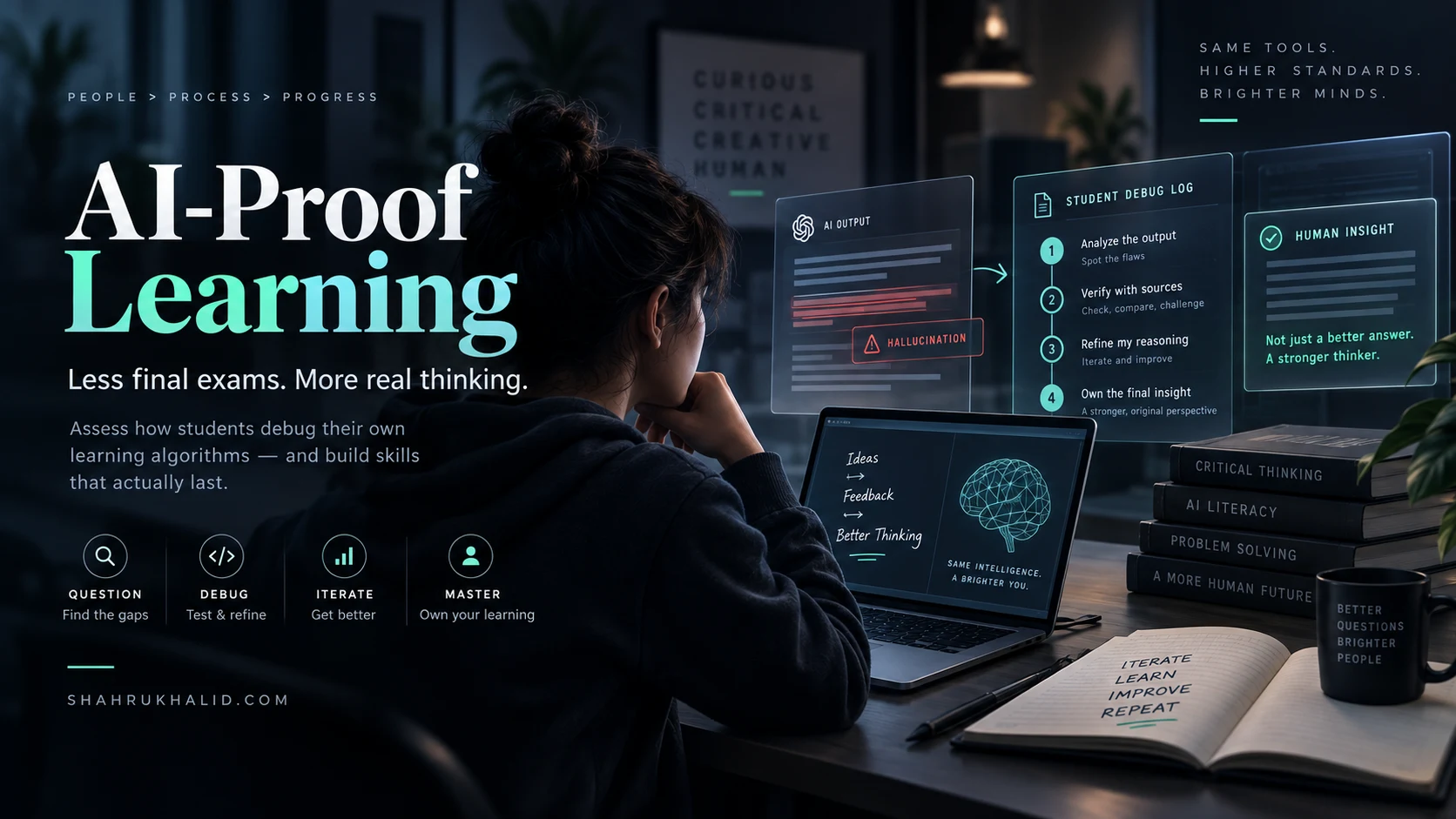
Of course, introducing AI into the classroom is not without its challenges. We must be transparent about data privacy, the potential for algorithmic bias, and the necessity of maintaining human oversight. However, these challenges are actually part of the curriculum. When we teach students how to use these tools, we are also teaching them how to be critical consumers of technology. If an AI simulation produces a biased or illogical response, that is not a failure of the lesson; that is a teaching moment.
We must teach students to interrogate the AI, to ask “Why did you suggest this?”, and to identify the limitations of the model. This builds a level of digital literacy that is far more valuable than any static content knowledge. By treating the AI as a flawed but powerful collaborator, we prepare students for a workforce where they will be expected to work alongside autonomous systems, directing them toward ethical and effective outcomes.
Redefining Assessment: The Portfolio of Process
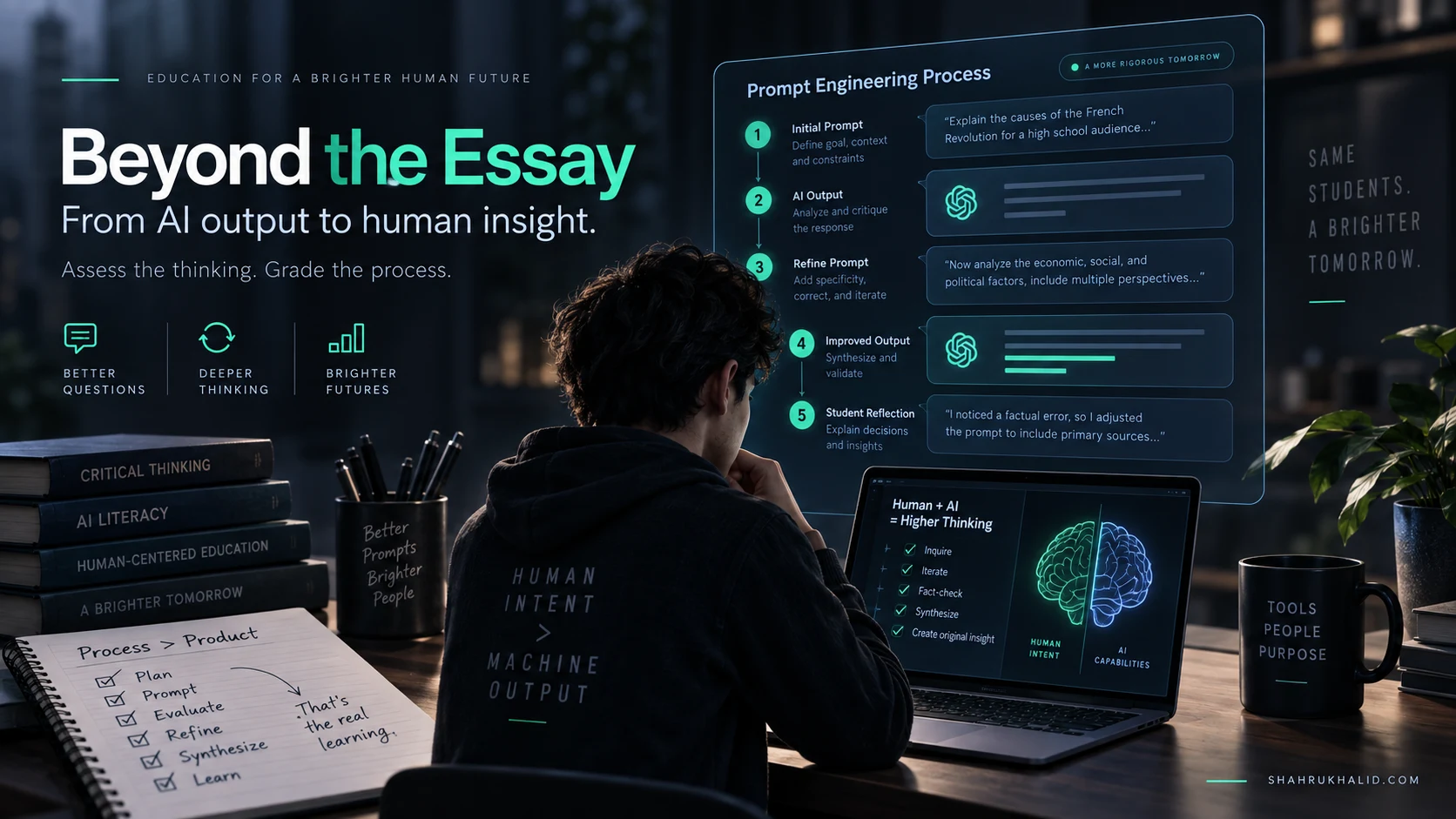
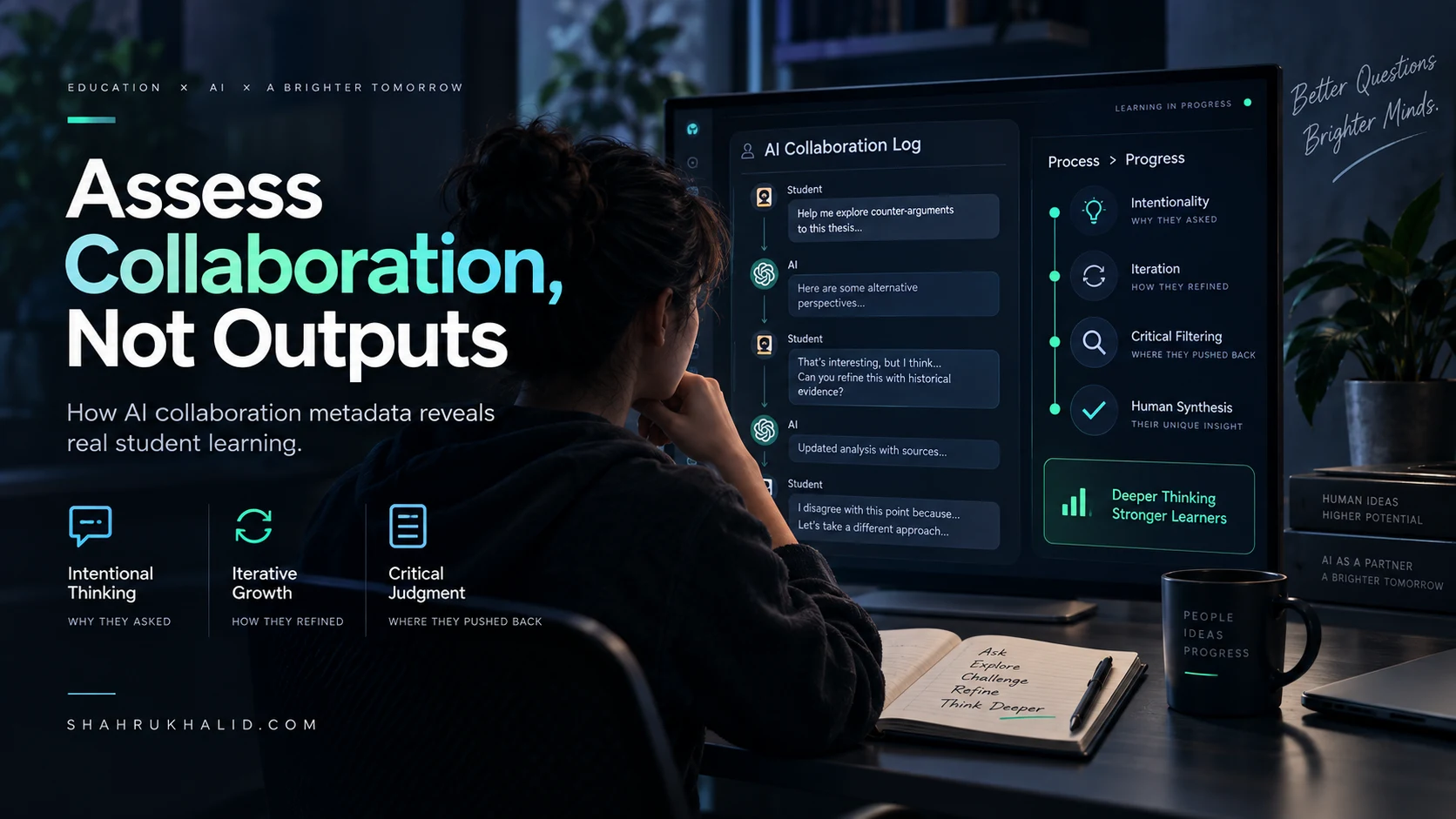
If we are going to move beyond the gradebook, we need a new way to measure success. Static assignments are easy to grade because they are binary—either the answer is there, or it isn’t. Evaluating a simulation is more nuanced. I recommend a “process-over-product” assessment framework. In this model, the student submits a record of their simulation, including their initial strategy, the challenges they encountered, how they adjusted their approach based on the AI’s feedback, and a final reflection on what they learned about the problem’s complexity.
This approach rewards curiosity, persistence, and critical thinking. It turns the classroom into a laboratory for problem-solving rather than a factory for output. When we stop obsessing over the “correct” answer, we open the door to true mastery—the ability to apply knowledge in dynamic, unpredictable contexts.