
The 2026 Students Secret Weapon: Your International K-12 Blueprint for Dominating SIS, IB & Digital Learning
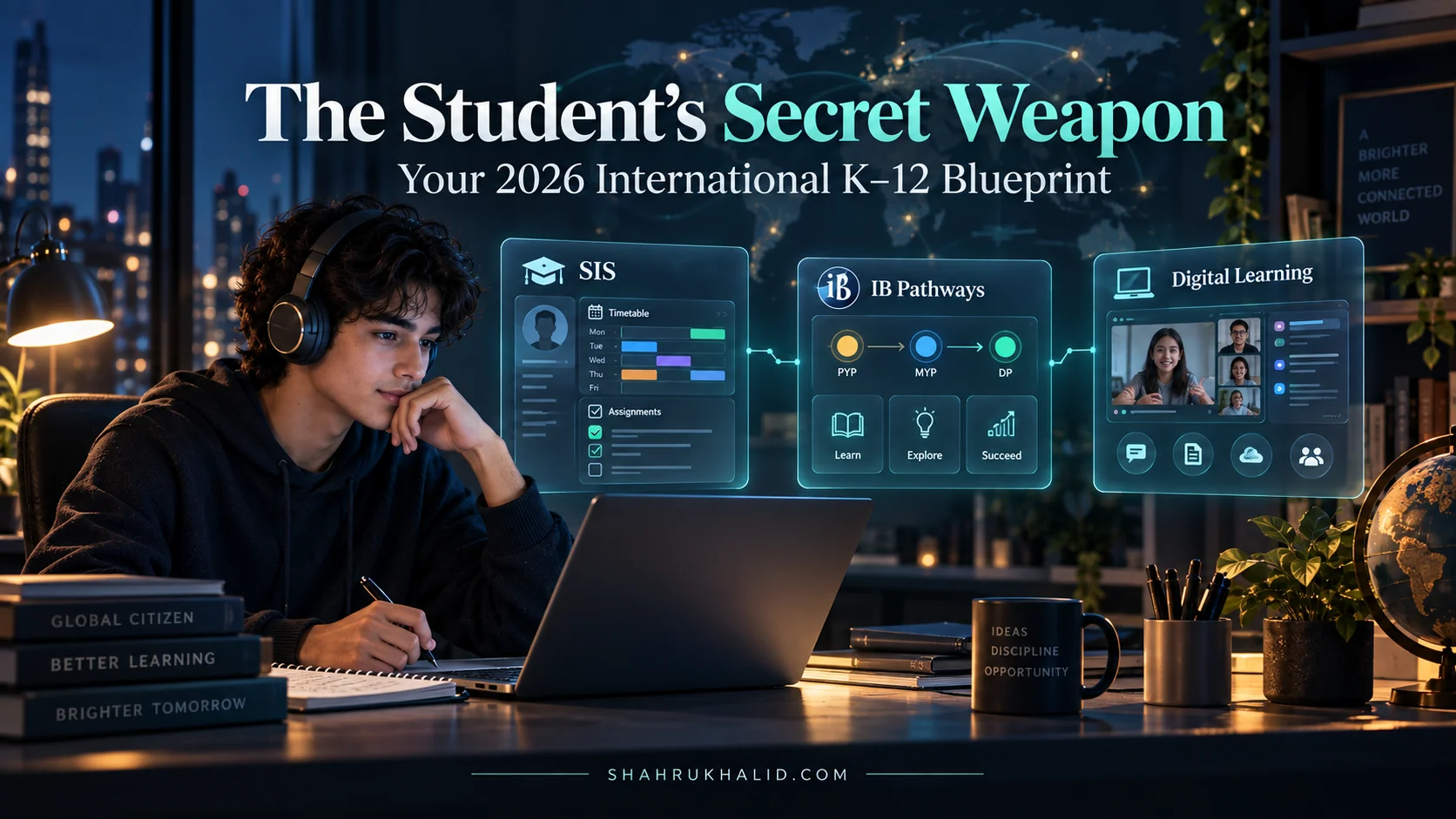
Key Takeaways
- The blueprint serves as an academic GPS for navigating the international K-12 landscape by 2026.
- SIS acts as your academic command center, centralizing grades, schedules, and communication.
- IB cultivates critical thinking, inquiry, and global skills, preparing students for higher education.
- Mastering SIS, IB, and digital learning is crucial for academic triumph by 2026.
- The strategy empowers students to dominate their international K-12 educational journey.
Welcome to the starting line of your incredible journey! Think of this masterclass as your personal academic GPS, designed to navigate the exciting, sometimes challenging, terrain of international K-12 education. By 2026, the way we learn, interact, and achieve will be even more intertwined with technology and global perspectives. My aim here is to lay down the foundational concepts, making sure we’re all speaking the same language, and showing you why this blueprint is absolutely essential for your International K-12 success.
Understanding Your Academic Ecosystem: SIS, IB, and Digital Learning
Let’s demystify the core components of your 2026 educational toolkit. These aren’t just buzzwords; they are powerful allies waiting to be fully leveraged.
- Student Information System (SIS): Your Academic Command Center
Imagine your school’s entire operational brain, but specifically tailored for you. That’s your SIS. It’s a sophisticated software system that manages everything from your grades and attendance records to your course schedules, assignments, and even communication with teachers and parents. For a student, your SIS is your primary portal to your academic life. It’s where you’ll check your progress, find important announcements, and submit certain assignments. Think of it like the dashboard of a high-performance car – it gives you all the vital information you need to drive successfully.
- Why it’s essential for 2026: As schools become more data-driven and personalized, your SIS will be the central hub for your individualized learning path. Mastering it means you’re always informed and proactive.
- International Baccalaureate (IB) Program: Your Global Passport to Learning
The IB program is a world-renowned educational framework designed to develop students who are intellectually, emotionally, personally, and ethically well-rounded. It’s not just about what you learn, but how you learn and how you apply that learning to the world. The IB curriculum, whether it’s the Primary Years Programme (PYP), Middle Years Programme (MYP), or Diploma Programme (DP), focuses on critical thinking, inquiry-based learning, and fostering an international mindset.
- How does IB curriculum benefit K-12 students globally? It cultivates skills like research, communication, collaboration, and self-management – skills that are universally valued in universities and workplaces. It encourages you to ask “why” and “how,” not just “what,” preparing you for complex global challenges. It’s a rigorous, yet incredibly rewarding, path that truly prepares you for higher education and beyond, making you a competitive candidate on the global stage.
- Digital Learning: Your Infinite Classroom
This is perhaps the most dynamic and rapidly evolving component. Digital learning encompasses all the ways technology enhances and delivers education. This includes online platforms, educational apps, virtual reality (VR) simulations, artificial intelligence (AI) powered tutors, collaborative documents, and even digital textbooks. It’s about using tools that extend your learning beyond the traditional classroom walls and textbooks.
- Why it’s essential for 2026: The pandemic accelerated digital transformation in education, and there’s no turning back. By 2026, digital fluency won’t just be an advantage; it will be a prerequisite for effective learning and collaboration. It’s how you’ll access resources, connect with peers across continents, and present your work in innovative ways.
The “Why Now?” – Your 2026 Advantage
You might be asking, “Mahnoor, why is this blueprint so critical now?” The answer lies in the convergence of these three powerful forces. In 2026, students who excel won’t just be those who work hard; they’ll be those who work smart by strategically integrating their SIS, IB methodologies, and digital tools.
Imagine a student who:
- Regularly checks their SIS for assignment feedback and upcoming deadlines, staying ahead of the curve.
- Applies IB’s inquiry-based approach to a research project, using digital tools to gather diverse sources and collaborate with peers globally.
- Leverages AI-powered writing assistants to refine their essays or data visualization tools to present complex information clearly.
This isn’t a futuristic dream; it’s the reality for students who master this International K-12 Strategy. It’s about moving from passively receiving information to actively orchestrating your learning experience. This integrated approach is the secret sauce for dominating SIS, IB & Digital Learning, ensuring your International K-12 success.
Core Principles of Your Blueprint
Before we dive into the practicalities, let’s establish some guiding principles:
- Proactive Engagement: Don’t wait for information to come to you. Seek it out, whether it’s on your SIS or through digital research.
- Strategic Integration: See SIS, IB, and digital tools not as separate entities, but as interconnected parts of a powerful system.
- Continuous Skill Development: The digital landscape changes rapidly. Embrace lifelong learning of new tools and techniques.
- Critical Digital Citizenship: Use digital tools responsibly, ethically, and with a discerning eye for information quality.
- Personalized Learning Ownership: This blueprint puts you in the driver’s seat of your education.
By embracing these principles, you’re not just preparing for exams; you’re preparing for a future where adaptability and digital literacy are paramount. This is how you build a robust International K-12 Strategy for lasting success.
Prerequisites & Complete Environment Setup
Alright, now that we understand why this blueprint is crucial, let’s get down to the practicalities of setting up your personal learning environment. Think of this module as preparing your academic workspace – ensuring you have all the right tools, organized and ready to go. This isn’t about coding or complex IT; it’s about making sure your digital and physical spaces are optimized for your International K-12 success.
Your Digital Toolkit: Essential Software & Accounts
Before you can truly leverage SIS, IB, and digital learning, you need the right foundational tools. Most international schools provide access to many of these, but knowing what they are and how to use them is key.
- School-Provided Accounts & Platforms:
- Your SIS Login: This is non-negotiable. Ensure you have your username and password for your school’s Student Information System. Examples include ManageBac (popular for IB schools), PowerSchool, Blackbaud, or Veracross.
- Action: Log in regularly. Explore all sections: grades, attendance, assignments, announcements, communication tools. Get comfortable with its interface.
- Learning Management System (LMS) Login: Many schools use an LMS like Google Classroom, Canvas, Moodle, or Schoology. This is where teachers post assignments, resources, and often collect submissions.
- Action: Familiarize yourself with each course’s page. Understand how to submit assignments, participate in discussions, and access course materials.
- Email Account: Your school email is your official communication channel.
- Action: Check it daily. Set up notifications if possible. Learn to use it professionally.
- Cloud Storage: Most schools provide access to cloud storage like Google Drive (part of Google Workspace) or OneDrive (part of Microsoft 365). This is crucial for saving your work, collaborating, and accessing files from anywhere.
- Action: Understand how to create, share, and organize files and folders. Learn about version history – it can save you from accidental deletions!
- Personal Productivity Tools (Free/Freemium Options):
- Note-Taking Apps: Beyond pen and paper, digital note-taking is powerful.
- Examples: Google Keep, Microsoft OneNote, Notion, Evernote.
- Setup Tip: Choose one and stick with it. Create a system for organizing notes by subject or project.
- Calendar/Planner Apps: Essential for managing IB deadlines and your overall schedule.
- Examples: Google Calendar, Apple Calendar, Microsoft Outlook Calendar.
- Setup Tip: Sync your school calendar (if available) and manually add all IB deadlines, project due dates, and personal commitments. Use color-coding!
- Reference Management Tools (for IB DP/MYP): As you delve into research, these become invaluable.
- Examples: Zotero, Mendeley (for older students).
- Setup Tip: Learn the basics of how to capture sources and generate bibliographies. This will be a lifesaver for Extended Essays and Internal Assessments.
Configuring Your Physical Workspace: The Analog Foundation
While we’re focusing on digital, your physical environment plays a huge role in effective learning.
- Dedicated Study Space: A quiet, well-lit area free from distractions.
- Configuration: Keep it tidy. Ensure good ergonomics (chair, desk height).
- Reliable Internet Connection: Non-negotiable for digital learning.
- Verification: Test your internet speed regularly. Have a backup plan (e.g., mobile hotspot) if possible.
- Backup Strategy: What if your laptop crashes?
- Configuration: Regularly back up important files to your cloud storage and an external hard drive. This is your digital safety net.
Directory Layout & File Organization: The Digital Filing Cabinet
This is where many students stumble. A well-organized digital file system is paramount for efficiency, especially with the volume of work in IB programs.
- Cloud Storage Structure (e.g., Google Drive/OneDrive):
- Create a main folder for the current academic year (e.g., `2025-2026 Academic Year`).
- Inside, create sub-folders for each subject (e.g., `IB English HL`, `IB Math SL`, `Science`, `History`).
- Within each subject folder, create sub-folders for different types of work (e.g., `Assignments`, `Notes`, `Resources`, `Past Papers`, `IA/EE`).
- Example Structure:
└── 2025-2026 Academic Year/
├── IB English HL/
│ ├── Assignments/
│ ├── Notes/
│ └── Resources/
├── IB Math SL/
│ ├── Practice Problems/
│ └── Formula Sheets/
├── Extended Essay/
│ ├── Research/
│ ├── Drafts/
│ └── Final Submission/
└── General School Info/
├── Timetable/
└── Important Contacts/
- Naming Conventions: Be consistent!
- Suggestion: `Subject_AssignmentName_YourName_Date.docx` (e.g., `English_LiteraryAnalysis_MahnoorTariq_2025-10-26.docx`)
- For IB-specific work, include the component: `EE_ResearchQuestion_Draft1_MahnoorTariq.docx`
Verification: Are You Ready?
Before moving on, take a moment to verify your setup.
- Can you log into your SIS and LMS without issues?
- Have you explored all sections of your SIS?
- Do you know where your school’s digital learning resources are located?
- Is your cloud storage organized with a clear folder structure?
- Do you have a reliable note-taking and calendar app set up?
- Is your physical study space conducive to focused work?
If you’ve answered yes to these, you’ve successfully completed your environment setup! You’ve laid a strong foundation for your International K-12 Strategy and are well on your way to optimizing SIS for international schools and digital learning K-12 strategies.
Core Implementation Architecture & Workflow Blueprint
Now that your academic environment is set up, it’s time to understand how all these pieces – your SIS, the IB framework, and your digital tools – fit together to create a powerful, seamless workflow. Think of this as the “master plan” for your academic operations. We’re going to visualize how you, the student, interact with these systems to achieve maximum International K-12 success.
The Student-Centric Workflow: A Visual Blueprint
Let’s imagine your academic journey as a series of interconnected steps, where each component plays a vital role. I like to visualize this as a dynamic flow, much like a well-oiled machine.
Here’s a conceptual “visual card structure” representing your core workflow:
Card 1: SIS (Student Information System)
Role: Central Hub for Official Info
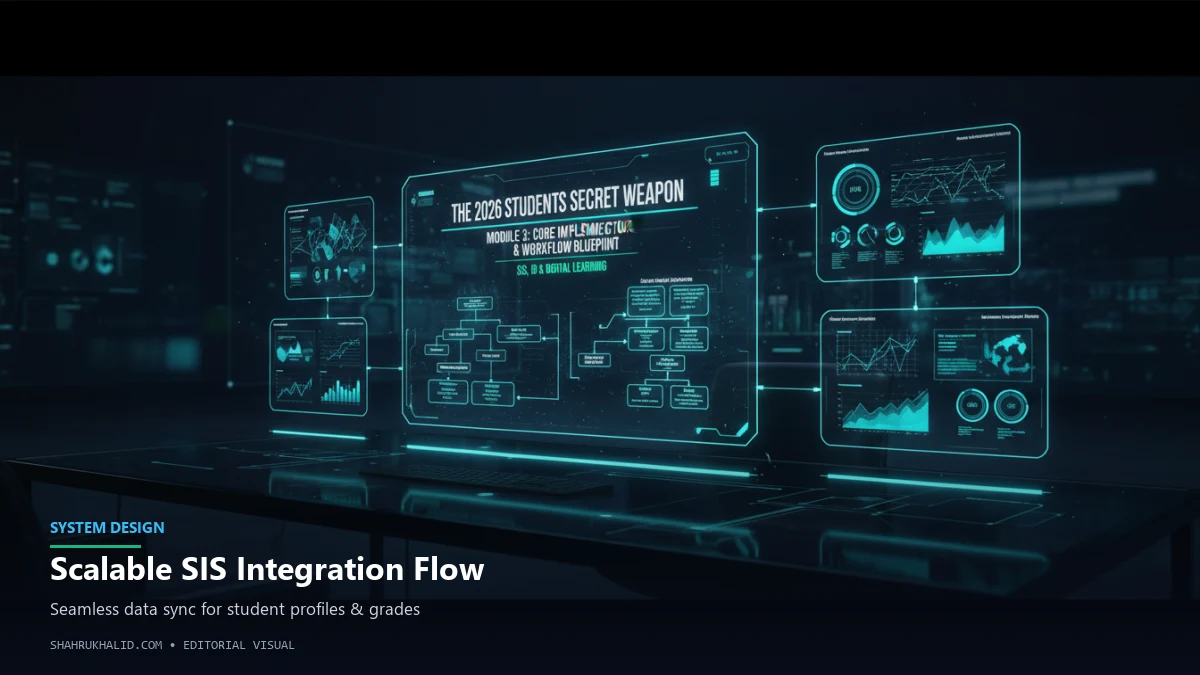
- Access Grades & Feedback
- View Assignment Deadlines
- Check Attendance & Schedule
- Receive School Announcements
- Communicate with Teachers (Official)
Your primary source of truth for academic status.
Card 2: IB Program Framework
Role: Guiding Principles & Learning Approach
- Inquiry-Based Learning
- Critical Thinking & Research Skills
- Global Contexts & Intercultural Understanding
- Personal Development (CAS, TOK, EE)
- Assessment Criteria & Rubrics
Shapes how you approach tasks and learning.
Card 3: Digital Learning Tools
Role: Execution & Enhancement
- Research & Information Gathering (Databases, AI tools)
- Collaboration (Shared Docs, Video Conferencing)
- Creation & Presentation (Design tools, Multimedia)
- Organization (Note-taking, Calendars, File Storage)
- Personalized Practice (Adaptive learning apps)
Your hands-on instruments for learning and producing.
↓ INTERCONNECTION & SYNERGY ↓
Card 4: YOU – The Empowered Student
Outcome: Informed Decisions, High-Quality Work, Global Competence
- Proactive Deadline Management
- Deep Research & Critical Analysis
- Effective Collaboration & Communication
- Innovative Problem Solving
- Self-Regulated Learning
You are the orchestrator, leveraging each component for optimal learning.
The Interconnected Workflow Explained
Let’s break down how these cards interact in a typical academic scenario, illustrating how to excel in international K-12 programs.
- Initiation (SIS & IB):
- You receive a new assignment or project notification via your SIS or your teacher’s LMS. This notification will include the due date, specific requirements, and often links to resources.
- Simultaneously, you immediately frame this task through your IB Program lens. What are the “Approaches to Learning” (ATL) skills involved? What are the assessment criteria? Which global context does it fit into? Is it an inquiry-based task?
- Planning & Research (IB & Digital Learning):
- Using the IB framework, you formulate research questions or a project plan.
- You then turn to your Digital Learning Tools. This might mean:
- Searching academic databases for credible sources.
- Using AI tools (like those developed by Google, as referenced in `ai.google.dev/docs`) to brainstorm ideas, summarize complex texts (but always verify!), or generate initial outlines. Remember, these are tools to assist your thinking, not replace it.
- Collaborating with peers on a shared document in your cloud storage.
- Taking detailed notes using your preferred note-taking app, linking them to sources.
- Creation & Development (Digital Learning & IB):
- You start drafting your work using word processors, presentation software, or specialized design tools, all part of your Digital Learning Tools.
- Throughout this process, you constantly refer back to the IB assessment criteria and rubrics. Am I demonstrating critical thinking? Is my argument well-supported? Am I reflecting on my learning?
- You might use digital tools for data analysis, creating graphs, or embedding multimedia elements to enhance your presentation.
- Review & Refinement (SIS, IB & Digital Learning):
- Before submission, you review your work. You might use digital grammar checkers or peer-review tools.
- You check your SIS or LMS one last time for any updates or specific submission instructions.
- You ensure your work aligns with IB academic honesty policies and properly cites all sources using your reference management tool.
- Submission & Feedback (SIS & Digital Learning):
- You submit your completed work through the designated portal, often linked from your SIS or directly on your LMS.
- Once graded, feedback is typically provided through your SIS or LMS. You access this feedback digitally, reflect on it (an important IB skill!), and integrate it into future learning.
This cyclical process ensures that you’re not just completing tasks, but actively engaging with your learning, leveraging technology, and developing the holistic skills championed by the IB. This integrated approach is the essence of a powerful International K-12 Strategy.
The Power of Integration: A Diagram Grid
Let’s visualize this integration with a simple grid, showing how each element strengthens the others.
This blueprint is not just theoretical; it’s a practical guide for how to optimize SIS for international schools and leverage digital learning K-12 strategies within the demanding yet rewarding IB framework. By understanding these connections, you gain a significant advantage in your International K-12 strategy.
Hands-on Practical Implementation & Real-World Configuration
Now, let’s roll up our sleeves and get into the “how-to.” This module is all about taking the concepts from our blueprint and applying them with concrete, step-by-step actions. My goal is to give you production-ready strategies that you can implement immediately to boost your International K-12 success.
Optimizing Your SIS for Maximum Insight
Your SIS is more than just a grade book; it’s a powerful data source for your academic performance.
- Step-by-Step: Setting Up SIS Notifications
- Goal: Never miss an important update or deadline.
- Action:
- Log into your school’s SIS (e.g., ManageBac, PowerSchool).
- Navigate to your “Profile Settings” or “Notification Preferences” (the exact location varies by system, but look for a gear icon or your name in the top right).
- Look for options to receive email or app notifications for:
- New assignments posted.
- Grades updated.
- Teacher comments/feedback.
- School-wide announcements.
- Configure these to your preferred frequency (e.g., daily digest, immediate alerts for critical items).
- Why this works: This proactive configuration ensures that your SIS actively pushes critical information to you, rather than you having to constantly pull it. It’s a cornerstone of an effective International K-12 Strategy.
- Step-by-Step: Extracting Deadlines and Integrating with Your Digital Calendar
- Goal: Create a unified, comprehensive view of all your IB and school deadlines.
- Action:
- Access the “Assignments” or “Calendar” section within your SIS.
- Identify all upcoming deadlines for IB Internal Assessments (IAs), Extended Essays (EE), Theory of Knowledge (TOK) components, and regular coursework.
- Open your preferred digital calendar (e.g., Google Calendar, Outlook Calendar).
- For each deadline, create an event in your digital calendar.
- Event Title: Be specific (e.g., `IB English HL IA Draft Due`, `Math SL Quiz Chapter 3`).
- Date & Time: Input the exact due date and time.
- Description: Copy-paste key instructions or links to the assignment in your SIS/LMS.
- Reminders: Set multiple reminders (e.g., 1 week before, 3 days before, 1 day before).
- Pro-Tip: Use different colors for different









