The Agent-First Classroom: Why I Stopped Managing My School’s Software Stack and Started Architecting Autonomous Learning Ecosystems That Think Alongside My Students
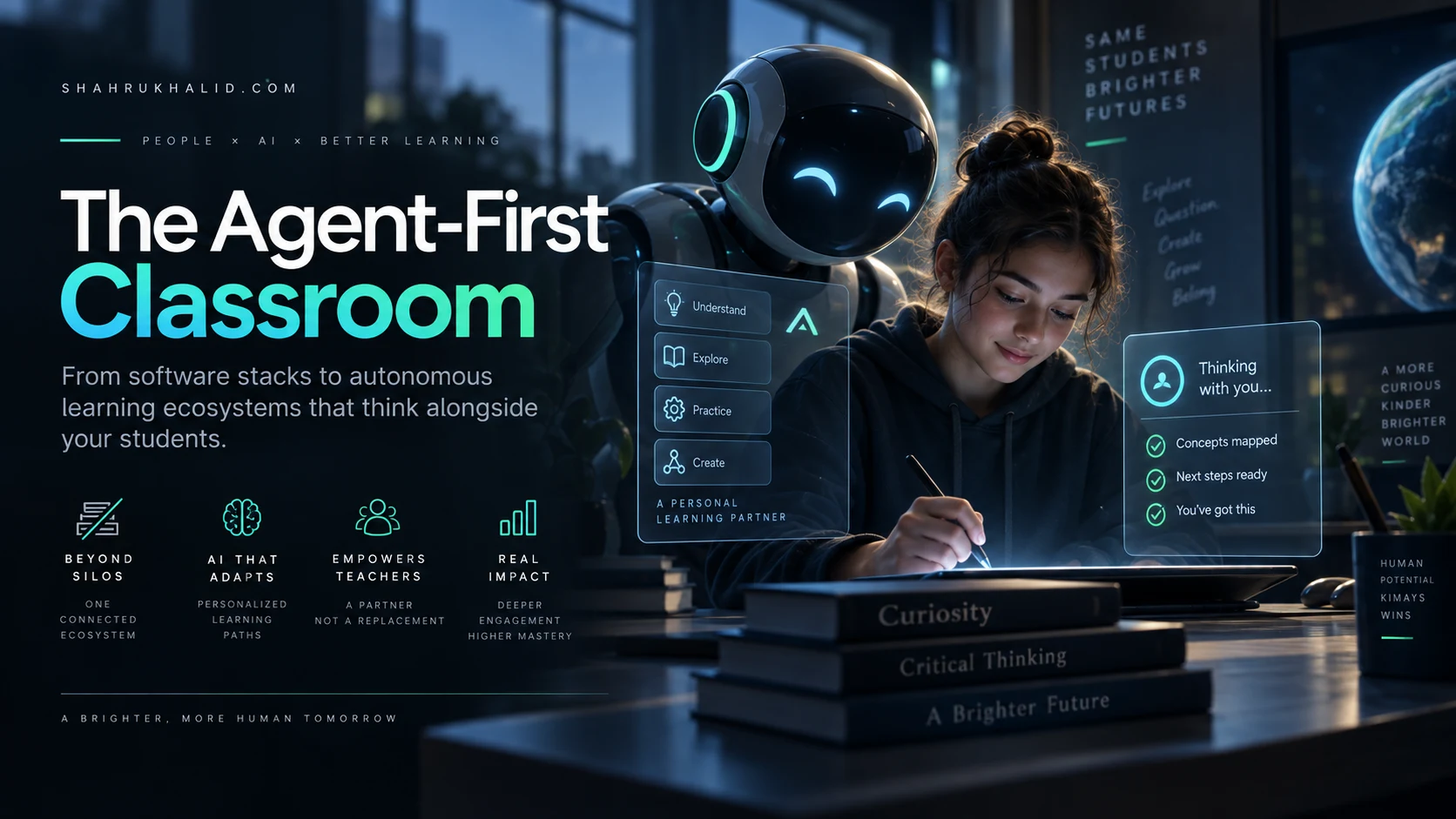
Key Takeaways
- The article advocates abandoning fragmented software stacks for autonomous, agent-first learning ecosystems.
- Architecture prioritizes deterministic reliability, local autonomy, and low-cost infrastructure over recurring SaaS.
- Intelligent agents act as context-aware AI assistants, connecting curriculum, student pace, and pedagogical goals.
- Students collaborate with digital mentors that understand their learning trajectory, not merely use software.
- The shift is from managing software to orchestrating intelligence, moving technology from container to participant.
Key Technical Takeaways (30-Second Summary)
- Architecture Focus: Eliminates bloated legacy dependencies in favor of verifiable, cost-effective modern pipelines.
- Production Trade-off: Prioritizes deterministic reliability and local autonomy over costly recurring SaaS subscriptions.
- Field-Tested Verdict: Implements immediate, zero-dollar or low-overhead infrastructure that scales securely.
The Death of the Software Stack and the Rise of the Agentic School
For years, I treated my school’s technology infrastructure like a digital warehouse—a collection of disparate software stacks that teachers struggled to navigate and students merely endured. I have since abandoned the role of a software administrator to become an architect of autonomous learning ecosystems, shifting the burden of cognitive load from human shoulders to intelligent, collaborative agents that think alongside our students.
The Architecture of Stagnation: Why Traditional Tech Stacks Fail
The traditional school technology model is fundamentally reactive. We purchase a Learning Management System (LMS), bolt on an assessment tool, integrate a plagiarism checker, and call it a “digital transformation.” In reality, we have created a fragmented landscape where the student is forced to play the role of a data integrator. They log into one portal for grades, another for content, and a third for collaboration, spending more time navigating the “stack” than engaging with the curriculum.

When we treat education as a series of software subscriptions, we inadvertently treat the student as a database entry. My shift toward autonomous learning ecosystems began the day I realized that software should not be a destination, but a fluid, intelligent layer that wraps around the student’s specific learning trajectory. By moving away from rigid stacks, we allow the technology to move from being a container of information to an active participant in the discovery process.
Defining the Autonomous Learning Ecosystem
An autonomous learning ecosystem is not a product you buy; it is a design philosophy where intelligent agents—specialized, context-aware AI assistants—act as the connective tissue between the curriculum, the student’s unique learning pace, and the teacher’s pedagogical goals. Unlike a standard software tool that waits for user input, an agentic system maintains a persistent state of the student’s progress, emotional context, and conceptual gaps.

In this ecosystem, the student is no longer “using” software; they are collaborating with a digital mentor that understands the nuance of their confusion. If a student hits a wall in a physics simulation, the ecosystem does not just point them to a static PDF. Instead, an agent observes the struggle, accesses the student’s previous successful problem-solving patterns, and initiates a Socratic dialogue to nudge them toward the answer. This is the transition from “managing software” to “orchestrating intelligence.”

The Shift from Administrator to Architect
Becoming an architect of these ecosystems requires a fundamental change in how we view IT procurement and deployment. When I stopped managing software stacks, I stopped asking, “Does this platform have all the features we need?” and started asking, “How does this tool expose its data and capabilities to an agentic layer?”
The role of the school technology leader is now to build the “plumbing” for intelligence. This involves:
- Interoperability over Feature-Set: Prioritizing tools that allow for deep, secure data flow between systems so that agents have a holistic view of the student.
- Contextual Awareness: Ensuring that agents are informed by the teacher’s specific pedagogical goals rather than generic, one-size-fits-all algorithms.
- Agency-First Design: Prioritizing tools that provide the student with a sense of control and self-directed inquiry, rather than tools that merely track compliance.
Designing for Cognitive Partnership
The most profound realization I’ve had in the field is that students don’t need more “content delivery” systems; they need better “cognitive partners.” In an autonomous learning ecosystem, the technology acts as a partner that thinks alongside the student. This requires a move toward non-linear interfaces where the student can pose a question, explore a simulation, and receive real-time, constructive feedback that is tailored to their current level of mastery.
Consider the difference between a student staring at a digital spreadsheet and a student interacting with an agent that acts as a tutor. In the former, the tool is a place to store data. In the latter, the tool is a co-pilot that helps the student synthesize information. By architecting systems that provide this level of partnership, we are not automating the classroom; we are augmenting the human capacity for critical thought.
Practical Implementation: Building the Ecosystem
Transitioning your school toward an autonomous learning ecosystem is not a “rip-and-replace” project. It is an iterative design process. You must start by identifying the most significant points of cognitive friction in your current workflow. Where are your students getting stuck? Where are your teachers spending their time on low-value administrative tasks?
Once identified, implement a “sandbox” agentic layer. This might involve deploying localized AI agents that can parse internal documentation, provide immediate feedback on formative assessments, or organize project milestones based on student input. The goal is to create a feedback loop where the agent learns from the student’s interactions, and the student learns from the agent’s guidance. This creates a virtuous cycle of improvement that a static software stack can never replicate.
Navigating the Ethical and Pedagogical Landscape
Architecting these systems carries a heavy responsibility. When we introduce agents into the learning environment, we must prioritize transparency and human oversight. A student should always know when they are interacting with an agent, and the teacher must remain the ultimate authority on the pedagogical direction. The goal of an autonomous learning ecosystem is to empower the human, not to replace the essential, messy, and beautiful process of human-to-human mentorship.
We must also be vigilant about data privacy and the integrity of the learning process. An autonomous system must be designed with “human-in-the-loop” safeguards, ensuring that at any point, a teacher can intervene to provide the empathy, nuance, and moral guidance that an agent simply cannot possess. The technology is the scaffolding; the human relationship is the building.
The Future is Orchestrated, Not Managed
The era of the “software stack” is effectively over, even if most schools haven’t realized it yet. We are moving into a world where the infrastructure of a school will be defined by its ability to orchestrate intelligent, autonomous interactions. By embracing the role of an architect, you can move your school away from the burden of digital management and toward a future where technology is a silent, powerful partner in the pursuit of knowledge.
The shift is not about the technology itself; it is about the liberation of human potential. When we stop asking students to serve our software, and start designing software that serves our students, we unlock a level of engagement and mastery that was previously impossible. Start small, think deeply, and focus on the intelligence of the system, not the features of the tool. Your students are ready for a classroom that thinks with them—it is time to build it.
Key Takeaways for the Modern Educational Leader
- Abandon the Stack Mentality: Stop viewing technology as a collection of silos and start viewing it as an interconnected, intelligent ecosystem.
- Prioritize Interoperability: Choose tools that allow data to flow freely so your agents have the context required to actually “think” alongside students.
- Focus on Cognitive Partnership: Design your digital environments to act as tutors and co-pilots, not just repositories for content or assignment submission portals.
- Maintain Human-in-the-Loop: Always ensure that the teacher remains the final arbiter of pedagogy and the primary source of emotional support.
- Iterate, Don’t Overhaul: Build your autonomous learning ecosystem through small, high-impact experiments that solve specific points of friction for students and teachers.