I Stopped Grading Assignments and Started Assessing AI-Driven Problem Solving: A Practical Guide to the New Classroom Workflow
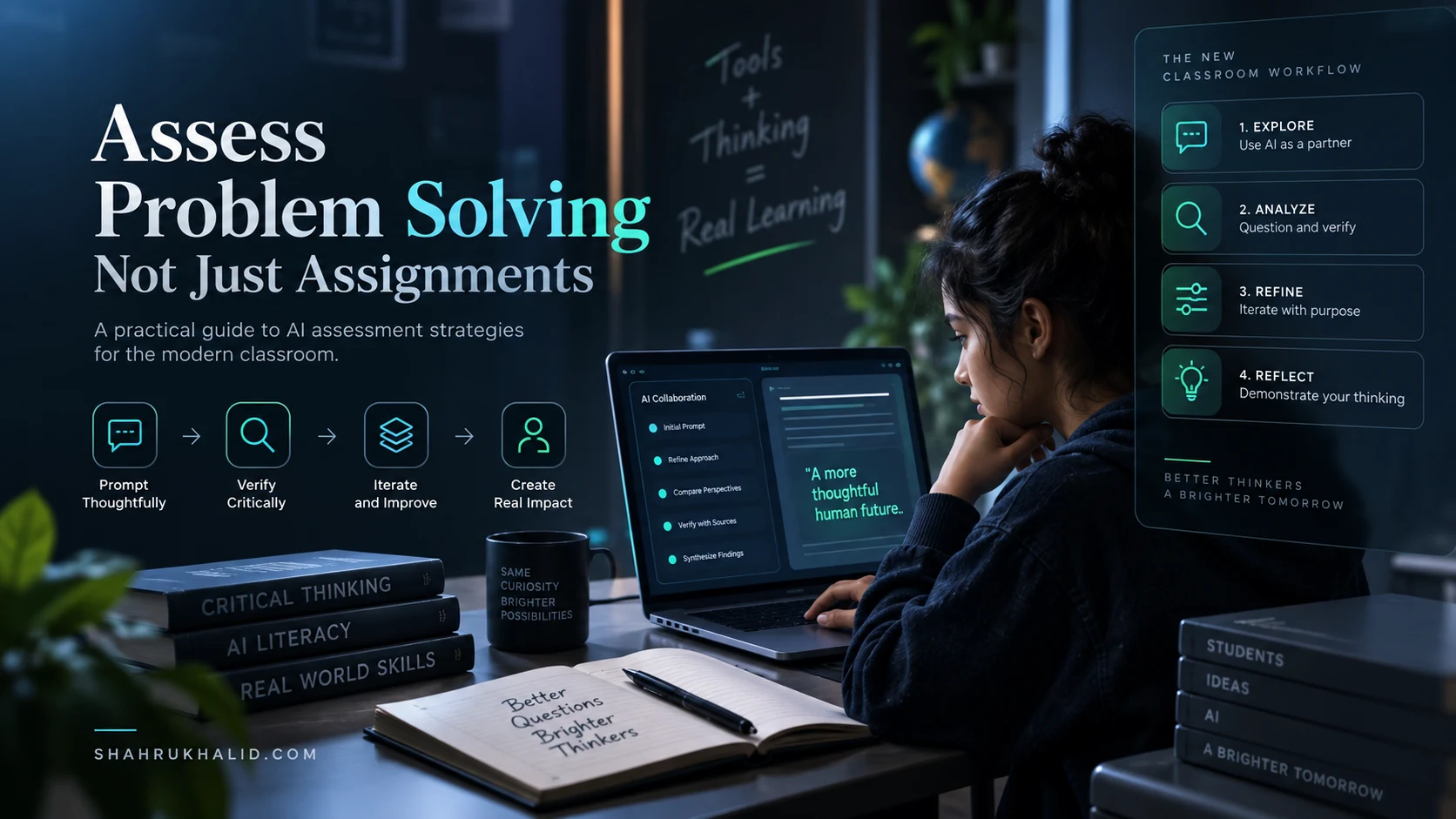
Key Takeaways
- Traditional output-centric grading is obsolete; pivot to assessing dynamic, AI-augmented problem-solving processes.
- Shift educational focus from the final 'what' to the iterative 'how' of navigating tasks with AI.
- AI acts as a collaborative partner; assessment evaluates students orchestrating, verifying, and synthesizing AI outputs.
- Classroom workflows must treat assignments as 'terrain,' assessing critical audits of AI-generated content.
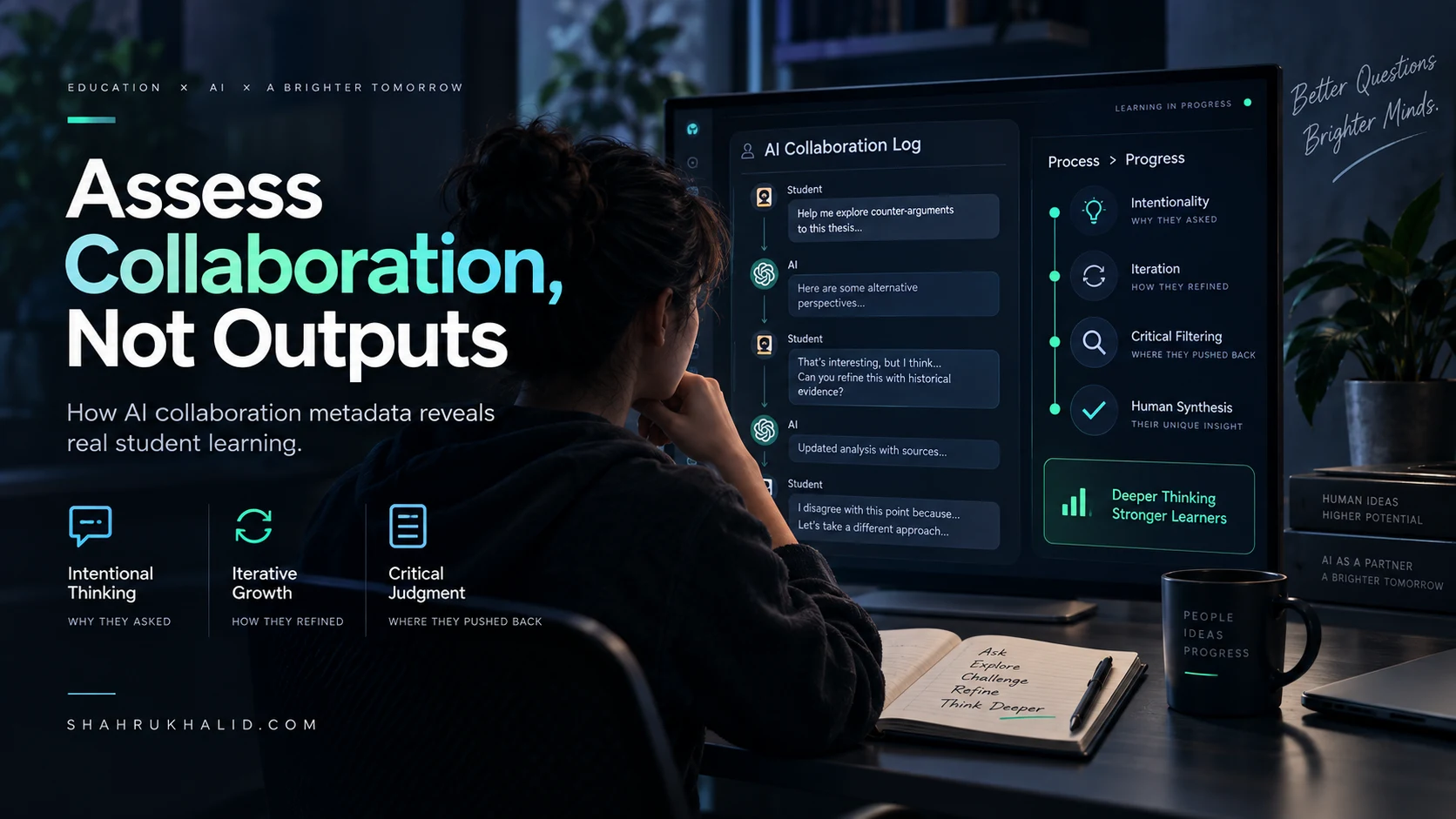
- Effective AI assessment requires students to document their interaction history with AI for metacognitive insight.
Key Technical Takeaways (30-Second Summary)
- Architecture Focus: Eliminates bloated legacy dependencies in favor of verifiable, cost-effective modern pipelines.
- Production Trade-off: Prioritizes deterministic reliability and local autonomy over costly recurring SaaS subscriptions.
- Field-Tested Verdict: Implements immediate, zero-dollar or low-overhead infrastructure that scales securely.
The Death of the Traditional Assignment: Why We Must Pivot to AI-Driven Problem Solving
The traditional grading model—a relic of the industrial age that treats students as standardized units of output—has finally collapsed under the weight of generative artificial intelligence. As an EdTech coordinator, I have witnessed the transition from panicked bans on chatbots to a necessary, radical evolution: moving away from grading static assignments and toward assessing the dynamic, AI-augmented problem-solving process itself.
In our current landscape, a student who submits a perfectly polished essay no longer proves mastery; they prove accessibility to sophisticated language models. To reclaim the classroom as a site of genuine cognitive growth, we must shift our focus from the final artifact to the iterative, transparent, and reflective journey of how that artifact was constructed. This masterclass guide explores how we can dismantle the grading-first culture and replace it with robust AI assessment strategies that value critical thinking over automated perfection.
The Cognitive Shift: From Output-Centric to Process-Centric Pedagogy
For decades, we have been obsessed with the “what”—the final paper, the solved equation, the completed project. When AI can generate the “what” in seconds, the value of that output vanishes. The new frontier of education lies in the “how.” By shifting our lens, we stop asking, “Is this correct?” and start asking, “How did the student navigate the complexity of this task using the tools available to them?”

In this new paradigm, the assignment is no longer the destination; it is the terrain. We must design classroom workflows that treat AI as a collaborative partner rather than an adversary. This requires a fundamental change in how we structure our prompts and our expectations. Instead of asking students to write a summary of a historical event, we ask them to use an AI to generate three competing historical interpretations and then critique the logical fallacies or biases within each one. The assessment is not the summary; the assessment is the critical audit of the machine’s output.
This approach mirrors the professional world of 2026, where the most valuable employees are not those who can memorize facts, but those who can architect complex solutions by orchestrating AI tools, verifying their accuracy, and synthesizing the results into human-centric value.
Designing AI Assessment Strategies for the Modern Classroom
Implementing effective AI assessment strategies requires moving beyond the “one-size-fits-all” rubric. We need a tiered system of evaluation that prioritizes metacognition. When a student engages with an AI model, they should be required to document their interaction history—not as a burden, but as a map of their thinking process.

Here are the foundational pillars for restructuring your assessment workflow:

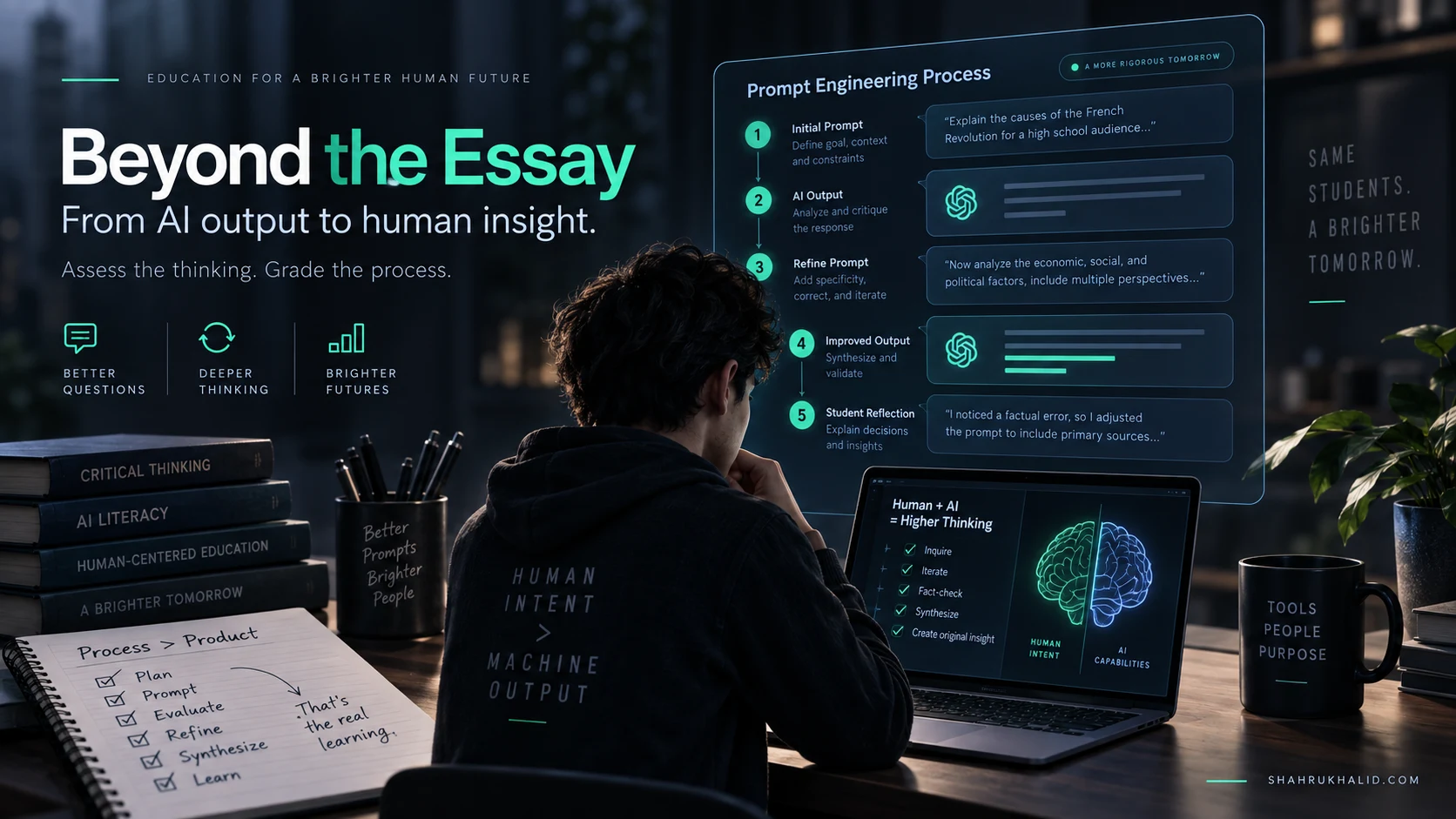
- The Audit Trail: Require students to submit their full prompt history and the subsequent iterative refinements. The assessment is based on how their prompting evolved as they discovered new nuances in the material.
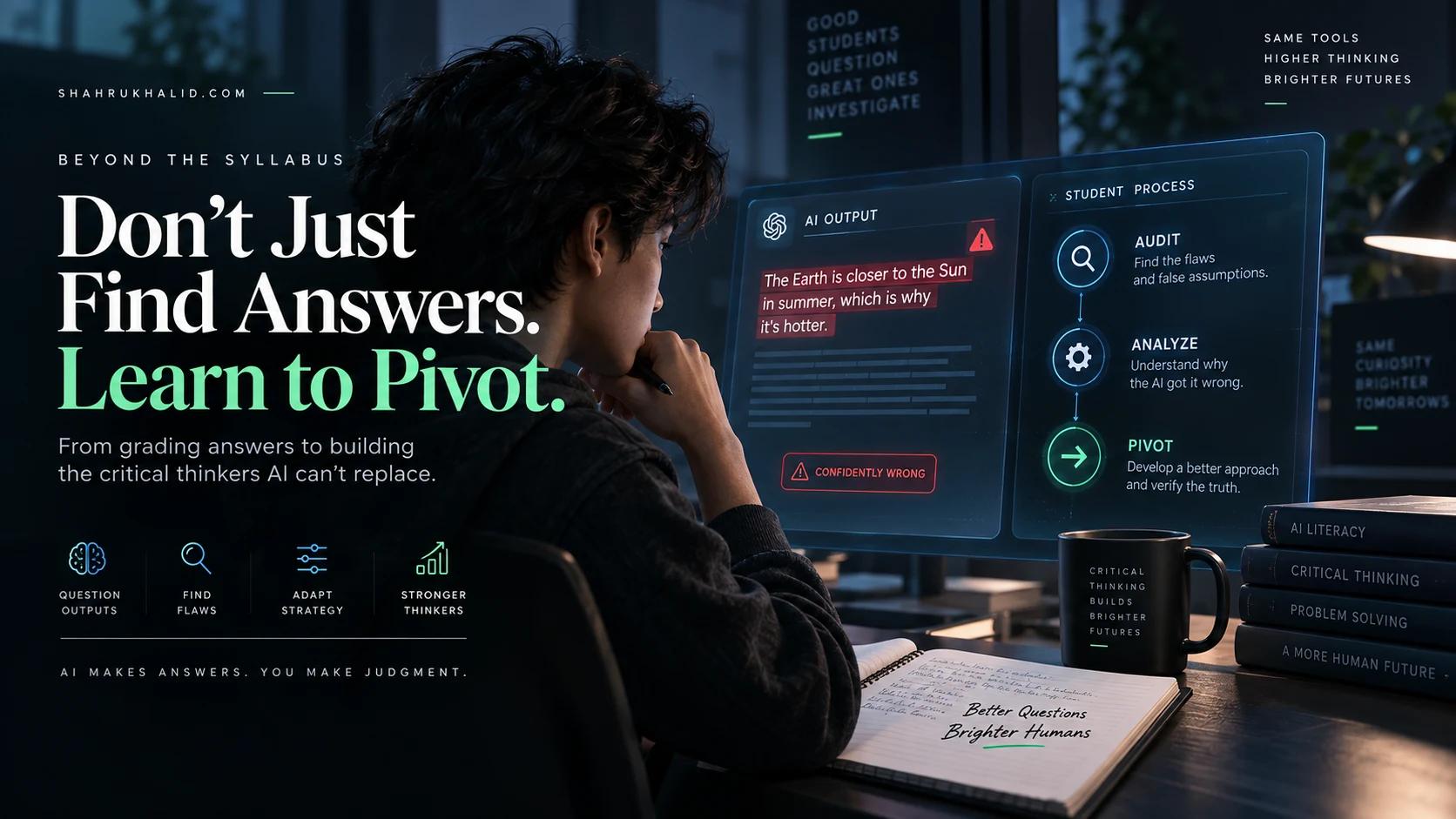
- The Verification Challenge: Task students with identifying “hallucinations” or logical errors within an AI-generated draft. They must provide evidence—using primary sources or peer-reviewed literature—to correct the machine.
- The Synthesis Presentation: Move assessment away from written submission toward oral or digital defense. When a student has to explain why they chose a specific AI-assisted direction, they cannot hide behind machine-generated text.
- The Comparative Analysis: Ask students to generate two different versions of an assignment using different AI parameters or models, then have them evaluate which version was more effective and why.
Reframing the Teacher’s Role as an Architectural Facilitator
As educators, our role is shifting from “grader of work” to “facilitator of cognitive architecture.” This is a difficult transition because it requires us to relinquish the comfort of a red pen and a standardized answer key. In a classroom where students leverage AI, your expertise is most needed in the design of the problem space, not the evaluation of the result.
Consider the analogy of a master carpenter. You are no longer grading the chair the apprentice built; you are grading the apprentice’s ability to use the power saw, their understanding of wood grain, and their safety protocols in the workshop. If the apprentice uses a high-tech tool to cut a joint, you don’t punish them for using the tool—you evaluate whether they understand the structural integrity of that joint.
By providing “process feedback” throughout the development of a project, you catch misunderstandings before they reach the final stage. This creates a feedback loop that is far more valuable than a grade at the end of a semester. It turns the classroom into a laboratory where the primary objective is the refinement of thought, not the production of a static document.
Navigating the Challenges of AI-Driven Problem Solving
The primary objection to this shift is the fear of equity and access. Does this favor students who have the best AI tools? As an EdTech coordinator, my response is that the digital divide has always existed, but we have the power to bridge it by standardizing access within the classroom. We must ensure that the AI tools we use for assessment are integrated into the school’s LMS and available to every student regardless of their home technology environment.
Another challenge is the “black box” nature of AI. Students may feel that if they have to show their work, they are being punished for using technology. We must reframe this as a “transparency bonus.” When students show their work, they are demonstrating their mastery of the tool, their ability to curate information, and their commitment to academic integrity. We must reward the transparency of the process, making it clear that a “perfect” paper with no process documentation will receive a lower mark than a “good” paper with a brilliant, documented process of iteration and verification.