How to Learn Anything Faster & Smarter in 2026: Your Students Step-by-Step Guide

Why is this so essential right now, in 2026? Think about it: the world is changing at an incredible pace. New information, new tools, new challenges emerge every single day. The ability to quickly grasp complex topics, adapt to new situations, and retain what you’ve learned isn’t just an advantage; it’s a necessity. If you want to stay ahead, to innovate, to truly make an impact, you need to be a master learner. This guide is your step-by-step roadmap to becoming just that. We’re going to strip away the jargon and get to the core principles, making sure everything is beginner-friendly and actionable.
Understanding the “Why”: The 2026 Learning Imperative
In my world of software development, new frameworks and tools pop up constantly. What was cutting-edge last year might be standard practice today, and obsolete tomorrow. The same dynamic applies to almost every field. For students, this means the sheer volume of information you’re expected to absorb is growing exponentially. Relying on old, inefficient study habits simply won’t cut it. You need effective study strategies that are designed for this new reality. This isn’t about studying harder; it’s about studying smarter. It’s about understanding how your brain actually works and then leveraging that knowledge to your advantage. We’re talking about transforming your learning process from a chore into an efficient, almost intuitive skill.
What Does it Mean to Learn Faster Smarter? Core Principles Unpacked
So, what exactly do I mean by “Learn Faster Smarter”? It’s a blend of two powerful ideas: efficiency and effectiveness.
- Faster isn’t about rushing; it’s about optimizing. It means reducing wasted effort, cutting down on the time it takes to grasp a concept, and accelerating your progress.
- Smarter is about depth and retention. It means not just memorizing facts but truly understanding them, connecting them to existing knowledge, and being able to recall and apply them when it matters most. It’s about building a robust, interconnected web of knowledge in your mind, rather than a fragile stack of isolated facts.
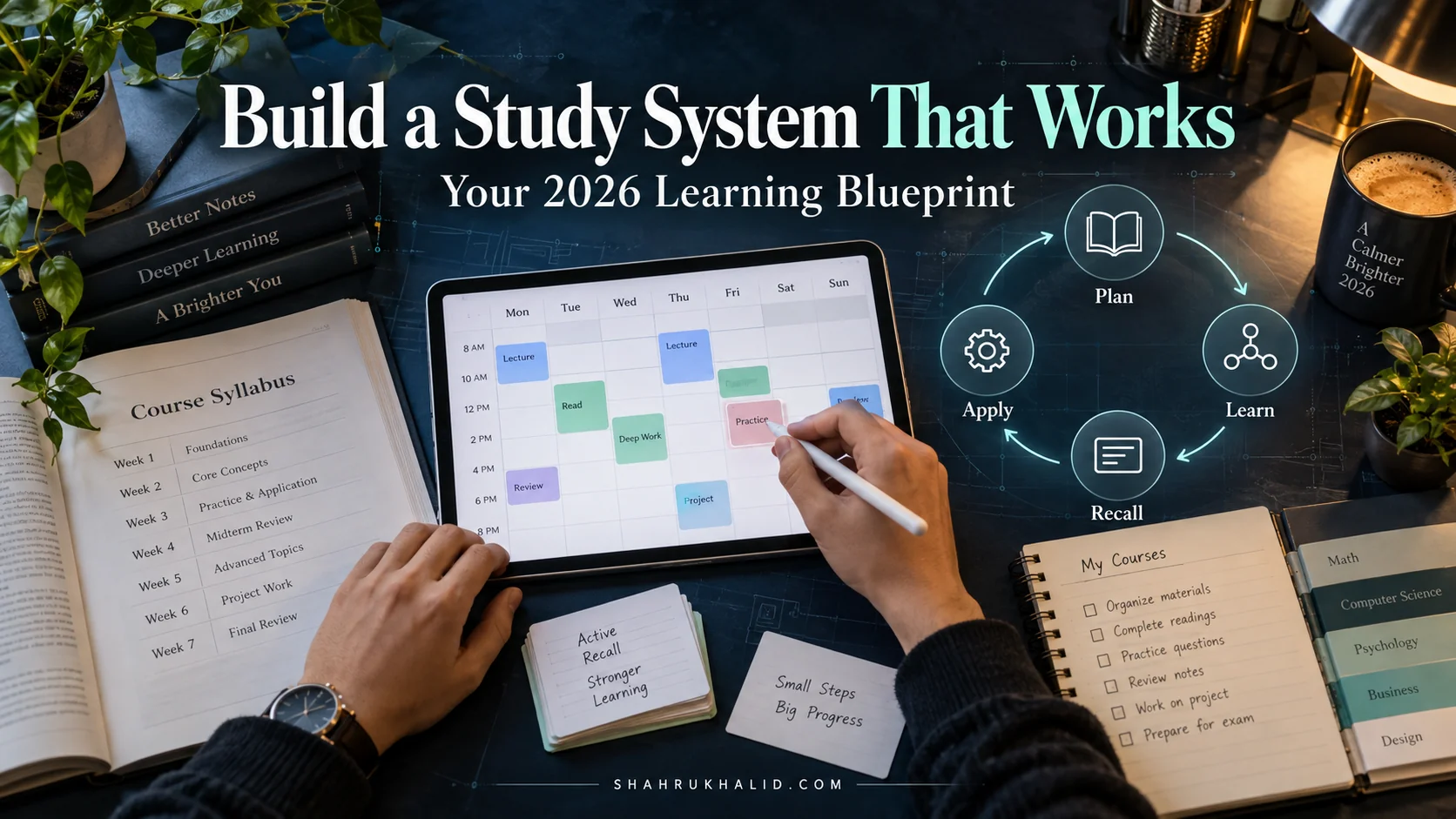
At its heart, learning faster and smarter relies on a few core principles, which we’ll explore in detail throughout this guide:
- Active Engagement, Not Passive Consumption: Think about it like this: are you a spectator or a player? Passive learning is like watching a football game; you see what’s happening, but you’re not building any muscle memory or strategic thinking. Active learning is like being on the field, making decisions, reacting, and getting hands-on. When you actively engage with material – by asking questions, explaining concepts in your own words, or solving problems – you’re building stronger neural pathways.
- Strategic Repetition (Spaced Repetition): Our brains are designed to forget things we don’t use. It’s a feature, not a bug! But we can hack this. Instead of cramming everything right before an exam, we can strategically review information at increasing intervals. This “spaced repetition” tells your brain, “Hey, this information is important, keep it around!” We’ll dive into how to implement this effectively.
- Connecting the Dots (Elaboration): Imagine your brain as a vast library. When you learn something new, you don’t just throw it on a random shelf. You try to connect it to other books, other sections, other ideas you already have. This is elaboration – linking new information to existing knowledge. The more connections you make, the easier it is to retrieve that information later. It’s like creating multiple cross-references in your mental library.
- Testing Yourself (Active Recall): This is one of the most powerful cognitive learning methods. Instead of just re-reading your notes, try to recall information from memory without looking. This could be by quizzing yourself, explaining a concept to an imaginary friend, or trying to solve a problem from scratch. The act of retrieving information strengthens its memory trace. It’s like exercising a muscle; the more you try to pull that information out, the stronger the connection becomes.
These principles are the bedrock of accelerated learning techniques. They are not magic, but rather scientifically-backed approaches that leverage how your brain naturally learns. My own journey as a developer advocate often involves learning entirely new programming languages or complex cloud architectures, much like navigating a new country. I can’t just read a travel guide; I need to speak the language, interact with the locals, and explore the hidden alleys. That’s active learning in action.
Eliminating Jargon: Learning Science in Plain English
I know terms like “cognitive load” or “metacognition” might sound intimidating, but don’t worry. My goal is to make this accessible.
- Cognitive Load: Think of this as the amount of mental effort your brain is exerting at any given time. If you try to learn too many new, unrelated things at once, your cognitive load becomes too high, and your brain gets overwhelmed, making it hard to process anything effectively. We want to manage this, breaking down complex topics into digestible chunks.
- Metacognition: This is simply “thinking about your thinking.” It’s being aware of your own learning process, understanding what you know, what you don’t know, and how you learn best. It’s like being your own personal learning coach, observing your progress and adjusting your strategies.
By the end of this masterclass, you’ll not only understand these concepts but you’ll have practical tools to apply them. You’ll be able to answer questions like: “What are the most effective ways to learn faster?” and “How can students learn smarter and retain information?” with confidence, because you’ll be doing it. This isn’t just theory; it’s a practical guide to transforming your academic journey and beyond. Let’s get started on building your ultimate learning toolkit!