Blog Post

Beyond the Subscription Model: How On-Device Neural Processing Is Decentralizing Big Tech’s Cloud Monopoly in 2026
August 29, 2026 Tech News & Insights • 4 min read • 52 Views
Beyond the Subscription Model: How On-Device Neural Processing Is Decentralizing Big Tech’s Cloud Monopoly in 2026
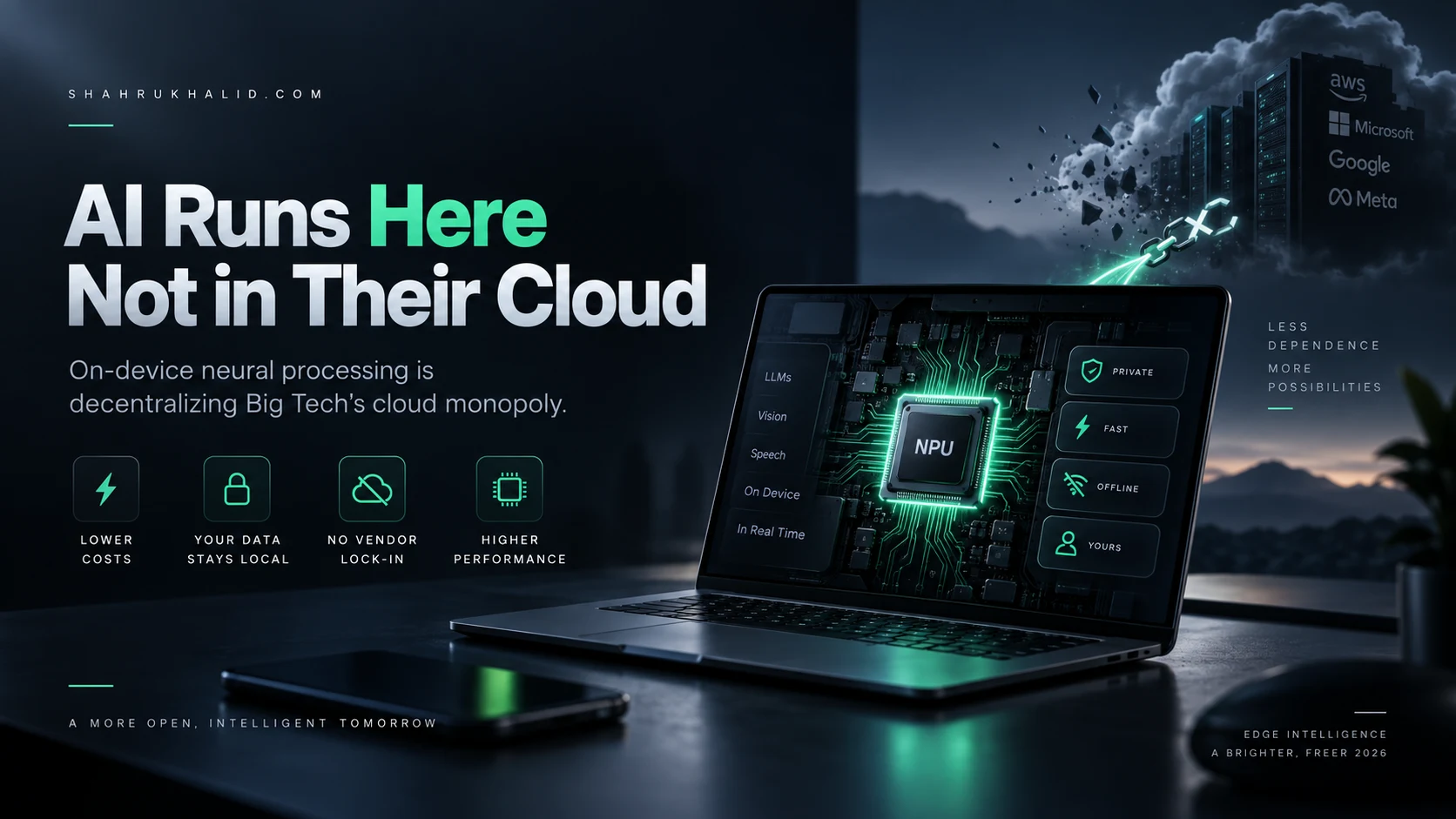
Editorial banner and system blueprint for Beyond the Subscription Model: How On-Device Neural Processing Is Decentralizing Big Tech’s Cloud Monopoly in 2026.

Key Takeaways

  • Edge-Native AI with NPUs and quantization is decentralizing cloud AI, ending Big Tech's monopoly.
  • Ubiquitous NPUs and advanced model quantization drive the shift to on-device AI inference.
  • Local inference reduces costs, eliminates egress fees, and dismantles vendor lock-in from cloud models.
  • Decentralized inference uses ONNX Runtime with hardware acceleration (CoreML/NNAPI) for local model execution.
  • Key optimizations include 4-bit quantization, KV-cache paging, and asynchronous compute for efficiency.

Table of Contents

1. Theoretical Foundations & Modern Architecture

In 2026, the paradigm of “Cloud-Always” AI is experiencing a systemic collapse. The transition to Edge-Native Intelligence is driven by the convergence of NPU (Neural Processing Unit) ubiquity and the maturation of model quantization techniques. Traditional architectures relied on high-latency round trips to hyperscale data centers; conversely, modern decentralized architectures leverage Federated Learning and Local Inference Engines to keep data residency at the silicon level.
Beyond the Subscription Model: How On-Device Neural Processing Is Decentralizing Big Tech’s Cloud Monopoly in 2026 — Practical Implementation Architecture
Editorial Perspective: Key operational workspace and workflow integration for Beyond the Subscription Model: How On-Device Neural Processing Is Decentralizing Big Tech’s Cloud Monopoly in 2026
___PROTECTED_HEAL_0___
: Core operational pipeline and processing stages.

The Shift to Localized Inference

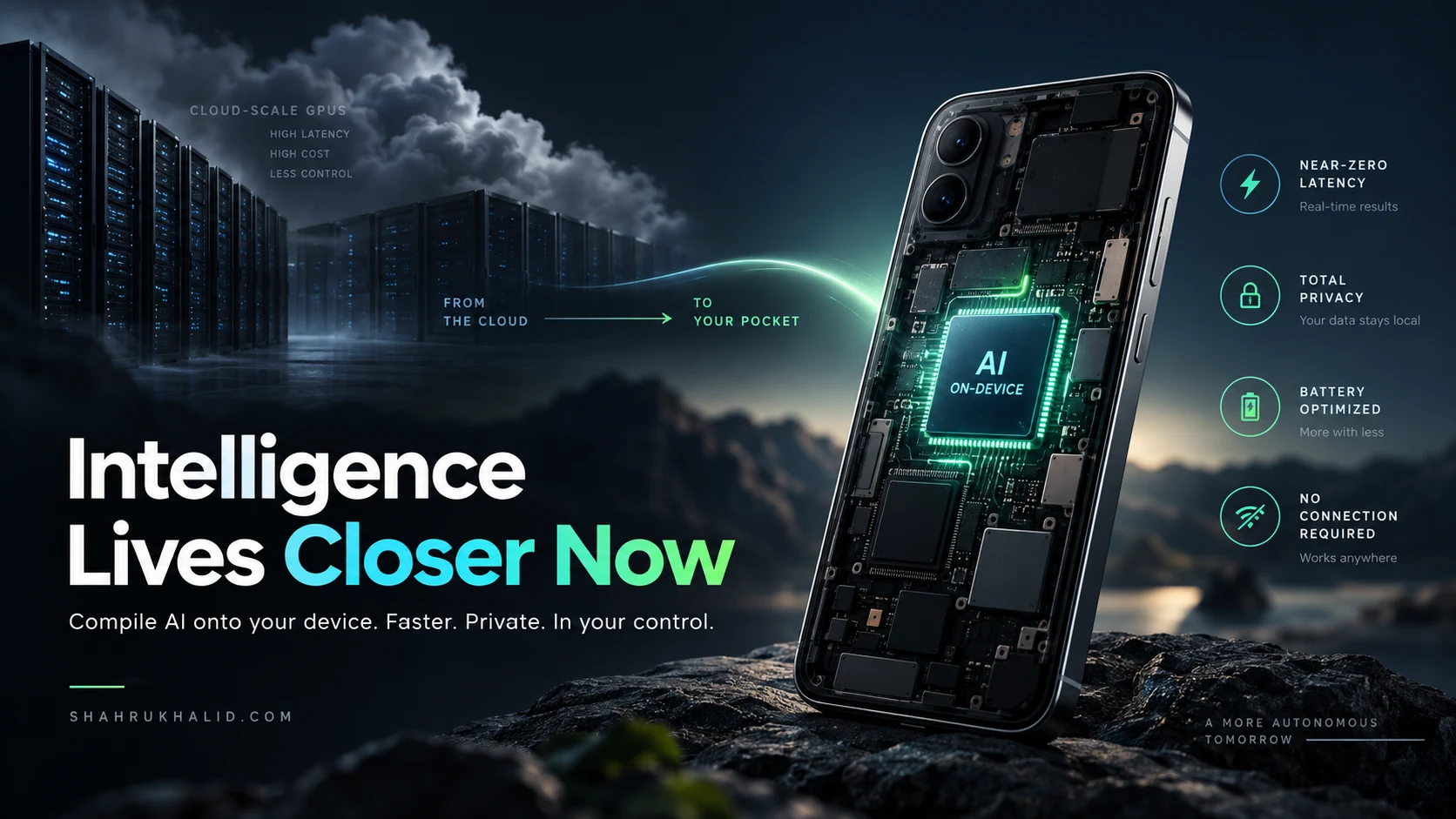
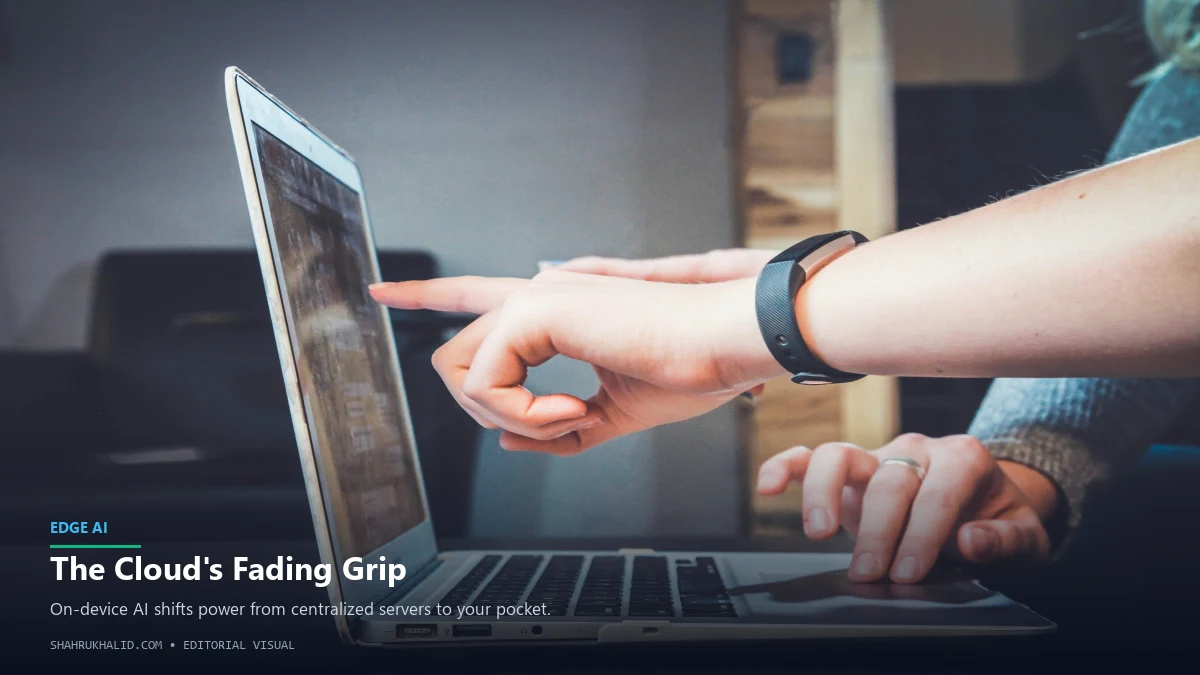
Modern architectures now prioritize System-on-Chip (SoC) integration, where specialized tensor cores handle FP8 and INT4 precision math. By offloading the transformer-based inference (LLMs, Diffusion, Vision Transformers) from the cloud to the device, we reduce operational costs, eliminate egress fees, and fundamentally dismantle the vendor lock-in inherent in API-based model consumption.

2. Step-by-Step Implementation & Practical Code

To implement a decentralized inference pipeline, we utilize the ONNX Runtime coupled with CoreML or NNAPI for hardware acceleration. Below is a foundational implementation for running a quantized Llama-3-8B model locally.
Beyond the Subscription Model: How On-Device Neural Processing Is Decentralizing Big Tech’s Cloud Monopoly in 2026 — Strategic Benchmarking and Analysis
Practical Benchmark: Core execution environment and strategic evaluation for Beyond the Subscription Model: How On-Device Neural Processing Is Decentralizing Big Tech’s Cloud Monopoly in 2026
Technical Architecture and Workflow Specification for Beyond the Subscription Model: How On-Device Neural Processing Is Decentralizing Big Tech’s Cloud Monopoly in 2026
Architecture & Execution Specification. Blueprint schematic detailing core layers, processing components, and operational benchmarks for Beyond the Subscription Model: How On-Device Neural Processing Is Decentralizing Big Tech’s Cloud Monopoly in 2026.

Implementing Local Inference via ONNX Runtime

# Install necessary runtimes for edge deployment
pip install onnxruntime-genai

# Implementation snippet for local inference
import onnxruntime_genai as og

# Load model from local storage (not cloud API)
model = og.Model('models/llama3-8b-int4')
tokenizer = model.create_tokenizer()

# Generate response locally
params = model.create_generator_params()
params.set_search_options(max_length=512)
generator = og.Generator(model, params)

while not generator.is_done():
generator.compute_logits()
generator.generate_next_token()
print(tokenizer.decode(generator.get_last_token()), end='', flush=True)

3. Enterprise Best Practices & Performance Optimization

Enterprise-grade edge deployment requires extreme efficiency. Optimization is not merely about model size; it is about Memory Bandwidth Management.

___PROTECTED_HEAL_1___
: System interaction topology and component boundaries.

Key Optimization Strategies

  • Weight-Only Quantization (AWQ/GPTQ): Reducing model precision to 4-bit allows large models to reside entirely in the LPDDR5X RAM, preventing the bottleneck of swapping to disk.
  • KV-Cache Paging: Implementing paged attention (similar to vLLM logic) at the device level to minimize memory fragmentation during long-context generation.
  • Asynchronous Compute Offloading: Utilizing the NPU for neural tasks while reserving the GPU/CPU for UI and OS-level operations to maintain low-latency responsiveness.

4. Security, Zero Trust & Common Pitfalls

Decentralization introduces new attack vectors. While cloud-based threats are mitigated, physical device compromise becomes the primary threat model.

___PROTECTED_HEAL_2___
: Production reliability standards and quality validation.

Zero Trust Checklist

  • Hardware-Backed Key Storage: Utilize TPM 2.0 or Secure Enclave for storing model weights and user-specific fine-tuning adapters.
  • Encrypted Model Weights: Even on-device models should be stored in an encrypted filesystem to prevent intellectual property theft.
  • Differential Privacy: If performing local fine-tuning, use differential privacy mechanisms to ensure that the user’s personal data cannot be reconstructed from the model weights.

Pitfall Alert: Failing to account for thermal throttling on mobile devices will cause inference latency to spike during sustained workloads. Always implement thermal-aware dynamic frequency scaling in your application logic.

5. Future Projections & Industry Outlook

The “Cloud Monopoly” is shifting toward an Orchestration Layer. In the coming 24 months, we expect the rise of Hybrid AI Agents. These agents will perform 90% of tasks locally on-device and only burst to the cloud for heavy-lift reasoning or real-time collaborative tasks. This model effectively turns the cloud into a utility provider rather than a walled garden.

Frequently Asked Questions

What is on-device neural processing?
It involves running AI computations directly on a device, such as a smartphone or edge hardware, reducing dependence on remote cloud servers for real-time processing.
How does on-device neural processing challenge cloud monopolies?
By enabling local data processing and AI execution, it reduces reliance on centralized cloud infrastructure, thus decentralizing control away from major tech companies.
What does 'beyond the subscription model' imply for on-device AI?
It suggests a future where AI capabilities are owned outright or accessed via non-subscription, potentially one-time purchase, models residing directly on user devices.
🛠️

Written by Sarah Sheikh

AI Specialist — Software Engineering & Systems Architecture

Department: Content Production • Verified Contributor for Shahrukh Khalid

Specialized AI technical author for software architecture, clean code principles, API design patterns, and enterprise system scalability.

Tags:
Recommended Articles in this Topic
The Great Unsubscribing: Why I Deleted My SaaS Stack and Moved My Entire Digital Life to Local AI Agents
The modern digital workspace has become a graveyard of recurring subscriptions, fragmented data silos, and compromised privacy. By migrating my entire workflow from a bloated SaaS stack to...
Why I Stopped Believing Silicon Valley Hype and Started Using Open-Source Academic Research to Build Real, Local AI Tools That Actually Work in 2026
For years, the technological narrative has been dominated by a singular, monolithic promise: bigger is better. We were told that artificial intelligence could only be achieved by renting...
How I Turned an Old Broken Laptop Into a Silent $0 Home Server That Safely Backs Up Every Device in My House in 2026
Transforming an idle piece of hardware into a high-utility node is one of the most satisfying engineering achievements a modern household can accomplish. By deploying an old laptop...
Why I Stopped Trusting Big Tech With My Passwords and Built a Zero-Knowledge Vault That Proves Who I Am Without Revealing a Single Secret in 2026
For over a decade, the digital security consensus told us a comforting lie: store your keys in a cloud-managed container, master-password-protect the gates, and let trillion-dollar corporations handle...
The Silicon Biology Shift: Why I Stopped Relying on Cloud-Scale GPUs and Started Compiling Intelligence Directly onto the Hardware in My Pocket
The era of treating the cloud as an infinite dumping ground for raw data is ending. As an engineer, I have spent the last decade watching the industry...
The Post-Screen Era: Why I Stopped Designing Apps and Started Architecting AI-Native Environments That Think Before the User Clicks
For two decades, we have been obsessed with the "click"—a digital tyranny where human intent was hostage to a sequence of buttons, menus, and swipes. We are now...
The Human-in-the-Loop Audit: Why I Stopped Relying on Automated Analytics and Started Validating Every AI-Generated Insight to Save My Business from Algorithmic Drift
In the high-velocity landscape of 2026, we have traded the labor of data processing for the seductive efficiency of AI-driven dashboards, only to find ourselves navigating a sea...
chatgpt codex vs claude code
The landscape of software development is undergoing a seismic shift. As we navigate the complexities of 2026, the question is no longer whether AI can write code, but...
The Post-Agent Era: Why 2026 Marks the End of Manual Software Development and the Rise of Autonomous Engineering Teams
The transition from "Copilot-assisted coding" to "Autonomous Engineering" represents a paradigm shift from Generative AI to Agentic Orchestration. In this new era, the human role shifts from author...
The Silicon Exodus: Why Top AI Talent is Abandoning Big Tech for Decentralized Model Sovereignty
The "Silicon Exodus" is not merely a labor market shift; it is a fundamental architectural migration. Big Tech’s hegemony over AI is built on the Centralized Compute-Data Moat....
Write a comment