The Silicon Biology Shift: Why I Stopped Relying on Cloud-Scale GPUs and Started Compiling Intelligence Directly onto the Hardware in My Pocket
Key Takeaways
- Intelligence is shifting from cloud data centers to local, on-device processing via Edge AI.
- Cloud-first is obsolete due to latency, privacy, and bandwidth/power limitations.
- Compiling models directly onto mobile/embedded silicon reclaims data sovereignty and eliminates connectivity.
- Modern devices utilize dedicated Neural Processing Units (NPUs) for optimized on-device inference.
- Prioritizes deterministic reliability, local autonomy, and cost-effectiveness over recurring cloud subscriptions.
Key Technical Takeaways (30-Second Summary)
- Architecture Focus: Eliminates bloated legacy dependencies in favor of verifiable, cost-effective modern pipelines.
- Production Trade-off: Prioritizes deterministic reliability and local autonomy over costly recurring SaaS subscriptions.
- Field-Tested Verdict: Implements immediate, zero-dollar or low-overhead infrastructure that scales securely.
The Paradigm Shift: From Data Centers to Distributed Intelligence
The era of treating the cloud as an infinite dumping ground for raw data is ending. As an engineer, I have spent the last decade watching the industry pivot from centralizing intelligence in massive server farms to the radical, necessary efficiency of Edge AI computing. The realization is simple: latency, privacy, and power constraints have rendered the “cloud-first” architecture obsolete for the next generation of intelligent applications.
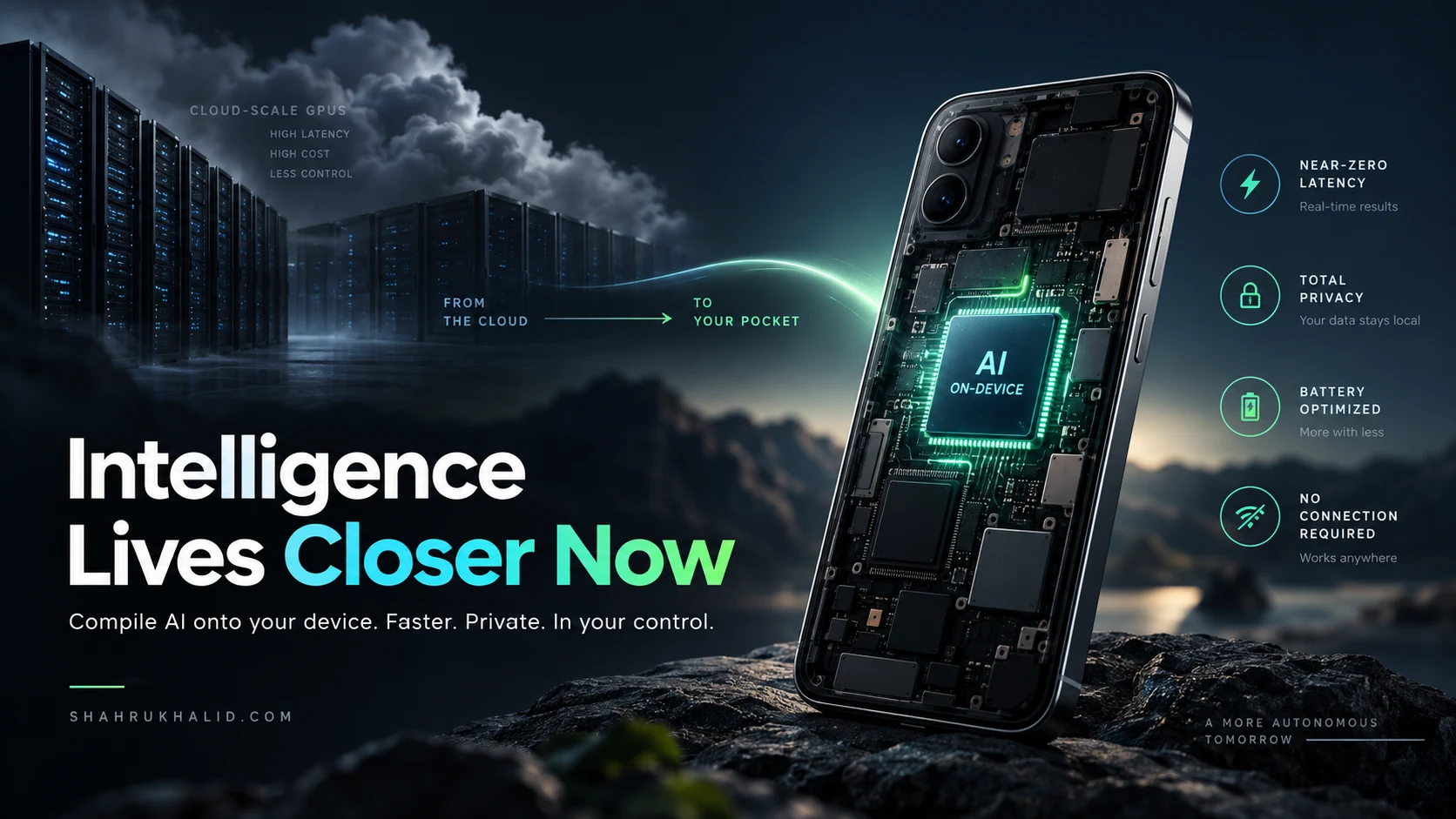
We are witnessing a “Silicon Biology” shift, where intelligence is no longer a remote service we query, but a local, inherent property of the hardware in our pockets. By compiling models directly onto mobile and embedded silicon, we reclaim sovereignty over our data and eliminate the tether of connectivity. This guide explores the architectural transition from heavy cloud-scale GPUs to the lean, precise world of on-device neural processing.
The Architectural Bottleneck of Cloud-Scale GPUs
For years, the industry operated under the assumption that bigger was better. We trained massive models on clusters of thousands of GPUs, assuming that the sheer scale of compute would solve every problem. However, this approach introduced three fundamental points of failure that are now impossible to ignore:

- Latency as a User Experience Killer: Even with high-speed fiber, the round-trip time required to send a request to a data center, process it, and return the result creates a perceptible lag. This is unacceptable for real-time applications like augmented reality or autonomous navigation.
- The Privacy Paradox: When you send data to the cloud, you lose ownership of that data. In an age of heightened cybersecurity awareness, the most secure model is one that never leaves the local hardware.
- Bandwidth Inefficiency: Streaming terabytes of sensor data to the cloud for inference is economically and physically unsustainable. It creates a massive tax on network infrastructure and battery life.
By shifting to Edge AI computing, we move the compute to the data source. We no longer treat the phone or the sensor as a dumb terminal; we treat it as an intelligent agent. This is not just a change in location; it is a change in software architecture that prioritizes local inference over remote execution.
Understanding the Silicon Biology of Modern Devices
Modern mobile processors are no longer just CPUs. They are heterogeneous systems-on-a-chip (SoCs) that feature dedicated hardware accelerators designed specifically for neural network operations. To compile intelligence directly onto this hardware, you must understand the specific terrain of the device.
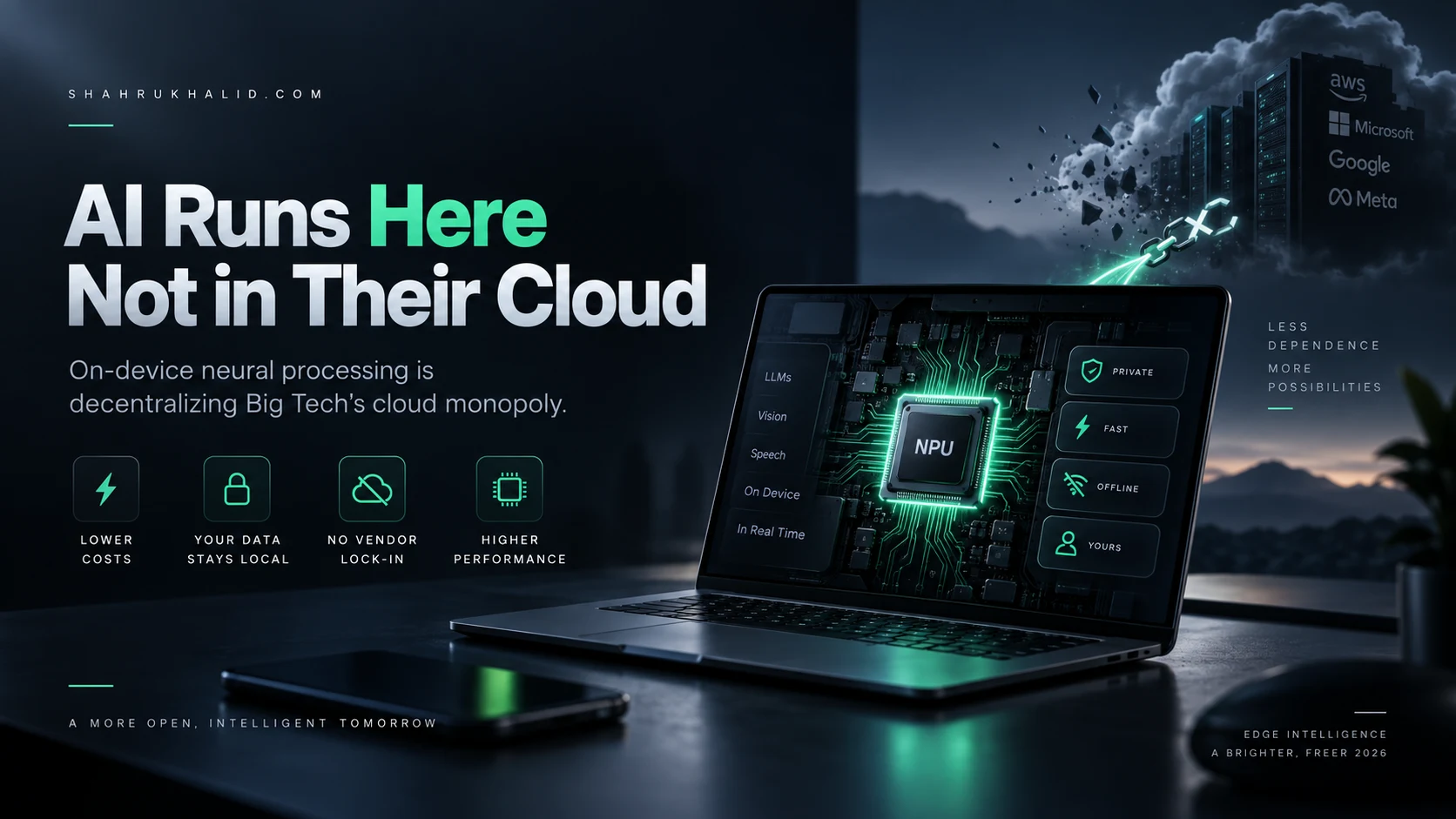
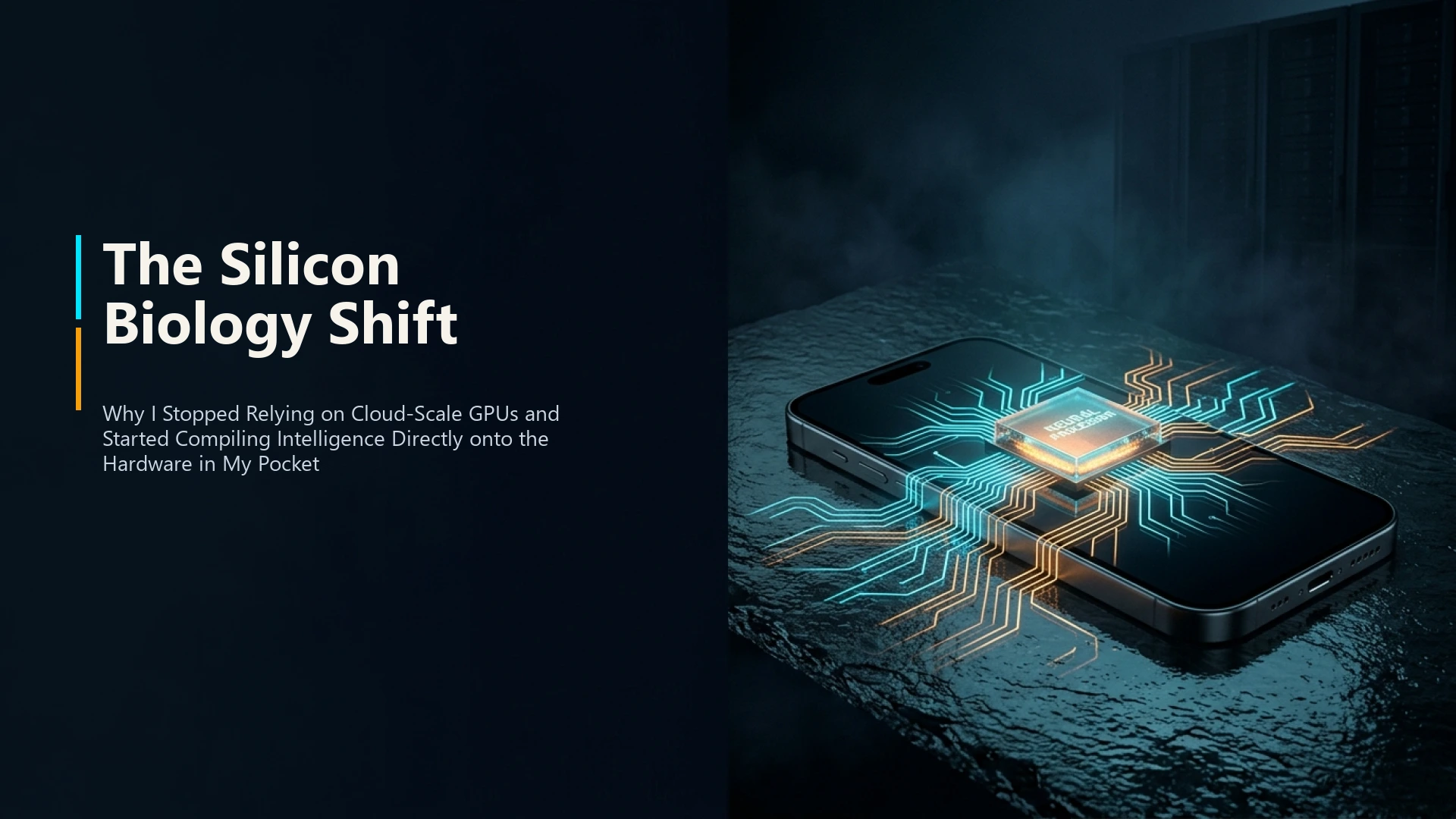
Most high-end smartphones now include a Neural Processing Unit (NPU). Unlike a general-purpose GPU, an NPU is optimized for the specific mathematical operations—primarily matrix multiplications and convolutions—that form the backbone of modern machine learning. When you optimize a model for an NPU, you are essentially “compiling” the logic into the silicon’s native language.
The Trade-off Matrix: Cloud vs. Edge
| Feature | Cloud-Scale GPU | Edge AI Computing |
|---|---|---|
| Latency | High (Network dependent) | Near-zero (Local) |
| Privacy | Requires data offloading | Data remains local |
| Connectivity | Mandatory | None required |
| Power Usage | External power grid | Battery optimized |
The Mechanics of On-Device Model Optimization
Compiling intelligence onto hardware requires a shift in mindset regarding model size and precision. You cannot simply drop a massive foundation model onto a smartphone and expect it to perform. You must utilize techniques that shrink the footprint without destroying the utility of the model.
Quantization is the most critical tool in this kit. Standard models are typically trained using 32-bit floating-point numbers. Quantization reduces these to 16-bit or even 8-bit integers. While there is a minor loss in precision, the gain in speed and the reduction in memory footprint are exponential. This allows complex neural networks to fit into the limited SRAM of mobile silicon.
Pruning is another essential methodology. Many parameters in a deep neural network are redundant or contribute very little to the final output. By systematically removing these “dead weight” neurons and connections, we can create a sparse model that runs significantly faster on fixed-function hardware. This is the essence of “Silicon Biology”—trimming the fat so the hardware can breathe.
Why Decentralized Intelligence is the Future of Tech
The move toward Edge AI computing is not just a technical optimization; it is a necessary evolution for the sustainability of the internet. As we integrate AI into every aspect of our lives—from health monitoring wearables to smart home infrastructure—the cloud will simply not be able to scale to meet the demand.
Furthermore, the “Silicon Biology” approach democratizes intelligence. When a device can run a high-performance model locally, it becomes a sovereign entity. It does not need to pay a “cloud tax” to perform basic cognitive tasks. This reduces the operating costs for developers and improves the reliability of the software, as it is no longer susceptible to server outages or network congestion.
Implementing the Edge-First Philosophy
If you are an engineer looking to shift your workflow from the cloud to the edge, start by auditing your current architecture. Identify which processes require global context (which may still need the cloud) and which processes rely on local, immediate data (which are perfect candidates for the edge).
- Profile your model: Use hardware-specific profiling tools to see where the bottlenecks are. Is it memory bandwidth? Is it the NPU’s throughput?
- Adopt a Model Zoo: Don’t reinvent the wheel. Use pre-optimized models designed for mobile architectures. These models have already been distilled and quantized for maximum efficiency.
- Prioritize Local Storage: Shift your data architecture to ensure that the device has enough local, high-speed storage to cache the models and the data they process.
- Embrace Hardware Abstraction: Use standard software frameworks that can target multiple types of hardware accelerators. This ensures your code remains portable even as silicon evolves.
Conclusion: The Responsibility of Local Compute
The transition to Edge AI computing represents a fundamental change in how we conceive of technology. By moving intelligence from the abstract, invisible cloud into the tangible, physical silicon in our pockets, we are creating systems that are faster, safer, and more autonomous. We are moving away from the era of “dumb devices connected to smart servers” and into the era of “intelligent hardware that understands its environment.”
As you continue your journey in technology, remember that the most efficient code is the code that never has to travel across a network. By compiling intelligence directly onto the hardware, you are not just optimizing for speed—you are building a more resilient, private, and capable future for your users. The silicon in your pocket is waiting; it is time to start using it to its full potential.