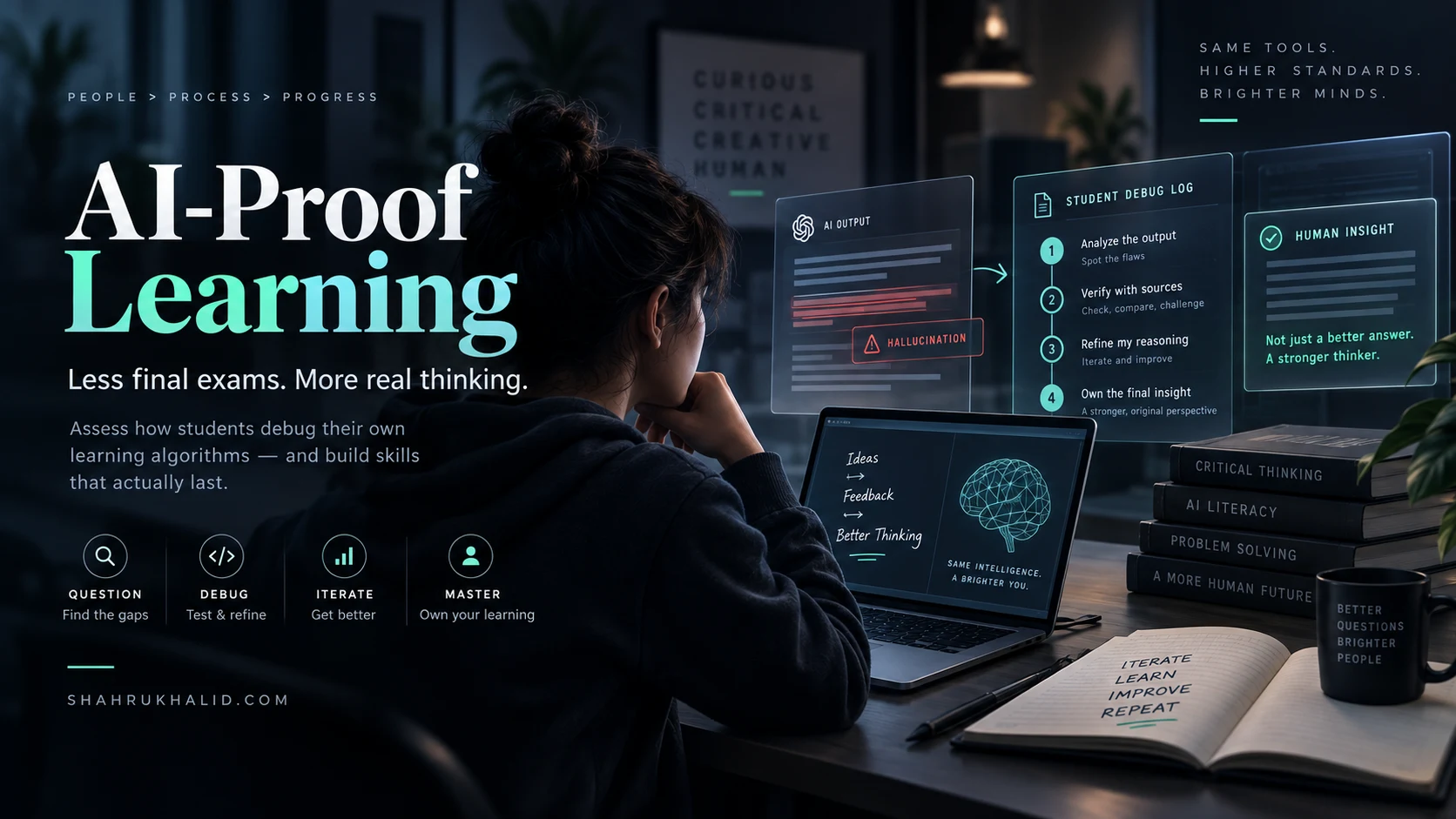
The Skill-Debt Crisis: Why Your Degree Is Losing Value to Adaptive Learning Loops and How to Future-Proof Your Career Today
Key Takeaways
- The Skill-Debt Crisis: Why Your Degree Is Losing Value to Adaptive Learning Loops and How
- The Anatomy of the Skill-Debt Crisis
- From Static Education to Adaptive Learning Loops
- The ROI of Micro-Learning and Just-in-Time Knowledge
- Strategies for Future-Proofing Your Career
The Skill-Debt Crisis: Why Your Degree Is Losing Value to Adaptive Learning Loops and How to Future-Proof Your Career Today
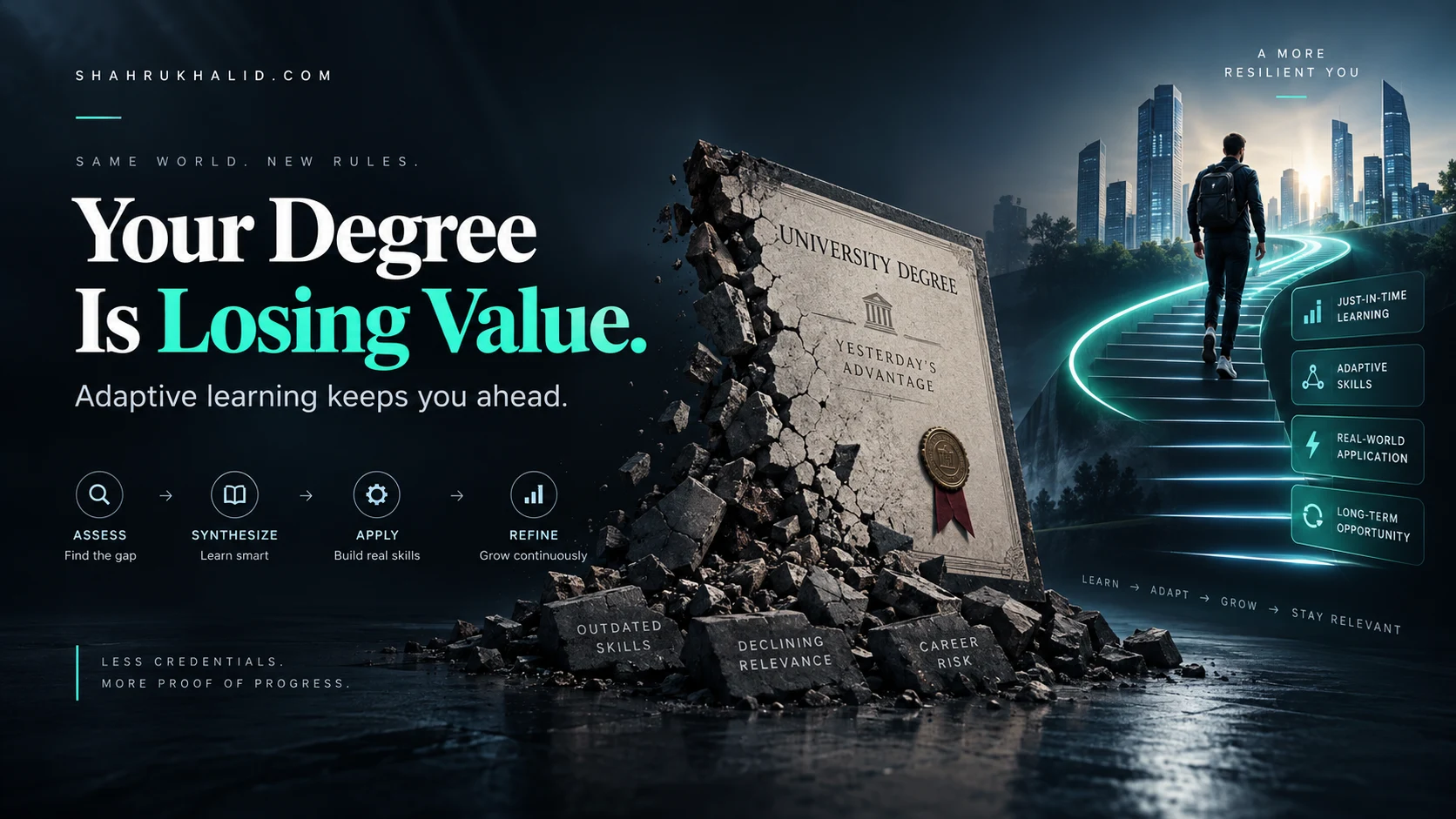
The traditional four-year degree is no longer a terminal destination for professional security, but rather a depreciating asset in an era where the half-life of a learned skill has plummeted to less than five years. To survive the accelerating disruption of the digital economy, professionals must transition from static education models to adaptive learning loops that prioritize real-time knowledge acquisition over institutional credentials.
We are currently witnessing a seismic shift in the global labor market: the Skill-Debt Crisis. Think of skill-debt like technical debt in software engineering—it is the accumulation of outdated knowledge and stagnant competencies that you continue to “pay interest” on by failing to perform at the level required by modern, AI-augmented industries. For decades, the university degree acted as a golden ticket, a signal of baseline competence that lasted a career. Today, that signal is fading. If your career strategy relies solely on the prestige of your alma mater or the static knowledge you acquired during your undergraduate years, you are actively losing ground to those who have mastered the art of the adaptive learning loop.
The Anatomy of the Skill-Debt Crisis
In the mid-20th century, a professional could learn a trade or a discipline and rely on that knowledge for three decades. Today, the velocity of technological change—driven by generative AI, autonomous systems, and decentralized workflows—means that what you learned in 2022 might already be considered legacy knowledge by 2026. This creates a dangerous gap. When your professional capability fails to keep pace with the tools of your industry, you are accruing skill-debt. The “interest” on this debt is paid in declining productivity, decreased marketability, and the eventual obsolescence of your role.
Most mid-career professionals suffer from the “Credential Trap.” They believe that because they hold a degree or a certification, they have “finished” their education. This is a fatal misconception. In the current landscape, education is not a phase you complete; it is a continuous, iterative process. The degree is merely the foundation; the structure you build upon it determines whether you thrive or collapse under the weight of technological disruption.
From Static Education to Adaptive Learning Loops
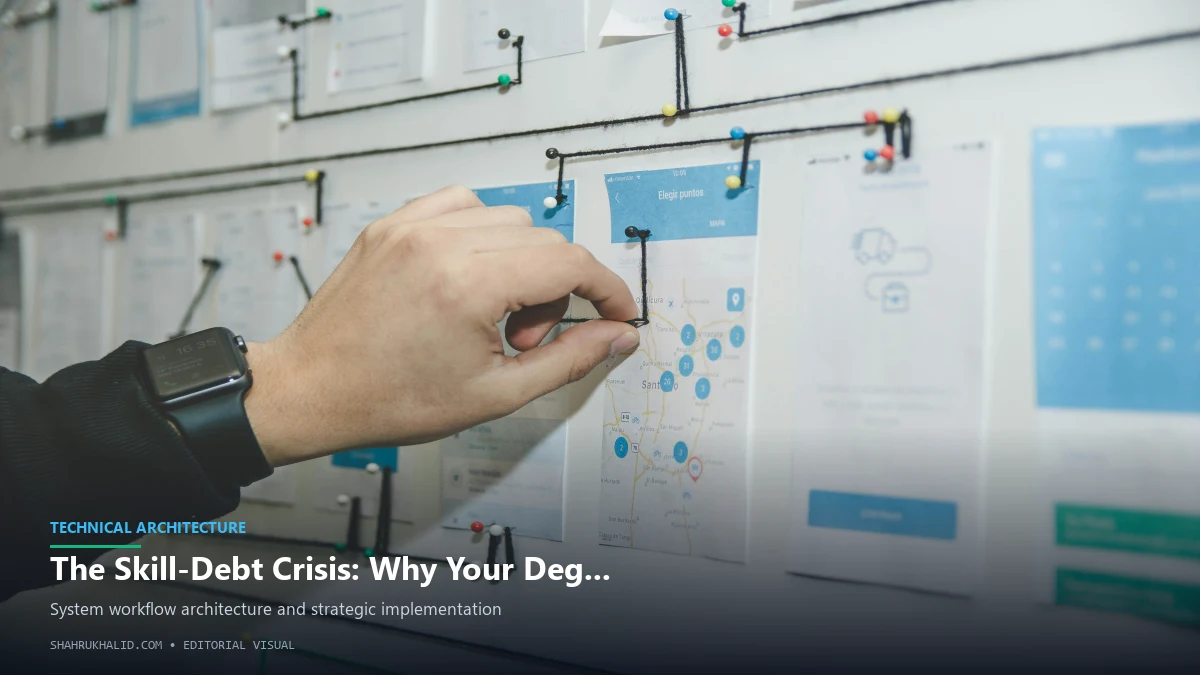
To future-proof your career, you must pivot from static, episodic learning to a system of adaptive learning loops. An adaptive loop is a four-stage process designed to minimize skill-debt and maximize ROI on your time:
- Assessment (The Signal): Identify the gap between your current output and the requirements of the top 5% of performers in your field. Use market data, job descriptions for roles two tiers above yours, and industry-specific trend reports to determine exactly what skills are currently being monetized.
- Synthesis (The Input): Instead of enrolling in broad, generic courses, curate high-density information sources. This includes technical documentation, white papers, expert podcasts, and peer-to-peer communities. Your goal is to extract the “first principles” of the new technology or methodology.
- Application (The Execution): Theoretical knowledge is worthless until it is applied. Create a “sandbox” project—a side hustle, an internal company initiative, or a personal experiment—where you apply the new skill in a low-stakes environment. This is where the learning becomes sticky.
- Refinement (The Feedback): Measure the outcome. Did your application of the skill result in time saved, revenue generated, or a more efficient workflow? If yes, codify that process. If no, adjust your approach. This feedback loop is the heartbeat of professional growth.
The ROI of Micro-Learning and Just-in-Time Knowledge
The most successful professionals of 2026 are not those who hold the most degrees, but those who have mastered “Just-in-Time” (JIT) learning. JIT learning is the antithesis of the “Just-in-Case” learning represented by the traditional university model. Just-in-Case learning assumes you might need a skill in the future, so you spend thousands of dollars and years of time learning it. JIT learning focuses on acquiring the specific skill necessary to solve a problem currently in front of you.
By focusing on micro-learning—short, hyper-focused bursts of study—you can reduce your skill-debt incrementally. When you learn in small, targeted segments, you avoid the cognitive overload of traditional education and gain the ability to pivot your skillset as market demands shift. This is the ultimate hedge against career volatility. When the market shifts, the professional who has built a habit of adaptive learning can retool in weeks, while the professional relying on their degree alone must spend years trying to catch up.
Strategies for Future-Proofing Your Career
Future-proofing is not about predicting the future; it is about building a professional architecture that is resilient to change. Here are three strategic pillars for the modern worker:
1. Build a Personal Knowledge Management (PKM) System: Your brain is for processing, not for storing. Use digital tools to capture, organize, and retrieve insights. When you encounter a new methodology or a breakthrough in your field, store it in a system that allows you to connect it to your existing knowledge. This creates a compounding effect, where every new piece of information makes your previous knowledge more valuable.
2. Cultivate “T-Shaped” Competencies: Maintain a broad base of general knowledge (the horizontal bar of the T) while developing deep, specialized expertise in one or two high-leverage areas (the vertical bar). In 2026, the most valuable professionals are those who understand the “big picture” of how their industry works but can execute with surgical precision in a specific, high-demand niche.

3. Prioritize Agency Over Credentials: In the eyes of the modern employer, a portfolio of successful projects carries more weight than a piece of parchment. Focus on building a “proof of work.” Whether it is a public blog, a GitHub repository, or a history of successfully led projects, ensure that your accomplishments are visible and verifiable. This is the strongest signal you can send in a crowded market.