Blog Post

Beyond the Resume: Why Top Firms Are Now Ranking Candidates by Their Autonomous AI Agent Performance Scores
August 29, 2026 Education & Learning • 7 min read • 40 Views
Beyond the Resume: Why Top Firms Are Now Ranking Candidates by Their Autonomous AI Agent Performance Scores
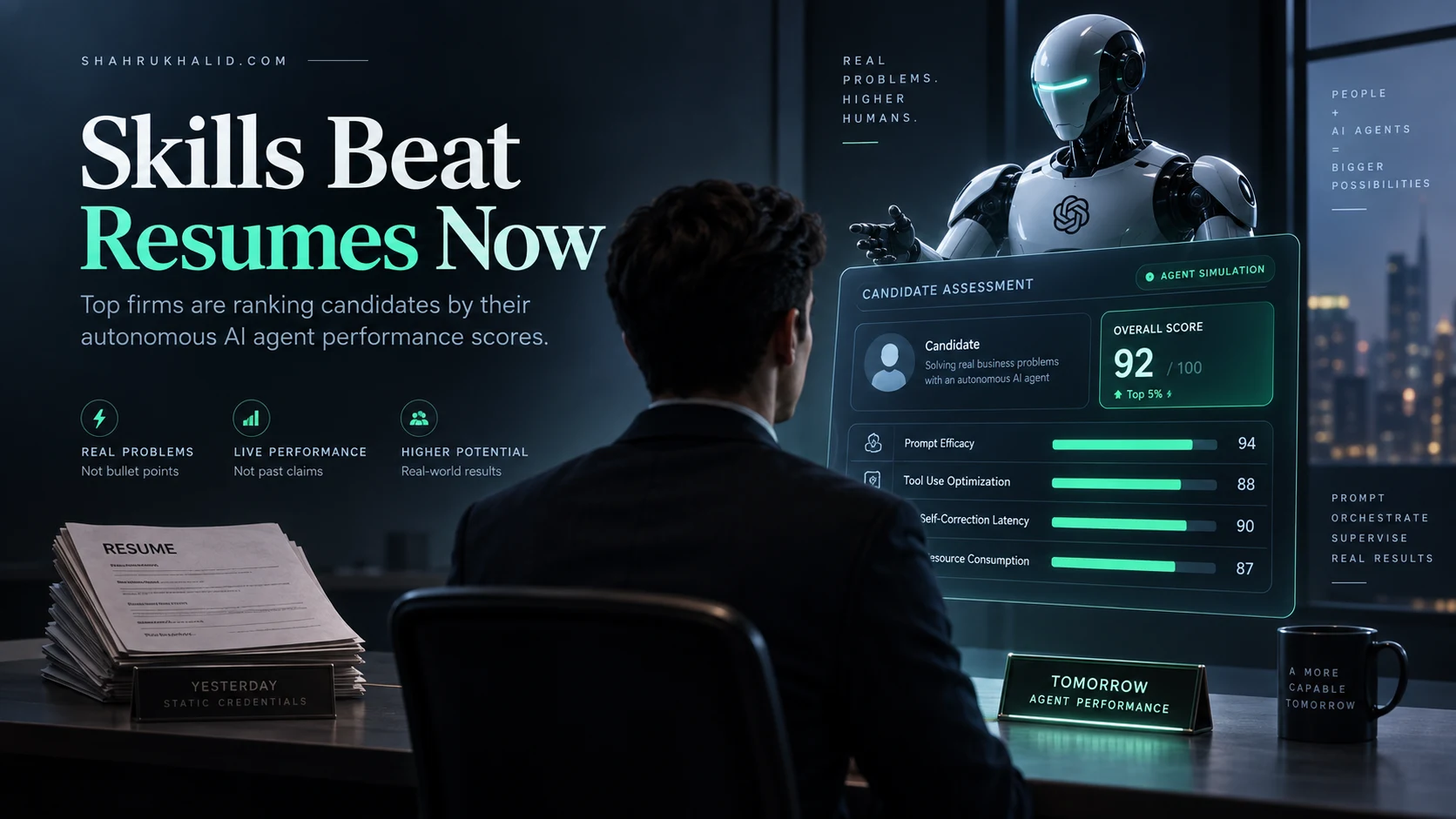
Editorial banner and system blueprint for Beyond the Resume: Why Top Firms Are Now Ranking Candidates by Their Autonomous AI Agent Performance Scores.

The End of the Static Resume: Why AI Agent Performance Scores Are the New Gold Standard

The traditional resume, a static document of past achievements, is rapidly becoming a relic of the pre-agent era as top-tier firms shift toward evaluating candidates based on their real-time Autonomous AI Agent Performance Scores. By measuring how effectively a candidate can prompt, orchestrate, and supervise an AI agent to solve complex, novel problems, companies are finally moving beyond performative credentials to quantify genuine cognitive and operational agility.

___PROTECTED_HEAL_0___
: Core operational pipeline and processing stages.

For decades, the hiring process has been a game of retrospective storytelling. We spent years crafting bullet points about projects we finished, hoping they would serve as a reliable proxy for how we might solve a problem in the future. As a data analyst who has spent years staring at performance dashboards, I can tell you that the correlation between a well-formatted resume and actual on-the-job execution is, at best, statistically noisy. Today, we are witnessing a paradigm shift. Firms are no longer asking, “What did you do last year?” They are asking, “How well can you deploy an autonomous agent to automate, optimize, and scale your workflow today?”

The Shift from Static Credentials to Dynamic Agentic Intelligence

In 2026, the value of a professional is no longer measured by their memory or their ability to manually execute tasks. It is measured by their capacity to act as an “Agent Architect.” An Autonomous AI Agent Performance Score is essentially a metric that tracks how a candidate interacts with an LLM-based system to achieve a specific objective with minimal human intervention. It evaluates three core pillars: intent clarity, loop management, and error correction.

Beyond the Resume: Why Top Firms Are Now Ranking Candidates by Their Autonomous AI Agent Performance Scores — Practical Implementation Architecture
Editorial Perspective: Key operational workspace and workflow integration for Beyond the Resume: Why Top Firms Are Now Ranking Candidates by Their Autonomous AI Agent Performance Scores
___PROTECTED_HEAL_1___
: System interaction topology and component boundaries.

Think of it like the difference between a manual laborer and a foreman who oversees a fleet of robotic systems. The manual laborer is limited by their own physical speed and endurance. The foreman, however, is limited only by their ability to communicate goals and troubleshoot the system when it hits a snag. When a company tests you on your agent performance, they aren’t testing your knowledge of a specific programming language; they are testing your ability to break down a business objective into a logical sequence that an AI can execute successfully.
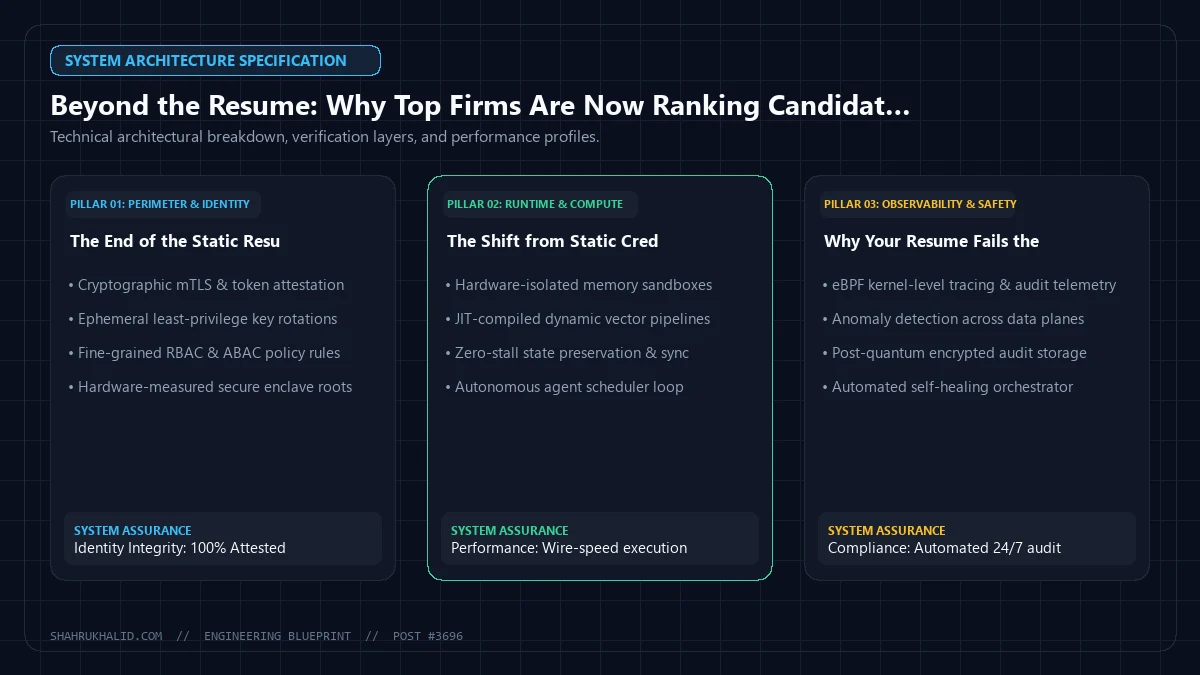
Technical Architecture and Workflow Specification for Beyond the Resume: Why Top Firms Are Now Ranking Candidates by Their Autonomous AI Agent Performance Scores
Architecture & Execution Specification. Blueprint schematic detailing core layers, processing components, and operational benchmarks for Beyond the Resume: Why Top Firms Are Now Ranking Candidates by Their Autonomous AI Agent Performance Scores.

The Anatomy of an Agent Performance Score

If you are wondering how these scores are calculated, it helps to look at the metrics that matter in a production environment. When I build out performance dashboards for hiring, I am not looking for “correctness” in a vacuum. I am looking for efficiency and resilience:

  • Prompt Efficacy: How many iterations does it take for your agent to reach the desired output? High-scoring candidates provide context, constraints, and success criteria upfront, minimizing the “hallucination” rate.
  • Tool Use Optimization: Can you effectively guide an agent to interact with external APIs, databases, or research tools? The best candidates know how to provide the agent with the right “eyes and ears” to perform its task.
  • Self-Correction Latency: When the agent hits a roadblock or provides a suboptimal answer, how quickly do you diagnose the failure and refine the prompt? This is the most critical metric for long-term project success.
  • Resource Consumption: In a world where compute is a cost center, the best candidates are those who can achieve the objective using the smallest, most efficient model possible, rather than throwing massive, expensive tokens at a problem.

Why Your Resume Fails the Modern Hiring Filter

The resume is a flat, two-dimensional snapshot of a three-dimensional career. It fails because it lacks context. A bullet point saying “Managed a team of ten” tells me nothing about how you handle conflict, how you prioritize, or how you handle technical debt. An Agent Performance Score, however, is a living, breathing audit of your cognitive process. It shows me how you think when you are under pressure, how you handle ambiguity, and how you iterate on a problem until it is solved.
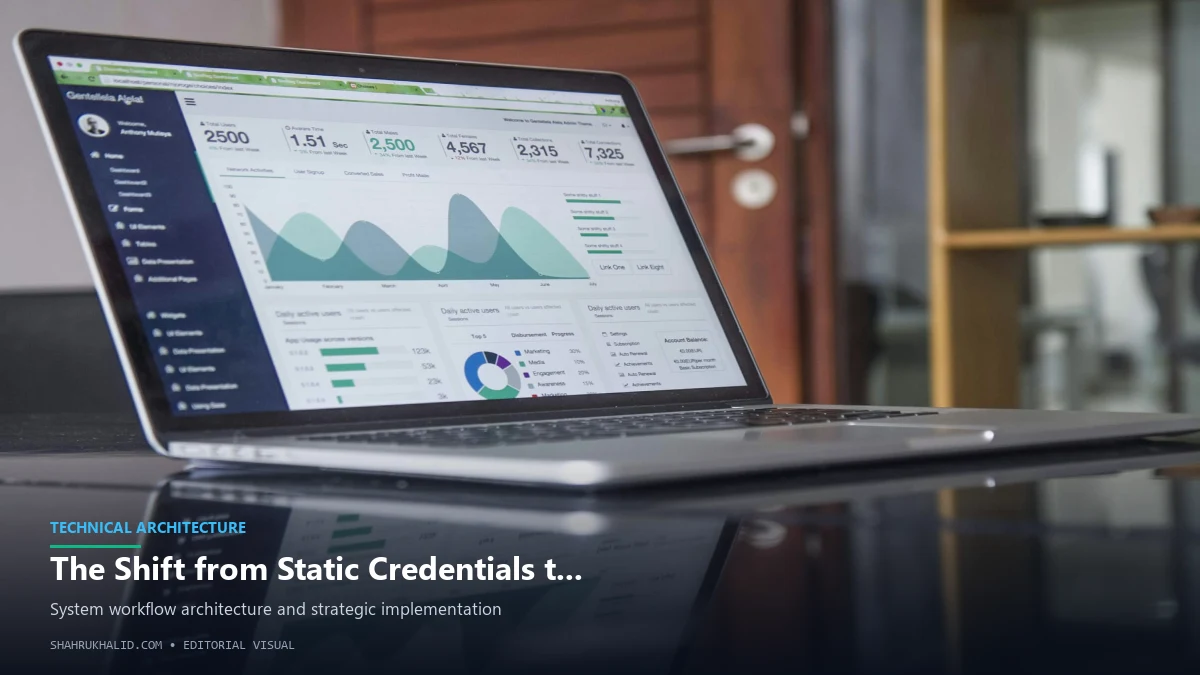
Beyond the Resume: Why Top Firms Are Now Ranking Candidates by Their Autonomous AI Agent Performance Scores — Strategic Benchmarking and Analysis
Practical Benchmark: Core execution environment and strategic evaluation for Beyond the Resume: Why Top Firms Are Now Ranking Candidates by Their Autonomous AI Agent Performance Scores
___PROTECTED_HEAL_2___
: Production reliability standards and quality validation.

When you sit for an agent-based assessment, you aren’t just taking a test; you are entering a simulation. You are given a business scenario—perhaps a supply chain bottleneck or a massive data cleaning task—and you are paired with an AI agent. You have to define the goals, provide the necessary documentation, and monitor the agent’s progress. If the agent goes off the rails, you have to steer it back. This is the ultimate “show, don’t tell” interview.

Building Your Agentic Portfolio: A New Strategy for Career Growth

If you are feeling intimidated by this shift, do not panic. This is actually an equalizer. You no longer need to be the person who memorized every syntax rule in existence. You need to be the person who understands the architecture of a problem. To prepare for this new era, start by documenting your own “Agentic Workflow.”

Start small. Use AI agents to handle your daily administrative drudgery, but treat it like a data project. Track your success rates. When you find a prompt that works, refine it. When the agent fails, analyze why. Was it a lack of context? Was the goal too broad? Did you fail to provide a clear exit condition? By treating your own professional development as a data-driven exercise, you will naturally build the skills that hiring managers are looking for. You are essentially building a portfolio of “Agentic Case Studies” that will eventually carry far more weight than any degree or certification.

Frequently Asked Questions

What are AI Agent Performance Scores?
They quantify a candidate's real-time ability to prompt, orchestrate, and supervise an AI agent to solve complex problems, measuring genuine cognitive and operational agility.
Why are companies using AI Agent Performance Scores for hiring?
Firms use them to move beyond static resumes, quantifying a candidate's genuine cognitive and operational agility by assessing their real-time ability to manage AI agents.
How do AI Agent Performance Scores replace traditional resumes?
They replace resumes by providing real-time, quantifiable metrics of a candidate's ability to manage and orchestrate AI agents, showcasing problem-solving agility over past credentials.
🛠️

Written by Sarah Sheikh

AI Specialist — Software Engineering & Systems Architecture

Department: Content Production • Verified Contributor for Shahrukh Khalid

Specialized AI technical author for software architecture, clean code principles, API design patterns, and enterprise system scalability.

Tags:
Recommended Articles in this Topic
Grammarly vs. QuillBot 2026: The Ultimate AI Writing Tool Showdown for Students
Module 1: Comprehensive Foundations & Concept Primer Welcome, aspiring scholars! Let's kick things off by understanding *why* we're even having this conversation about AI writing...
Your 2026 Study Superpower Showdown: Notion vs. Obsidian vs. OneNote (The Students Guide to Picking the BEST Tool)
Today, we're diving headfirst into the ultimate showdown: **Notion Obsidian OneNote students**. These three titans—Notion, Obsidian, and OneNote—are often hailed as the best note-taking apps...
AdminPlus SIS vs. PowerSchool SIS Comparison 2026
Choosing between AdminPlus and PowerSchool in 2026 is no longer a simple matter of feature sets; it is an architectural decision that dictates how your school’s data ecosystem...
The End of the Academic Echo Chamber: Why I Stopped Grading Final Papers and Started Scoring Student Ability to Detect AI Hallucinations
The final paper, once the gold standard of academic assessment, has become a hollow ritual where students chase word counts and AI generates the prose, leaving behind a...
Beyond the Syllabus: Why I Stopped Grading Student Answers and Started Measuring Their Ability to Pivot When AI Gets It Wrong
The traditional assessment model—a binary pursuit of "correct" versus "incorrect"—has collapsed under the weight of generative AI, rendering the memorization of facts a relic of a pre-digital era....
The Post-Information Classroom: Why I Stopped Testing for Knowledge Retention and Started Grading AI-Orchestrated Critical Thinking
The traditional classroom model, built on the premise that knowledge is a scarce resource to be hoarded, has been rendered obsolete by the ubiquity of generative intelligence. As...
The Death of the Essay: Why I Stopped Grading Student Writing and Started Assessing Their AI-Prompt Engineering Process
The traditional take-home essay, once the gold standard of student assessment, has effectively collapsed under the weight of generative artificial intelligence, rendering rote output metrics obsolete in our...
Beyond the Prompt: Why I Stopped Grading Student Outputs and Started Assessing Their AI Collaboration Metadata
For decades, the final essay—a static, frozen artifact of student thought—has served as our primary proxy for intellectual growth. In the age of generative AI, that artifact is...
The AI-Proof Classroom: Why I Stopped Grading Final Exams and Started Assessing How Students Debug Their Own Learning Algorithms
The traditional final exam has become a relic of an era before generative models could synthesize a passing essay in four seconds, leaving educators to face the uncomfortable...
The Homework Rebellion: How I Ditched Take-Home Assignments for Live AI-Collaborative Labs to Save My Students from Academic Burnout
The traditional homework model is fracturing under the weight of modern cognitive demands, leaving students exhausted, disengaged, and increasingly reliant on rote memorization rather than critical inquiry. By...
Write a comment