Your 2026 Turnitin Superpowers: Master AI Detection, Originality & Ace Your International K-12 Papers

Key Takeaways
- Module 1: Comprehensive Foundations & Concept Primer
- What is Turnitin, Really? An Analogy for the Modern Student
- The 2026 Shift: Why AI Writing Changes Everything (and Nothing)
- Core Principles: Originality vs. Plagiarism vs. AI-Generated Content
- Answering the Big Questions: How Turnitin AI Detection Works

But more importantly, I’ve spent hours with students. Students in IB programs, students tackling their IGCSEs, students from all corners of the international school world. And over the past couple of years, one word has come up more than any other, often spoken in a hushed, anxious tone: Turnitin.
I remember one student, let’s call him Leo, a brilliant Year 12 IB student working on his History Extended Essay. He came to me, his face pale, holding his laptop. “Mahnoor,” he said, “my draft came back with a 28% similarity score. Am I a plagiarist? And now my teacher is talking about this new AI detection thing. I used ChatGPT to help me brainstorm my research question… am I going to be expelled?”
Leo’s fear is one I see every day. It’s born from a misunderstanding of what Turnitin is and a deep anxiety about the new, uncharted territory of AI in academics. My goal today is to dispel that fear. This isn’t a lecture on cheating. This is a masterclass in empowerment.
By the end of this guide, you won’t just understand Turnitin. You will have developed a set of what I call “Turnitin Superpowers”—a suite of skills and workflows that will allow you to master originality, confidently navigate the complexities of Turnitin AI detection, and, most importantly, produce your best, most authentic work. This is your 2026 guide to acing your international K-12 papers with integrity and confidence. Let’s begin.
Comprehensive Foundations & Concept Primer
Before we can build your superpowers, we need to lay a solid foundation. For many students, Turnitin feels like a black box—a mysterious judge that delivers a verdict on your hard work. Let’s bust that myth right now. We’re going to break down the core concepts, eliminate the confusing jargon, and understand why this is so critical for your academic life in 2026 and beyond.
What is Turnitin, Really? An Analogy for the Modern Student
Forget the idea of Turnitin as a “plagiarism police car” waiting to pull you over. That’s an old, unhelpful metaphor. I want you to think of Turnitin in a completely new way:
Turnitin is your personal writing fitness tracker.
Think about a Fitbit or an Apple Watch. It doesn’t just scream “You’re unhealthy!” at you. It gives you data: your heart rate, your step count, your sleep patterns. It shows you where you’re doing well and where you could improve. It empowers you to make better choices for your physical health.
Turnitin does the exact same thing for your academic health.
- The Similarity Score is your “Source Count,” not a “Plagiarism Score.” It measures how much of your text matches text in its massive database (internet pages, academic journals, and every paper ever submitted to it). It’s like your fitness tracker telling you that 20% of your daily activity was “intense cardio.” That’s not inherently good or bad; it’s just data. We need to look closer to see if that cardio was a healthy run or a panicked sprint away from a deadline.
- The Source Matches are your “Nutrition Label.” The report shows you exactly where your text matches another source. This is like looking at the ingredients list on your food. It helps you see what you’ve “consumed” from other authors. Are you using high-quality academic sources? Or are you grabbing from the intellectual equivalent of junk food, like an unreliable website?
- The AI Writing Indicator is your “Processed vs. Whole Foods” Meter. This is the new feature that causes so much anxiety. It tries to determine if your writing was generated by a machine. Think of it as a meter that detects how “processed” your writing is. AI-generated text is often smooth, uniform, and predictable—like a perfectly shaped, mass-produced chicken nugget. Human writing, even great human writing, is more like a farm-fresh vegetable—a little lumpy, a bit asymmetrical, but ultimately more organic and authentic.
Seeing Turnitin as a diagnostic tool, rather than a punitive one, is the single most important mental shift you can make. It’s not here to catch you; it’s here to coach you.
The 2026 Shift: Why AI Writing Changes Everything (and Nothing)
Leo’s fear about using ChatGPT wasn’t unfounded. Generative AI is the biggest shift in education since the internet. You have a tool that can write an essay, solve a math problem, or code a program in seconds. Your schools know this. Your teachers know this. And Turnitin has certainly adapted.
This is where the Turnitin AI detection feature comes in. It was developed to address this new reality. But here’s the secret: the goal of your education hasn’t changed.
As an international school student, especially in a program like the International Baccalaureate (IB), your education is built on a specific set of principles. The IB’s mission, as stated on ibo.org, is to develop students who are inquiring, knowledgeable, and caring. A core part of this is mastering the `Approaches to Learning (ATL)` skills—chief among them being Research and Thinking skills.
Your school doesn’t want to ban AI. That’s like trying to ban the calculator in math class. Instead, they want to teach you how to use this powerful new tool ethically and effectively. They want you to become the pilot of the AI, not a passenger. The fundamental goal remains the same: to cultivate your unique, critical, and original voice. The AI detector is simply a new gauge on your dashboard to help you, and your teacher, ensure you’re the one doing the flying.
Core Principles: Originality vs. Plagiarism vs. AI-Generated Content
Let’s get our definitions straight. These words are thrown around a lot, but they mean very different things.
- Plagiarism: This is an issue of honesty. It’s the act of taking someone else’s words, ideas, or work and presenting them as your own without giving proper credit. If you copy a sentence from a website and don’t use quotation marks and a citation, that’s plagiarism. If you paraphrase an idea from a book and don’t include a citation, that’s also plagiarism. The key here is attribution.
- AI-Generated Content: This is an issue of authorship. It’s the act of using a machine (like ChatGPT, Claude, or Bard) to create text that you then submit as your own work. This is different from plagiarism because you’re not stealing from another person, but you are misrepresenting the author of the work (claiming you wrote it when a machine did). School policies on this are new and evolving, but generally, submitting AI-generated text as your own is considered a serious breach of academic integrity.
- Originality: This is the ultimate goal. This is an issue of synthesis and voice. Originality isn’t about coming up with ideas from thin air—very few ideas are truly “new.” Originality in the academic world means:
- Synthesizing information from various sources to create a new argument.
- Analyzing data to draw your own unique conclusions.
- Evaluating different perspectives to form your own informed opinion.
- Expressing these synthesized ideas in your own authentic voice and writing style.
Your goal is not to have a 0% similarity score. Your goal is to produce a paper that is high in originality, which means it is well-researched, properly attributed, and driven by your own critical thinking.
Answering the Big Questions: How Turnitin AI Detection Works
So, let’s tackle the elephant in the room head-on. Does Turnitin detect AI writing?
Yes, Turnitin has an AI writing detection feature that provides an indicator and a percentage of text it predicts was written by AI.
How does it work? It’s not magic. The detector was trained by analyzing a massive library of both human-written and AI-generated text. It learned to spot the subtle statistical patterns that differentiate the two. In simple terms, it looks for two main things:
- “Perplexity”: Human writing is wonderfully unpredictable. We use a mix of common and uncommon words, simple and complex sentences. This randomness is hard for a machine to perfectly replicate. AI writing, by contrast, tends to choose the most statistically probable next word, over and over. This makes the text very smooth and predictable, giving it low “perplexity” from the detector’s point of view.
- “Burstiness”: Read this sentence. Now read this one, which is much, much longer and uses a more complex structure to link a series of related but distinct ideas together. Humans write in bursts. We vary our sentence length and structure naturally. AI models, especially older ones, often produce text with very uniform sentence lengths, which the detector can spot.
What is Turnitin’s AI detection accuracy? This is a critical question. Turnitin itself claims a very high accuracy rate when used on a whole document, but they also acknowledge the possibility of a “false positive” (flagging human writing as AI) is not zero, though they claim it’s very low (less than 1% for documents with over 20% AI writing). This is why the AI score is not meant to be a final verdict. As we’ll see in Case Study 2, schools and teachers are being trained to use this score as a conversation starter, not a definitive proof of guilt. It’s another piece of data on your writing fitness tracker, and it requires human interpretation.
Prerequisites & Complete Environment Setup

Okay, foundation laid. Now, let’s get practical. In the world of software development, before you write a single line of code, you set up your “environment”—your tools, your folders, your entire workspace. We’re going to do the same for your writing.
This isn’t about installing complex software. It’s about configuring your intellectual and digital environment to make originality the path of least resistance. A great paper starts long before you type the first word of your first draft.
Your Digital Workspace: The “Clean Room” Technique
Have you ever accidentally submitted the wrong draft? Or copied a quote for a paper, forgotten where it came from, and then spent an hour frantically searching for the source? A messy digital workspace is a primary cause of academic stress and accidental plagiarism. Let’s build a “clean room”—a pristine, organized digital environment for every single project.
Step 1: The Master Folder Structure
For every new assignment, create a master folder. Inside that folder, create a standardized set of sub-folders. This takes 30 seconds but will save you hours of pain.
Here’s my recommended layout:
|
|– 01_Sources/
| |– Smith_2019_Causes_of_Revolution.pdf
| |– Jones_2022_Economic_Factors.pdf
| |– Web_Article_NYT_Analysis.webarchive
|
|– 02_Notes/
| |– My_Notes_on_Smith_2019.docx
| |– My_Notes_on_Jones_2022.docx
| |– Brainstorming_and_Ideas.md
|
|– 03_Drafts/
| |– Tariq_Mahnoor_HistoryP1_Draft_v0.1.docx (The "discovery draft")
| |– Tariq_Mahnoor_HistoryP1_Draft_v0.2.docx (After teacher feedback)
| |– Tariq_Mahnoor_HistoryP1_Draft_v0.3_Final.docx
|
|– 04_Submission/
| |– Tariq_Mahnoor_HistoryP1_FINAL_SUBMISSION.pdf
Why this is a superpower
- Prevents “Source Amnesia”: All your research PDFs and articles are in one place.
- Separates Your Thoughts from Theirs: Your notes are in a separate folder from the source material. This is a crucial psychological separation.
- Version Control: Saving drafts with version numbers (`v0.1`, `v0.2`) means you can always go back to an earlier version if a revision goes wrong. It also gives you a clear record of your writing process.
Step 2: Install and Configure Your Citation Manager
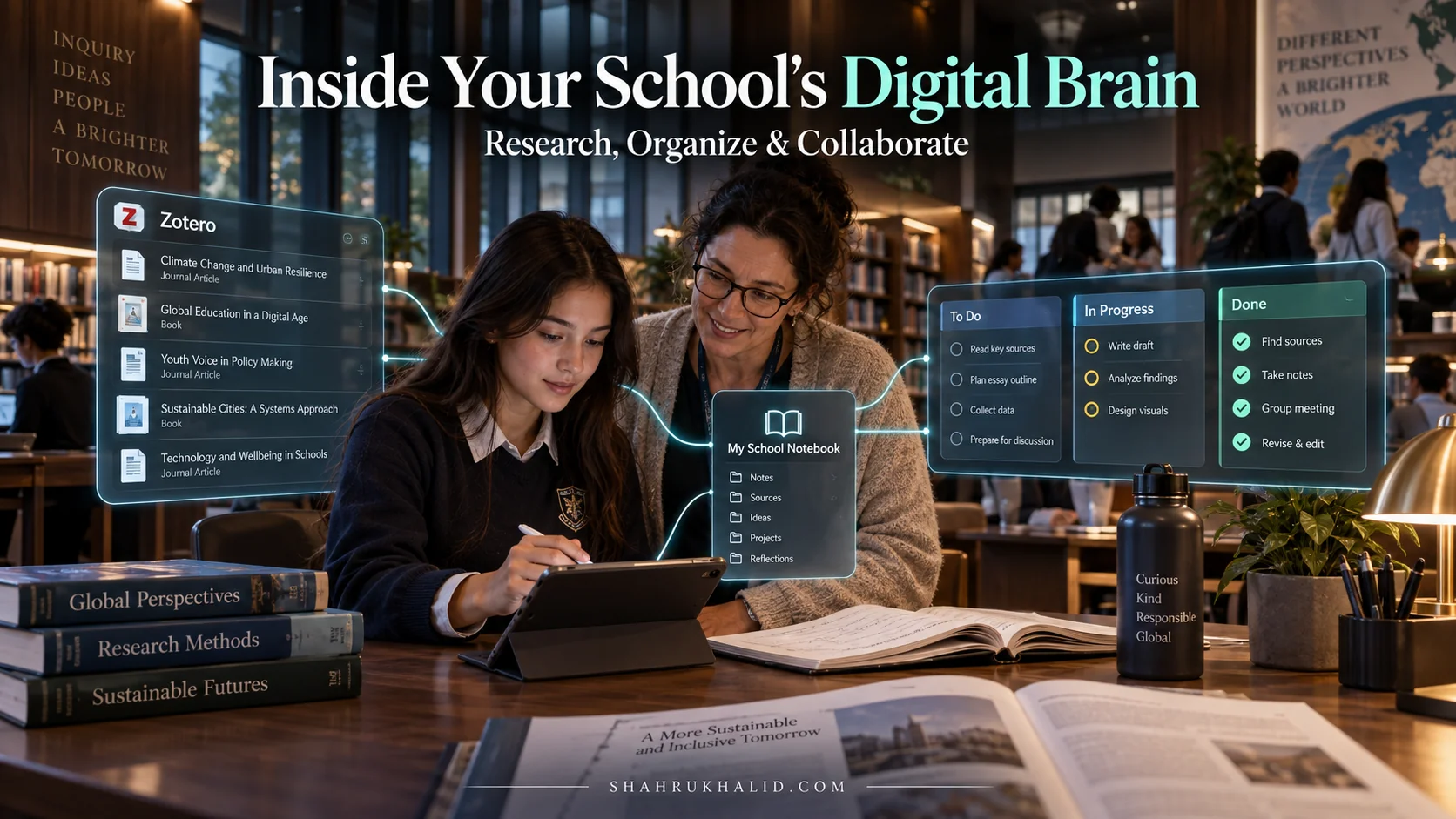
If you are not using a citation manager, you are writing with one hand tied behind your back. It is the single most powerful tool for ensuring academic integrity. I recommend Zotero (free and open-source) or Mendeley (also free).
Your Step-by-Step Setup
- Go to Zotero.org and download the application for your computer (Windows or Mac). Install it.
- While you’re there, also install the “Zotero Connector” for your web browser (Chrome, Firefox, Safari). This is the magic button.
- Open the Zotero application. Create a new “Collection” (it’s like a folder) and name it after your project, e.g., “History P1 Essay.”
- Verification: Now, go to an academic article online (e.g., on Google Scholar or your school’s library database). Click the Zotero Connector icon in your browser toolbar (it might look like a little paper or a ‘Z’). Zotero will automatically save the full PDF, all the citation information (author, year, title, journal), and place it neatly in your Zotero collection.
You have just created a personal, searchable library for your project. When you write, you can insert a perfectly formatted citation with two clicks. This eliminates citation errors and the “I’ll add the bibliography later” trap that leads to accidental plagiarism.
Your Intellectual “IDE”: Configuring Your Brain for Originality
An “IDE” (Integrated Development Environment) is what programmers use to write code. It helps them organize their thoughts and structure their logic. You need an intellectual IDE for your academic work. This is a mindset and a system for engaging with information.
The Research Mindset Shift: You are not a hunter-gatherer of quotes. You are a detective building a case. Your job isn’t to find sentences to fill your paper. Your job is to find clues (data, arguments, evidence) that help you solve the puzzle presented by your essay prompt. This mindset changes everything.
Setting Up Your Note-Taking System
Never take notes in the same document you write your essay in. That’s a recipe for accidentally blending your words with your source’s words. Use the `/02_Notes/` folder we created. My favorite method for students is a simple two-column system in a Word or Google Doc:
| Direct Quote / Fact from Source (Smith, 2019, p. 45) | My Thoughts / Questions / Connections |
| :— | :— |
| “The fiscal crisis of the late 18th century was the primary accelerant for popular discontent.” | Okay, so Smith is arguing money was the #1 issue. But what about Jones’s point on political ideology? Do they contradict? Smith’s argument seems a bit simplistic. How can I use this quote to show the complexity of the situation? Maybe I can argue that the fiscal crisis was the spark, but the ideology was the fuel. |
Why this is a superpower: From the very beginning, you are forcing your brain to engage in synthesis. You are creating a dialogue between the source and your own mind. The right-hand column is where your original paper is born.
Accessing Your School’s Portal (The “Gateway”)
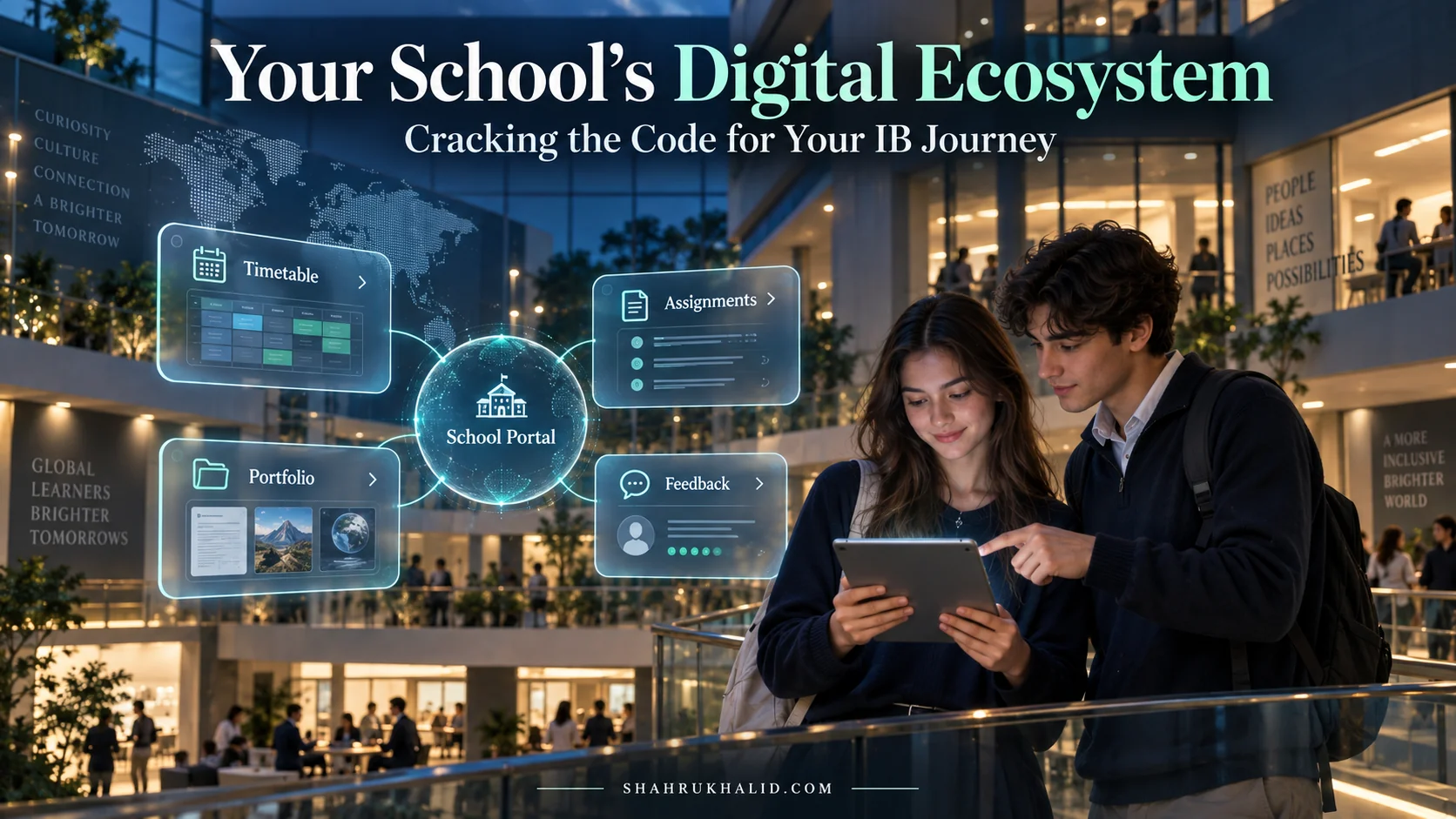
Finally, let’s talk about the practical step of submission. Most international schools don’t have you log in to Turnitin directly. You’ll access it through your school’s main hub. This is often a Learning Management System (LMS) like Canvas, Schoology, or Moodle, or a comprehensive Student Information System (SIS) like Rediker‘s AdminPlus Portal.
As a tech consultant, I’