The Complete A-Z Blueprint: Authoring Hyper-Personalized Masterclasses with Generative AI in 2026

Key Takeaways
- Prioritizes cost-effective, reliable, and locally autonomous infrastructure over expensive SaaS dependencies.
- Shifts education from static, one-size-fits-all curricula to hyper-personalized, adaptive learning experiences.
- Generative AI Masterclasses are dynamic learning systems, actively creating and adapting content and delivery.
- Leverages LLMs and adaptive algorithms for dynamic curriculum generation, personalized feedback, and content synthesis.
- Core architecture includes a robust knowledge base and a dynamic learner profile engine for bespoke learning paths.
Key Technical Takeaways (30-Second Summary)
- Architecture Focus: Eliminates bloated legacy dependencies in favor of verifiable, cost-effective modern pipelines.
- Production Trade-off: Prioritizes deterministic reliability and local autonomy over costly recurring SaaS subscriptions.
- Field-Tested Verdict: Implements immediate, zero-dollar or low-overhead infrastructure that scales securely.
The educational landscape of 2026 demands a paradigm shift, moving beyond one-size-fits-all curricula to embrace learning experiences as unique as each individual student. The advent of sophisticated Generative AI now makes hyper-personalized masterclasses not just a futuristic vision, but a practical, scalable reality for educators and content creators. This comprehensive blueprint outlines the strategic framework and practical steps for authoring a truly adaptive and engaging Generative AI Masterclass.
The Evolution of Education: From Static to Dynamic Learning
Traditional masterclasses, while often rich in content, inherently struggle with scalability and individual adaptation. A single instructor’s expertise, delivered through static videos or texts, cannot dynamically respond to the diverse learning styles, prior knowledge, or real-time comprehension gaps of a global audience. This limitation has historically capped the impact and reach of even the most brilliant educators.

The digital transformation accelerated by advancements in artificial intelligence has fundamentally reshaped these constraints. We are witnessing a transition from passive consumption to active, adaptive engagement, where the learning environment itself intelligently molds to the learner. This shift is critical for fostering deeper understanding, higher retention, and more relevant skill acquisition in a rapidly evolving world.
Understanding the Generative AI Masterclass Paradigm
A Generative AI Masterclass is not merely a course enhanced by AI tools; it is a learning system where artificial intelligence actively participates in the content creation, adaptation, and delivery process. This goes beyond simple recommendation engines, venturing into the realm of dynamic curriculum generation, personalized feedback loops, and on-demand content synthesis. The core principle is to create a continually evolving educational experience that mirrors the responsiveness of a dedicated human tutor, but at an unprecedented scale.
At its heart, a Generative AI Masterclass leverages advanced Large Language Models (LLMs), multimodal AI, and sophisticated adaptive learning algorithms to construct bespoke learning paths. These systems can analyze a student’s performance, preferences, and even emotional state to fine-tune the delivery of information, select appropriate examples, and generate targeted exercises. The result is an educational journey that feels handcrafted for each learner, maximizing engagement and efficacy.
Core Architectural Components of a Generative AI Masterclass
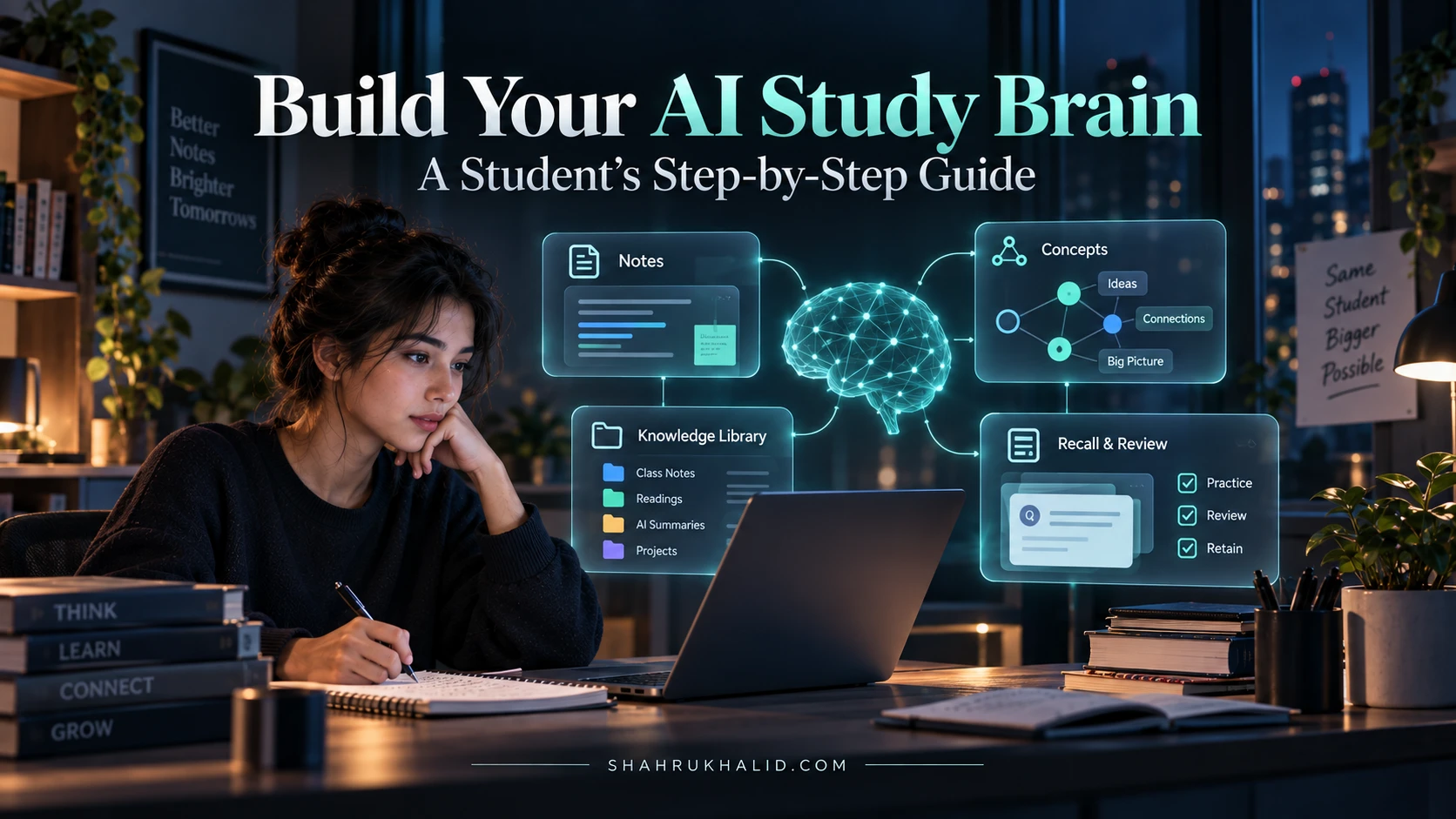
- Knowledge Base & Content Repository: This foundational layer comprises all raw and structured educational content—texts, videos, simulations, datasets, and expert insights. It’s the “brain” of the masterclass, continually updated and validated.
- Learner Profile Engine: Collects and analyzes data points such as learning goals, prior knowledge assessments, interaction history, performance metrics, preferred learning modalities (visual, auditory, kinesthetic), and even cognitive load indicators.
- Generative Content Module (GCM): Powered by frontier LLMs (e.g., GPT-5.5, Gemini Ultra, Claude 4 in 2026), this module synthesizes new explanations, examples, analogies, and practice problems. It can adapt existing content or create entirely novel material on the fly.
- Adaptive Learning Path Orchestrator (ALPO): This intelligent agent uses data from the Learner Profile Engine and the GCM to dynamically adjust the sequence, depth, and pace of the curriculum. It determines when to introduce new concepts, review old ones, or offer alternative explanations.
- Interactive Assessment & Feedback System: Beyond traditional quizzes, this system generates personalized questions, provides immediate, contextualized feedback, and suggests remediation paths. It can even conduct simulated dialogues or project-based evaluations.
- Multimodal Interaction Layer: Facilitates diverse forms of engagement, from natural language chat interfaces and voice assistants to interactive simulations and augmented reality (AR) experiences.
- Ethical AI & Bias Mitigation Framework: An essential overlay ensuring fairness, transparency, and the prevention of harmful biases in content generation and personalization algorithms.
Phase 1: Foundation & Design – Crafting Your Generative AI Masterclass Blueprint
The success of any Generative AI Masterclass hinges on meticulous upfront design. This phase establishes the pedagogical bedrock and strategic vision before any AI models are engaged.

Defining Your Masterclass Domain and Niche
Begin by clearly delineating the subject matter. What specific skills or knowledge will students acquire? A broad topic like “Marketing” is too vague; “Advanced Performance Marketing Strategies for E-commerce in 2026” is precise. This specificity guides AI in content generation and ensures targeted learning outcomes.
- Example: Instead of “Coding,” focus on “Developing Secure, Scalable Microservices with Rust and WebAssembly.”
Comprehensive Audience Profiling
Understanding your target student is paramount. Who are they? What are their existing knowledge gaps, motivations, and learning preferences? Generative AI thrives on data, and a rich student profile enables hyper-personalization.
- Demographics: Age, professional background, geographical location.
- Psychographics: Learning goals (career advancement, personal interest), preferred learning styles (visual, auditory, reading/writing, kinesthetic), pain points, motivations.
- Prerequisite Knowledge: What should a student already know? How will you assess this?
Establishing Clear Learning Objectives (SMART Goals)
For a Generative AI Masterclass, objectives must be Specific, Measurable, Achievable, Relevant, and Time-bound. These objectives serve as the north star for the AI, guiding its content generation and adaptive pathways.
- Example: Instead of “Understand AI,” aim for “By the end of this module, students will be able to implement a transformer-based Generative AI model for text summarization using open-source libraries.”
Curriculum Mapping & Content Architecture
Even with generative capabilities, a human-designed curriculum skeleton is crucial. Outline the core modules, key concepts within each, and the logical progression of topics. This provides the AI with a robust framework to build upon.
- Module Breakdown: Divide the masterclass into logical sections.
- Core Concepts: Identify the essential knowledge points for each module.
- Dependencies: Map out how modules and concepts relate to each other.
- Assessment Points: Determine where knowledge checks and skill application challenges will occur.
Ethical Considerations and Bias Mitigation in Design
From the outset, address potential biases in data used to train generative models and ensure the masterclass promotes inclusivity. Implement safeguards to prevent the AI from generating discriminatory or inaccurate content.
- Data Curation: Select diverse and representative datasets for AI training.
- Bias Auditing: Regularly evaluate AI-generated content for fairness and accuracy.
- Transparency: Clearly communicate to students when content is AI-generated or AI-adapted.
Phase 2: AI-Powered Content Generation – From Concepts to Curricula
This is where the generative power of AI truly shines, transforming your blueprint into rich, dynamic educational content. The tools and techniques in 2026 offer unprecedented capabilities for content synthesis.
Leveraging Advanced Large Language Models (LLMs)
Modern LLMs are adept at drafting explanations, creating analogies, summarizing complex topics, and even crafting engaging narratives. They serve as your co-author, accelerating content creation exponentially.
- Text Generation: Prompt LLMs with specific learning objectives and concept definitions to generate module introductions, detailed explanations, case studies, and concluding summaries.
- Question & Exercise Generation: LLMs can create a vast library of practice questions, from multiple-choice to open-ended, tailored to different difficulty levels and learning objectives.
- Analogy & Metaphor Creation: Instruct the AI to generate relatable analogies to simplify complex technical concepts, making them more accessible to diverse learners.
Pro Tip: Prompt Engineering for Educational Content
Effective prompting is key. Provide clear instructions on tone (e.g., authoritative, encouraging, conversational), target audience (e.g., beginner, intermediate), desired length, and specific examples to emulate. Use few-shot learning by providing a few well-crafted examples of the type of content you want the AI to generate.
Multimodal AI for Richer Learning Experiences
Beyond text, multimodal AI can generate visual assets, audio explanations, and even interactive simulations, catering to diverse learning preferences.
- Image & Diagram Generation: AI models like Midjourney v7 or DALL-E 4 can create custom illustrations, flowcharts, and conceptual diagrams directly from text prompts, visualizing complex processes.
- Audio Narration & Explanations: Text-to-speech (TTS) AI with advanced emotional rendering can generate professional-quality voiceovers for lessons, making content accessible and engaging for auditory learners.
- Interactive Simulations (Emerging): While still evolving, AI can assist in generating parameters and scenarios for basic interactive simulations, allowing students to experiment with concepts in a safe environment.
Real-World Scenario: Quantum Computing Generative AI Masterclass
An educator designing a Generative AI Masterclass on quantum computing might prompt an LLM to explain “quantum entanglement” in three different ways: for a high school student, an undergraduate physics major, and a seasoned software engineer. Simultaneously, a multimodal AI could generate a visual animation illustrating entangled particles, while another AI creates a voiceover in a calm, academic tone. This immediate content diversification is impossible with traditional methods.
Content Curation and Validation
AI-generated content is a powerful starting point, but it requires human oversight. Educators must act as editors, curators, and validators to ensure accuracy, pedagogical soundness, and alignment with learning objectives.
- Fact-Checking: Verify all generated facts, figures, and technical explanations against authoritative sources.
- Pedagogical Review: Assess if the content effectively teaches the concept, offers appropriate scaffolding, and avoids cognitive overload.
- Alignment: Ensure the generated content directly supports the defined learning objectives.
- Refinement: Edit for clarity, conciseness, and engaging tone. AI output can sometimes be verbose or overly formal.
Phase 3: Hyper-Personalization Engine – Adaptive Learning Paths & Feedback
This phase transforms a static curriculum into a dynamic, responsive learning journey, making each Generative AI Masterclass truly unique for every student.

Dynamic Curriculum Adaptation
The ALPO (Adaptive Learning Path Orchestrator) continuously analyzes student data to adjust the learning trajectory in real-time. This is the heart of hyper-personalization.
- Pre-assessment & Diagnostic Testing: Before starting, students complete AI-generated diagnostic tests. The AI then skips already mastered topics or recommends prerequisite modules, optimizing their starting point.
- Pacing & Depth Adjustment: If a student grasps concepts quickly, the AI accelerates the pace and introduces more advanced topics or deeper dives. If they struggle, it provides remedial content, alternative explanations, or slower pacing.
- Content Modality Preference: Based on historical interactions, the AI might prioritize video explanations for a visual learner, interactive exercises for a kinesthetic learner, or detailed text for a reading/writing preference.
Example: Financial Modeling Generative AI Masterclass
A student enrolling in a financial modeling masterclass might initially struggle with discounted cash flow (DCF) concepts. The AI detects this through incorrect answers and hesitation. Instead of moving on, it generates a simpler explanation of time value of money, provides additional practice problems with detailed step-by-step solutions, and even offers a short, AI-generated video breaking down the DCF formula with a real-world company example. Once mastery is demonstrated, the AI seamlessly integrates them back into the main curriculum, perhaps with a slightly more challenging next topic.
Contextualized & Generative Feedback
Beyond simply marking answers right or wrong, Generative AI provides rich, actionable feedback that explains why an answer is incorrect and how to improve.
- Explanatory Feedback: For a wrong answer, the AI doesn’t just say “Incorrect.” It explains the underlying conceptual mistake, references relevant sections of the course, and suggests specific resources.
- Hints & Scaffolding: If a student is stuck, the AI can offer a series of progressively more explicit hints, guiding them towards the solution without giving it away entirely.
- Personalized Remediation: Based on patterns of errors, the AI can identify specific knowledge gaps and generate mini-modules or practice sets to address those weaknesses directly.
AI-Powered Interactive Assessments
Assessments become dynamic and diagnostic, moving beyond static question banks.
- Adaptive Quizzing: Questions are generated on the fly, adjusting difficulty based on previous responses.
- Project-Based Learning Support: For complex projects, the AI can act as a sounding board, helping students refine their approach, identify potential pitfalls, and even critique drafts (within ethical boundaries), offering suggestions for improvement.
- Simulated Dialogues: In certain domains (e.g., communication, sales, negotiation), AI can simulate conversational partners, allowing students to practice skills in a risk-free environment and receive immediate feedback on their performance.
Phase 4: Deployment & Iteration – Launching, Monitoring, and Optimizing
Building a Generative AI Masterclass is not a one-time event; it’s a continuous cycle of deployment, monitoring, and refinement.
Platform Selection and Integration
Choosing the right technology stack is crucial for delivering your masterclass effectively.
- Learning Management Systems (LMS) with AI Integrations: Modern LMS platforms (e.g., Canvas, Moodle, custom enterprise solutions) increasingly offer native integrations with generative AI APIs, allowing for seamless content flow and data capture.
- Custom Development vs. Off-the-Shelf Solutions: For highly specialized needs, a custom-built platform offers maximum flexibility but requires significant development resources. Hybrid approaches, leveraging existing platforms with custom AI modules, are often a balanced choice.
- API Orchestration: Managing the various AI model APIs (LLMs, multimodal, TTS) and ensuring their smooth interaction with the learning platform is a key technical consideration.
Data Analytics and Performance Monitoring
The continuous collection and analysis of student interaction data are vital for understanding the effectiveness of the masterclass and identifying areas for improvement.
- Engagement Metrics: Time spent on modules, completion rates, interaction frequency with AI agents.
- Learning Outcomes: Performance on assessments, skill acquisition metrics, longitudinal progress.
- AI Effectiveness: Evaluation of AI-generated content quality, feedback utility, and personalization accuracy. This often involves human-in-the-loop validation of AI outputs.
Continuous Improvement & Iteration
A Generative AI Masterclass is a living entity, constantly evolving based on data and feedback.
- A/B Testing: Experiment with different AI-generated explanations, feedback styles, or adaptive pathways to determine which approaches yield the best learning outcomes.
- Feedback Loops: Implement mechanisms for students to provide direct feedback on the AI’s content or personalization. This human insight is invaluable for refinement.
- Model Retraining & Fine-tuning: Periodically update and fine-tune the underlying AI models with new data, improved algorithms, and validated content to enhance their performance and relevance.
Pro Tip: Small-Scale Pilots
Before a full launch, conduct pilot programs with a small group of target students. Gather extensive qualitative and quantitative feedback. This iterative testing helps iron out kinks and validate the AI’s effectiveness in a controlled environment.
Real-World Impact & Case Studies (2026)
The promise of the Generative AI Masterclass is already being realized across various sectors, demonstrating tangible benefits for both learners and educators.
Case Study 1: Corporate Upskilling in Cybersecurity
A leading cybersecurity firm partnered with an educational AI provider to develop a Generative AI Masterclass for upskilling its global workforce in zero-trust architecture and threat intelligence. The masterclass dynamically adjusted content based on each employee’s existing role (e.g., network engineer, security analyst, compliance officer) and their proficiency in specific security domains. The AI generated real-time attack simulations, personalized remediation for skill gaps, and contextualized case studies relevant to the company’s operational environment. Result: A 40% reduction in training time and a 25% increase in certified skill acquisition compared to traditional methods.
Case Study 2: Personalized Medical Education for Aspiring Surgeons
A renowned medical institution launched a Generative AI Masterclass focusing on advanced laparoscopic surgical techniques. Students interacted with multimodal AI simulations that adapted to their dexterity and decision-making during virtual surgeries. The AI provided instant feedback on instrument handling, tissue manipulation, and critical decision points, generating custom video tutorials for specific areas of weakness. The personalization allowed students to practice at their own pace, repeating complex maneuvers until mastery, leading to a demonstrable improvement in surgical readiness and reduced error rates in simulated environments.
Case Study 3: Entrepreneurship & Startup Scaling Program
An accelerator program deployed a Generative AI Masterclass to guide budding entrepreneurs through the complexities of startup scaling. The AI acted as a virtual mentor, generating business plan templates, market analysis frameworks, and financial projections tailored to each startup’s unique industry and stage. When an entrepreneur faced a challenge (e.g., “how to navigate Series A funding rounds for a B2B SaaS startup”), the AI synthesized relevant legal advice, pitch deck examples, and mentorship insights from a vast knowledge base, providing highly specific and actionable guidance.
The Future of Learning: Beyond the Generative AI Masterclass
While the Generative AI Masterclass represents a significant leap, the horizon of educational technology continues to expand. We can anticipate even more immersive and integrated learning experiences.
- Neuro-Adaptive Interfaces: Integrating brain-computer interfaces (BCIs) to gauge cognitive load and attention, allowing for even more granular, real-time adaptation of content and pacing.
- Metaverse Learning Environments: Fully immersive 3D virtual spaces where AI-powered tutors and generative content create dynamic, interactive learning worlds for collaborative and experiential education.
- Lifelong Learning Companions: AI systems that act as continuous learning partners throughout an individual’s career, proactively recommending skill development paths based on evolving industry trends and personal growth goals.
- Autonomous Curriculum Development: AI agents capable of autonomously identifying emerging knowledge domains, curating expert resources, and generating entirely new masterclasses with minimal human oversight, subject to rigorous ethical frameworks.
Conclusion & Your Next Steps
Authoring a hyper-personalized Generative AI Masterclass in 2026 is no longer an aspiration but an achievable endeavor for any educator or institution committed to the future of learning. By embracing a structured approach—from foundational design and AI-powered content generation to robust personalization and continuous iteration—you can create educational experiences that are profoundly effective, infinitely scalable, and deeply engaging.
The journey requires a blend of pedagogical expertise, technological acumen, and a commitment to ethical AI. Begin by identifying your niche, understanding your audience, and leveraging the immense power of generative models as intelligent co-creators. The rewards are transformative: empowered learners, democratized access to expert knowledge, and a truly dynamic educational ecosystem that adapts to the human at its core. The time to build these intelligent learning systems is now.