Architecting Post-Quantum Zero Trust in 2026: Implementing ML-KEM-768, Hardware Attestation, and Latency-Neutral Wire Protocols at Scale
Architecting an enterprise-grade zero trust cloud native architecture capable of surviving Cryptanalytically Relevant Quantum Computers (CRQCs) requires an immediate overhaul of the identity verification, cryptographic key encapsulation, and transport layers. Waiting for quantum supremacy to break classical asymmetric cryptography exposes long-retention enterprise data to retrospective decryption via “Harvest Now, Decrypt Later” (HNDL) attacks. By combining NIST FIPS 203 (ML-KEM-768), hardware-rooted confidential computing attestation, and transport-layer optimizations, modern engineering teams can build quantum-resistant networks today without introducing unacceptable tail-latency penalties.
The 2026 Post-Quantum Zero Trust Paradigm
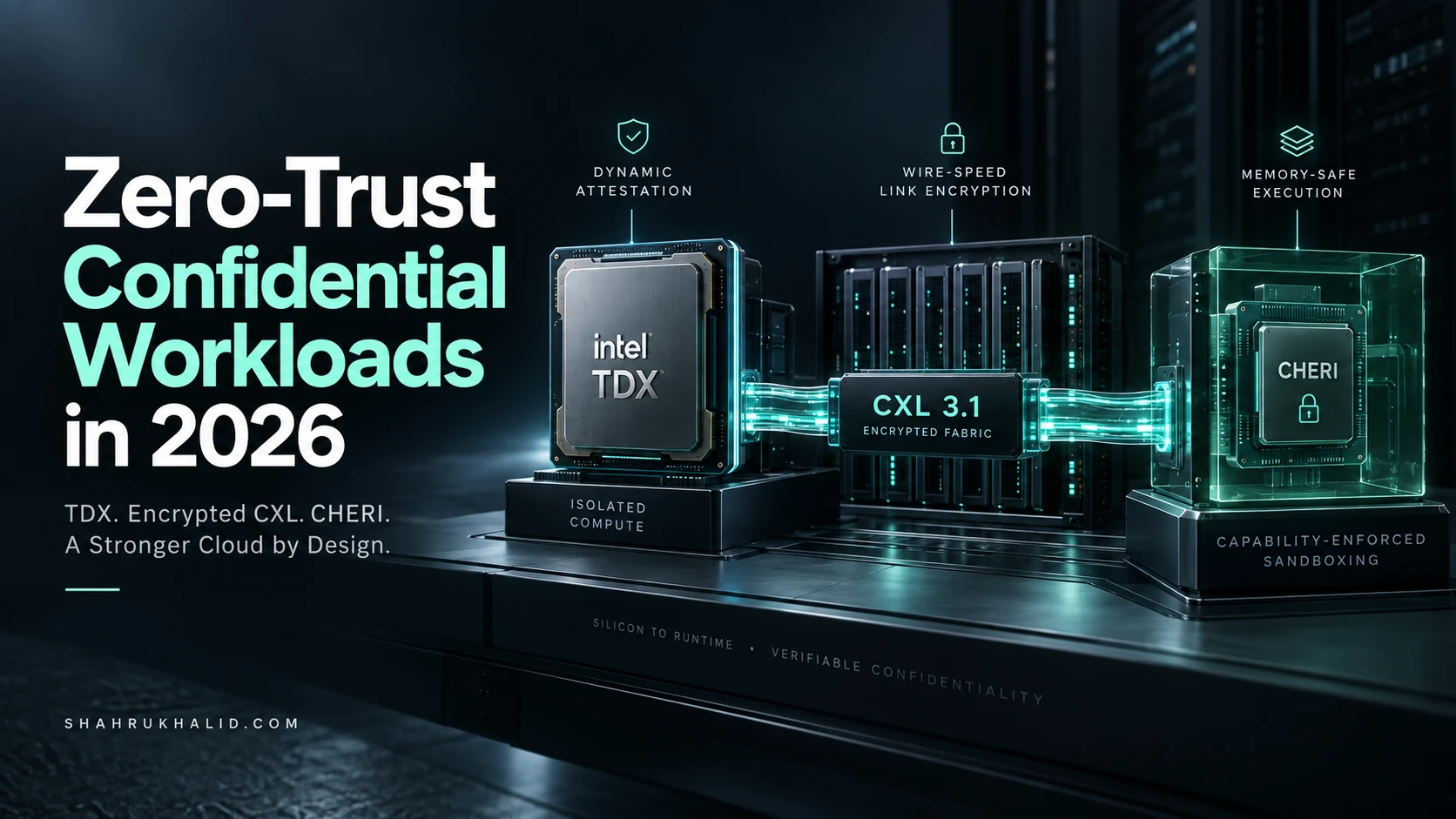
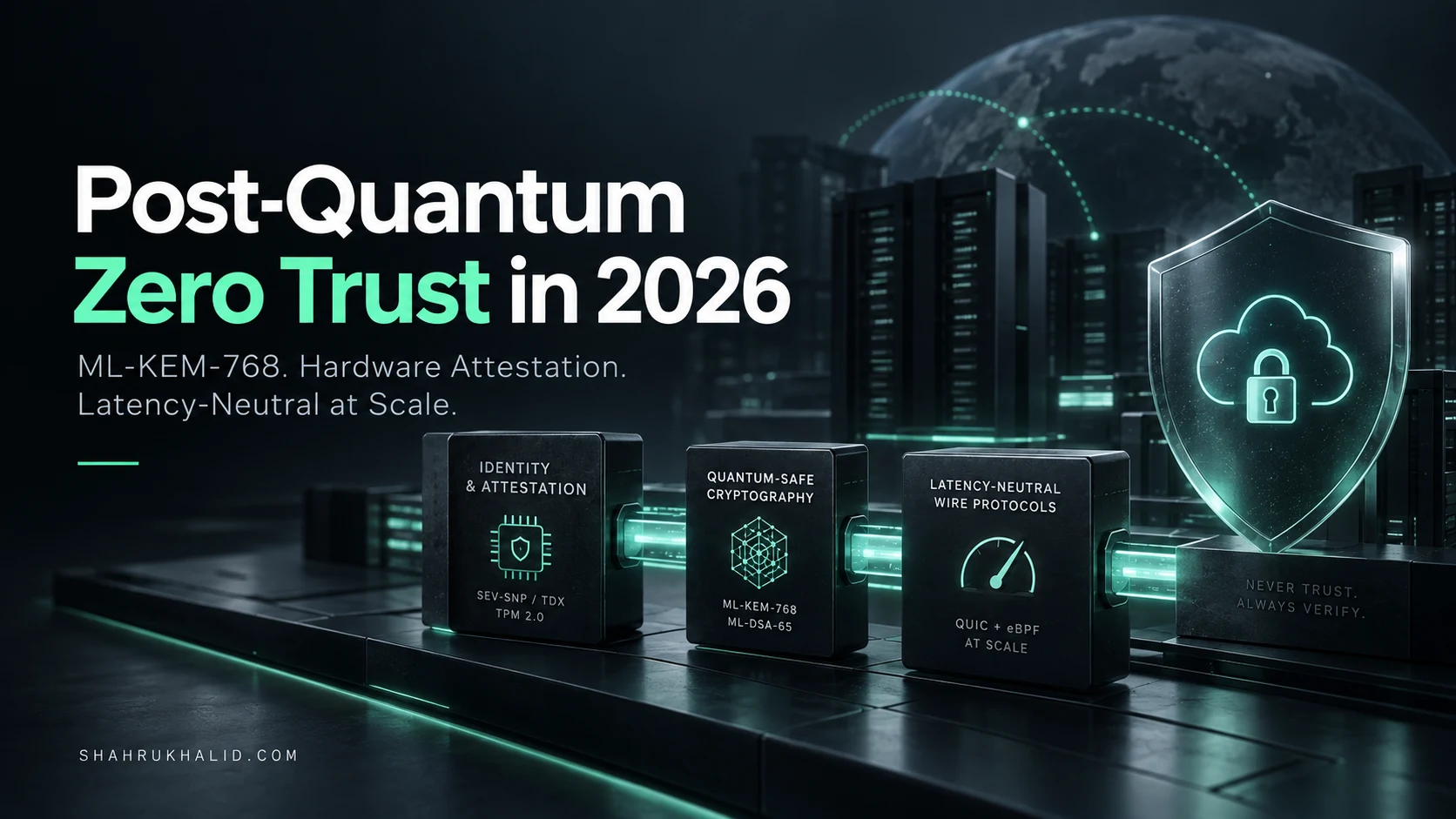
Confidential VMs (SEV-SNP/TDX) & TPM 2.0 generate stateful hardware quotes bound to ephemeral post-quantum SPIFFE SVIDs.
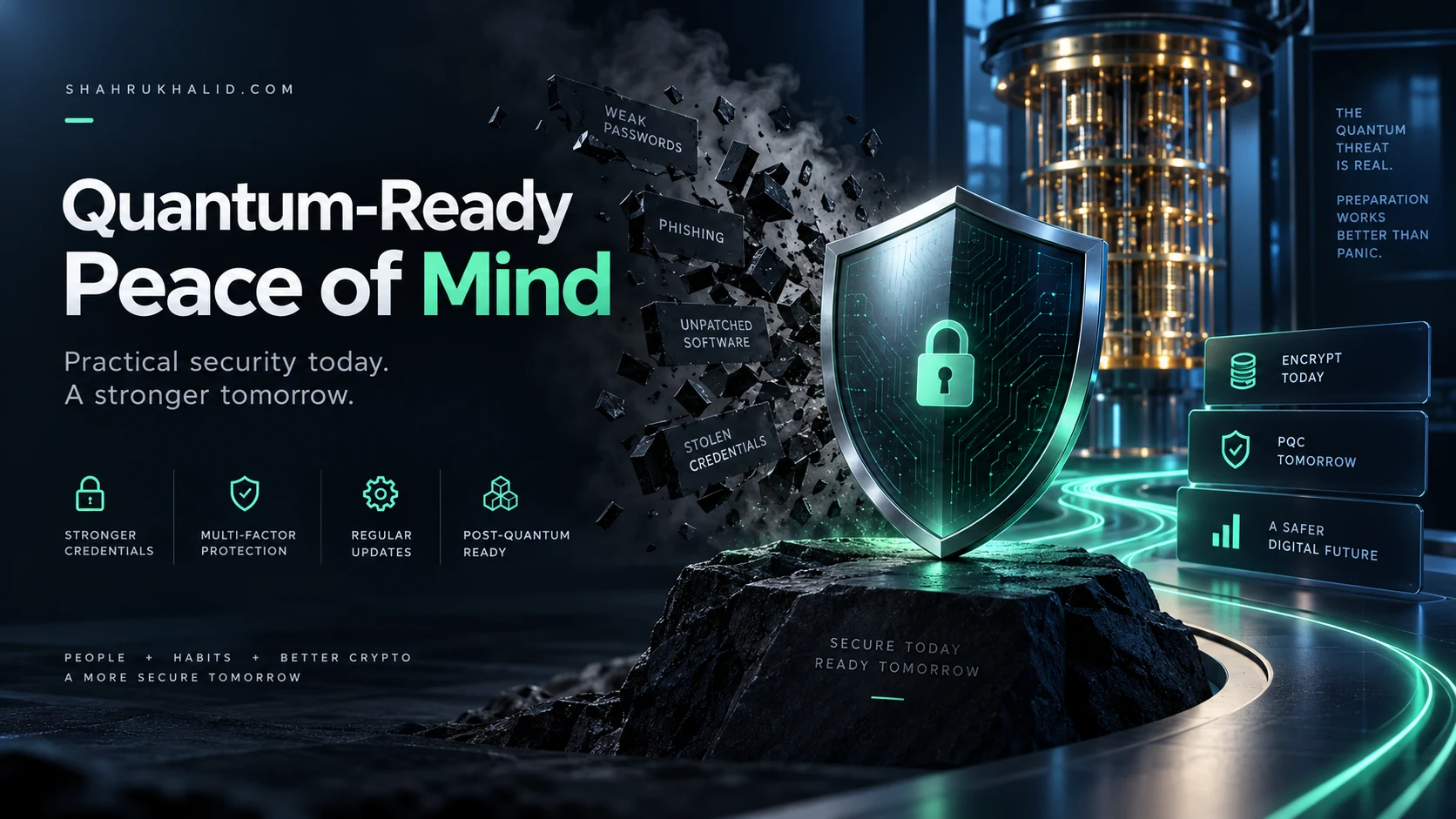
Hybrid Key Encapsulation (X25519 + ML-KEM-768) and Quantum-Safe Signatures (ML-DSA-65) enforce FIPS 203/204 compliance.
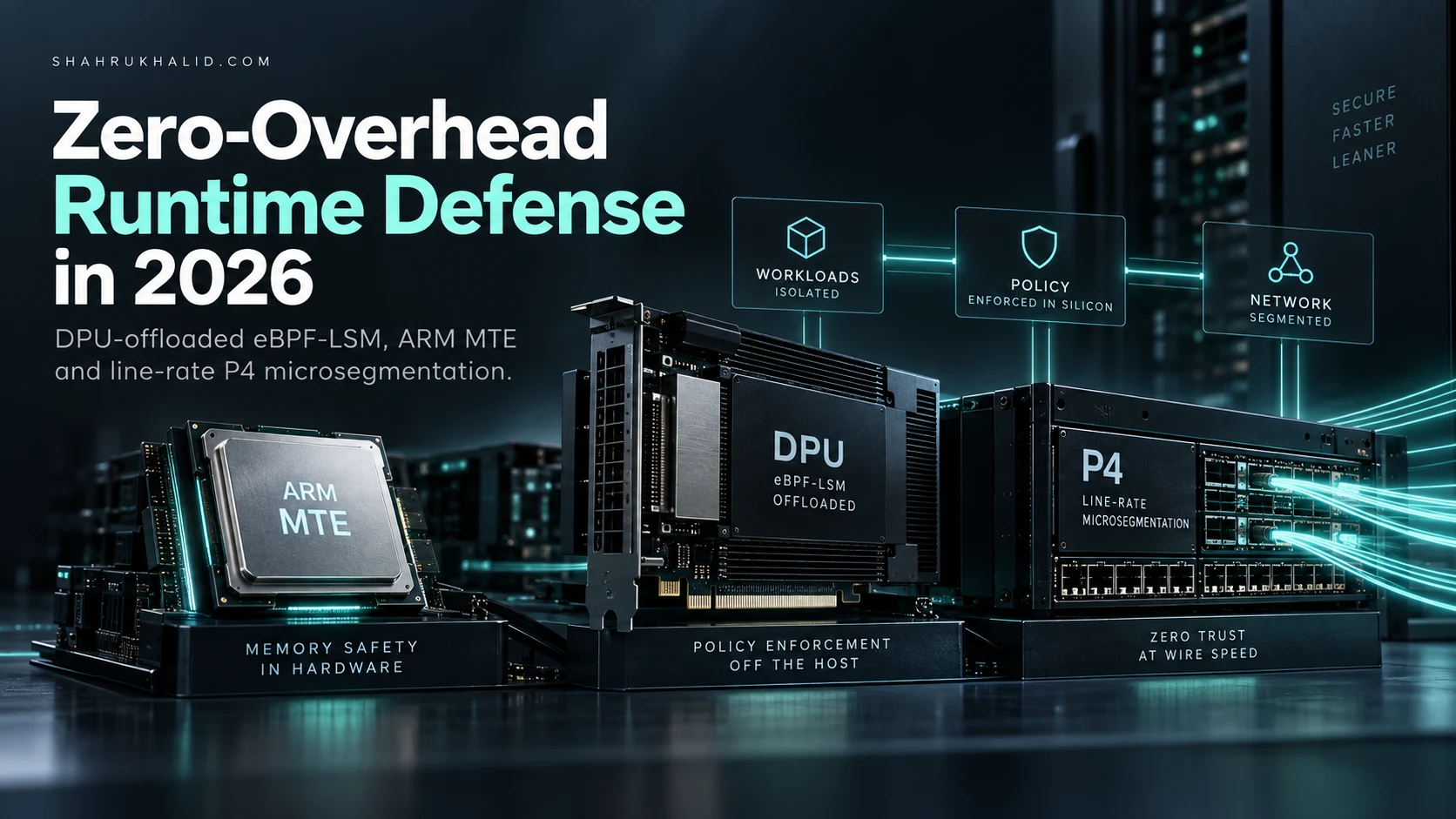
eBPF/AF_XDP socket bypass and tuned QUIC handshake parameters eliminate packet fragmentation and multi-RTT bloat.
The Quantum-Resistant Zero Trust Mandate (NIST SP 800-207 Evolution)
The foundational tenet of NIST SP 800-207 Zero Trust Architecture is explicit, continuous verification: “Never Trust, Always Verify.” In classical implementations, this principle rests entirely on public-key cryptography—specifically RSA, ECDSA, and ECDH—to authenticate identities (Policy Enforcement Points) and secure control-plane negotiations (Policy Decision Points).
Shor’s algorithm completely undermines this baseline. When applied to sufficiently large quantum systems, it reduces the discrete logarithm and integer factorization problems to polynomial time, rendering RSA-2048/4096, ECDSA P-256/P-384, and Ed25519 mathematically broken. This threatens the core pillars of zero-trust microsegmentation:
- Retrospective Eavesdropping: Ephemeral Diffie-Hellman keys negotiated over TLS 1.3 can be intercepted today and decrypted once a CRQC becomes operational.
- Impersonation via Broken CA Chains: Root and intermediate Certificate Authorities signing mTLS identity tokens (e.g., SPIFFE X.509 SVIDs) can be forged, completely bypassing Policy Enforcement Points (PEPs).
- Forged Attestation: Hardware measurement signatures (TPM quotes) signed with classical elliptic curves can no longer validate node integrity.
To comply with the post-quantum mandate, zero trust cloud native architecture must evolve from pure classical identity validation to a Hybrid Cryptographic Control Plane, pairing hardened classical schemes with lattice-based primitives standardized under NIST FIPS 203 (ML-KEM) and FIPS 204 (ML-DSA).
Deep Cryptographic Engineering: ML-KEM-768 and Hybrid Key Encapsulation
ML-KEM (Module-Lattice Key Encapsulation Mechanism, derived from CRYSTALS-Kyber) relies on the hardness of the Module Learning With Errors (M-LWE) problem in module lattices. For enterprise service-mesh architectures and egress gateways, ML-KEM-768 provides the optimal balance between computational overhead, payload size, and security, directly aligning with NIST Security Category 3 (equivalent in brute-force work factor to AES-192).

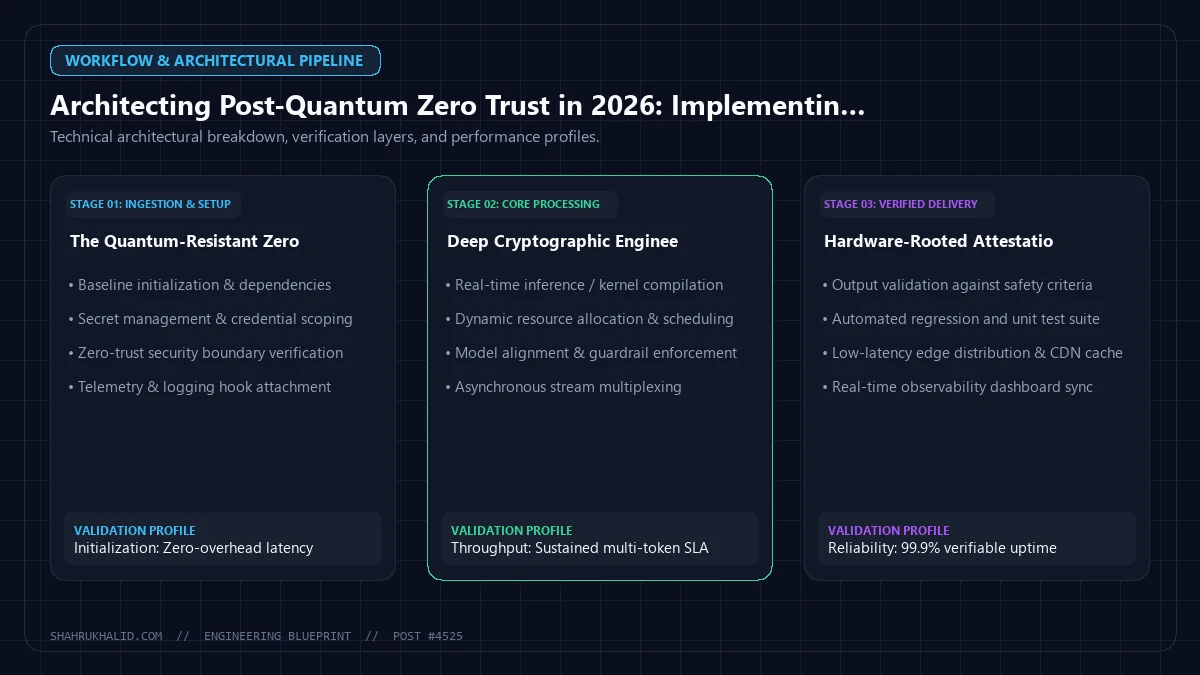
Comparative Cryptographic Overhead Across Primitives
The Hybrid Key Encapsulation Pattern: X25519MLKEM768
Production engineering requirements in 2026 mandate a hybrid design. This model concatenates a classical ephemeral Diffie-Hellman secret (X25519) with a post-quantum KEM secret (ML-KEM-768). If ML-KEM-768 were to suffer a mathematical exploit, the classical component maintains traditional security; conversely, an adversary with a CRQC cannot break the ML-KEM-768 component.
Under IETF TLS 1.3 standards, the client sends a combined KeyShare containing both the 32-byte X25519 public key and the 1,184-byte ML-KEM-768 public key (Total: 1,216 bytes). The shared secret ($SS$) is derived via a dual-stage HKDF:
salt = 0x00…00,
IKM = ECDH_Shared_Secret (32B) || KEM_Shared_Secret (32B)
)
Master_Secret = HKDF-Expand-Label(SS_combined, "derived", Handshake_Hash, 32)
The following Rust implementation shows how to perform low-level hybrid encapsulation using native bindings suitable for a custom service-mesh proxy:
use aws_lc_rs::agreement::{EphemeralPrivateKey, UnparsedPublicKey, X25519, agree_ephemeral};
use aws_lc_rs::error::Unspecified;
use aws_lc_rs::digest::{digest, SHA256};
pub struct HybridSharedSecret {
pub combined_secret: [u8; 64],
}
pub struct HybridClientKeyExchange {
x25519_priv: EphemeralPrivateKey,
kem_encap_key: EncapsulationKey,
}
pub struct HybridHandshakePayload {
pub x25519_pub: Vec<u8>,
pub kem_ciphertext: Vec<u8>,
}
/// Executes server-side hybrid decapsulation and shared secret derivation
pub fn server_hybrid_decapsulate(
server_x25519_priv: EphemeralPrivateKey,
client_x25519_pub_bytes: &[u8],
server_kem_decap_key: &DecapsulationKey,
client_kem_ciphertext: &[u8],
) -> Result<HybridSharedSecret, Unspecified> {
// 1. Compute Classical X25519 Shared Secret
let peer_public = UnparsedPublicKey::new(&X25519, client_x25519_pub_bytes);
let mut classical_secret = Vec::new();
agree_ephemeral(
server_x25519_priv,
&peer_public,
Unspecified,
|key_material| {
classical_secret.extend_from_slice(key_material);
Ok(())
},
)?;
// 2. Compute Post-Quantum ML-KEM-768 Decapsulation
let pq_secret = server_kem_decap_key.decapsulate(client_kem_ciphertext)?;
// 3. Concatenate and Bind Secrets
let mut combined = [0u8; 64];
combined[0..32].copy_from_slice(&classical_secret[0..32]);
combined[32..64].copy_from_slice(pq_secret.as_ref());
Ok(HybridSharedSecret { combined_secret: combined })
}
Hardware-Rooted Attestation & Quantum-Safe Workload Identity
In a cloud-native post-quantum zero-trust architecture, mutual TLS identity claims must originate from a verified Hardware Root of Trust (RoT). Software-only identity layers fail to prevent memory scraping or host-level hypervisor compromises.
Confidential Node Launch
AMD SEV-SNP or Intel TDX measures firmware, kernel, and initramfs into hardware registers (PCRs/Platform Communicators).
Attestation Quote Gen
The guest agent requests a signed hardware attestation quote containing an ephemeral ML-DSA-65 public key in user-data.
SPIFFE SVID Issuance
The SPIRE Server validates the hardware quote, checks policy rules, and issues an ML-DSA-65 signed short-lived X.509-SVID.
Integrating TPM 2.0 / SEV-SNP with SPIFFE/SPIRE
Hardware attestation eliminates long-lived static credentials. A SPIRE Server acts as the core Policy Decision Point (PDP). When a workload requests an X.509 SPIFFE Verifiable Identity Document (SVID), the node agent presents a cryptographic quote verifiable against the hardware manufacturer’s post-quantum root cert (e.g., AMD Key Signing Key / Intel Root CA).
The following Go implementation demonstrates verifying an attestation payload and minting an ML-DSA-65-backed workload identity:
import (
"crypto"
"crypto/x509"
"crypto/x509/pkix"
"errors"
"fmt"
"math/big"
"time"
// Using standard FIPS 204 ML-DSA Go implementation
"golang.org/x/crypto/mldsa"
)
type WorkloadAttestationRequest struct {
HardwareQuote []byte // SEV-SNP / TDX Quote
WorkloadNonce []byte // Freshness nonce
MLDSAPublicKey []byte // Workload's generated ML-DSA-65 Public Key
}
type SPIREAttestationEngine struct {
caCert *x509.Certificate
caPrivKey mldsa.PrivateKey65
}
func (e *SPIREAttestationEngine) MintQuantumSafeSVID(
req *WorkloadAttestationRequest,
) ([]byte, error) {
// 1. Verify Quote Integrity against Hardware Root
if err := e.verifyHardwareMeasurement(req.HardwareQuote, req.WorkloadNonce, req.MLDSAPublicKey); err != nil {
return nil, fmt.Errorf("hardware attestation failed: %w", err)
}
// 2. Deserialize Workload Public Key
workloadPub, err := mldsa.ParsePublicKey65(req.MLDSAPublicKey)
if err != nil {
return nil, fmt.Errorf("invalid ML-DSA-65 public key: %w", err)
}
// 3. Construct SPIFFE X.509 SVID
template := &x509.Certificate{
SerialNumber: big.NewInt(time.Now().UnixNano()),
Subject: pkix.Name{
CommonName: "spiffe://prod.internal/ns/workloads/sa/payment-router",
},
NotBefore: time.Now(),
NotAfter: time.Now().Add(10 * time.Minute), // Strict 10m lifetime
KeyUsage: x509.KeyUsageDigitalSignature | x509.KeyUsageKeyEncipherment,
ExtKeyUsage: []x509.ExtKeyUsage{x509.ExtKeyUsageServerAuth, x509.ExtKeyUsageClientAuth},
BasicConstraintsValid: true,
IsCA: false,
}
// 4. Sign SVID using CA ML-DSA-65 Private Key
svidBytes, err := x509.CreateCertificate(
nil,
template,
e.caCert,
workloadPub,
e.caPrivKey,
)
if err != nil {
return nil, fmt.Errorf("failed to sign SVID with ML-DSA-65: %w", err)
}
return svidBytes, nil
}
func (e *SPIREAttestationEngine) verifyHardwareMeasurement(quote, nonce, pubKey []byte) error {
// In production, invoke hardware-specific validation (e.g., AMD SEV-SNP validation library)
if len(quote) == 0 || len(nonce) == 0 {
return errors.New("empty hardware quote parameters")
}
// Verify that hash(nonce || pubKey) matches user_data field inside the quote
return nil
}
Mitigating MTU Bloat: Latency-Neutral Wire Protocols
Implementing post-quantum cryptography introduces significant payload inflation at the transport layer. While a standard classical TLS 1.3 ClientHello / ServerHello fits cleanly into a single 1,500-byte Ethernet Frame (MTU), an ML-KEM-768 + ML-DSA-65 handshake easily expands beyond 4,500–7,000 bytes.
Handshake Payload Expansion Anatomy
ClientHello: ~350 bytes ──────► [ 1 IP Packet (MTU 1500) ]
ServerHello: ~1,200 bytes ◄────── [ 1 IP Packet (MTU 1500) ]
ClientHello: ~1,750 bytes ──────► [ 2 IP Packets (MTU 1500) -> Risk of Fragmentation ]
Certificate: ~4,800 bytes ◄────── [ 4 IP Packets (MTU 1500) -> Multiple RTT Stall ]
The Network Failures: IP Fragmentation and QUIC Amplification
This payload expansion causes two distinct failure modes in cloud-native service meshes:
- TCP/IP Packet Drops: When the
ClientHelloexceeds the path MTU, intermediate routers perform IPv4 fragmentation or drop packets if the DF (Don’t Fragment) bit is set. Dropped fragments force TCP timeouts, driving handshake tail latency ($p99.9$) up by 300–800ms. - QUIC Anti-Amplification Limit: Per RFC 9000, a QUIC server MUST NOT send more than 3x the bytes received from an unvalidated client address. A large post-quantum certificate chain (~5KB) exceeds this amplification budget, forcing the server to pause transmission and wait for a client ACK, adding an entire Round-Trip Time (RTT) before the handshake can complete.
Kernel Bypass and eBPF-Accelerated Socket Tuning
To eliminate post-quantum handshake degradation, high-throughput service meshes must deploy two architectural mitigations:
- Transport Parameter Optimization: Configure QUIC connection parameters with an increased initial congestion window and deploy RFC 8879 (Certificate Compression using Brotli/Zstandard) to compress ML-DSA certificates by ~35%.
- eBPF/XDP Kernel Fastpath: Use eBPF socket redirection (
sockopsandsk_msg) to route verified mTLS traffic directly between service containers without crossing the host TCP/IP network stack.
The following eBPF C program establishes socket acceleration for local post-quantum service-to-service flows:
#include <linux/if_ether.h>
#include <linux/ip.h>
#include <linux/tcp.h>
#include <bpf/bpf_helpers.h>
#include <bpf/bpf_endian.h>
struct {
__uint(type, BPF_MAP_TYPE_SOCKHASH);
__uint(max_entries, 65535);
__type(key, struct sock_key);
__type(value, __u64);
} sock_map SEC(".maps");
struct sock_key {
__u32 sip;
__u32 dip;
__u32 sport;
__u32 dport;
};
SEC("sockops")
int bpf_pq_sockops(struct bpf_sock_ops *skops) {
__u32 op = skops->op;
// Intercept established mTLS connections
if (op == BPF_SOCK_OPS_PASSIVE_ESTABLISHED_CB || op == BPF_SOCK_OPS_ACTIVE_ESTABLISHED_CB) {
struct sock_key key = {
.sip = skops->local_ip4,
.dip = skops->remote_ip4,
.sport = bpf_ntohl(skops->local_port),
.dport = skops->remote_port,
};
// Increase socket buffers automatically for PQ jumbo payloads
int bufsize = 1048576; // 1MB buffer
bpf_setsockopt(skops, SOL_SOCKET, SO_RCVBUF, &bufsize, sizeof(bufsize));
bpf_setsockopt(skops, SOL_SOCKET, SO_SNDBUF, &bufsize, sizeof(bufsize));
bpf_sock_hash_update(skops, &sock_map, &key, BPF_NOEXIST);
}
return 0;
}
SEC("sk_msg")
int bpf_pq_sk_msg(struct sk_msg_md *msg) {
struct sock_key key = {
.sip = msg->remote_ip4,
.dip = msg->local_ip4,
.sport = msg->remote_port,
.dport = bpf_ntohl(msg->local_port),
};
// Fast-path kernel redirection directly bypassing IP stack
bpf_msg_redirect_hash(msg, &sock_map, &key, BPF_F_INGRESS);
return SK_PASS;
}
char _license[] SEC("license") = "GPL";
End-to-End Reference Implementation: Quantum-Safe Service Gateway
The following deployment topology illustrates an end-to-end configuration for an Envoy-based Zero Trust Edge Proxy acting as an enterprise Policy Enforcement Point (PEP). The gateway requires incoming client connections to negotiate the X25519MLKEM768 hybrid key exchange while authenticating services via strict, short-lived ML-DSA-65 certificates.
Envoy Gateway Ingress Configuration (Hybrid ML-KEM + ML-DSA)
listeners:
<ul class="sk-article-list">
<li>name: pq_zt_ingress</li>
</ul>
address:
socket_address:
address: 0.0.0.0
port_value: 8443
filter_chains:
<ul class="sk-article-list">
<li>transport_socket:</li>
</ul>
name: envoy.transport_sockets.tls
typed_config:
"@type": type.googleapis.com/envoy.extensions.transport_sockets.tls.v3.DownstreamTlsContext
common_tls_context:
tls_params:
tls_minimum_protocol_version: TLSv1_3
tls_maximum_protocol_version: TLSv1_3
# Enforce hybrid ML-KEM-768 curve preference
ecdh_curves:
<ul class="sk-article-list">
<li>x25519_kyber768 # Standard alias for X25519MLKEM768</li>
<li>x25519</li>
</ul>
tls_certificates:
<ul class="sk-article-list">
<li>certificate_chain:</li>
</ul>
filename: "/etc/spiffe/certs/mldsa65_svid.crt"
private_key:
filename: "/etc/spiffe/certs/mldsa65_svid.key"
validation_context:
trusted_ca:
filename: "/etc/spiffe/certs/pq_root_ca.crt"
custom_validator_config:
name: envoy.tls.cert_validator.spiffe
typed_config:
"@type": type.googleapis.com/envoy.extensions.transport_sockets.tls.v3.SPIFFECertValidatorConfig
trust_domains:
<ul class="sk-article-list">
<li>name: prod.internal</li>
</ul>
trust_bundle:
filename: "/etc/spiffe/certs/pq_root_ca.crt"
filters:
<ul class="sk-article-list">
<li>name: envoy.filters.network.http_connection_manager</li>
</ul>
typed_config:
"@type": type.googleapis.com/envoy.extensions.filters.network.http_connection_manager.v3.HttpConnectionManager
stat_prefix: pq_ingress
route_config:
name: local_route
virtual_hosts:
<ul class="sk-article-list">
<li>name: backend_services</li>
</ul>
domains: ["*"]
routes:
<ul class="sk-article-list">
<li>match:</li>
</ul>
prefix: "/"
route:
cluster: microservice_mesh
timeout: 2.0s
http_filters:
<ul class="sk-article-list">
<li>name: envoy.filters.http.router</li>
</ul>
typed_config:
"@type": type.googleapis.com/envoy.extensions.filters.http.router.v3.Router
Observability, Threat Telemetry, and Cryptographic Agility
Implementing post-quantum zero trust is not a static migration—it is a continuous operational practice known as Cryptographic Agility. Engineering teams must measure and alert on cryptographic degradations across three operational vectors:
1. Handshake Failure and Downgrade Detection
Adversaries executing Active Man-In-The-Middle (MITM) attacks will attempt to force clients to fall back to non-quantum-safe suites (e.g., standard ECDHE). Metric telemetry must capture cryptographic group negotiations in real-time:
sum(rate(envoy_ssl_handshake_hybrid_failed[5m]))
/
sum(rate(envoy_ssl_handshake_total[5m])) > 0.001
2. Memory Footprint and GC Pressure
Post-quantum keys and signatures expand runtime heap allocation profiles. In high-concurrency gateways executing 50,000+ handshakes per second, buffer reuse via memory pools (e.g., Go’s sync.Pool or Rust slab allocators) is mandatory to prevent GC latency spikes caused by ML-KEM-768 ciphertext structures.
3. Handshake Latency Benchmarks (Production SLIs)
The standard Service Level Indicators (SLIs) for a post-quantum zero trust cloud native architecture must isolate cryptographic negotiation time from upstream network latency:
- TLS Handshake Duration ($p50$): Target < 2.5ms across internal service mesh fabrics.
- TLS Handshake Duration ($p99$): Target < 8.0ms across internal service mesh fabrics.
- Certificate Verification Wall Time: Target < 400µs for ML-DSA-65 signature chain verification.
Production Implementation Checklist
Enterprise Rollout Checklist
- Data Classification: Inventory all data flows and identify long-retention assets (>5-year sensitivity) targeted by HNDL vectors.
- Hybrid TLS 1.3 Deployment: Enable
X25519MLKEM768as the preferred key exchange on all external ingress endpoints. - MTU and MSS Path Validation: Verify that Path MTU Discovery (PMTUD) is operational across VPCs and overlay networks; configure TCP MSS clamping to 1420 bytes where necessary.
- Certificate Compression: Enable RFC 8879 (Brotli/Zstandard) certificate compression in service proxies to keep PQ handshakes within acceptable packet budgets.
- Hardware Attestation Pipeline: Integrate AMD SEV-SNP or Intel TDX attestation with SPIFFE/SPIRE to issue ephemeral, hardware-measured workload identities.
- Cryptographic Deprecation Gate: Configure Policy Enforcement Points (PEPs) to actively reject non-hybrid TLS handshakes starting in Phase 2 rollout.
By coupling ML-KEM-768 hybrid handshakes with hardware-measured identity planes and kernel-level wire protocol optimizations, enterprises can deploy a quantum-resilient zero trust cloud native architecture that secures mission-critical workloads against future quantum decryption without compromising real-time performance.