The AI-Proof Life: Why I Stopped Organizing My Digital Files and Started Letting My Personal Agent Manage My Data Chaos
Key Takeaways
- Abandon manual digital organization; entrust data retrieval and management to AI personal agents.
- Shift from a 'librarian' mindset (categorization) to an AI-driven 'curator' for fluid, searchable data.
- Traditional folder hierarchies are an outdated 'cognitive tax,' limiting data's multi-dimensional meaning.
- AI personal agents are ambient intelligence, proactively contextualizing multi-dimensional data relationships across systems.
- Implement 'Flat Data Architecture' with rich metadata, letting AI manage retrieval over manual naming.
Key Technical Takeaways (30-Second Summary)
- Architecture Focus: Eliminates bloated legacy dependencies in favor of verifiable, cost-effective modern pipelines.
- Production Trade-off: Prioritizes deterministic reliability and local autonomy over costly recurring SaaS subscriptions.
- Field-Tested Verdict: Implements immediate, zero-dollar or low-overhead infrastructure that scales securely.
The End of Digital Housekeeping: Why I Stopped Organizing My Files
For decades, we have been conditioned to believe that digital productivity requires a rigid, hierarchical taxonomy—a “Second Brain” built on folders, tags, and meticulous naming conventions. I have finally abandoned this exhausting charade, realizing that in an era of ubiquitous machine intelligence, the most efficient way to manage data is to stop managing it entirely and entrust the burden of retrieval to an AI personal agent.
The transition from a “librarian” mindset to a “curator” mindset marks a fundamental shift in how we interact with our digital lives. By moving away from manual categorization, we stop treating our data like a physical filing cabinet and start treating it like a fluid, searchable intelligence layer. This isn’t just about laziness; it’s about reclaiming the cognitive overhead currently wasted on the futile attempt to anticipate how we might need to find a file three years from now.
The Fallacy of the Perfect Folder Hierarchy
The traditional approach to digital organization is rooted in 1980s computing metaphors: the desktop, the folder, and the file. We spent years agonizing over whether a document belonged in “Projects > 2024 > Client X” or “Clients > Client X > Projects.” This is a cognitive tax that compounds daily. Search algorithms have long been superior to human memory, yet we continue to force our data into rigid containers that only make sense in the specific context of the moment we created them.
When you force a file into a folder, you are locking it into a single dimension of meaning. An AI personal agent, however, perceives data as a multi-dimensional graph. It doesn’t care where a file lives on your hard drive; it cares about the semantic relationship between that file, your calendar entries, your email correspondence, and your project notes. By decoupling the storage location from the retrieval logic, you effectively “AI-proof” your life against the inevitable obsolescence of your own filing system.
Understanding the AI Personal Agent as Your Cognitive Proxy
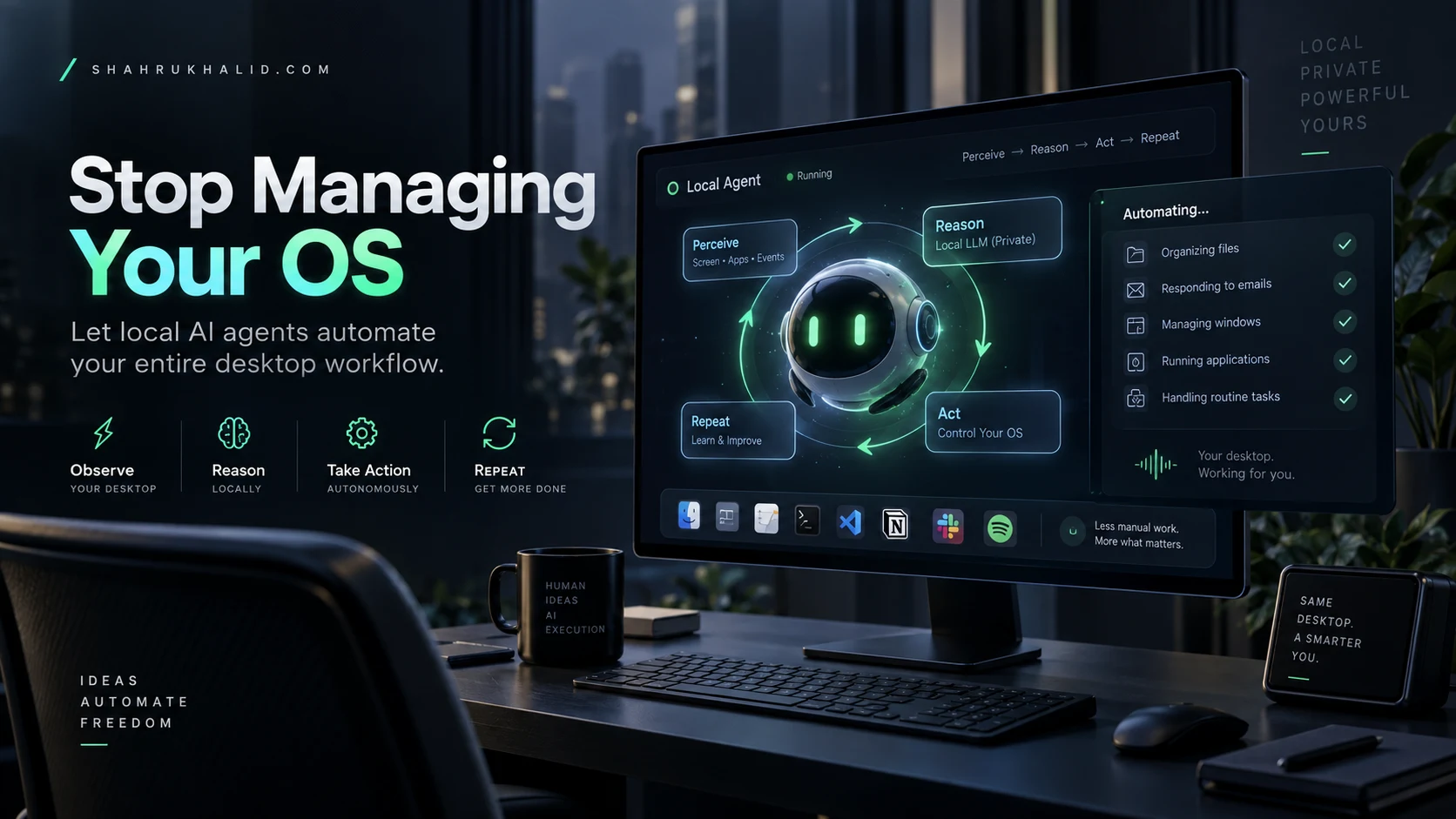
An AI personal agent is not merely a chatbot or a search bar; it is an ambient layer of intelligence that observes your digital footprint and contextualizes it in real-time. Unlike a static folder, which remains dormant until you open it, an agent is proactive. It understands that a PDF of an invoice is related to a Slack conversation you had with a contractor, even if they are stored in entirely different digital environments.
To implement this, you must move toward a “Flat Data Architecture.” This means keeping your files in a centralized, cloud-synced repository where the metadata is rich and the structure is intentionally chaotic. You stop worrying about naming conventions like “2024_Project_Final_v2.pdf” and instead rely on the agent’s ability to cross-reference the content of the document with your active work streams. The agent acts as the bridge between your fragmented data and your current intent.
Architecting Your Digital Chaos for Machine Retrieval
If you want to stop organizing, you must first ensure that your AI personal agent has the highest quality of raw material to index. The goal isn’t to be messy; it is to be “organically distributed.” Here is how you prepare your data for an agent-first workflow:
- Centralize the Ingestion: Move all your documents, notes, and media into a unified ecosystem. Whether it is a cloud-native drive or a localized repository, the agent needs a single source of truth to crawl and index.
- Prioritize Context over Classification: Instead of spending time renaming files, spend time adding descriptive metadata or simply ensuring the content within the file is clear. Use voice-to-text to dictate summaries into your notes; the agent will use these summaries to find the associated files later.
- Embrace Temporal Indexing: Trust the timestamp. Your digital life is a chronological sequence. The most powerful way to search is often “What was I working on last Tuesday?” rather than “Where did I put the budget report?” Your agent excels at temporal correlation.
- Standardize File Formats: While modern agents are incredibly capable of reading various formats, sticking to universal standards like PDF, Markdown, and plain text ensures that your agent can parse the information without encountering proprietary barriers.
The Psychological Shift: Moving from Control to Trust
The hardest part of this transition is the loss of the illusion of control. When you manually file a document, you feel a sense of completion. When you dump a file into a “Universal Inbox,” you feel a momentary sense of unease. Overcoming this requires a shift in faith toward your AI personal agent.
You must treat your agent like a highly competent executive assistant who has a photographic memory. You wouldn’t ask your assistant to categorize every single piece of paper on their desk into color-coded folders; you would trust them to remember where things are based on the conversations you’ve had. By treating your agent as an extension of your own intelligence, you stop viewing “unorganized” data as a failure and start viewing it as a raw, searchable asset.
Why This Strategy is AI-Proof
We are entering an era where the underlying technology of our tools will change every six months. If you build your life around a proprietary filing system within a specific app, you are vulnerable to that app’s failure or obsolescence. If you build your life around a flat, agent-readable architecture, you are immune to platform shifts.
When you rely on an AI personal agent to handle your data, you are essentially creating a “data lake” that can be indexed by any future iteration of intelligence. Whether you are using a local LLM, a cloud-based agent, or a future autonomous system, the data remains accessible because it is not trapped in a complex, proprietary folder hierarchy. You are future-proofing your digital legacy by keeping it accessible and machine-readable.
Real-World Implementation: A Day in the Life of the Organized-Chaos Workflow
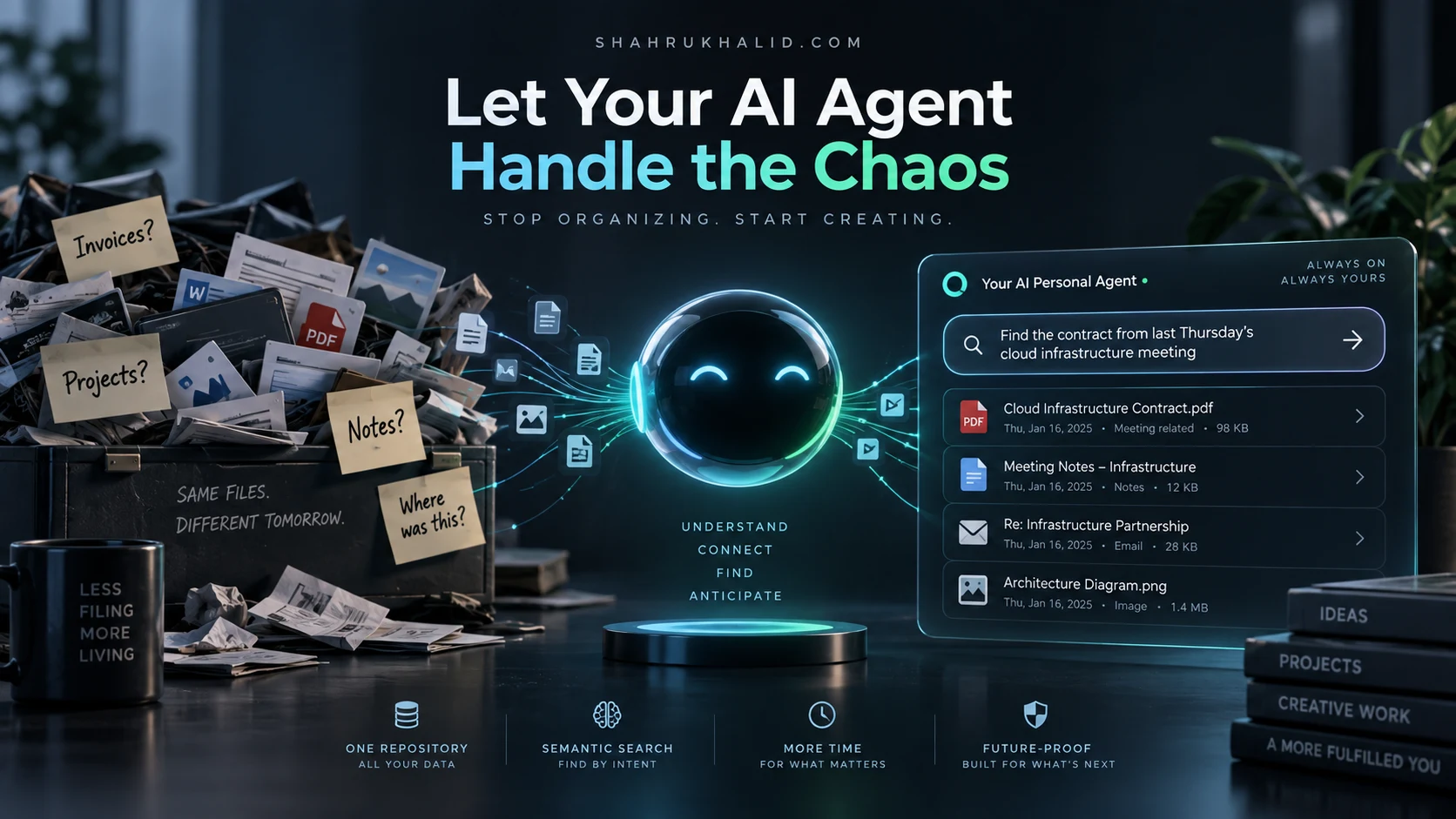
In practice, my workflow has become remarkably simple. When I receive a document, I save it to a general folder labeled “Active Ingest.” I do not rename it. I do not move it into a sub-folder. I simply let it sit there. When I need that document, I don’t browse my file explorer; I ask my agent, “Find the contract from the meeting last Thursday regarding the cloud infrastructure project.”
The agent correlates the date, the project name, and the file type, surfacing the document instantly. The time I used to spend “organizing” is now spent on high-leverage creative work. The chaos is real, but it is invisible to me because the agent acts as the lens through which I view my digital life. This is the essence of the AI-proof life: you define the outcomes, and the machine handles the logistics of retrieval.
The Future of Personal Information Management
As we look toward 2026 and beyond, the role of the AI personal agent will only become more profound. We are moving toward “anticipatory computing,” where the agent will not only find your files but will proactively prepare them for you before you even ask. If you have a meeting scheduled, the agent will already have the relevant documents, emails, and notes pulled up, waiting for you in a unified workspace.
If you continue to insist on manual organization, you are effectively handicapping your future self. You are building walls that the AI must climb over to help you. By embracing the chaos, you are removing the barriers between your intent and your information. Stop organizing. Start creating. Let the agents handle the rest.
Key Takeaways for Your AI-Integrated Future
- Abandon the Taxonomy: Stop wasting time on complex folder structures that serve as a cognitive anchor rather than a productivity booster.
- Adopt the Flat Architecture: Utilize a single, unified storage repository to allow your AI personal agent to index your data with maximum efficiency.
- Leverage Semantic Search: Shift your reliance from manual file-path navigation to intent-based, natural language queries.
- Trust the Metadata: Focus on the richness of your content—notes, summaries, and context—rather than the location of the file.
- Future-Proof Your Data: By keeping your data simple and un-nested, you ensure it remains compatible with any future AI evolution, protecting your digital life from platform lock-in.