Future of Quantum Computing and Cryptography: Preparing for Post-Quantum Security
Key Takeaways
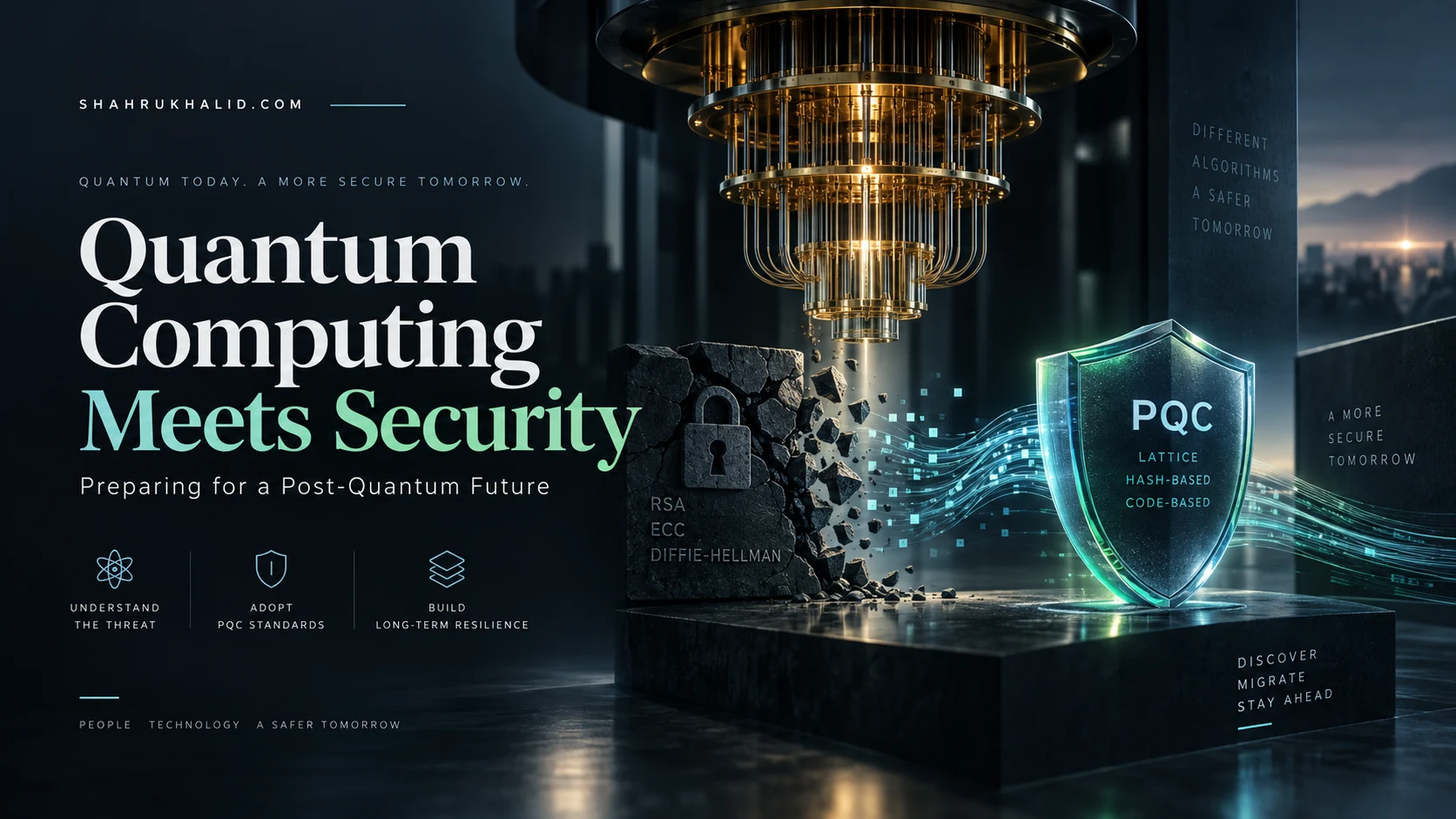
- Quantum computers will break current public-key encryption (RSA, ECC) using algorithms like Shor's.
- Post-quantum cryptography (PQC) algorithms secure classical systems against quantum and classical attacks.
- PQC is software-based, integrating into existing systems, unlike specialized hardware-dependent QKD.
- NIST is standardizing PQC algorithms to prevent 'harvest now, decrypt later' data breaches.
- PQC uses new math (e.g., lattice-based) and requires proactive adoption before quantum dominance.
Introduction to the Quantum Threat
Quantum computing represents a paradigm shift in processing power. While classical computers process information as binary bits representing either zero or one, quantum computers leverage qubits that utilize superposition and entanglement. This fundamental architectural advantage allows quantum systems to evaluate complex mathematical problems at speeds unimaginable to classical hardware. However, this immense computational leap introduces a severe vulnerability to modern digital infrastructure. Widely used public-key cryptographic algorithms—such as RSA, Elliptic Curve Cryptography (ECC), and Diffie-Hellman—rely on mathematical problems like integer factorization and discrete logarithms that classical computers struggle to solve within a practical timeframe.
A sufficiently powerful, error-corrected quantum computer will break these foundational security mechanisms using algorithms like Shor’s algorithm, rendering standard encryption protocols obsolete. As global research institutions and technology enterprises race to achieve fault-tolerant quantum advantage, cybersecurity professionals must proactively address this impending cryptographic transition. Securing digital assets requires understanding the timeline of quantum threats and adopting standardized post-quantum cryptography (PQC) long before commercial quantum dominance becomes a reality.
Understanding Post-Quantum Cryptography (PQC)
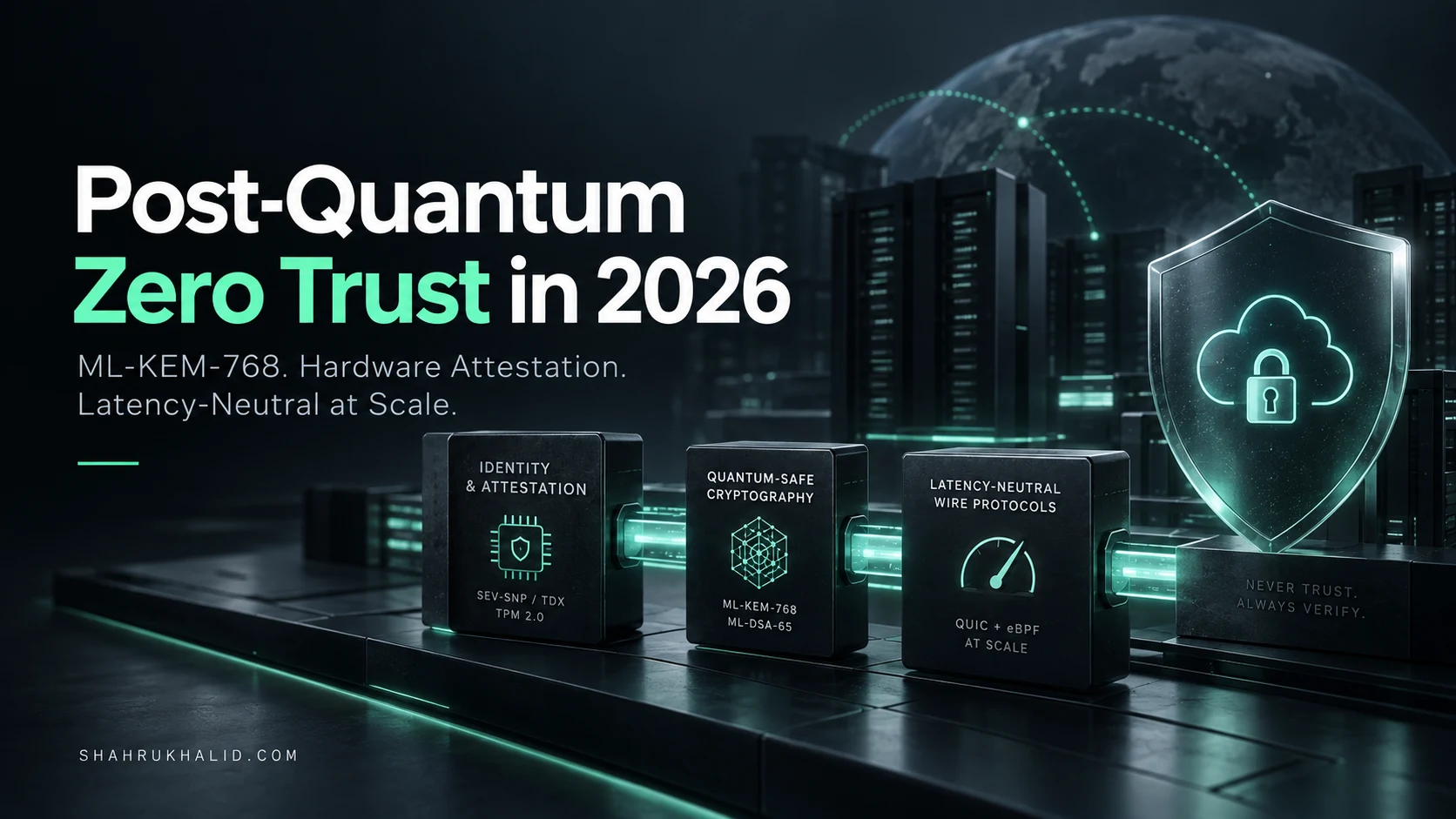
Post-quantum cryptography refers to cryptographic algorithms—typically running on conventional classical computers—that are secure against attacks by both classical and quantum computers. Unlike quantum key distribution (QKD), which requires specialized hardware and fiber-optic infrastructure, PQC software algorithms can be integrated into existing operating systems, web browsers, and hardware security modules.

To establish unified global standards, the National Institute of Standards and Technology (NIST) initiated a multi-year standardization process, evaluating dozens of candidate algorithms submitted by global cryptography experts. According to official guidelines detailed by NIST’s Post-Quantum Cryptography Project, the goal is to protect sensitive government and commercial data against retrospective decryption attacks, often summarized as ‘harvest now, decrypt later’ threats.
Key Categories of Post-Quantum Algorithms
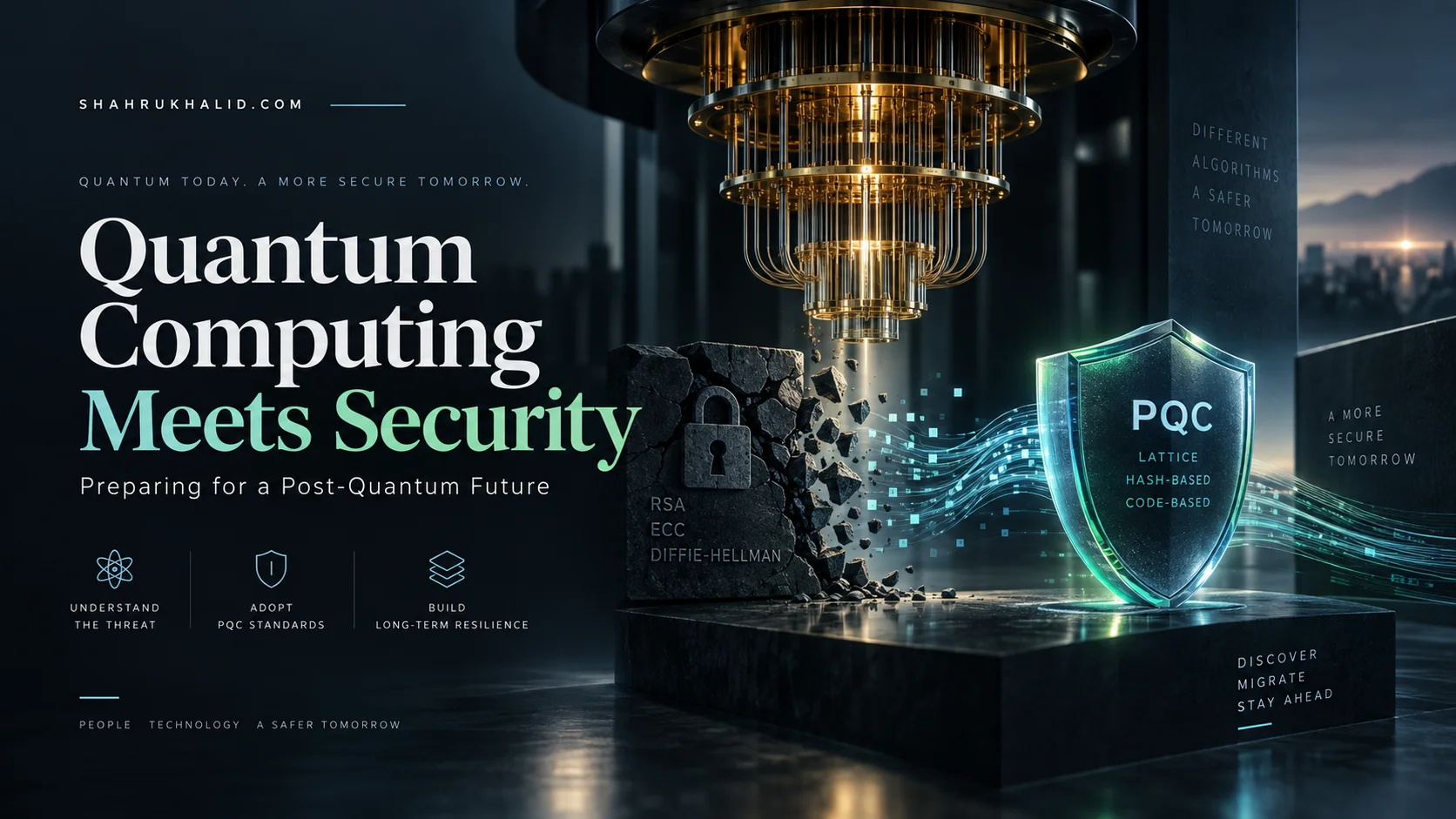
The newly standardized post-quantum algorithms rely on diverse mathematical problems that remain intractable even for quantum computers:
- Lattice-Based Cryptography: These schemes depend on the hardness of high-dimensional lattice problems. They serve as the backbone for several primary NIST recommendations due to their versatility and robust security proofs.
- Stateful Hash-Based Signatures: Designed primarily for digital signatures, these algorithms rely on the security of cryptographic hash functions and are heavily utilized in firmware signing and secure boot processes.
- Code-Based Cryptography: Based on error-correcting codes, these algorithms offer strong theoretical security guarantees, though they often require larger public key sizes compared to lattice-based alternatives.
The ‘Harvest Now, Decrypt Later’ Threat Matrix
A common misconception among IT leaders is that post-quantum migration can be delayed until large-scale quantum computers are officially operational. This perspective ignores the reality of data persistence and espionage. Malicious actors, nation-states, and criminal syndicates are actively intercepting and storing encrypted network traffic today. Government communications, proprietary intellectual property, healthcare records, and financial transactions captured now can be archived indefinitely.
Once a fault-tolerant quantum computer is successfully built, adversaries can decrypt all historical, archived traffic captured years prior. Consequently, organizations handling long-life sensitive data must evaluate their risk profiles immediately. A structured risk assessment involves reviewing data sensitivity lifespans against projected quantum milestone timelines.
Quantum Readiness Risk Comparison
| Data Classification | Typical Lifespan | Quantum Vulnerability Risk | Recommended Mitigation Priority |
|---|---|---|---|
| Top-Secret Government Communications | 25+ Years | Critical | Immediate PQC Migration |
| Financial Records & Banking Logs | 7–10 Years | High | Active Inventory & Testing |
| Proprietary Corporate R&D | 5–15 Years | High | Hybrid Cryptography Deployment |
| Public Web Traffic & Ephemeral Sessions | < 1 Year | Low | Standard Algorithmic Updates |
Actionable Migration Framework for IT Leaders
Transitioning an enterprise infrastructure from legacy public-key cryptography to post-quantum standards is a complex, multi-year engineering undertaking. Organizations cannot simply swap out algorithms overnight without risking system instability, compatibility failures, or regulatory non-compliance. Below is an actionable four-stage migration framework designed to guide security teams through the transition process.
Stage 1: Comprehensive Cryptographic Discovery
Before implementing new algorithms, an organization must achieve complete visibility into its cryptographic estate. Security teams must deploy automated discovery tools to audit codebases, databases, cloud repositories, application programming interfaces (APIs), and physical hardware appliances.
- Catalog every instance of RSA, ECC, and symmetric encryption keys across the entire IT ecosystem.
- Identify third-party vendor dependencies, legacy software libraries, and embedded Internet of Things (IoT) devices that utilize hardcoded cryptographic primitives.
- Document certificate authorities and internal Public Key Infrastructures (PKIs) to map out trust relationships.
Stage 2: Prioritization and Risk Scoring
Once the inventory is complete, prioritize assets based on data sensitivity, regulatory compliance mandates, and operational dependencies. Organizations should consult authoritative frameworks provided by the Cybersecurity and Infrastructure Security Agency (CISA) to align internal readiness strategies with national cybersecurity guidance. Focus initial migration efforts on high-value databases, core authentication servers, and long-term storage systems before addressing peripheral systems.
Stage 3: Hybrid Cryptographic Testing
To mitigate the risk of undiscovered vulnerabilities in newly standardized PQC algorithms, engineers should adopt hybrid cryptographic deployment strategies. Hybrid modes combine traditional algorithms (like ECDH or RSA) with post-quantum algorithms (like Kyber or Dilithium) concurrently.
- Establish test environments mimicking production cloud and on-premises workloads.
- Implement hybrid TLS connections to evaluate performance impacts on latency, packet size, and handshake overhead.
- Validate interoperability across legacy client applications and modernized servers.
Stage 4: Full PQC Deployment and Lifecycle Management
Following successful testing and verification, organizations can systematically phase out legacy algorithms. This phase requires updating certificate management platforms, enforcing strict automated rotation policies, and ensuring that all newly provisioned digital certificates comply with finalized post-quantum specifications.
The Role of Cloud Providers and Open Source Standards
Major cloud infrastructure providers and open-source foundations play an essential role in democratizing post-quantum readiness. Developers building cloud-native applications can leverage libraries updated by organizations like the Internet Engineering Task Force (IETF), which frequently publishes draft specifications and Request for Comments (RFCs) detailing how PQC algorithms integrate into Transport Layer Security (TLS 1.3) and Secure Shell (SSH) protocols.
Furthermore, major technology developers publishing technical guides through resources such as Google Developers and enterprise cloud documentation portals are actively releasing software development kits (SDKs) that support cryptographic agility. Cryptographic agility—the architectural capability of a system to swap out underlying cryptographic algorithms without requiring fundamental redesigns of application logic—is the ultimate defensive shield against future technological disruptions.
Conclusion
The intersection of quantum computing and cryptography marks a defining crossroads for modern digital security. While the full realization of fault-tolerant quantum computers remains a developing scientific frontier, the timeline for organizational cryptographic migration is already underway. By conducting thorough algorithmic inventories, prioritizing data exposure risks, adopting hybrid encryption strategies, and designing for cryptographic agility, enterprise leaders can safeguard their digital ecosystems against the looming quantum threat.
Sources and further reading
- Post-Quantum Cryptography Project — National Institute of Standards and Technology (NIST)
- Cybersecurity and Infrastructure Security Agency Home — Cybersecurity and Infrastructure Security Agency (CISA)
- Google Developers — Google
- Internet Engineering Task Force — IETF
This article was researched and drafted with AI assistance. Sources are provided for verification.