The Role of AI in the Modern Classroom
Key Takeaways
- Modern classroom AI uses modular, agentic architectures built on LLMs, RAG, and Knowledge Graphs.
- Agentic architectures leverage LLMs as the 'Brain,' Vector Databases as 'Memory,' and APIs as 'Tools'.
- RAG pipelines vectorize curriculum for grounded, verifiable facts, preventing AI hallucinations.
- Knowledge Graphs map concept dependencies, ensuring foundational understanding for complex topics.
- Custom AI tutor implementation involves document ingestion, embedding, vector storage, and semantic retrieval.
Table of Contents
- 1. Theoretical Foundations & Modern Architecture
- 2. Step-by-Step Implementation & Practical Code
- 3. Enterprise Best Practices & Performance Optimization
- 4. Security, Zero Trust & Common Pitfalls
- 5. Future Projections & Industry Outlook
- 6. Frequently Asked Questions (FAQ)
1. Theoretical Foundations & Modern Architecture
The integration of Artificial Intelligence into educational technology (EdTech) represents a paradigm shift from monolithic Learning Management Systems (LMS) to modular, agentic architectures. At its core, the modern classroom AI stack relies on Large Language Models (LLMs), Retrieval-Augmented Generation (RAG), and Knowledge Graphs.

The Agentic Classroom Architecture
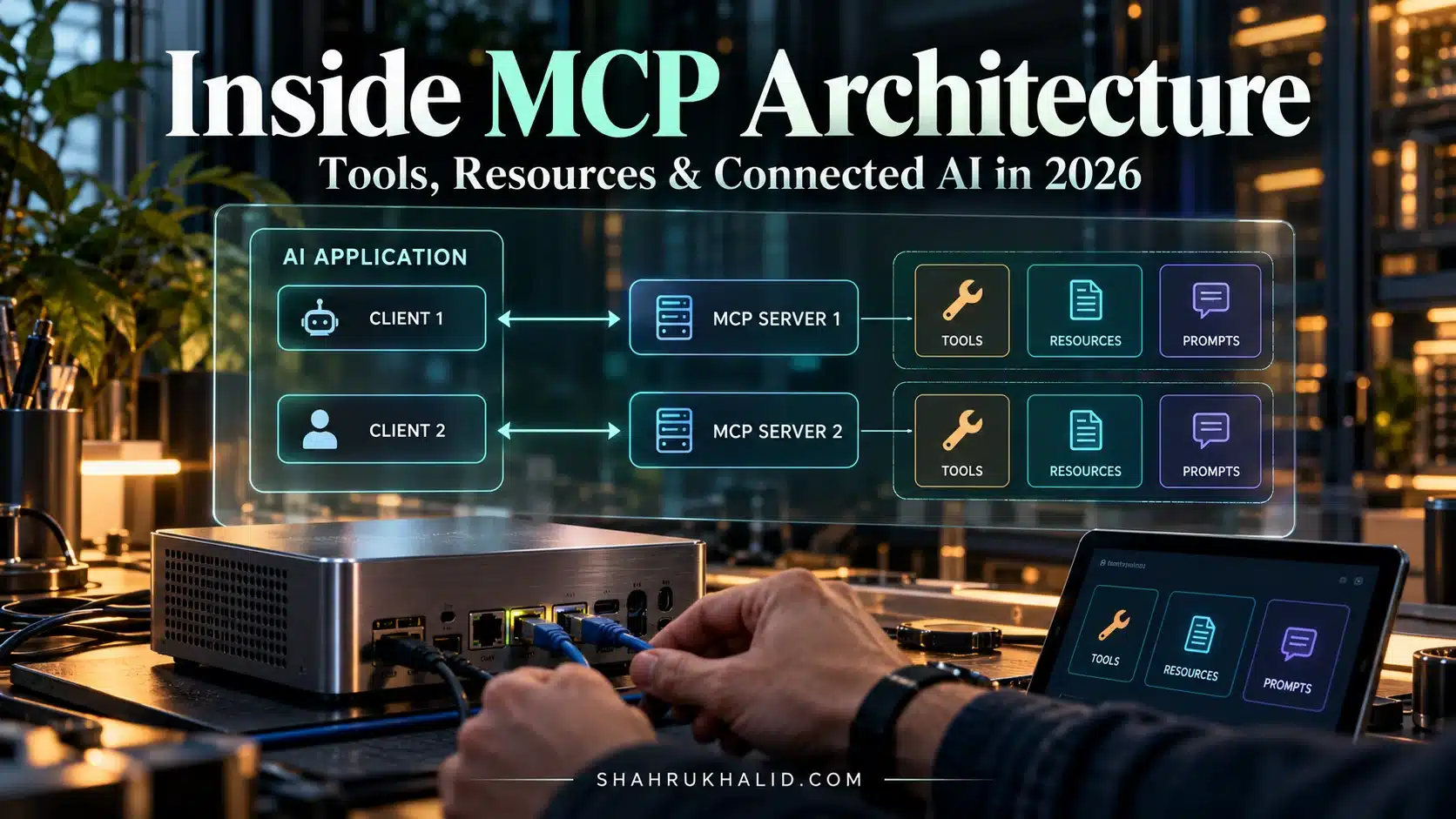
Modern EdTech architecture is moving away from simple chatbots toward Agentic Workflows. These systems leverage a “Brain” (the LLM), “Memory” (Vector Databases), and “Tools” (API access to gradebooks, curriculum databases, and assessment engines).
- LLM Orchestration: Utilizing models like GPT-4o or Claude 3.5 Sonnet to process natural language inputs from students and faculty.
- RAG Pipelines: By vectorizing proprietary curriculum and academic standards, we ensure the AI provides grounded, verifiable facts rather than hallucinations.
- Knowledge Graphs: Implementing graph databases (like Neo4j) allows the system to map dependencies between concepts—e.g., understanding that a student cannot grasp “Calculus” without first mastering “Limits.”
2. Step-by-Step Implementation & Practical Code
Building a custom AI tutor requires a robust pipeline. Below is a simplified implementation of a RAG-based tutor using Python and LangChain, designed to ingest course materials and provide context-aware responses.


Implementation Workflow
- Document Ingestion: Use
PyPDFLoaderto parse course syllabi and textbooks. - Embedding: Convert text into high-dimensional vectors using OpenAI’s
text-embedding-3-small. - Vector Storage: Store embeddings in
ChromaDBfor efficient similarity search. - Retrieval: Implement a semantic search to fetch relevant context before generating an answer.
from langchain_openai import OpenAIEmbeddings, ChatOpenAI
from langchain_community.vectorstores import Chroma
from langchain.chains import RetrievalQA
# Initialize components
loader = PyPDFLoader("curriculum_guide.pdf")
docs = loader.load()
vectorstore = Chroma.from_documents(docs, OpenAIEmbeddings())
# Setup RAG Chain
qa_chain = RetrievalQA.from_chain_type(
llm=ChatOpenAI(model="gpt-4o"),
chain_type="stuff",
retriever=vectorstore.as_retriever()
)
# Execution
response = qa_chain.invoke("Explain the concept of Photosynthesis based on the provided material.")
print(response)
3. Enterprise Best Practices & Performance Optimization
Scaling AI in an educational institution requires more than just functional code; it requires high-availability infrastructure and cost-efficient inference.
Optimization Strategies
- Caching Strategies: Use Semantic Caching (e.g., Redis with GPTCache) to store previous Q&A pairs. If a student asks a common question, the system returns the cached result, saving tokens and reducing latency.
- Model Distillation: For routine tasks like grading or simple summaries, utilize smaller, fine-tuned models (e.g., Llama-3-8B or Mistral-7B) hosted on your own VPC to reduce dependency on expensive API calls.
- Observability: Implement LangSmith or Arize Phoenix to monitor token usage, trace latency, and evaluate “hallucination rates” in real-time.
4. Security, Zero Trust & Common Pitfalls
Educational data is sensitive and subject to strict regulations like FERPA and GDPR. A Zero Trust architecture is non-negotiable.
Key Security Pillars
- Data Anonymization: Before sending prompts to third-party LLM providers, use PII-scrubbers (such as Presidio) to strip student names, IDs, and contact info.
- Prompt Injection Defense: Implement strict system prompts and input validation layers to prevent “jailbreaking” attempts where students try to bypass grading logic.
- Access Control (RBAC): Ensure that the AI agent only has access to the specific student record or course data that the authenticated user is authorized to view.
5. Future Projections & Industry Outlook
The next iteration of the AI-powered classroom will move toward Multimodal Learning and Real-time Cognitive Load Monitoring.
- Multimodal Interaction: Future AI will analyze real-time video/audio feeds to detect student frustration or disengagement, dynamically adjusting the pace of instruction.
- Autonomous Curriculum Generation: AI will move from being a “tutor” to a “curriculum architect,” generating personalized learning paths that adapt to a student’s cognitive velocity in real-time.
- Decentralized AI: Expect a shift toward “Edge AI,” where models run locally on school-issued tablets, ensuring privacy and offline functionality.