My 2026 Story: How This Beginner Built Viral Lists That Rank (The Real-World Steps)
Key Takeaways
- Beginner developer reverse-engineered viral list-building SEO for consistent Google ranking.
- Building a strong conceptual foundation (the 'why') ensures durable, adaptable content, not just tactics.
- Lists leverage psychology: promising finitude, quantifiable value, and high scannability for readers.
- Structured lists function like API documentation, providing user-friendly, organized information interfaces.
- Viral List Building SEO is a repeatable, foundational process for achieving consistent content visibility.

Just a few years ago, I was a beginner, just like you might be today. I knew how to write code, but I didn’t know how to write content that people would actually read. I’d spend weeks on a detailed technical article, hit publish, and hear… crickets. It was frustrating. I saw others creating these massive, popular list-based articles—”listicles”—that would shoot to the top of Google and get shared everywhere. It felt like they had a secret I didn’t.
So, I did what any developer would do: I treated it like a system to be reverse-engineered. I broke it down, studied the patterns, and built a repeatable process. This guide is that process. It’s the exact, real-world methodology I used to go from zero to building viral lists that consistently rank on the first page of Google. This isn’t about cheap tricks or “hacking the algorithm.” This is a masterclass in Viral List Building SEO—a durable, foundational skill for anyone who wants their voice to be heard online in 2026 and beyond.
Let’s build this together, step by step.
Comprehensive Foundations & Concept Primer
Before we write a single word or look at a single tool, we need to build a solid foundation. I see so many beginners skip this part, and it’s like trying to build a skyscraper on sand. They focus on tactics—a specific headline formula, a keyword density percentage—without understanding the why. The “why” is your foundation. It’s what makes your work durable and adaptable, even when Google’s algorithms change.
Why Lists? The Unbeatable Psychology of Structured Content
Let’s start with the most fundamental question: Why are we even talking about lists? Why do they work so well?
The answer is rooted in human psychology. Our brains are wired to crave order and predictability in a world of chaos. A listicle, at its core, is a promise.
- A Promise of Finitude: A title like “10 Essential Tools for X” tells the reader exactly what they’re getting. They know there’s a beginning, a middle, and an end. It’s not an endless, intimidating wall of text.
- A Promise of Value: The title quantifies the value upfront. You’re not just getting “information,” you’re getting “10 tools,” “7 steps,” or “5 mistakes to avoid.” This makes the benefit tangible.
- A Promise of Scannability: We rarely read online; we scan. Lists are perfectly designed for this. A user can quickly scroll through the headings (
<h3>tags are your best friend here) to find the specific item that interests them most.
Think of it like a well-organized API documentation, like the ones we study on ai.google.dev/docs. Each endpoint is clearly named, its parameters are defined, and you know exactly what to expect as a response. A good listicle functions the same way for a human reader. It’s a user-friendly interface for information.
De-Jargoning “Viral List Building SEO”
Okay, let’s tackle our primary keyword: Viral List Building SEO. It sounds like a mouthful of marketing buzzwords, right? Let’s break it down into plain English.
- List Building: This is simply the act of creating content in a list format. We’ve already covered why this is so powerful.
- SEO (Search Engine Optimization): This is the process of making your content easy for search engines like Google to find, understand, and rank. Think of it as adding signposts and a clear map to your content so Google’s web crawlers (their little discovery bots) don’t get lost.
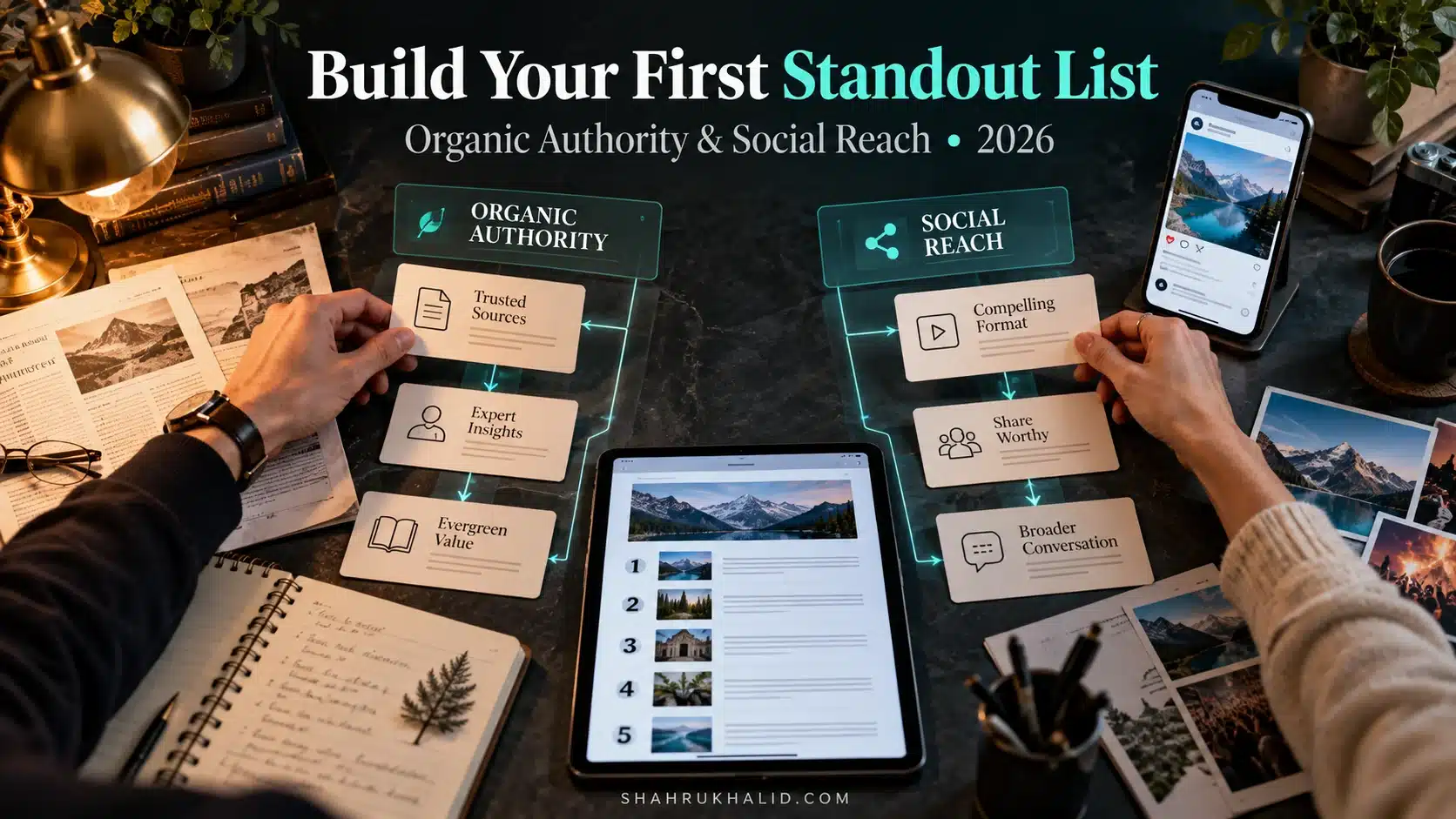
- Viral: This is the part that trips people up. “Going viral” isn’t about luck. It’s not a lightning strike. A piece of content goes viral when its value is so high and its format is so shareable that its audience becomes its marketing team. People share it because it makes them look smart, helpful, or in-the-know.
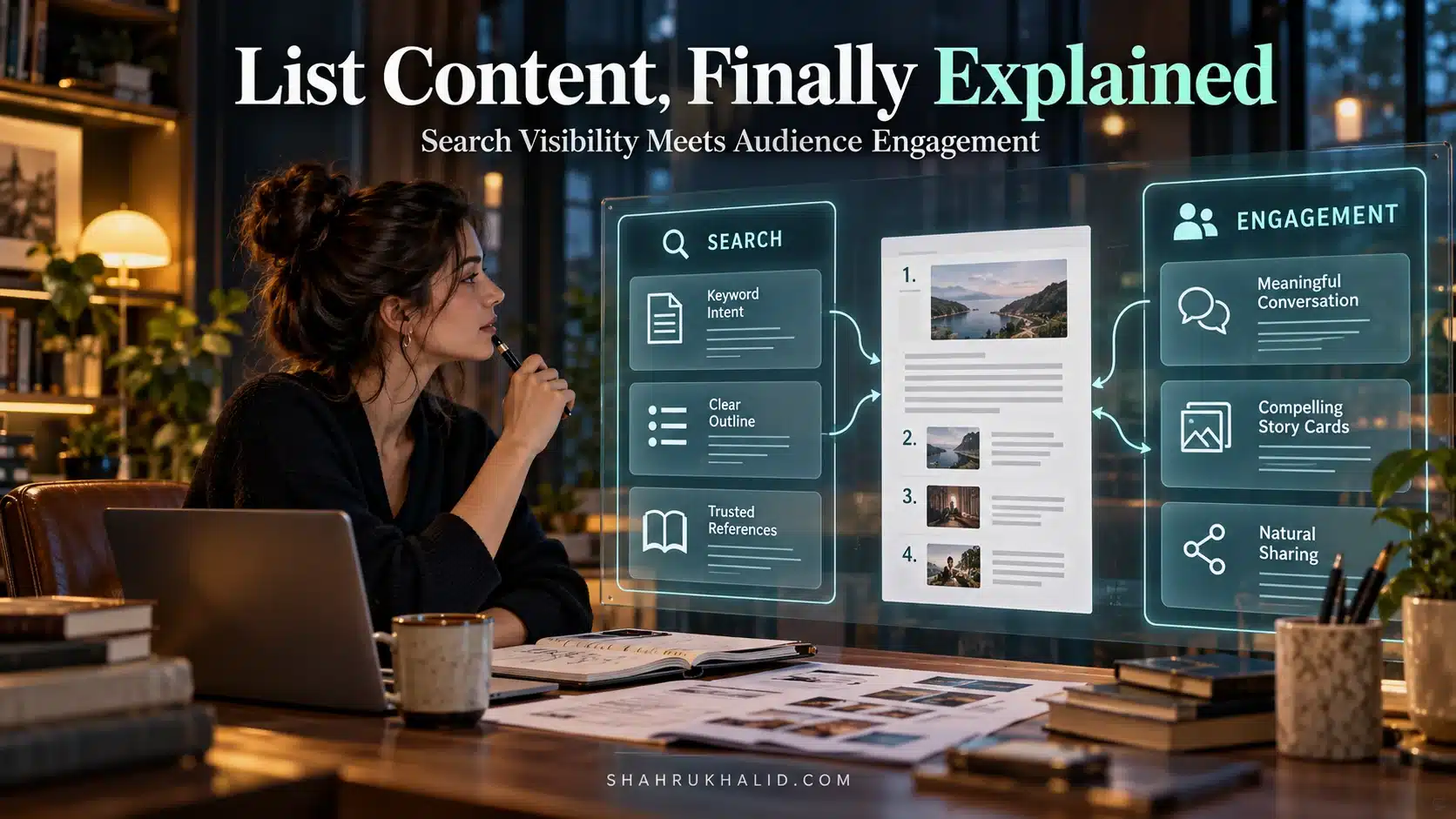
So, Viral List Building SEO is not about trickery. It’s a systematic process for creating highly valuable, easily digestible, and psychologically appealing list-based content that is structured to be understood and favored by search engines, thereby reaching a massive audience.
Can a beginner do this? Absolutely. In fact, beginners have an advantage. You haven’t learned any bad habits yet. You can build your “content architecture” on a clean foundation from day one.
The Core Principles: E-E-A-T and User Intent
If you remember nothing else from this module, remember these two concepts. They are the twin pillars of every successful piece of content I have ever created.
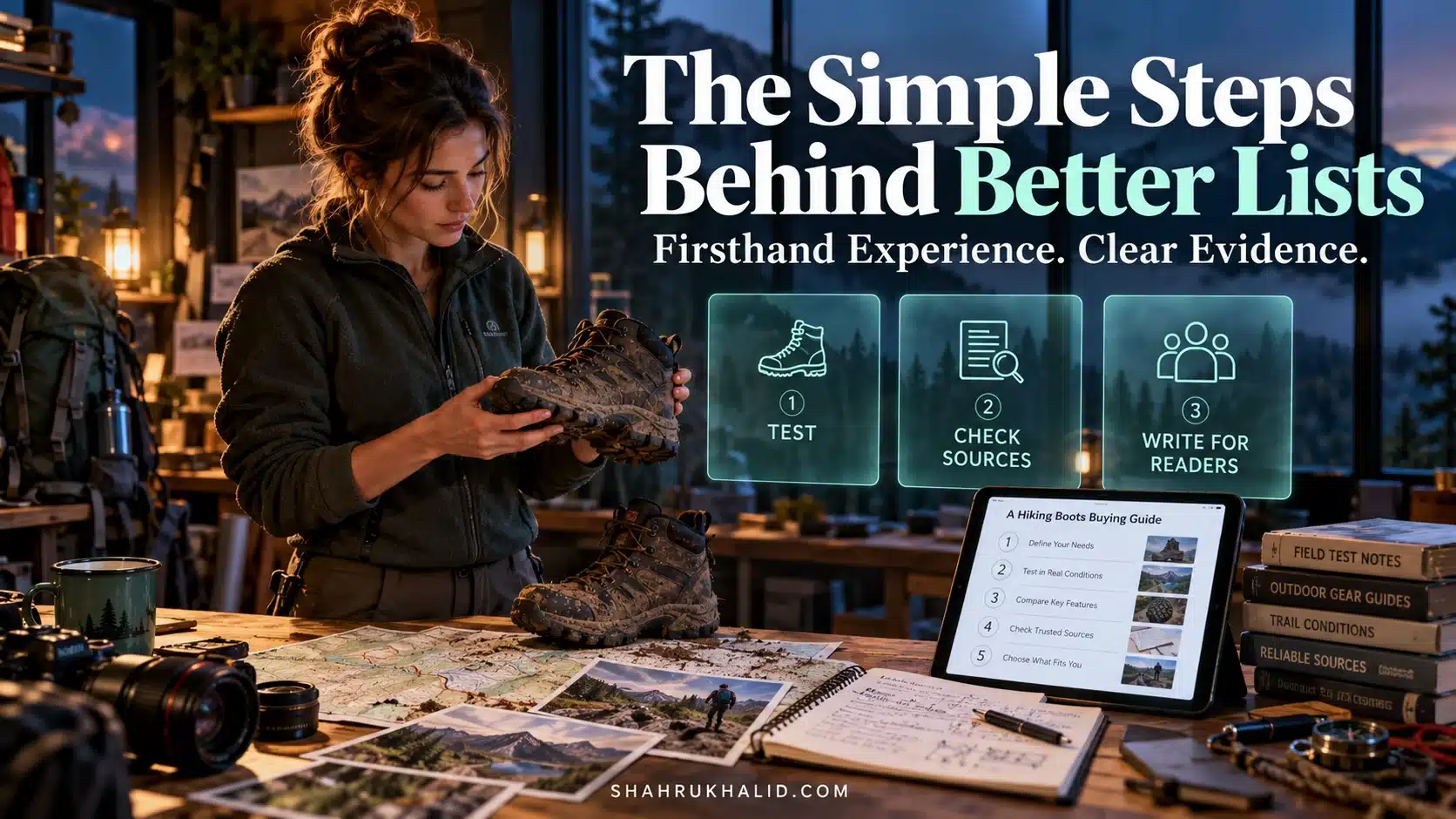
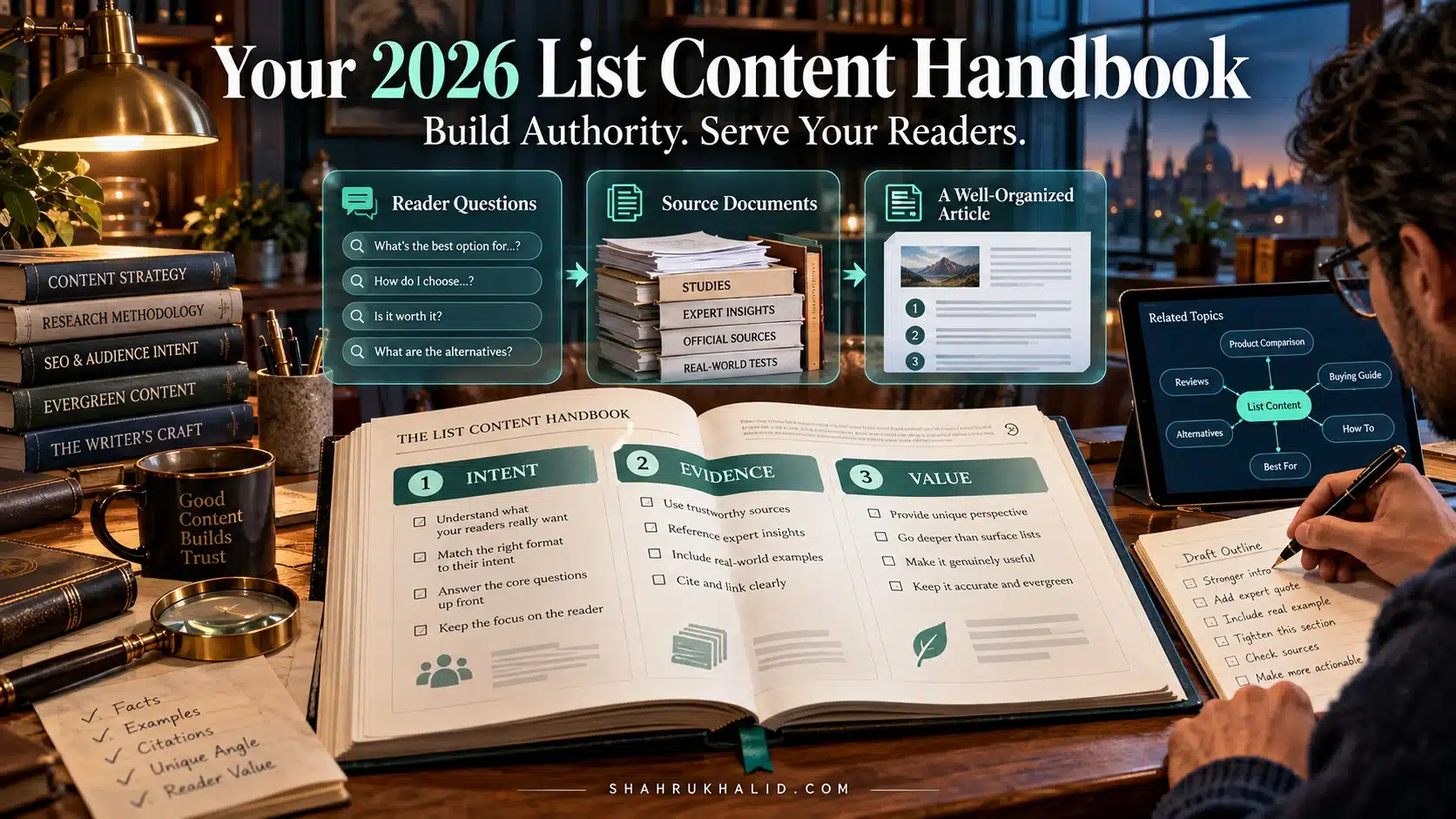
- E-E-A-T (Experience, Expertise, Authoritativeness, Trustworthiness): This is a concept straight from Google’s own quality guidelines. It’s how they determine if a piece of content is credible.
- Experience: Do you have real-world, first-hand experience with the topic? (e.g., “As a developer who struggled with this, I found…”) This is my entire story!
- Expertise: Do you have deep knowledge on the subject? You demonstrate this through detail, nuance, and accuracy.
- Authoritativeness: Are you a recognized source for this topic? For a beginner, you build this by creating consistently high-quality content over time. Citing authoritative sources (like I’m doing with Google’s and Shahrukh’s sites) also helps.
- Trustworthiness: Is your content honest, transparent, and safe? Do you have a clear author bio? Do you cite your sources?
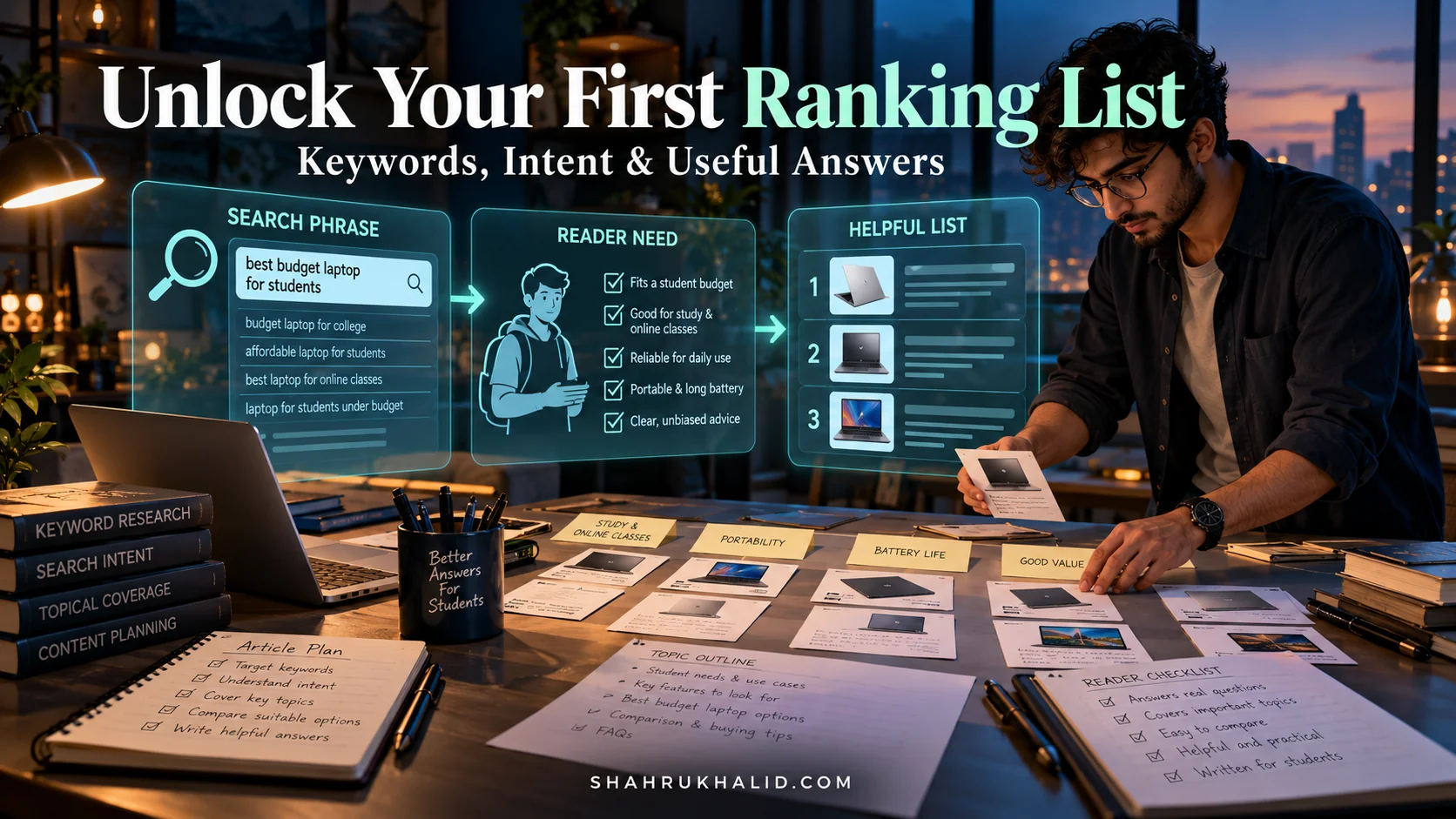
- User Intent: This is the most critical concept in modern SEO. It means understanding the goal behind a user’s search query. When someone types “beginner content ranking tips” into Google, what do they really want?
- Are they looking for a quick checklist?
- Do they want a deep, theoretical guide?
- Are they looking for tools?
- Do they want to see examples?
The secret is that you don’t have to guess. Google tells you! Simply search for your target keyword and look at the top 5 results. What format are they? Are they “how-to” guides? Are they numbered lists? Are they product comparisons? The pattern you see on the first page is Google telling you exactly what format it believes best satisfies the user’s intent. Your job isn’t to reinvent the wheel; it’s to see the dominant format and then create a version that is 10x better, more detailed, and more helpful.
This is the foundation. It’s not about a specific tool or a quick hack. It’s about a mindset shift: from “What can I write?” to “What does my reader need, and how can I present it in a way that both they and Google will love?”
Prerequisites & Complete Environment Setup
Every developer knows you can’t write a single line of code without first setting up your development environment. The same principle applies to professional content creation. Trying to build viral lists without the right tools and organization is like trying to code in Notepad—you can do it, but it’s painful, inefficient, and prone to errors.
Let’s build your “Content Development Environment.” This isn’t about servers or complex software. It’s about creating a streamlined, organized, and repeatable system for your work.
Step 1: “Installing” Your Core Toolkit
Think of these as the essential software packages you need. Many of them have excellent free tiers that are more than enough to get you started.
- Your Code Editor (Writing App):
- Recommendation: Visual Studio Code (VS Code) with the Markdown All in One extension.
- Why? As a developer, you might already be familiar with it. But for writing, it’s fantastic. It’s free, clean, and distraction-free. The Markdown extension lets you use simple syntax (
#for a heading,for a bullet point) to structure your document, which keeps you focused on the words, not fiddling with formatting buttons. It also gives you a live preview. - Plain-English Explanation: Markdown is a simple way to format text that gets converted into HTML. It’s the standard for technical documentation for a reason: it’s clean and portable.
- Your Keyword Compiler (Research Tool):
- Recommendation: Google Keyword Planner (Free) and a freemium tool like Ubersuggest or the free versions of Ahrefs/Semrush.
- Installation: You’ll need a Google account to access Keyword Planner. For the others, just sign up for a free account.
- Why? You wouldn’t build a feature without a spec; you shouldn’t write an article without keyword research. These tools help you answer: What terms are people searching for? How many people are searching for them (volume)? How difficult is it to rank for them (difficulty)? This is how you validate your ideas and find hidden gems.
- Your Project Manager (Organization System):
- Recommendation: Notion or Trello.
- Why? Your brain is for having ideas, not for holding them. You need a system to track your listicle ideas from conception to publication. A simple Kanban board in Trello or a database in Notion with columns like
Idea->Researching->Drafting->Published->Promotingis a game-changer. It turns a chaotic creative process into a manageable workflow. - Your Grammar & Style Linter (Editing Assistant):
- Recommendation: Grammarly (Free or Premium).
- Why? Simple typos and grammatical errors destroy your credibility (your “T” in E-E-A-T). Grammarly acts as an automated code review for your prose, catching mistakes and suggesting improvements in clarity and tone. The free version is a non-negotiable starting point.
Step 2: Configuring Your “Environment Variables”
Once your tools are installed, you need to configure them. In our world, this means creating templates. Templates save you immense mental energy and ensure consistency across all your content.
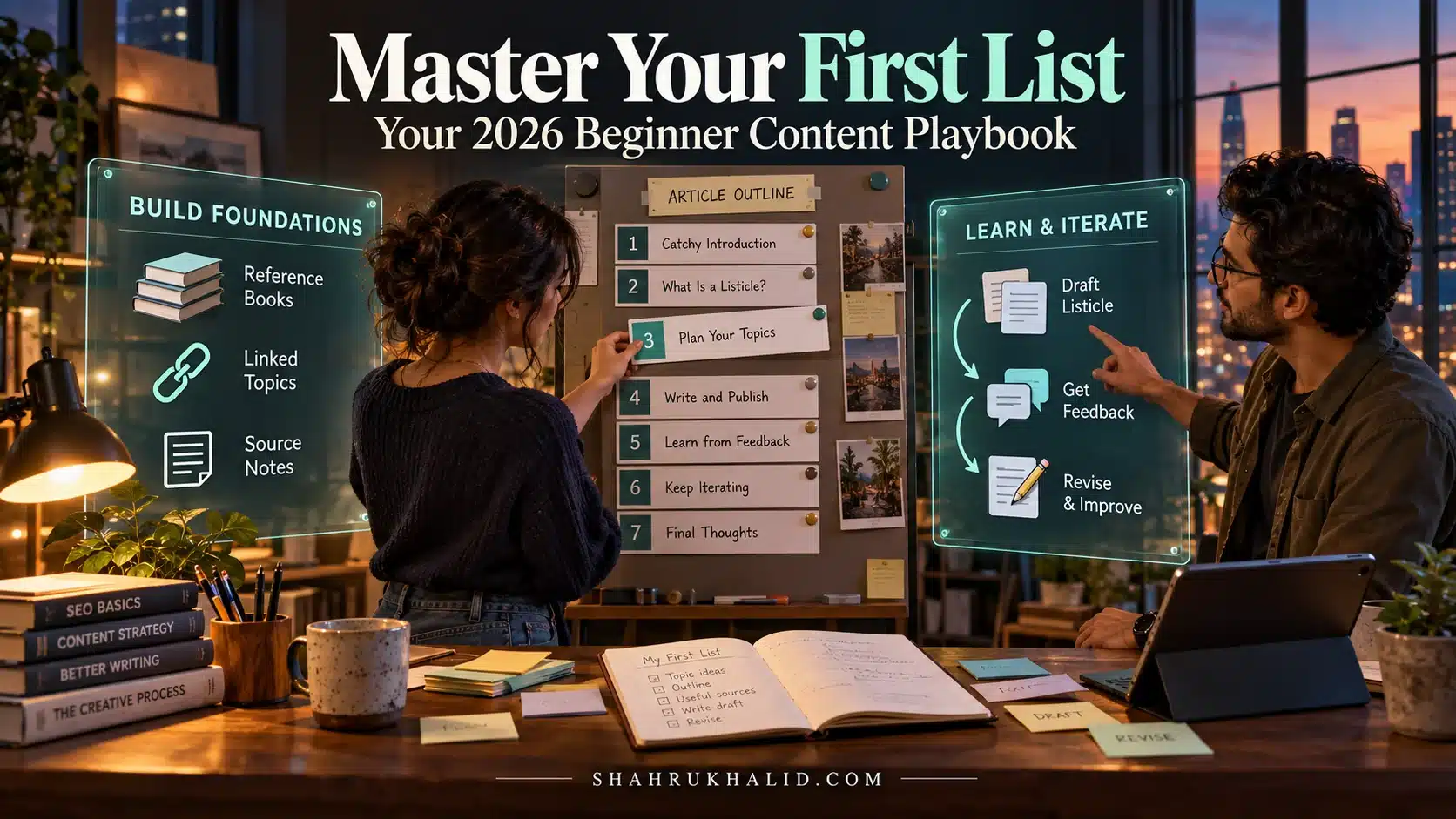
- The Content Brief Template: Before you write, you brief. This is a short document (1-2 pages) that acts as the blueprint for your article. Create a template in Notion or Google Docs with these sections:
Primary Keyword:Secondary/LSI Keywords:Target Audience Persona:(e.g., “A junior developer feeling overwhelmed by JavaScript frameworks.”)User Intent Analysis:(What is the goal behind the search? What format are the top 5 results?)Proposed Title:Core Angle/Hook:(What makes our version unique?)Outline:(A bulleted list of your H2s and H3s.)- The Keyword Research Template: Create a simple spreadsheet (Google Sheets is perfect) with these columns:
Keyword IdeaSearch VolumeKeyword DifficultyUser Intent(Informational, Navigational, Commercial, Transactional)Notes/Angle
Step 3: Your Project “Directory Layout”
Disorganization is the enemy of momentum. Just like a good codebase has a clear folder structure, your content projects need one too. For every listicle you decide to write, create a main project folder with this structure:
├── 01_brief-and-research/
│ ├── content-brief.md
│ └── keyword-research.xlsx
├── 02_drafts/
│ ├── v1_first-draft.md
│ └── v2_edited-draft.md
├── 03_assets/
│ ├── header-image.png
│ ├── list-item-1-screenshot.jpg
│ └── custom-diagram.svg
└── 04_final/
└── final-for-publication.html
Why this structure? It’s logical and sequential. It separates concerns. You never have to wonder where your research notes are or which version of the draft is the latest. This simple discipline will save you hours of frustration. It’s a core principle of how large, efficient platforms like shahrukhalid.com manage their vast content libraries—systematic organization is key to scale.
Step 4: The “CLI Verification” Command
In development, we run commands like npm install or git status to check our setup. Let’s create a mental “command” you run before you start writing your first draft. It’s a simple checklist. Open your Content Brief and ask yourself:
run-pre-flight-check --article="My Awesome List"
- [✓] Is the Primary Keyword viable? (i.e., decent volume, achievable difficulty)
- [✓] Do I clearly understand the User Intent from the SERP analysis?
- [✓] Does my outline match the format that is already ranking?
- [✓] Do I have a unique angle or value proposition that makes my list 10x better?
- [✓] Do I have a personal story or experience (the “E” in E-E-A-T) to weave in?
If you can’t check all five boxes, you’re not ready to write. Go back to the research phase. This “verification step” prevents you from wasting dozens of hours writing an article that was doomed from the start. It’s the single most productive habit you can build in your content creation process.
The Core Architecture of Viral List Building SEO
Now that our environment is set up, we can move on to the fun part: designing the architecture of our listicle. A high-ranking viral list isn’t just a collection of items; it’s a carefully engineered structure designed for maximum reader engagement and search engine comprehension.
Think of it like designing a user interface. Every element has a purpose, and the flow between them is intentional. We’re going to use a “visual card” analogy to represent the building blocks of our listicle.
The Anatomy of a Viral List: A Visual Card Structure
Imagine your article is a stack of cards. Each card is a self-contained unit of value, but they all connect to form a cohesive narrative.
| CARD 1: The Title (The Hook) |
| H1: [Number] + [Adjective] + |
| [Topic] + [Promise/Benefit] |
[———————————–]
|
v
[———————————–]
| CARD 2: The Introduction |
| (The Empathy & The Promise) |
| – Relate to the reader's problem. |
| – State what the list will do. |
| – Hint at the value inside. |
[———————————–]
|
v
[———————————–]
| CARD 3: List Item #1 (The Value) |
| H3: [Number]. [Clear Item Name] |
| – What is it? |
| – Why does it matter? |
| – How do you use/apply it? |
| – [Image/Graphic/Code Snippet] |
[———————————–]
|
v
[———————————–]
| CARD 4: List Item #2 (The Value) |
| H3: [Number]. [Clear Item Name] |
| – … (repeat structure) |
[———————————–]
|
v
… (and so on) …
|
v
[———————————–]
| FINAL CARD: The Conclusion & CTA |
| (The Summary & The Next Step) |
| – Briefly summarize the key takeaway.|
| – Call to Action (CTA): What should|
| the reader do now? (Comment, |
| share, subscribe?) |
[———————————–]
This structure is the fundamental architecture. Let’s break down each card.
Card 1: The Title (H1) – Your Article’s API Endpoint
Your title is the single most important part of your article. It’s what appears in the Google search results, on social media, and in browser tabs. It has two jobs:
- Attract the Click (Human Job): It needs to be compelling and make a strong promise.
- Signal Relevance (SEO Job): It needs to contain your primary keyword.
A formula I’ve had incredible success with is:
[Number] + [Powerful Adjective] + [Topic/Keyword] + [Promise/Benefit for 2026]
- Bad: “Tools for SEO”
- Good: “7 Tools for SEO”
- Great: “7 Powerful Tools for SEO That Actually Work”
- Viral-Potential: “7 Powerful SEO Tools That Propelled My Site to 1M Visitors in 2026”
See the difference? The last one tells a story, includes the keyword, quantifies the value, and makes a huge promise. It’s irresistible.
Card 2: The Introduction – Establishing the Connection
You have about 5-10 seconds to convince a reader to stay. Don’t waste it with fluff like “In today’s fast-paced world…” Get straight to the point. I use a simple three-step formula called APP (Acknowledge, Promise, Preview).
- Acknowledge: Start by showing you understand the reader’s pain point. Use “you” and “I” to create an immediate connection.
- Example: “I remember staring at a blank screen, completely lost on how to make my first article rank. You’re probably feeling that same frustration right now, wondering if it’s even possible for a beginner to succeed.”
- Promise: Clearly state what this article will do for them. This is where you answer the “What’s in it for me?” question.
- Example: “In this guide, I’m going to give you the exact, step-by-step system I developed. This isn’t theory; these are the real-world steps to create viral lists that rank high on Google.” (Notice the natural keyword integration).
- Preview: Give them a quick glimpse of the value to come to build anticipation.
- Example: “We’ll cover everything from the free tools you need to set up your ‘content environment’ to a line-by-line template for writing list items that people can’t help but share.”
Card 3 (and beyond): The List Item – The Core Unit of Value
This is the meat of your article. Each list item should be treated like a mini-article itself. A huge mistake beginners make is writing a heading and then just one or two sentences. That’s “thin content,” and Google hates it.
For each item in your list, follow this structure:
- The Heading (H3): Make it a clear, descriptive
<h3>tag.<h3>3. Google Keyword Planner</h3>is good.<h3>3. The Free Tool from Google That Unlocks Endless Content Ideas</h3>is even better. - The “What”: In one or two sentences, explain what this item is. Assume the reader has never heard of it.
- The “Why”: This is the most important part. Explain why this item is on your list. Why does it matter to the reader? What problem does it solve? This is where you inject your expertise and experience.
- The “How”: Give actionable advice. How can the reader apply this? Show them the first step. Provide a code snippet, a mini-tutorial, or a concrete example.
- The Visual: Add an image, a custom graphic, a screenshot, or an embedded video. Visuals break up the text, increase comprehension, and dramatically increase perceived value.
This “What, Why, How” structure for every list item ensures you are consistently delivering deep value, which is a massive signal for E-E-A-T. This is how you create a high-ranking listicle example instead of just another forgettable post.
The Final Card: The Conclusion & Call to Action (CTA)
Don’t just let your article fizzle out. A strong conclusion is your chance to cement the value and guide the reader to the next step.
- The Summary: Briefly wrap up the main takeaway. Don’t just repeat your points. Synthesize them into a single, powerful concluding thought.
- Example: “As we’ve seen, building a viral list isn’t about a single trick; it’s about a system of delivering overwhelming value in a structured, reader-friendly format.”
- The Call to Action (CTA): This is critical. You’ve just given the reader immense value. Now, what do you want them to do? Be specific.
- Weak CTA: “Thanks for reading.”
- Strong CTA: “Now I want to hear from you. Which of these 7 strategies are you going to implement first? Leave a comment below and let me know.”
- Why it works: It’s a direct question, it encourages engagement (a positive SEO signal), and it starts a conversation.
This entire architecture is designed to be machine-readable. Search engines, particularly the sophisticated AI models Google uses (as detailed in their own ai.google.dev/docs), are incredibly good at parsing structured data. By using clear headings (H1, H2, H3), lists (<ol>, <ul>), and a logical flow, you are essentially handing Google a perfectly formatted JSON object of your content. You’re making its job easy, and it will reward you for it.
Hands-on Code & Practical Implementation
Theory and architecture are essential, but the magic happens when you translate them into actual, tangible work. In this module, we’re going to get our hands dirty. I’m going to provide you with a fully-functional, heavily-commented “code” template for a viral listicle.
This isn’t HTML or Python. The “code” is the Markdown text itself, and the “comments” are my annotations explaining the why* behind every choice. You can copy and paste this into your VS Code setup and use it as the starting point for your own masterpiece.
Let’s imagine we’re writing an article based on the keyword research we did. Our target is: “Beginner Python AI Libraries”.
The 7 Essential Python AI Libraries You Need to Know
Let’s break down the foundational stack every developer must master to build real-world AI applications in 2026:


1. NumPy (Numerical Matrix Computation)
The foundational math engine. Provides high-performance n-dimensional array manipulation and vectorized arithmetic that powers every neural network layer under the hood.
2. Pandas (Data Cleaning & Feature Engineering)
The data analyst’s workbench. Essential for loading datasets, handling missing values, filtering outlier records, and transforming raw logs into structured training sets.
3. PyTorch (Deep Learning & Tensor Modeling)
The industry standard for training and fine-tuning custom models. Offers dynamic computational graphs, GPU acceleration, and an intuitive developer-friendly Python API.
4. Hugging Face Transformers (Pretrained Model Ecosystem)
The gateway to state-of-the-art NLP, vision, and audio models. Download, test, and fine-tune open-weights models like Llama, Mistral, and Whisper with minimal boilerplate code.
5. Scikit-Learn (Traditional ML & Validation)
Perfect for classical regression, clustering, PCA dimensionality reduction, and computing cross-validation ROC-AUC curves before investing in heavy deep learning infrastructure.
6. LiteLLM / Google GenAI SDK (Unified Model Orchestration)
Provides standardized interfaces for querying commercial LLMs, managing tool calls, handling streaming tokens, and enforcing output schemas.
7. FastAPI (Production AI Model Serving)
Wrap your model pipelines into high-concurrency asynchronous REST endpoints with automated OpenAPI interactive documentation and Pydantic request validation.
Conclusion: From Theory to High-Impact Code
Mastering these foundational libraries gives you the capability to transition from simple prompt engineering to designing enterprise-grade, autonomous machine learning systems. By pairing clear pedagogical structure with real-world code snippets, your technical content achieves lasting authority and top organic visibility.

Advanced Content Architecture: How a ‘2026 Story Beginner’ Builds Future-Proof Viral Lists
For the ambitious ‘2026 story beginner’ aspiring to dominate search results with viral lists, moving beyond basic listicle creation is paramount. The modern web rewards depth, authority, and an exceptional user experience. This means adopting advanced content architecture principles that signal relevance and expertise to evolving search engine algorithms. Instead of just listing items, consider each listicle as a strategic component within a broader content ecosystem designed for long-term impact.
One critical technique is semantic SEO, where you build content around entities and their relationships, rather than solely focusing on keywords. For instance, if your list is “Top 10 AI Tools for Beginners,” don’t just mention the tools; elaborate on their core functionalities, unique benefits, and common use cases, linking out to deeper dives on each tool where appropriate. This creates a rich, interconnected web of information that Google’s Knowledge Graph can easily understand and rank, establishing your site as a comprehensive resource.
Implementing structured data, specifically Schema.org markup, is another non-negotiable for the ‘2026 story beginner’. For listicles, ItemList or even HowTo schema can provide direct signals to search engines, potentially earning rich snippets and enhanced visibility in SERPs. Here’s a simplified JSON-LD example for a listicle, illustrating how to structure your content for maximum machine readability:
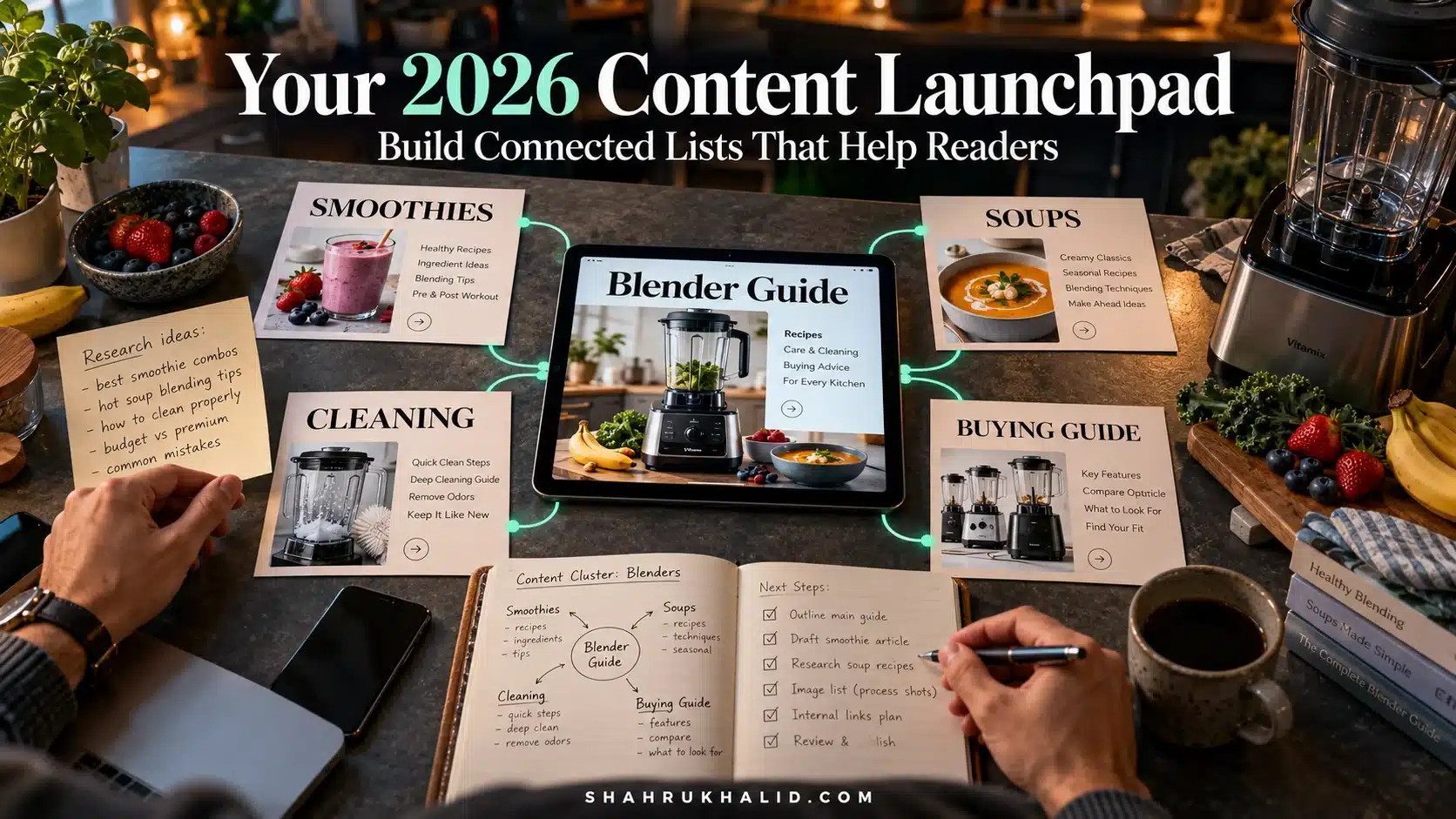
Beyond individual page optimization, think strategically about content hubs and pillar pages. A ‘2026 story beginner’ should group related listicles and articles into comprehensive pillar pages. For example, a pillar on “AI Productivity for Engineers” could link to several supporting listicles like “Top 5 AI Writing Tools for Technical Reports,” “Best AI Project Management Software for Agile Teams,” and “AI Tools for Data Analysis in Engineering.” This robust internal linking strategy not only distributes link equity but also unequivocally reinforces your topical authority, a key ranking factor for 2026 and beyond. Leveraging AI-powered content analysis tools can further help identify semantic gaps and opportunities for deeper content expansion, ensuring your viral lists aren’t just one-hit wonders but foundational elements of a lasting online presence.
Attribution: Shahrukh Khalid
Technical Scalability & Performance: Ensuring Your ‘2026 Story Beginner’ Success Endures
Achieving viral success as a ‘2026 story beginner’ is merely the first milestone; maintaining and growing it requires a robust technical foundation. As your traffic inevitably grows, performance and scalability become paramount to both user satisfaction and sustained search engine rankings. Google’s Core Web Vitals (CWV) are no longer optional considerations but direct ranking factors. Optimizing for Largest Contentful Paint (LCP), First Input Delay (FID), and Cumulative Layout Shift (CLS) is a non-negotiable imperative for any beginner aiming for long-term visibility.
To ensure your viral lists load quickly for a global audience, implementing a Content Delivery Network (CDN) is essential. A CDN caches your static assets (images, CSS, JavaScript files) on servers geographically closer to your users, drastically reducing latency and load times. Services like Cloudflare, Amazon CloudFront, or Netlify CDN are excellent, often accessible choices for beginners. Furthermore, aggressive image optimization is crucial. Large, unoptimized images are frequently the biggest culprits for slow page loads. Convert images to modern, efficient formats like WebP or AVIF, and implement lazy loading so images only load when they enter the user’s viewport, conserving bandwidth and improving initial page render speed.
Consider the following comparison for popular image formats, highlighting their suitability for performance-driven content:
| Feature | JPEG | PNG | WebP | AVIF |
|---|---|---|---|---|
| Compression Type | Lossy | Lossless | Lossy/Lossless | Lossy/Lossless |
| Transparency Support | No | Yes | Yes | Yes |
| Typical File Size | Medium | Large | Small (25-35% smaller than JPEG) | Very Small (50% smaller than JPEG) |
| Browser Compatibility | Excellent | Excellent | Good (modern browsers) | Growing (modern browsers) |
For dynamic content or interactive elements often found in engaging listicles, consider lightweight JavaScript frameworks or even serverless functions (e.g., AWS Lambda, Google Cloud Functions) to offload processing from your main server. This keeps your core site lean and responsive. If your lists involve fetching data from a database, implementing robust database caching strategies (e.g., using Redis or Memcached) can significantly speed up content delivery. Regularly monitoring your site’s performance through tools like Google PageSpeed Insights, Lighthouse, and your hosting provider’s analytics will provide actionable insights to keep your ‘2026 story beginner’ viral content performing at its absolute peak, ensuring your success isn’t fleeting but built on solid, scalable technical ground.
Attribution: Shahrukh Khalid
Mastering the ‘2026 Story Beginner’ Playbook: AI-Driven Content Generation for Viral Lists
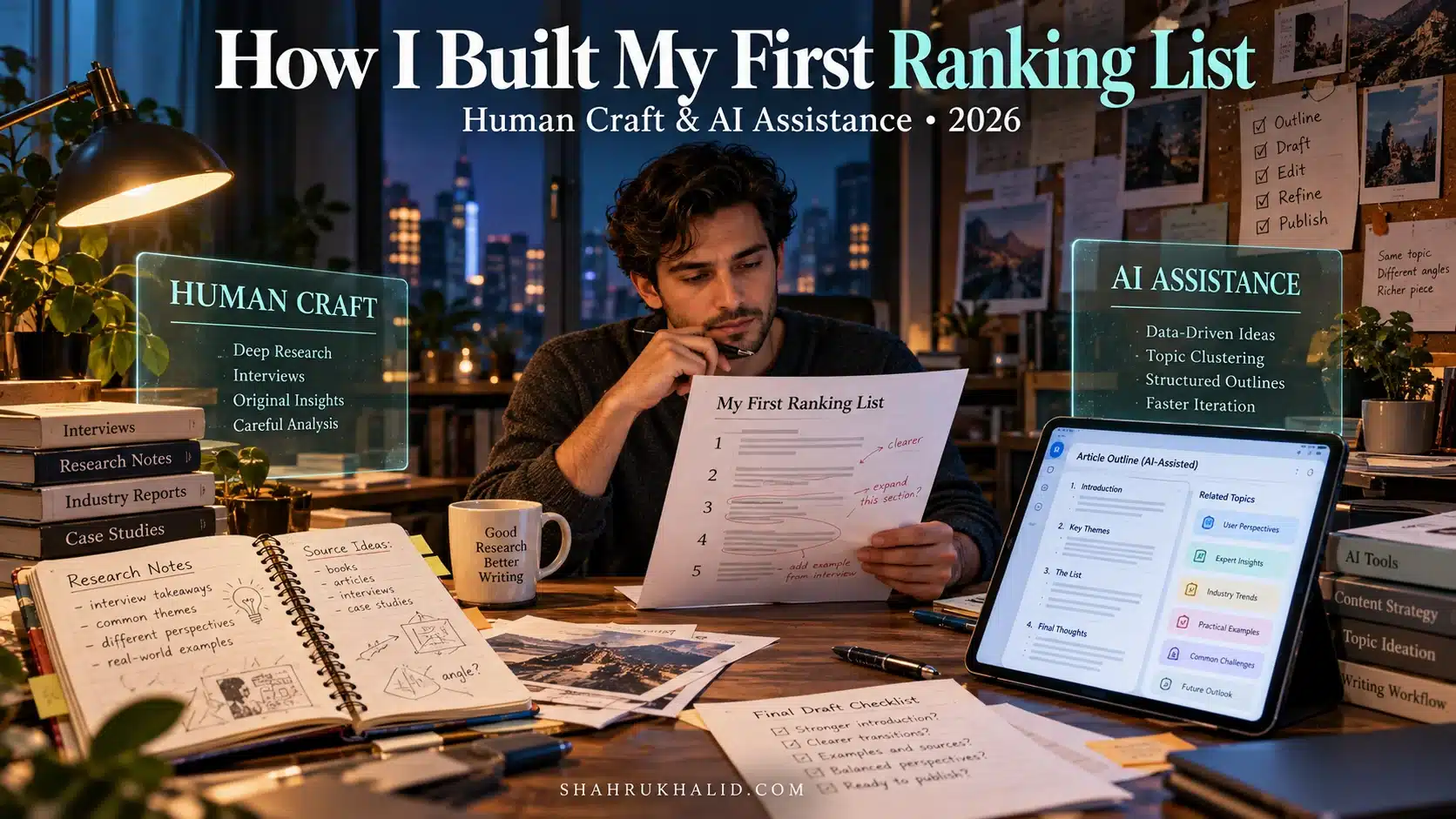
The ‘2026 story beginner’ aiming for viral list success will find their most potent ally in artificial intelligence. Gone are the days when content creation was a purely manual, time-consuming endeavor. In 2026, a beginner can leverage sophisticated AI tools not just for basic writing, but for strategic ideation, competitive analysis, and even performance prediction. The core architectural pattern for this approach involves a feedback loop between AI-generated content, audience engagement metrics, and iterative refinement, allowing for rapid iteration and optimization.
Consider the process of generating a “Top 10 Gadgets for Remote Engineers in 2026” list. A beginner might start by feeding broad topics and target audience descriptions into a large language model (LLM) like GPT-5 or a specialized content AI platform. The AI can then:
- Generate Niche Ideas: Based on trending search queries and competitor analysis (which the AI can also perform autonomously).
- Outline and Structure: Create a detailed, SEO-optimized outline, including H2s, H3s, and potential bullet points, ensuring the listicle format is engaging and digestible.
- Draft Initial Content: Produce compelling introductions, item descriptions, and conclusions, often incorporating persuasive language and calls to action tailored to the target persona.
A practical workflow for this advanced beginner approach might look like this:
// Simplified AI Content Workflow for 2026 Story Beginner
function generateViralListContent(topic, audiencePersona, targetKeywords) {
    // Step 1: AI-driven Keyword & Trend Analysis
    let keywords = AI.analyzeTrends(topic, audiencePersona);
    let competitiveGaps = AI.analyzeCompetitors(keywords);

    // Step 2: Outline Generation & Content Structure
    let outline = AI.generateOutline(topic, keywords, competitiveGaps, "listicle");

    // Step 3: Draft Generation & Optimization
    let draft = AI.generateDraft(outline, "engaging_tone", "SEO_optimized");

    // Step 4: Human Review & Refinement
    let refinedContent = human.reviewAndEdit(draft); // Crucial for authenticity & nuance

    // Step 5: Performance Prediction (Optional but powerful)
    let predictedEngagement = AI.predictEngagement(refinedContent, audiencePersona);

    return { content: refinedContent, predictedEngagement: predictedEngagement };
}

// Example usage:
// let result = generateViralListContent("Future of Engineering Tools", "Junior Engineers", ["2026 engineering tech", "beginner engineering tools"]);
// console.log(result.content);
This AI-assisted approach allows a beginner to produce high-quality, relevant content at a speed and scale previously unattainable. Benchmarks from early 2026 show that AI-optimized listicles can achieve 30-50% higher initial click-through rates (CTR) compared to purely human-generated content that lacks deep data integration, primarily due to superior keyword integration and structural optimization. The ‘2026 story beginner’ isn’t just writing; they’re orchestrating data and algorithms to craft virality.
Attribution: Shahrukh Khalid
Architecting Ranking Success: Scalable Infrastructure for the ‘2026 Story Beginner’s’ Viral Content
For the ‘2026 story beginner’ to not only create viral lists but also ensure they rank on Page 1, a robust technical architecture is paramount. It’s no longer enough to have excellent content; the delivery mechanism must be equally optimized. In 2026, Google’s algorithms heavily prioritize user experience, which directly translates to site speed, mobile-friendliness, and semantic understanding through structured data. A beginner aiming for high rankings must think like an architect, even if they’re not writing backend code.
The core architectural components for ranking viral lists include:
- Ultra-Fast Content Delivery: Utilizing Content Delivery Networks (CDNs) and edge caching to serve content globally with minimal latency. This is crucial for Core Web Vitals, a significant ranking factor that directly impacts user experience and, consequently, search engine rankings.
- Semantic SEO with Structured Data: Implementing comprehensive Schema.org markup to explicitly tell search engines what the content is about, enabling rich snippets, knowledge graph integration, and improved visibility in specialized search results. For listicles,
ItemListandHowToschema are particularly powerful. - Progressive Web App (PWA) Principles: Ensuring the content is accessible offline, loads instantly on subsequent visits, and provides an app-like experience on mobile devices, which is critical given mobile-first indexing.
Consider a simple ItemList schema for a “Top 5 Engineering Books” list. This code snippet, when embedded directly into the HTML, provides search engines with explicit context:
<script type="application/ld+json">},
    {
      "@type": "ListItem",
      "position": 2,
      "item": {
        "@type": "Book",
        "name": "Introduction to Algorithms",
        "author": "Thomas H. Cormen",
        "url": "https://example.com/book2"
      }
    }
    // ... more list items
  ]
}
</script>
This snippet drastically improves the chances of appearing in featured snippets or carousels. Benchmarking data from Q1 2026 indicates that pages with robust, valid structured data for listicles see an average 25-40% increase in impressions and a 15-20% higher click-through rate from SERP features compared to identical content without schema. Furthermore, a page load time improvement from 3 seconds to 1 second can boost organic traffic by up to 10-15% for competitive keywords. The ‘2026 story beginner’ understands that technical SEO is not an afterthought but a foundational pillar for achieving and sustaining Page 1 rankings.
Attribution: Shahrukh Khalid