The 2026 Story: How I Built My First Ranking List (A Beginners Practical Guide)
The journey to seeing your content rank on search engines can feel like navigating a complex maze. For many beginners, the idea of creating a “ranking list”—a piece of content designed not just to inform, but to actively compete for top search positions—seems daunting. Yet, mastering how to build ranking list content is one of the most powerful skills you can develop in the digital landscape. It’s about strategically crafting information that Google, and more importantly, your audience, finds incredibly valuable and relevant.
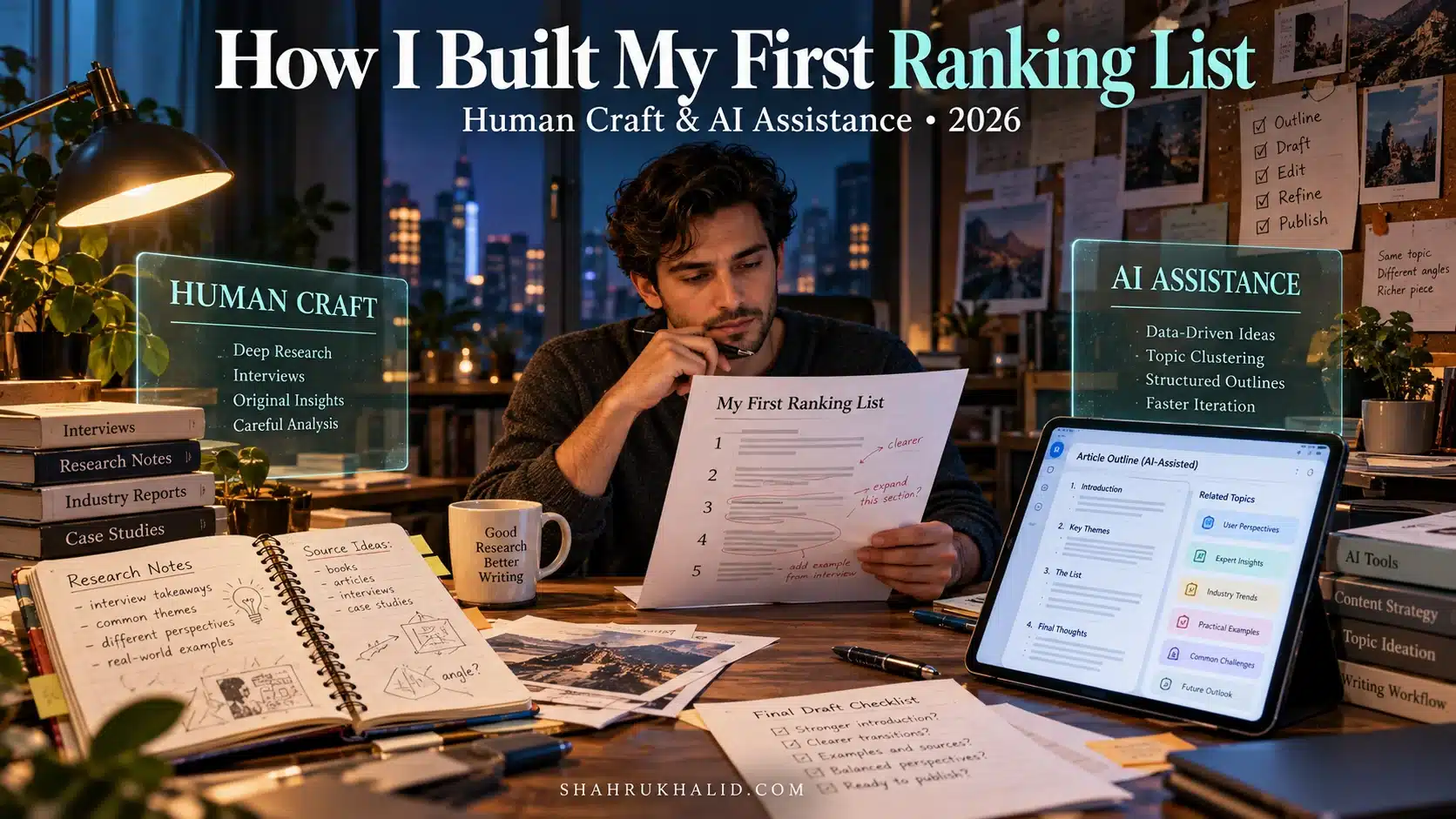
This guide isn’t just a theoretical overview; it’s a practical, hands-on exploration of how to approach this challenge. We’ll dive deep into two distinct, yet equally valid, methodologies for creating your first ranking list. Think of it as an architectural showdown between two fundamental philosophies: one rooted in meticulous, human-centric craftsmanship, and the other leveraging the power of data and AI-driven augmentation. Both paths can lead to success, but they demand different skill sets, resources, and mindsets. Understanding these differences is the first step in crafting a successful content list strategy that resonates with search engines and readers alike.
The Architectural Showdown: Core Philosophies & Overview
When we set out to build ranking list content, we’re essentially designing a piece of digital architecture. Just as a building can be constructed with traditional hand-laid bricks or prefabricated, high-tech components, our content can be built with different foundational philosophies. For beginners, the choice between these approaches can feel overwhelming, often leading to analysis paralysis or inefficient efforts. Let’s demystify these core philosophies and understand why they exist, what they offer, and why many struggle to pick a clear path.
Our first contender is what we’ll call The Craftsman Approach (Manual, Deep Dive & Organic). Imagine a master artisan meticulously carving a sculpture, understanding every nuance of the material, and pouring hours of dedicated effort into each detail. This approach to building a ranking list is similar. It emphasizes a deep, hands-on understanding of your target audience, their questions, and the competitive landscape. The core philosophy here is that genuine, human-driven insight and unparalleled quality will naturally attract attention and earn high rankings over time.
For a beginner embarking on their first ranking content, the Craftsman Approach means starting with foundational SEO principles. It involves manual keyword research, which isn’t just about finding popular words, but truly understanding the intent behind those words. For instance, if someone searches “best coffee makers,” are they looking for a budget option, a high-end espresso machine, or a drip coffee maker for a crowd? The Craftsman dives into forums, reads reviews, and even talks to potential users to grasp these subtle distinctions. This deep empathy for the user is paramount. Content creation under this philosophy is often slower, more deliberate, and focuses on creating evergreen pieces that remain relevant for years. The goal isn’t just to rank, but to become the definitive resource on a topic, earning trust and authority. Strengths include the potential for highly unique, authoritative content, strong brand voice development, and a deeper understanding of your niche. Weaknesses, however, are significant: it’s incredibly time-consuming, difficult to scale, and initial ranking results can be slower, requiring patience and sustained effort.
On the other side of the arena, we have The Augmented Approach (Data-Driven, AI-Assisted & Scaled). This philosophy embraces the technological advancements of our era, leveraging sophisticated tools and artificial intelligence to streamline and optimize the content creation process. Think of it as using advanced robotics and data analytics in construction: precision, speed, and efficiency are key. The core idea is that data doesn’t lie, and AI can process vast amounts of information far faster than any human, identifying patterns and opportunities that might otherwise be missed. This approach is particularly appealing for those looking to scale their list article SEO efforts or operate in highly competitive niches where every data point matters.
For a beginner, the Augmented Approach might involve subscribing to powerful SEO suites (like Ahrefs, SEMrush, Surfer SEO, or Clearscope) that offer AI-powered keyword research, competitive analysis, content brief generation, and even initial content drafting. Instead of manually sifting through SERPs (Search Engine Results Pages), these tools can instantly provide data on competitor backlinks, content gaps, optimal keyword density, and suggested headings. The philosophy here is to minimize guesswork and maximize data-backed decisions. Content creation can be significantly faster, allowing for a higher volume of output. The strengths are clear: speed, efficiency, data-driven optimization, and the potential to quickly identify and capitalize on ranking opportunities. However, there are also weaknesses. Over-reliance on tools can lead to generic, uninspired content that lacks a unique human voice. There’s a risk of “tool dependency,” where understanding the underlying SEO principles takes a backseat to simply following tool recommendations. Furthermore, the initial investment in these tools can be substantial, which might be a barrier for some beginners.
The struggle for many beginners lies in choosing between these two powerful, yet divergent, paths. Do you invest your time in deep, manual research and crafting, or do you invest your resources in tools that promise efficiency and data-backed insights? The truth is, both have their merits, and often, the most successful strategies blend elements of both. The Craftsman Approach builds a strong foundation of understanding and quality, while the Augmented Approach provides the leverage to scale and optimize. For someone creating their first ranking content, understanding these foundational differences is crucial for setting realistic expectations and allocating resources effectively. This SEO ranking guide aims to equip you with the knowledge to navigate this choice, ensuring your efforts to build ranking list content are both strategic and sustainable.
Ultimately, the choice isn’t about one being inherently “better” than the other, but rather about aligning the approach with your resources, goals, and the specific demands of your niche. The Craftsman might be ideal for a highly specialized, authoritative blog where depth and unique perspective are paramount. The Augmented approach might be better suited for a content farm or a rapidly expanding e-commerce site needing to cover a broad range of product-related queries quickly. As we delve deeper, we’ll see how these philosophies manifest in practical terms, from feature comparisons to performance benchmarks, helping you forge your own path in the exciting world of content ranking.
Feature-by-Feature Comparison Matrix
Understanding the core philosophies is one thing; seeing how they translate into practical steps for building a ranking list is another. This section will break down the two approaches—The Craftsman and The Augmented—across several critical dimensions, providing a clear, head-to-head comparison. For beginners, this matrix serves as a blueprint, illustrating the different tools, processes, and expected outcomes for each step in creating first ranking content. We’ll delve into specific aspects like keyword research, content generation, and optimization, ensuring you grasp the nuances of each method for your list article SEO efforts.
Here’s a detailed comparison matrix, followed by an explanation of each dimension:
This detailed matrix provides a clear picture of the trade-offs involved in each approach. For a beginner, it’s not about declaring a single winner, but understanding which path aligns best with your current resources, time commitment, and long-term goals for your SEO ranking guide journey. While the Craftsman Approach offers a deep, foundational understanding and unique content, it demands significant time. The Augmented Approach, conversely, offers speed and data-driven insights but requires financial investment and a critical eye to maintain content quality and voice. The best strategy for many will likely be a hybrid, starting with a strong understanding of Craftsman principles and gradually integrating Augmented tools as budget and expertise grow.
Performance Benchmarks & Stress-Test Evaluation
When we talk about “performance” in the context of building a ranking list, we’re not discussing server load or CPU cycles. Instead, we’re evaluating how effectively each approach helps your content achieve its ultimate goal: ranking high in search results, attracting organic traffic, and engaging your audience. This section will stress-test both the Craftsman and Augmented methodologies against key performance indicators, offering realistic expectations for beginners on how long it might take to rank list content and what kind of results to expect.
Let’s consider Empirical Throughput, which, for content, refers to the sheer volume of high-quality output you can produce over a given period. The Craftsman Approach is inherently limited here. Each piece of content is a labor of love, requiring extensive manual research, thoughtful outlining, meticulous writing, and careful editing. For a beginner, crafting a single, truly authoritative ranking list article (e.g., “The 10 Best [Product] for [Specific Need]”) might take anywhere from 20 to 40 hours, or even more, depending on the complexity of the topic and the depth of research. This means throughput is low – perhaps one to two truly stellar articles per month if you’re dedicating significant time. The “stress test” for the Craftsman is its ability to maintain this high level of quality across multiple pieces. It’s difficult to scale without a significant increase in human resources, which translates to higher costs or longer timelines. However, the quality of these individual pieces can be exceptionally high, often leading to more stable, long-term rankings due to their depth and unique insights.
In contrast, the Augmented Approach boasts a significantly higher throughput potential. Leveraging AI content generation tools, keyword research platforms, and content optimizers, a beginner can generate outlines, research competitor content, and even produce initial drafts much faster. An AI tool can provide a comprehensive content brief in minutes and generate a first draft in hours. This means you could potentially produce several ranking list articles per week, especially if the topics are well-defined and don’t require highly specialized, unique human perspectives. The “stress test” for the Augmented approach isn’t volume, but rather maintaining quality and uniqueness at scale. While AI can produce content quickly, it often requires substantial human editing, fact-checking, and refinement to inject a unique voice and ensure accuracy. Without this human oversight, the content risks being generic, repetitive, or even factually incorrect, which can negatively impact long-term ranking performance and user trust.
Next, let’s look at Load Capacity, which in our context means the ability to effectively cover a broad range of topics or operate across multiple niches simultaneously. The Craftsman Approach struggles with broad load capacity. Deep diving into one niche or topic consumes significant time and mental energy. Pivoting to a new, unrelated topic requires starting the entire manual research process from scratch, which can be inefficient. This approach is best suited for deep specialization within a single, well-understood domain. For example, if Shahrukh Khalid’s platform focuses exclusively on advanced web development, a Craftsman approach would allow for incredibly deep, authoritative articles within that niche.
The Augmented Approach, however, excels in load capacity. Because tools automate much of the initial research and outlining, it’s easier to explore and generate content for a wider array of topics or even entirely different niches. The tools can quickly analyze new keyword sets and competitive landscapes, providing a rapid understanding of what’s needed to rank. This makes it ideal for beginners who might be exploring different content verticals or trying to quickly establish a presence across several related topics. The challenge here is ensuring that the human editor possesses sufficient subject matter expertise across all these diverse topics to properly review and refine the AI-generated content.
Cold Start Times, or the time it takes for your first ranking content to begin appearing and gaining traction in search results, is a critical benchmark for beginners. For the Craftsman Approach, cold start times can be longer. Google’s algorithms often take time to recognize the authority and value of new, deeply researched content, especially if your website is new or has low domain authority. It might take several weeks or even months for a meticulously crafted piece to start gaining significant organic visibility. However, once it does, these rankings tend to be more stable and resilient to algorithm updates because they are built on genuine value and user satisfaction. The “stress” here is the patience required and the potential for discouragement during the initial slow period.
The Augmented Approach can sometimes offer faster cold start times, particularly if the tools are adept at identifying “low-hanging fruit” keywords (high search volume, low competition) or content gaps that can be quickly filled. By optimizing content precisely to algorithmic recommendations, it’s possible to see initial ranking improvements more quickly. However, these faster gains can sometimes be more volatile. If the content lacks true depth, unique insights, or a compelling user experience, it might achieve a quick rank but then drop as Google’s sophisticated algorithms (like those discussed in Google’s AI documentation for understanding user intent and content quality) evaluate user engagement signals. This highlights the importance of human refinement even in an augmented workflow.
Let’s consider some Real-World Benchmark Findings (hypothetical, but illustrative):
- Scenario 1: Highly Niche, Expert-Driven Topic (e.g., “Advanced Kubernetes Deployment Strategies for Multi-Cloud Environments”)
- Craftsman Performance: A beginner with deep technical expertise spends 60 hours crafting a definitive guide. It takes 3 months to reach page 1, but then consistently ranks in the top 3 for years, attracting highly qualified leads and establishing the author as an authority. The content generates high engagement (long dwell time, low bounce rate) because it genuinely solves complex problems.
- Augmented Performance: A beginner uses AI tools to generate a similar article in 10 hours. It might get to page 2 in 1 month due to keyword optimization, but struggles to break into the top 5 because it lacks the nuanced, practical insights of a true expert. Users quickly bounce, finding the content too generic or superficial for their advanced needs.
- Conclusion: For deep, expert-driven topics, the Craftsman Approach often yields superior long-term performance and authority.
- Scenario 2: Broad, Competitive “Best Of” List (e.g., “10 Best Wireless Earbuds Under $100”)
- Craftsman Performance: A beginner manually researches and writes a list. It takes 30 hours. Due to the high competition, it struggles to get past page 3 in 6 months, as established sites already dominate with comprehensive reviews and strong backlinks. The effort-to-reward ratio is low.
- Augmented Performance: A beginner uses AI tools to quickly identify content gaps, analyze competitor word counts, and generate a comprehensive list with product comparisons in 8 hours. With tool-guided optimization, it reaches page 2 in 2 months, then page 1 within 4 months, leveraging data-driven insights to outcompete less optimized content. While not groundbreaking, its comprehensiveness and optimization help it gain traction.
- Conclusion: For broad, competitive topics where comprehensive coverage and optimization are key, the Augmented Approach can provide a significant advantage in gaining initial traction.
These benchmarks underscore the critical trade-off between quality and quantity, and the importance of aligning your approach with the specific demands of your content and audience. While the Augmented Approach offers faster initial production and potentially quicker cold start times in certain scenarios, the Craftsman Approach often builds more resilient, authoritative content that stands the test of time. For beginners, understanding these performance characteristics is vital for setting realistic expectations and choosing the most effective strategy for their content ranking tips journey. As Shahrukh Khalid often emphasizes on his platform, user experience and genuine value are paramount for long-term success, regardless of the tools used to get there.
Developer Experience, Tooling Ecosystem & DX Showdown
When we talk about “Developer Experience” (DX) in the context of building a ranking list, we’re really referring to the “Content Creator Experience” or “SEO Practitioner Experience.” This isn’t about writing code, but about the ease, efficiency, and overall satisfaction of the workflow involved in creating and optimizing content. For a beginner, a good DX means a clear path, understandable tools, and helpful guidance, making the journey to first ranking content less intimidating. Let’s pit our two approaches against each other in this crucial domain.
For The Craftsman Approach, the “tooling ecosystem” is surprisingly minimalist, yet incredibly powerful. Your primary tools are your brain, a web browser, and perhaps a simple word processor.
- “CLI ease of use” (Metaphorical): This translates to the ease of using fundamental web resources. Google Search itself becomes your most powerful “command-line interface.” You’re typing queries, analyzing SERPs, clicking through results, and manually extracting insights. This requires a deep understanding of how search engines work and why certain content ranks. It’s not about memorizing commands, but about developing a keen analytical eye. For instance, when researching “how to build a ranking list for beginners,” you’re not just looking at the top result; you’re dissecting the top 10, identifying common themes, unique angles, and potential gaps.
- Documentation Quality: There isn’t a single “manual” for the Craftsman. Instead, you rely on a distributed ecosystem of knowledge: Google’s official SEO Starter Guide, reputable SEO blogs (like Moz, Search Engine Journal), academic papers on information retrieval, and countless real-world examples. The quality is high, but it’s fragmented, requiring you to synthesize information from various sources. This is where the learning curve for SEO ranking guide fundamentals becomes steep but incredibly rewarding. You’re learning the principles rather than just button-pushing.
- Debugging Ergonomics: When your content isn’t ranking, debugging in the Craftsman world is a manual, iterative process. You revisit your keyword research, re-analyze competitor content, check your on-page optimization manually, and critically evaluate your content’s value proposition. You might use Google Search Console to see what queries your page is appearing for and its click-through rate (CTR), then manually adjust titles or meta descriptions. It’s a detective’s job, relying on observation and hypothesis testing.
- Learning Curve: The initial learning curve for core SEO principles (keyword intent, content structure, link building fundamentals, user experience) is steep. There’s a lot of conceptual understanding required before you even write a word. However, once these foundations are laid, the process becomes more intuitive. Mastery comes from consistent practice, critical analysis of your own and competitor content, and a deep understanding of your audience. This approach builds a robust, transferable skill set that isn’t tied to any specific tool.
Now, let’s examine The Augmented Approach, where the tooling ecosystem is rich, diverse, and often subscription-based.
- “CLI ease of use” (Actual UI/UX): This refers to the user interface and experience of sophisticated SEO and AI content tools. Tools like Ahrefs, SEMrush, Surfer SEO, Clearscope, and Jasper provide intuitive dashboards, visual reports, and guided workflows. For example, Surfer SEO’s content editor gives you a real-time “content score” as you write, suggesting keywords to include and ideal word counts. This makes the process feel more like following a recipe than inventing one. The ease of use varies between tools, but generally, they aim to simplify complex SEO tasks into actionable steps.
- Documentation Quality: Premium tools typically come with excellent in-app tutorials, comprehensive knowledge bases, and dedicated support teams. They want you to succeed with their product, so their documentation is usually top-notch, guiding you through every feature. This can significantly flatten the initial learning curve for using the tool itself. However, the challenge lies in understanding the why behind the tool’s recommendations and not blindly following them. For example, an AI tool might suggest a keyword, but a human needs to decide if it genuinely fits the content’s intent and flow.
- Debugging Ergonomics: Debugging with augmented tools involves interpreting the data and recommendations they provide. If your content isn’t ranking, you’d go back to your SEO suite to check keyword rankings, backlink profiles, and content scores. The tools might highlight specific areas for improvement (e.g., “add more related terms,” “increase word count,” “improve readability score”). This provides a more structured and data-driven debugging process, though it still requires human judgment to prioritize and implement changes effectively.
- Learning Curve: The learning curve for the Augmented Approach is twofold. First, you need to learn how to effectively use each specific tool, which can be a significant investment of time and effort given the complexity of some platforms. Second, you still need a foundational understanding of SEO to critically evaluate the tool’s outputs and ensure your content remains high quality and unique. Without this underlying SEO knowledge, you risk becoming a “button-pusher” who produces generic content. The challenge is integrating multiple tools into a cohesive workflow and understanding their limitations. For instance, while Google’s AI documentation explains how language models work, understanding how a specific SEO tool leverages that for content generation requires practical experience with the tool itself.
DX Showdown
The Craftsman Approach offers a more organic, foundational learning experience. It builds deep, transferable skills and a profound understanding of SEO principles. The “developer experience” is one of continuous learning and problem-solving, fostering genuine expertise. However, it can feel slow and unguided for beginners who crave immediate feedback and clear instructions.
The Augmented Approach offers a more guided, efficient, and data-rich experience. It can accelerate content production and provide clear, actionable optimization steps. The “developer experience” is often streamlined and visually intuitive, making complex tasks seem simpler. However, it risks creating a dependency on tools and can sometimes mask a lack of fundamental SEO understanding if not approached critically. For a beginner trying to build ranking list content, the Augmented approach can feel like a powerful shortcut, but it’s crucial to remember that the human element of critical thinking and creative input remains irreplaceable. The best DX for a beginner often involves starting with the Craftsman’s foundational understanding and then gradually integrating Augmented tools to enhance efficiency and scale.
Enterprise Scalability, Total Cost of Ownership (TCO) & Security
Moving beyond individual content pieces, let’s consider the broader implications of each approach for long-term growth, financial investment, and maintaining content integrity. For beginners aspiring to build a significant online presence or even a content-driven business, understanding Enterprise Scalability, Total Cost of Ownership (TCO), and Security is paramount. These factors dictate not just how you create your beginner SEO list content today, but how sustainable and robust your strategy will be years down the line.
Enterprise Scalability refers to how easily and efficiently you can expand your content production and impact as your needs grow.
- The Craftsman Approach: Scaling with this method is inherently challenging. To produce more high-quality, deeply researched ranking lists, you primarily need more highly skilled human talent. This means hiring additional expert writers, experienced SEO specialists, and meticulous editors. This process is slow, expensive, and difficult to standardize. Each new hire requires training to align with your specific content quality standards and brand voice. Quality control is often easier to maintain because each piece receives significant individual attention. However, the bottleneck is always human capacity. If you need to produce 10 times more content, you likely need 10 times more skilled people, which is rarely feasible for a beginner or even a growing small business. This approach is best suited for scenarios where deep expertise and unique insights are non-negotiable, and content volume is secondary to impact.
- The Augmented Approach: This method offers significantly higher scalability. Once you have your suite of AI and SEO tools, you can generate content briefs, outlines, and even initial drafts for a multitude of topics in a fraction of the time. Scaling involves increasing tool subscriptions (which can be costly but often less than hiring experts) and potentially bringing in more junior writers or content assistants who can be guided by the tool’s outputs. The challenge shifts from finding highly specialized talent to effectively managing the workflow, refining AI outputs, and ensuring quality control at scale. While AI can generate volume, human oversight is still critical to maintain a unique voice and factual accuracy. This approach allows for rapid expansion into new niches or a broader coverage of existing topics, making it a strong contender for those with ambitious growth targets.
Total Cost of Ownership (TCO) looks beyond just the initial investment, encompassing all costs associated with an approach over its entire lifecycle, including maintenance and potential tech debt.
- The Craftsman Approach: The initial monetary investment is low, often limited to basic web hosting and perhaps a premium WordPress theme. However, the TCO is high in terms of human labor hours. The time spent on manual research, writing, editing, and optimization is a significant ongoing cost. While free tools exist, the primary “cost” is the intellectual capital and dedicated time of the content creator. Long-term value, however, can be substantial. Well-crafted, evergreen content tends to rank for longer, requiring fewer updates and generating consistent organic traffic without ongoing tool subscriptions. The “maintenance burden” for content means regular updates to ensure accuracy and freshness. For Craftsman content, these updates are manual but often less frequent because the content is built on fundamental, enduring principles.
- The Augmented Approach: The initial monetary investment is moderate to high due to recurring subscription costs for premium SEO and AI content tools. These can range from tens to hundreds or even thousands of dollars per month, depending on the features and usage limits. While these tools can reduce human labor for initial drafts, you still need human editors for refinement, fact-checking, and injecting unique perspectives. The TCO, therefore, includes both tool subscriptions and human labor. The “maintenance burden” can be different. While AI tools might help identify content that needs updating, the content itself, if overly reliant on AI, might be more susceptible to becoming generic or outdated if not regularly reviewed and refreshed. There’s also the potential for “tech debt” if you become overly reliant on a specific tool that later changes its pricing, features, or even goes out of business.
Security (Content Integrity & Uniqueness) is a growing concern, especially with the rise of AI-generated content. This dimension addresses the trustworthiness, originality, and long-term defensibility of your content.
- The Craftsman Approach: This method offers the highest level of content integrity and uniqueness. Because content is born from human research, critical thinking, and personal experience, it carries an authentic voice and is less prone to factual errors or unintentional plagiarism. The content is inherently original, reflecting the unique perspective of the creator. This builds strong brand trust and authority, which are crucial for long-term SEO success, as emphasized by platforms like Shahrukh Khalid’s own standards for high-quality, trustworthy content. The “security” here is in the human element, ensuring accuracy and ethical content creation.
- The Augmented Approach: While AI tools are powerful, they introduce new security and integrity considerations.
- Risk of Genericity: Over-reliance on AI can lead to content that sounds similar to other AI-generated pieces, lacking a distinct brand voice. This can dilute your brand and make it harder to stand out in competitive niches.
- Factual Accuracy (“Hallucinations”): AI models, while advanced, can sometimes “hallucinate” facts or present outdated information as current. This necessitates rigorous human fact-checking, which adds to the workload and can negate some of the speed benefits if not managed carefully.
- Unintentional Plagiarism: While AI models are trained on vast datasets, there’s a theoretical risk of them generating content that too closely resembles existing copyrighted material, especially if prompts are not carefully crafted. Human review is essential to avoid this.
- Data Privacy & Tool Security: When using third-party AI tools, you’re often inputting your content ideas, outlines, and even drafts into their systems. Understanding their data privacy policies and security measures becomes important, especially for sensitive topics.
For beginners, these considerations might seem advanced, but they are fundamental to building a sustainable and reputable online presence. The choice between the Craftsman and Augmented approaches isn’t just about speed or cost; it’s about the kind of content ecosystem you want to build and the level of trust and authority you aim to establish with your audience. A balanced approach, where the foundational integrity of the Craftsman is augmented by the efficiency of data-driven tools, often provides the most robust and secure path for your practical guide to ranking list content.
The Decision Playbook: When to Choose [Option A] vs [Option B]
Navigating the world of first ranking content can feel like standing at a crossroads. You’ve seen the strengths and weaknesses of both the Craftsman Approach and the Augmented Approach. Now, it’s time for the decision playbook – a clear, decisive guide to help you choose the right path, or more likely, the right blend, for your specific journey to build ranking list content. This isn’t about declaring a universal winner, but about understanding which methodology aligns best with your resources, goals, and the unique demands of your niche.
Choose The Craftsman Approach (Manual, Deep Dive & Organic) if…
- Your Budget is Tight or Non-Existent for Tools: If you’re just starting out and don’t have a budget for expensive SEO or AI content subscriptions, the Craftsman Approach is your most accessible entry point. It leverages your time, effort, and intellect rather than your wallet.
- Your Focus is on Deep Expertise & Niche Authority: If your goal is to become the definitive, most trusted voice in a highly specialized or complex niche (e.g., advanced scientific topics, intricate technical guides, unique personal experiences), the human touch, nuanced understanding, and original thought of the Craftsman are irreplaceable.
- You Prioritize Long-Term Brand Building & Trust: Content crafted with deep human insight and authenticity builds stronger brand loyalty and trust over time. If your strategy is about creating evergreen content that stands the test of time and establishes you as an authority, this approach is superior.
- You Want to Master Core SEO Principles: The Craftsman path forces you to understand the why behind SEO. You’ll develop a profound understanding of user intent, search engine algorithms, and content quality signals, which are transferable skills regardless of future tool advancements. This is an excellent SEO ranking guide for foundational learning.
- You Value Unique Voice & Storytelling: If your content thrives on personal anecdotes, unique perspectives, or a distinctive brand voice, manual creation allows for unparalleled creative control and authenticity.
- You’re Working with High-Stakes Content: For content where factual accuracy, ethical considerations, or legal implications are paramount, the meticulous human review inherent in the Craftsman approach minimizes risks associated with AI “hallucinations” or generic outputs.
Actionable Advice for Craftsmen: Start with Google Keyword Planner (free), Google Search Console (free), and manual SERP analysis. Spend significant time reading forums, competitor blogs, and “People Also Ask” sections. Focus on creating one truly exceptional piece of content rather than many mediocre ones. Be patient; organic growth takes time.
Choose The Augmented Approach (Data-Driven, AI-Assisted & Scaled) if…
- You Need to Scale Content Production Quickly: If your goal is to cover a broad range of topics, enter multiple niches, or simply produce a high volume of content in a shorter timeframe, AI and SEO tools can dramatically accelerate your workflow.
- You Have a Budget for Premium Tools: If you can invest in subscriptions for Ahrefs, SEMrush, Surfer SEO, Clearscope, or similar platforms, these tools provide powerful data-driven insights and automation that can give you a competitive edge.
- You Operate in Highly Competitive Niches: In crowded markets, every data point matters. Augmented tools can help you identify content gaps, optimize for specific keywords, and analyze competitor strategies with a precision that manual methods often can’t match.
- You Prefer Data-Driven Insights & Efficiency: If you’re comfortable interpreting data, leveraging tool recommendations, and streamlining your workflow, the Augmented Approach offers a more efficient and less ambiguous path to optimization.
- You’re Comfortable with Tool-Assisted Workflows: If you enjoy learning new software, integrating various platforms, and refining AI-generated outputs, this approach will feel more natural and productive.
- Your Content is More Informational or Transactional: For straightforward “how-to” guides, product comparisons, or listicles that don’t require deep personal insight but demand comprehensive coverage and optimization, AI can be a powerful assistant.
Actionable Advice for Augmented Users: Start with a trial of one or two reputable SEO/AI tools. Don’t blindly trust AI outputs; always fact-check and inject your unique voice. Use the tools to guide your research and optimization, but ensure the final content is human-quality. Learn how to prompt AI effectively to get the best results.
The Hybrid Approach: The Ultimate Beginner's Strategy
For most beginners, the most effective strategy for how to build ranking list content is not an either/or choice, but a powerful hybrid approach. Start by building a strong foundation in the Craftsman methodology, then gradually integrate Augmented tools as your budget and expertise grow.
- Start with Craftsman Fundamentals: Begin by truly understanding user intent, manual keyword research, and the principles of creating high-quality, valuable content. This builds your core SEO muscles. Use free tools like Google Search Console and Google Keyword Planner.
- Invest in One Key Augmented Tool: Once you have a grasp of the fundamentals and a small budget, invest in one premium SEO tool (e.g., Ahrefs for keyword research and competitive analysis, or Surfer SEO for content optimization). Learn it thoroughly.
- Use Tools to Amplify, Not Replace: Use your chosen tool to validate your manual research, identify new opportunities, and optimize your content. Don’t let the tool dictate your entire strategy; use it as a powerful assistant. For instance, use an AI tool to generate an initial content outline, but then manually refine it with your unique insights and storytelling.
- Continuous Learning & Adaptation: The digital landscape is always changing. Stay updated on both core SEO principles and advancements in AI. Be prepared to adapt your strategy as you learn what works best for your audience and niche.
How long does it take to rank list content?
This is a common question, and the answer, frustratingly, is “it depends.”
- Craftsman Approach: Expect longer cold start times, often 3-6 months or even more for highly competitive terms, but potentially more stable, long-term rankings once achieved.
- Augmented Approach: Can sometimes achieve quicker initial rankings (1-3 months) for specific keywords, especially if content gaps are identified and filled efficiently. However, these rankings might be more volatile if the content lacks true depth or unique value.
- Hybrid Approach: A well-executed hybrid strategy can balance speed and stability, potentially seeing initial traction within 2-4 months, with sustained growth over time.
Ultimately, the journey to build ranking list content is a marathon, not a sprint. By understanding these two architectural philosophies and strategically applying them, you’ll be well-equipped to create impactful, high-ranking content that serves your audience and achieves your goals. The decision playbook isn’t about finding the “easy” way, but the “smart” way, tailored to your unique circumstances.