Building Resilient Multi-Region Kubernetes Architectures with Cilium and Service Mesh in 2026
Key Takeaways
- Resilient multi-region Kubernetes prioritizes graceful recovery and federated autonomy over stretched clusters.
- Cilium leverages eBPF for kernel-level networking, security, and observability, bypassing user-space bottlenecks.
- Cilium's ClusterMesh connects multi-region clusters into a single flat network for seamless communication.
- Unlike traditional service meshes, Cilium avoids sidecar overhead, delivering near-line-rate performance.
- Modern multi-region architectures focus on cost-effective, verifiable pipelines and deterministic reliability.
Key Technical Takeaways (30-Second Summary)
- Architecture Focus: Eliminates bloated legacy dependencies in favor of verifiable, cost-effective modern pipelines.
- Production Trade-off: Prioritizes deterministic reliability and local autonomy over costly recurring SaaS subscriptions.
- Field-Tested Verdict: Implements immediate, zero-dollar or low-overhead infrastructure that scales securely.
The Modern Imperative: Architecting for Global Scale in 2026
In the landscape of 2026, the question is no longer whether your infrastructure will fail, but how gracefully it will recover when it does. Building a resilient Multi-Region Kubernetes deployment requires moving beyond basic cluster management and into the realm of intelligent, identity-aware networking, where Cilium serves as the connective tissue that bridges disparate cloud environments into a single, cohesive fabric.
Understanding the Multi-Region Kubernetes Challenge
When we talk about multi-region architectures, we are essentially fighting the laws of physics—specifically latency and the CAP theorem. Historically, stretching a Kubernetes cluster across regions was a recipe for disaster; the chatty nature of the Kubernetes API server and the reliance on flat, layer-2 networking meant that a single regional outage could cascade, taking down your entire control plane. Today’s best practice is to move toward a “federated yet autonomous” model.

In this architecture, you maintain independent clusters in different geographical regions to ensure fault isolation. The challenge then becomes connectivity: how do you ensure that a microservice in US-East-1 can securely and performantly communicate with a database or service in EU-Central-1? This is where standard CNI plugins fall short, and where the eBPF-powered capabilities of Cilium become the industry standard for modern platform engineering.
Why Cilium is the De Facto Standard for 2026
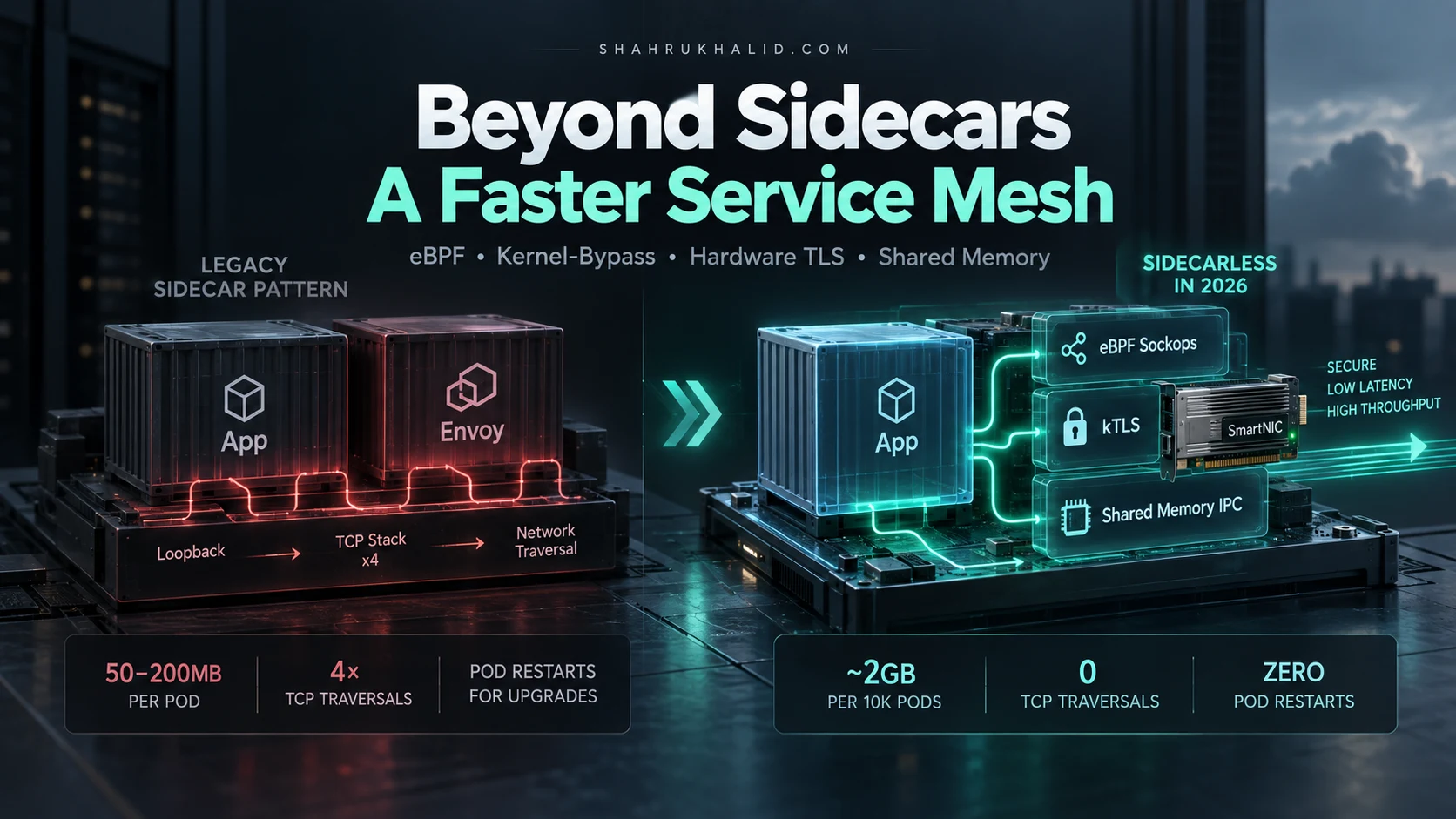
If you have been following the evolution of cloud-native networking, you know that Cilium has fundamentally changed the game by leveraging eBPF (Extended Berkeley Packet Filter) to perform networking, security, and observability directly in the Linux kernel. Unlike traditional sidecar-based service meshes that introduce significant latency and resource overhead, Cilium allows us to push the intelligence down to the kernel level.

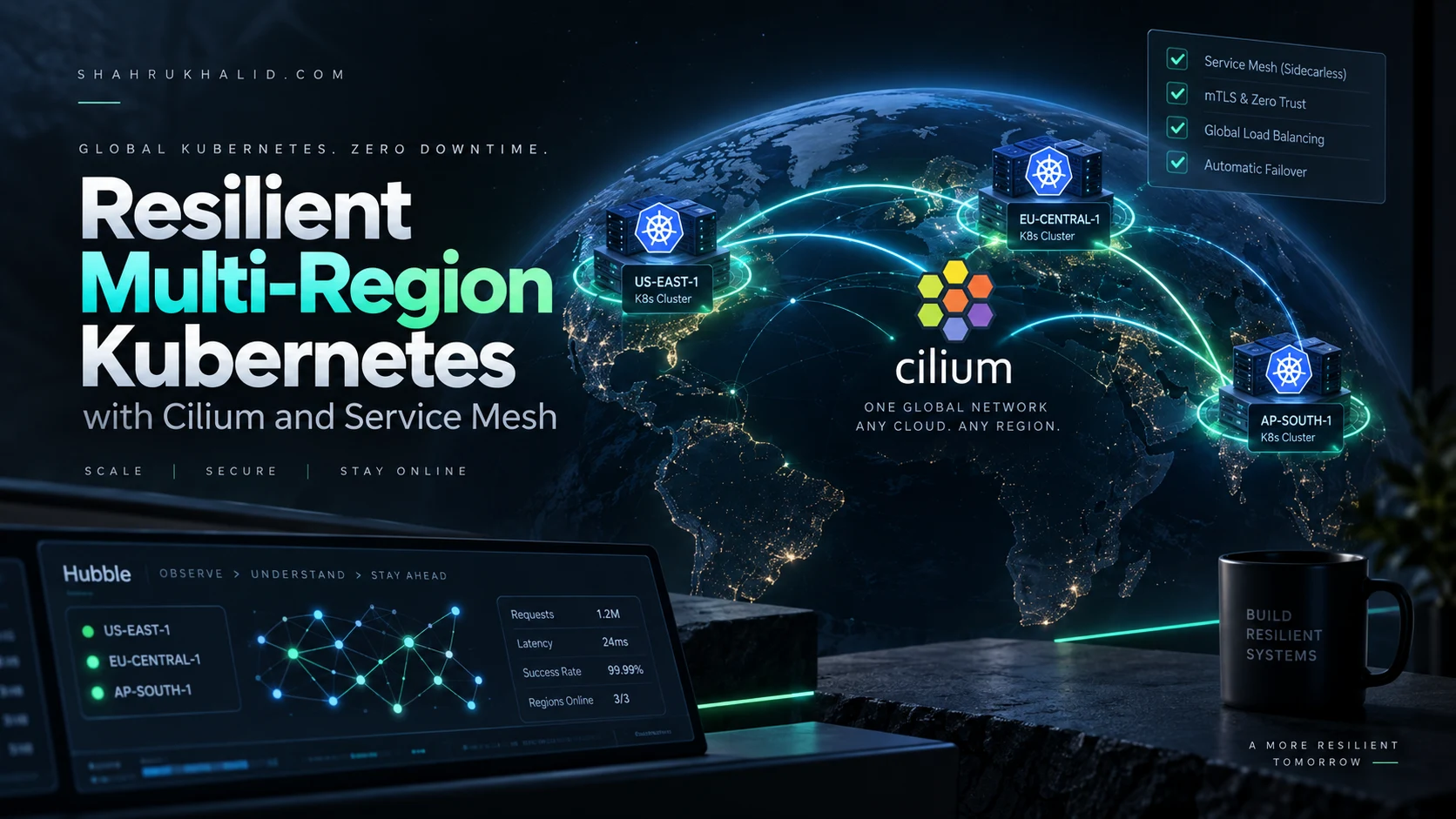
When deploying Multi-Region Kubernetes, Cilium provides a feature known as ClusterMesh. This allows you to connect multiple clusters as if they were a single flat network, regardless of the underlying cloud provider or physical location. Because it operates at the kernel level, it bypasses the traditional bottlenecks of user-space proxies, providing near-line-rate performance even across long-haul regional links.

Architecting the Control Plane: The ClusterMesh Approach
The core of a resilient setup is the ClusterMesh. By enabling this, you allow your clusters to share service information. When a service is deployed in one region, its identity is propagated to the other, allowing for global load balancing and cross-region failover. The brilliance of this approach is that it is identity-based rather than IP-based.
In the past, we relied on fragile DNS-based routing. With Cilium, communication is governed by cryptographic identities. Even if an IP address changes due to a pod restart or node scaling event, the security policy remains intact. This is the “Zero Trust” model at scale: your services trust the identity of the requester, not the network segment they happen to be sitting on.
# Basic command to enable ClusterMesh connectivity between clusters
cilium clustermesh enable --service-type LoadBalancer
cilium clustermesh connect --context cluster-1 --destination-context cluster-2
The Role of Service Mesh in a Post-Sidecar World
For years, the industry was obsessed with sidecars—putting a proxy container next to every application container. While this provided great visibility, it was a tax on memory and CPU that grew linearly with your cluster size. By 2026, the consensus has shifted toward “Sidecarless Service Mesh.”
By using Cilium with its integrated Service Mesh capabilities, you gain the benefits of mutual TLS (mTLS), traffic shadowing, and advanced canary deployments without the “sidecar tax.” You get the observability of a traditional mesh with the raw performance of a kernel-optimized network. For teams managing multi-region deployments, this is a massive win; you are effectively reducing your infrastructure footprint while simultaneously increasing the robustness of your cross-region traffic.
Field-Tested Strategies for Regional Failover
Resilience is not just about connectivity; it is about traffic steering. When designing your Multi-Region Kubernetes architecture, you must implement a “Global Load Balancing” strategy that is aware of regional health. I recommend a two-tier approach:
- External Traffic Management: Use a global DNS or Anycast-based load balancer (like Cloudflare or AWS Global Accelerator) to route users to the “closest” healthy region.
- Internal Service Routing: Use Cilium’s cross-region load balancing policies to prioritize local traffic, but allow for “overflow” or “failover” to a remote region if the local service instance becomes unavailable.
This creates a “Cellular Architecture.” If one region goes dark, your global load balancer redirects traffic, and your internal services automatically discover the healthy instances in the secondary region. Because Cilium has already synchronized the service identities, the transition is seamless and invisible to the end user.
Common Pitfalls and How to Avoid Them
Through my work with enterprise platform teams, I have seen the same mistakes repeated. The most common is underestimating the “blast radius” of shared dependencies. If you stretch a single Kubernetes control plane across regions, you are asking for trouble. Always keep your control planes regional. Let the data plane (the network) be global, but keep the management plane local.
Another pitfall is ignoring observability. In a multi-region setup, debugging a network timeout is a nightmare if you don’t have unified logging and tracing. Cilium’s Hubble component is non-negotiable here. It provides a visual map of all service interactions, allowing you to see exactly where a request is dropping across regional boundaries. Without this, you are effectively flying blind.
The 2026 Perspective: Where We Go From Here
The state of Multi-Region Kubernetes in 2026 is defined by the shift toward “Infrastructure as Code” that is truly provider-agnostic. We are no longer tethered to the proprietary networking stacks of individual cloud giants. By using Cilium as a foundational layer, we create a standardized language for networking that works the same on-premises as it does in a public cloud.
This portability is the ultimate form of resilience. If your primary cloud provider suffers a regional outage, your ability to shift workloads to another provider or region without re-architecting your networking is the difference between a minor incident and a company-ending event. We have moved from the era of “keeping servers up” to the era of “ensuring service availability regardless of environment.”
Key Takeaways for Your Infrastructure Roadmap
- Embrace eBPF: Move away from traditional iptables-based networking to eBPF-powered solutions like Cilium to gain performance and security observability.
- Decouple Connectivity from Providers: Use Cilium ClusterMesh to create a global network that treats all your Kubernetes clusters as a single entity, regardless of the cloud region.
- Prioritize Identity over IP: Shift your security and routing policies to use identity-based labels. This is the only way to manage complexity in a dynamic, multi-region environment.
- Adopt Sidecarless Mesh: Reduce your infrastructure overhead by utilizing service mesh features integrated directly into the CNI, rather than relying on heavy, resource-intensive sidecar proxies.
- Automate Failover: Build your architecture with the assumption of failure. Use traffic-steering policies that automatically route requests to healthy regional endpoints.
Building a resilient multi-region architecture is a marathon, not a sprint. By focusing on these foundational principles, you ensure that your platform is not just surviving the demands of 2026, but thriving in an environment that prioritizes scale, security, and absolute reliability.