Your First Viral List: 2026s Practical Guide to Ranking Content (Step-by-Step Foundations)

Key Takeaways
- The article introduces two content ranking philosophies: Organic Authority Blueprint (OAB) and Viral Velocity Engine (VVE).
- OAB prioritizes comprehensive, high-quality, evergreen content to build sustainable, predictable organic traffic.
- OAB emphasizes technical SEO, keyword research, semantic optimization, and strategic linking for high rankings.
- The Organic Authority Blueprint focuses on deep user intent, long-tail questions, and unique insights for topical authority.
- Choosing a content ranking philosophy is an architectural decision dictating resource allocation and content pipeline.
Navigating the digital landscape to ensure your content not only gets seen but also resonates deeply enough to spread like wildfire is a core challenge for every creator and business today. This isn’t just about writing well; it’s about strategically engineering your content for maximum visibility and impact. This Content Ranking Guide will dissect the two dominant philosophies for achieving high-ranking, impactful listicles in 2026: the meticulous, long-game approach of building organic authority versus the rapid, high-octane pursuit of viral velocity. We’ll explore their foundational principles, benchmark their performance, and equip you with a practical guide to ranking content that truly stands out.
The Architectural Showdown: Core Philosophies & Overview for Your Content Ranking Guide
In the quest for digital dominance, particularly with the ever-popular listicle format, content creators often find themselves at a strategic crossroads. Do you meticulously lay the groundwork for enduring organic search visibility, or do you engineer for explosive, rapid-fire virality? This isn’t a trivial choice; it’s an architectural decision that dictates your resource allocation, content creation pipeline, and ultimately, your long-term digital footprint. Many teams grapple with this dilemma, struggling to choose between what appears to be a slow, steady climb and a potentially fleeting, yet exhilarating, sprint. We’re going to demystify this by presenting two distinct, yet equally powerful, content ranking blueprints: The Organic Authority Blueprint (OAB) and The Viral Velocity Engine (VVE).
The Organic Authority Blueprint (OAB) is akin to constructing a robust, earthquake-resistant skyscraper. Its design philosophy is rooted in foundational strength, enduring relevance, and a deep understanding of search engine algorithms. This approach prioritizes creating comprehensive, high-quality, and evergreen content that meticulously addresses user intent and satisfies search queries with unparalleled depth. The OAB focuses on building topical authority over time, establishing your platform as the definitive source for specific subjects. Think of it as a long-term investment strategy where each piece of content is a brick in a towering structure, contributing to an overall edifice of credibility and trust. The goal here is sustainable, predictable traffic driven by consistent high rankings in search engine results pages (SERPs). This means a heavy emphasis on technical SEO, meticulous keyword research, semantic optimization, and a strategic internal and external linking structure. It’s about answering the long-tail questions, providing unique insights, and ensuring your content is not just found, but trusted and cited. For instance, if you’re writing a listicle like “10 Essential Tools for Remote Developers in 2026,” the OAB would ensure every tool is thoroughly reviewed, its pros and cons detailed, and the article structured with clear headings, schema markup, and internal links to related guides, making it an undeniable resource for search engines and users alike. This strategy inherently leads to high-ranking content tips that focus on longevity and depth.
Conversely, The Viral Velocity Engine (VVE) operates on a different set of principles, more akin to designing a high-performance, agile drone. Its core philosophy is built around immediate impact, emotional resonance, and rapid social distribution. The VVE aims to create content that is inherently shareable, tapping into current trends, cultural conversations, or strong emotional triggers (humor, outrage, inspiration, surprise). While SEO is not entirely ignored, it takes a backseat to the content’s potential for social propagation. The success metrics for VVE are less about consistent search rankings and more about reach, shares, comments, and rapid spikes in traffic. This approach thrives on understanding audience psychology, identifying trending topics before they peak, and crafting headlines and content snippets that compel immediate engagement. A VVE-driven listicle, such as “7 Mind-Blowing AI Predictions for 2026 That Will Change Everything,” would prioritize a catchy, curiosity-inducing title, easily digestible points, and visually appealing elements designed for quick consumption and sharing across platforms like X (formerly Twitter), TikTok, and LinkedIn. This strategy is a viral content creation guide in itself, focusing on the mechanics of spread rather than just discovery. It leverages the network effect, where each share amplifies the content’s reach exponentially, leading to rapid organic content visibility, albeit often for a shorter duration.
The struggle for many content teams lies in reconciling these two powerful, yet seemingly divergent, approaches. Should you invest heavily in the slow, methodical process of building search authority, or should you chase the fleeting, yet exhilarating, highs of viral success? The answer, as with many architectural decisions, isn’t always an either/or. Understanding their distinct design philosophies, their strengths, and their inherent trade-offs is the first step in formulating a cohesive content ranking strategy for 2026. The OAB promises stability and compounding returns, while the VVE offers explosive growth and immediate brand exposure. Both have their place in a well-rounded digital strategy, but knowing when and how to deploy each is key to a practical guide to content ranking success. We’ll delve deeper into how these foundational SEO steps for new content can be integrated or chosen based on your specific goals, ensuring you know how to make your listicle rank high on Google, whether through persistent effort or a sudden surge of popularity.
The Organic Authority Blueprint (OAB): Foundations for Enduring Rank
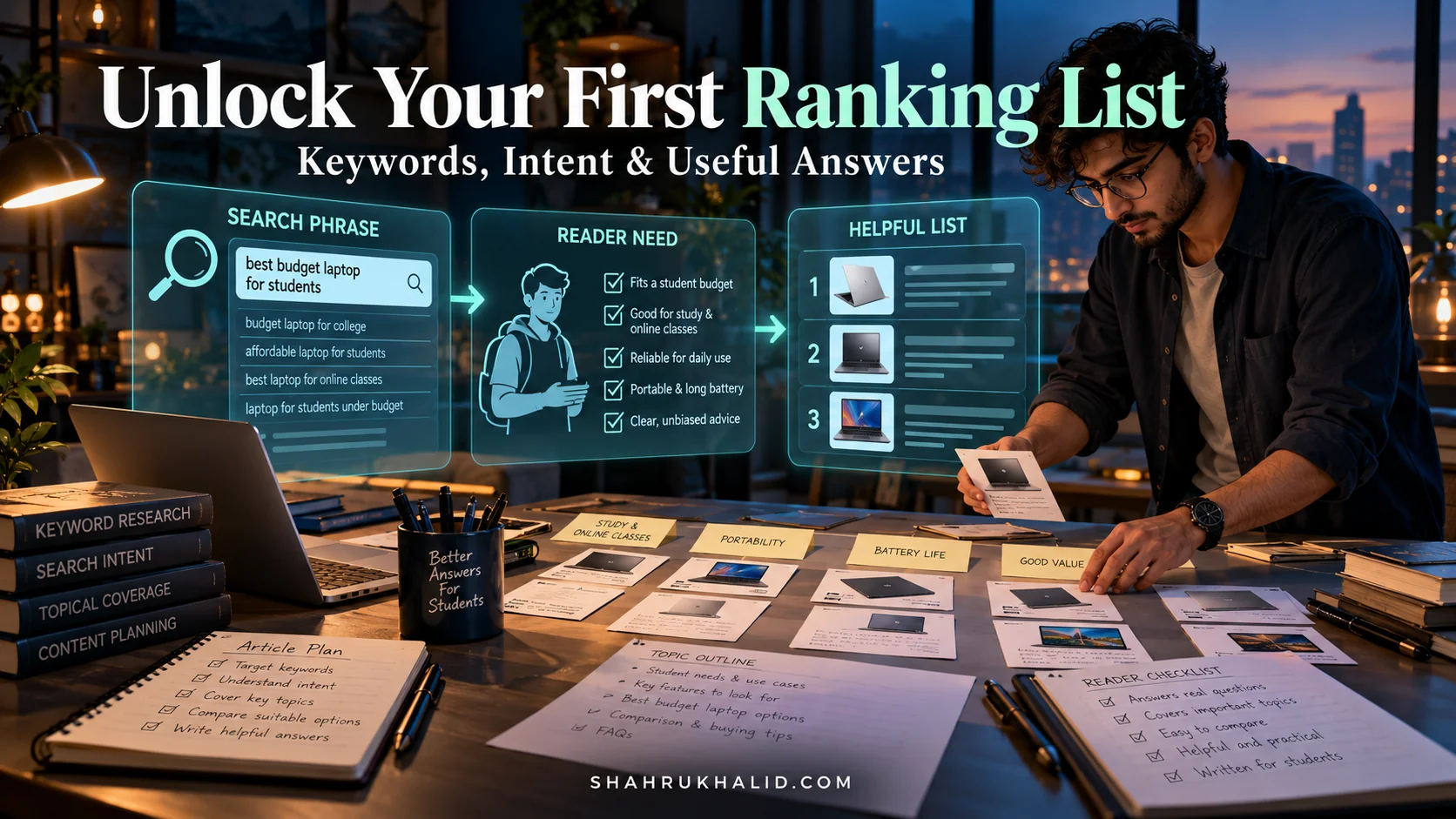
The OAB emphasizes a structured, data-driven approach. It begins with rigorous keyword research, not just for high-volume terms, but for long-tail queries that reveal specific user intent. Tools like Google Keyword Planner, Ahrefs, or Semrush become your architectural drafting tools, helping you map out the semantic landscape. For example, instead of just targeting “best laptops,” an OAB approach would target “best lightweight laptops for digital nomads 2026 under $1500” – a query with lower volume but higher conversion potential and clearer intent. Content creation under OAB is an exhaustive process: each point in your listicle is backed by data, expert quotes, or original research. You’re not just listing; you’re explaining, comparing, and providing actionable insights. This often involves creating custom graphics, data visualizations, and even short explainer videos embedded directly into the content to enhance user experience and dwell time, both critical signals for search engines.
Technical SEO is the concrete foundation of the OAB. This includes ensuring your website is fast, mobile-friendly, and secure (HTTPS). Proper use of heading tags (H1, H2, H3), meta descriptions, image alt text, and structured data (Schema markup) tells search engines exactly what your content is about, improving its chances of ranking. Google’s evolving algorithms, particularly those influenced by AI, are increasingly sophisticated at understanding context and nuance. Providing clear, semantically rich content, structured with appropriate AI-driven content guidelines in mind, is paramount. Internal linking is another critical component, creating a web of interconnected content that boosts the authority of individual pages and helps search engines crawl and understand your site’s hierarchy. External links to authoritative sources also signal credibility, while earning backlinks from other reputable sites acts as a powerful vote of confidence, significantly boosting your domain authority. This step-by-step SEO 2026 approach ensures that your content is not just discoverable but also perceived as a reliable, authoritative source.
The Viral Velocity Engine (VVE): Igniting Instant Engagement
The VVE, while less focused on traditional SEO metrics, is intensely data-driven in its own right – but the data points are different. Here, the focus is on social listening, trend analysis, and understanding emotional triggers. Tools like BuzzSumo, social media analytics platforms, and even simple trend aggregators become indispensable. The content itself is often shorter, punchier, and designed for immediate gratification. Headlines are crafted for maximum click-through and shareability, often employing curiosity gaps, strong emotional language, or provocative statements. Visuals are paramount: engaging images, short video clips, or shareable infographics are integrated directly into the listicle, making it easy for users to consume and share across diverse social platforms. The narrative often employs storytelling elements, relatable scenarios, or surprising revelations to hook the audience.
Promotion for VVE content is aggressive and immediate. It involves strategic posting across all relevant social media channels, often with tailored messaging for each platform. Influencer outreach, paid social promotion, and community engagement are common tactics. The goal is to create a “snowball effect” where initial shares lead to more shares, rapidly expanding the content’s reach. While the OAB builds authority over months or years, the VVE aims to achieve significant reach within hours or days. This requires a deep understanding of platform-specific algorithms and user behavior. For example, a listicle targeting “5 Unexpected Ways AI Will Change Your Job by 2026” might be broken down into short, digestible video clips for TikTok, a compelling infographic for Instagram, and a thought-provoking discussion starter for LinkedIn, all linking back to the main article. This viral content creation guide emphasizes speed, adaptability, and a keen sense of what makes people stop scrolling and share. While the lifespan of viral content can be shorter, the immediate brand exposure and potential for a massive influx of traffic can be invaluable, especially for new brands or product launches. The key is to understand how to create viral content that ranks not just in search, but in the collective consciousness of your target audience.
Feature-by-Feature Comparison Matrix
When architecting your content strategy, understanding the granular differences between the Organic Authority Blueprint (OAB) and The Viral Velocity Engine (VVE) is crucial. It’s not just about broad philosophies; it’s about how each approach performs across specific operational dimensions, much like evaluating competing software solutions for a critical system. This detailed feature matrix will provide a clear, data-driven perspective, helping you discern which strategy aligns best with your immediate project goals and long-term vision for a robust Content Ranking Guide. We’ll adapt traditional technical evaluation metrics to the realm of content, offering a unique “benchmarking” perspective for your listicle SEO strategy.
Let’s unpack some of these dimensions further. The “Time to First Significant Traffic/Ranking,” or Latency, highlights a fundamental difference. With OAB, you’re planting seeds that grow into mighty trees. You might publish a comprehensive listicle on “The 12 Foundational SEO Steps for New Content in 2026,” and it could take weeks or even months to reach the first page of Google for its target keywords. This is because search engines need time to crawl, index, assess its quality, and understand its relevance compared to existing content. They also look for signals like user engagement and backlinks before granting it prime real estate. In contrast, a VVE piece like “7 AI Tools That Will Make You Obsolete by 2026 (You Won’t Believe #4!)” could go from zero to millions of views in a single day if it hits the right nerve and is shared widely on platforms like X or TikTok. This immediate gratification is seductive, but it’s often a transient peak.
The “Content Creator Effort/Skill,” or Developer Experience from a content perspective, also varies significantly. For OAB, the content creator acts like a meticulous engineer, focused on precision, data integrity, and structural soundness. They need to understand how search engines interpret content, how to optimize for semantic search, and how to build a robust internal linking structure. This often involves using advanced SEO tools and adhering to strict content guidelines. For example, ensuring your listicle on “High-Ranking Content Tips” includes schema markup for `HowTo` or `ItemList` can be a complex but rewarding task for long-term visibility. Google’s documentation on structured data and AI integration provides excellent technical guidance for this. The VVE creator, on the other hand, is more of a creative director and social strategist. Their skills lie in identifying cultural zeitgeists, crafting emotionally compelling narratives, and understanding the nuances of different social platforms. They need to be agile, quick to react to trends, and adept at visual storytelling.
Reproducibility of Success, or Scalability, is another critical differentiator. OAB offers a more predictable path to growth. As you consistently publish high-quality, SEO-optimized content, your domain authority grows, making it progressively easier for new content to rank. This creates a virtuous cycle of organic content visibility. You can scale your content output with a reasonable expectation of continued ranking success. For VVE, however, scaling is much harder. What went viral yesterday might not work today. Trends shift, audiences tire, and algorithms change. Each viral hit often requires a fresh, innovative approach, making consistent, predictable viral success a significant challenge. It’s less about building a scalable system and more about constantly innovating and taking calculated risks.
Finally, consider the Resource Intensity, or Memory Footprint. OAB demands a substantial upfront investment in research, writing, and technical optimization. You’re building an asset designed to generate traffic for years. This might mean investing in premium SEO tools, hiring expert writers, and dedicating time to link-building efforts. While the initial cost per piece might be higher, the long-term return on investment (ROI) can be substantial and enduring. VVE, conversely, might have lower per-piece content production costs (e.g., a quick video or infographic), but it often requires significant investment in promotion and distribution. This could involve paid social media campaigns, influencer collaborations, or dedicated social media managers who are constantly monitoring trends and engaging with communities. The “cost” here is less about deep content creation and more about rapid, widespread dissemination. Understanding these trade-offs is fundamental to crafting a practical guide to content ranking success that aligns with your available resources and strategic objectives.
Performance Benchmarks & Stress-Test Evaluation
Evaluating content strategies isn’t just about theoretical frameworks; it’s about empirical results, much like stress-testing a new software architecture before deployment. We need to look at how these blueprints perform under real-world conditions, examining metrics like throughput, load capacity, and cold start times. This section will delve into the practical outcomes of adopting either the Organic Authority Blueprint (OAB) or The Viral Velocity Engine (VVE), providing concrete benchmarks for your Content Ranking Guide in 2026. Understanding these performance characteristics is vital for anyone seeking a practical guide to content ranking success.
Throughput: Content Output Rate vs. Impact
- Organic Authority Blueprint (OAB): The OAB typically exhibits a lower “throughput” in terms of raw content volume, but a significantly higher “impact per piece” over the long term. Because each article, like a listicle on “15 Advanced Listicle SEO Strategy Techniques for 2026,” requires extensive research, meticulous optimization, and often several rounds of expert review, the production cycle is longer. A team might produce 2-4 comprehensive OAB articles per month. However, these articles are designed to be evergreen, meaning they continue to attract traffic and generate leads for months, even years, after publication. Their impact compounds over time as they accrue backlinks, improve domain authority, and consistently rank for multiple high-value keywords. For example, a well-optimized OAB piece might steadily bring in 5,000-10,000 unique visitors per month for two years, totaling hundreds of thousands of views from a single investment. The “stress test” here is the ability to maintain quality and consistency over time, resisting the temptation to churn out lower-quality content for higher volume. The empirical finding is that OAB content, while slower to produce, offers a higher return on content investment when measured by sustained traffic and conversions.
- Viral Velocity Engine (VVE): The VVE boasts a much higher content “throughput” in terms of sheer volume and speed of creation. A VVE team might churn out 10-20 short, trend-focused listicles or visually driven pieces per month, such as “7 Hilarious Tech Fails of 2026 That Broke the Internet.” The emphasis is on rapid iteration and quick deployment to capitalize on fleeting trends. The “impact per piece” can be astronomically high in the short term, with successful viral content reaching millions of views and shares within days. However, this impact is often ephemeral. A viral piece might generate 1 million views in a week, then drop to negligible traffic the following month as the trend fades. The stress test for VVE is the constant pressure to identify new trends, innovate with creative hooks, and accept a high failure rate (many pieces won’t go viral). Empirical data shows that while VVE can deliver explosive traffic spikes, the average lifespan of significant traffic for a viral piece is often measured in days or weeks, making sustained traffic generation a challenge without continuous new viral hits. This approach is a true viral content creation guide in its rapid deployment and impact.
Load Capacity: Handling Traffic Spikes & Sustained Demand
- Organic Authority Blueprint (OAB): OAB content is built for sustained, predictable traffic. While it might not experience the sudden, massive spikes of viral content, it’s designed to handle a consistent, growing stream of visitors. The underlying website infrastructure for OAB is typically robust, optimized for speed and stability to ensure a smooth user experience for a steady flow of organic search users. If an OAB piece eventually goes viral (a happy accident, not the primary goal), the site is usually well-prepared to handle the increased load due to its foundational optimization. The “load capacity” here is about resilience and consistent performance under predictable, gradually increasing demand. A stress test might involve a sudden surge in search interest for a topic where your OAB content ranks #1; the system is expected to perform flawlessly. This contributes to organic content visibility that is reliable.
- Viral Velocity Engine (VVE): VVE content is explicitly designed to generate massive, often unpredictable, traffic spikes. The “load capacity” challenge for VVE is immense. A truly viral piece can send millions of users to your site in a very short period, potentially overwhelming inadequately prepared servers. This necessitates highly scalable hosting solutions (e.g., cloud-based auto-scaling), robust content delivery networks (CDNs), and efficient caching mechanisms. The stress test for VVE is the ability to gracefully handle a 100x or 1000x surge in traffic without crashing or slowing down, which would negate the viral effect. Many platforms that successfully leverage VVE invest heavily in infrastructure that can dynamically scale to meet these demands. The real-world benchmark here is whether your site can stay up and deliver content quickly when it’s most popular, ensuring that the fleeting moment of virality isn’t wasted due to technical limitations.
Cold Start Times: From Publication to Significant Traffic
- Organic Authority Blueprint (OAB): The “cold start time” for OAB content is typically longer. From the moment you publish a listicle like “How to Rank Listicles Organically: A Step-by-Step SEO 2026 Guide,” it takes time for search engine crawlers to discover, index, and evaluate the content. Then, it needs to compete with existing, established content for ranking positions. This process can range from a few days for initial indexing to several weeks or even months before it starts generating significant organic traffic. The “cold start” is a gradual warm-up, where traffic slowly but steadily increases as the content gains authority and moves up the SERPs. This is a foundational SEO step for new content, where patience is a virtue.
- Viral Velocity Engine (VVE): The “cold start time” for VVE content can be incredibly short, sometimes just hours. If a piece like “The 10 Craziest Tech Gadgets of 2026” is published and immediately shared by an influential account or picked up by a trending news aggregator, it can go from zero to thousands or millions of views within a day. The “cold start” here is an immediate ignition, driven by social signals and rapid distribution rather than algorithmic evaluation for search ranking. The benchmark is how quickly the content can achieve critical mass on social platforms. This requires a finely tuned understanding of social media algorithms and audience behavior, as well as a robust promotional strategy to kickstart the sharing process.
In summary, the OAB provides a predictable, long-term growth curve, excelling in sustained organic content visibility and building enduring authority. Its performance benchmarks are about consistency, depth, and resilience. The VVE, on the other hand, offers the potential for explosive, immediate reach, with performance benchmarks focused on speed, adaptability, and the ability to handle extreme traffic fluctuations. Both have their unique strengths and weaknesses when stress-tested against the demands of the digital content ecosystem. A truly effective content ranking strategy for 2026 often involves a judicious blend, leveraging the stability of OAB for core content while selectively deploying VVE tactics for timely, high-impact campaigns. This practical guide to content ranking success emphasizes that understanding these performance characteristics is key to making informed decisions about where to allocate your content creation and promotion efforts.
Developer Experience, Tooling Ecosystem & DX Showdown
When we talk about “Developer Experience” (DX) in the context of content, we’re really referring to the “Creator Experience” – how easy, efficient, and intuitive it is for content strategists, writers, and editors to produce, optimize, and manage content. This isn’t just about technical tools; it’s about the entire workflow, from ideation to publication and beyond. A superior DX leads to higher quality output, faster iteration, and less frustration. Let’s pit the Organic Authority Blueprint (OAB) against The Viral Velocity Engine (VVE) in a showdown of their respective tooling ecosystems, documentation quality, debugging ergonomics, and learning curves, offering a critical perspective for your Content Ranking Guide.
Tooling Ecosystem & CLI Ease of Use (Content Creation & Optimization Tools)
- Organic Authority Blueprint (OAB): The OAB thrives on a rich, often complex, tooling ecosystem. Your “CLI” (Command Line Interface) equivalent here isn’t a terminal, but rather a suite of sophisticated SEO platforms. Tools like Ahrefs, Semrush, Moz, and Google Search Console are indispensable. These platforms offer deep insights into keyword research, competitor analysis, backlink profiles, technical SEO audits, and content gap analysis. The “ease of use” isn’t always immediate; mastering these tools requires a significant learning curve. For example, understanding how to perform a comprehensive content audit using Ahrefs’ Site Audit feature or how to leverage Google Search Console’s Performance reports to identify ranking opportunities for a listicle on “Foundational SEO for New Content” requires dedicated effort. The “documentation quality” for these tools is generally excellent, with extensive tutorials, academies, and community forums. The OAB workflow often integrates with content management systems (CMS) like WordPress (with SEO plugins like Yoast or Rank Math), where technical SEO settings, schema markup, and internal linking are managed. The “developer” (content creator) experience is structured, data-driven, and relies heavily on analytical rigor.
- Viral Velocity Engine (VVE): The VVE’s tooling ecosystem is geared towards speed, trend identification, and social media management. Key tools include social listening platforms (e.g., Brandwatch, Sprout Social), trend analysis tools (e.g., BuzzSumo, Google Trends), and social media scheduling/analytics platforms (e.g., Hootsuite, Buffer). The “CLI ease of use” for these tools is often more intuitive and visually driven, designed for rapid content deployment and performance monitoring across various social channels. For instance, quickly identifying a trending hashtag on X or analyzing the engagement rate of a short video on TikTok using native analytics is generally more straightforward than conducting a deep SEO audit. The “documentation quality” for social media platforms and tools is often geared towards quick-start guides and best practices for maximizing reach. The VVE workflow emphasizes agility, creative ideation, and rapid deployment. The “developer” (content creator) experience is dynamic, highly responsive to external signals, and prioritizes immediate engagement metrics over long-term algorithmic satisfaction. This is a true viral content creation guide in its operational approach.
Debugging Ergonomics (Identifying Why Content Isn't Ranking/Going Viral)
- Organic Authority Blueprint (OAB): “Debugging” in OAB involves a systematic process of identifying why content isn’t ranking as expected. This typically means diving into Google Search Console for crawl errors, indexing issues, or manual actions. It involves using SEO tools to check keyword rankings, backlink profiles, and on-page optimization scores. If a listicle on “High-Ranking Content Tips” isn’t performing, you’d check for keyword cannibalization, insufficient content depth, poor internal linking, or a lack of authoritative backlinks. The “ergonomics” of this debugging process are analytical and diagnostic, relying on data interpretation and adherence to established SEO best practices. It’s a methodical, often iterative, process of identifying bottlenecks and implementing fixes. The feedback loop, however, can be slow, as search engine changes take time to reflect.
- Viral Velocity Engine (VVE): Debugging VVE content is about understanding why a piece failed to go viral or why its reach plateaued. This involves analyzing social media analytics: Was the headline compelling enough? Was the visual engaging? Was it posted at the optimal time? Did it tap into the right emotion or trend? Tools like A/B testing headlines on social media, analyzing click-through rates, and monitoring sentiment analysis become crucial. If a listicle designed to be a “practical guide to content ranking success” fails to gain traction on social media, the “debugging” might involve tweaking the visual, rephrasing the call to action, or targeting a different audience segment with paid promotion. The “ergonomics” are fast-paced and experimental, often involving quick adjustments and re-testing. The feedback loop is immediate, as social media engagement metrics update in real-time. The challenge is that there isn’t always a clear “fix” for virality; sometimes, content just doesn’t resonate.
Learning Curve (For Content Creators)
- Organic Authority Blueprint (OAB): The learning curve for OAB is steep but rewarding. It requires understanding fundamental SEO principles, algorithm updates, content strategy, and technical implementation. Beginners need to grasp concepts like keyword intent, semantic SEO, E-E-A-T (Experience, Expertise, Authoritativeness, Trustworthiness), and how to use structured data. For example, learning how to correctly implement JSON-LD schema for a listicle to enhance its appearance in SERPs (e.g., rich snippets) is a technical skill that takes time to acquire. Resources like Google’s own developer documentation on getting started with AI and search provide foundational knowledge, but applying it practically takes practice. This is a step-by-step SEO 2026 journey that builds expertise over time.
- Viral Velocity Engine (VVE): The learning curve for VVE is also significant, but it leans more towards psychology, creativity, and social media savvy. It requires understanding audience behavior, identifying emerging trends, crafting compelling narratives, and mastering platform-specific content formats (e.g., short-form video for TikTok, carousels for Instagram). While the technical barrier to entry for posting on social media is low, consistently creating viral content is an art and a science. It involves a continuous learning process of observing what resonates, experimenting with different approaches, and adapting quickly. For a beginner, understanding “how to create viral content that ranks” on social platforms involves a different set of skills than traditional SEO, often requiring a more intuitive, creative approach rather than a purely analytical one.
In essence, the DX showdown reveals that OAB offers a structured, analytical, and technically demanding experience, yielding predictable, long-term results. Its tooling is robust, its debugging methodical, and its learning curve builds deep, enduring expertise. VVE, conversely, provides a dynamic, creative, and fast-paced experience, offering the potential for immediate, explosive reach. Its tooling is agile, its debugging experimental, and its learning curve fosters quick adaptation and creative intuition. Both are powerful, but they demand different skill sets and operational methodologies from content creators, making the choice dependent on your team’s strengths and strategic objectives for organic content visibility and rapid impact.
Enterprise Scalability, Total Cost of Ownership (TCO) & Security
When a content strategy moves beyond individual projects to become a core component of an organization’s digital presence, the considerations shift dramatically. We’re no longer just talking about individual article performance; we’re evaluating the long-term viability, financial implications, and potential risks at an enterprise level. This section will scrutinize the Organic Authority Blueprint (OAB) and The Viral Velocity Engine (VVE) through the lens of enterprise scalability, Total Cost of Ownership (TCO), and security, providing a crucial framework for any comprehensive Content Ranking Guide.
Enterprise Scalability: Maintenance Burden & Content Velocity
- Organic Authority Blueprint (OAB): For enterprises, OAB offers a highly scalable and maintainable content architecture. The “maintenance burden” for OAB content, while present, is predictable and manageable. Evergreen content, such as a definitive listicle on “10 Foundational SEO Steps for New Content in 2026,” requires periodic reviews (e.g., annually or bi-annually) to update statistics, tool recommendations, or reflect algorithm changes. This planned maintenance ensures the content remains fresh and authoritative, sustaining its high-ranking status. The scalability lies in its cumulative effect: each high-quality, SEO-optimized piece contributes to the overall domain authority, making it easier for subsequent content to rank. An enterprise can build a vast library of interconnected, high-performing content assets that continually attract organic traffic. This allows for a steady “content velocity” where new content builds upon existing authority, leading to compounding returns. The challenge is maintaining quality at scale; ensuring every piece adheres to strict SEO and editorial guidelines requires robust content governance, style guides, and a skilled editorial team. This approach is excellent for building organic content visibility that grows over time.
- Viral Velocity Engine (VVE): Scaling VVE at an enterprise level presents unique challenges. The “maintenance burden” for viral content is often low after its initial peak, as its relevance quickly fades. However, the pre-publication burden is high, requiring constant trend monitoring, rapid content creation, and aggressive promotion. The “content velocity” for VVE is about the speed of identifying and capitalizing on new trends, which can be exhausting and unpredictable. To achieve consistent viral hits, an enterprise needs a highly agile content team, sophisticated social listening tools, and a significant budget for paid promotion and influencer outreach. The scalability issue arises from the inherent unpredictability of virality; you can’t simply “scale up” viral success by producing more content. Each viral hit is often a unique creative endeavor. While a successful viral campaign can bring massive, immediate brand exposure, sustaining that level of engagement requires continuous innovation and a high tolerance for content that doesn’t quite hit the mark. This is where a viral content creation guide needs to address the operational realities of continuous innovation.
Total Cost of Ownership (TCO): Cloud Infrastructure Hosting Costs & Content Investment
- Organic Authority Blueprint (OAB): The TCO for OAB is characterized by a significant upfront investment in content creation, SEO tools, and potentially expert SEO consultants, but with a lower ongoing “cloud infrastructure hosting cost” for traffic spikes. The content itself is the primary asset. A comprehensive listicle might cost more to produce initially due to in-depth research, expert writing, and technical optimization. However, once ranked, it acts as a perpetual lead-generation machine, requiring minimal promotional spend. Hosting costs are generally stable, as traffic grows predictably rather than explosively. The long-term ROI is high due to sustained traffic and conversions over many years. The “long-term tech debt” is minimal if content is regularly updated and technical SEO best practices are followed, as the content remains relevant and valuable. This approach aligns with a practical guide to content ranking success that prioritizes sustainable returns.
- Viral Velocity Engine (VVE): The TCO for VVE can be highly variable and often involves higher “cloud infrastructure hosting costs” to handle potential traffic surges. While individual pieces of viral content might be cheaper to produce (e.g., a quick video), the overall investment in social listening tools, paid social media promotion, and the infrastructure to handle massive traffic spikes can be substantial. The “content investment” shifts from deep, evergreen content to rapid, trend-driven pieces with a shorter shelf life. The ROI can be immediate and massive for successful campaigns, but it’s less predictable. The “long-term tech debt” isn’t about outdated content, but rather the potential for a fragmented content strategy if not carefully managed, and the constant need to chase new trends, which can be a drain on resources without consistent wins. The cost of failure (content that doesn’t go viral) is also higher, as the investment in promotion yields no return.
Security: Enterprise Compliance & Brand Reputation
- Organic Authority Blueprint (OAB): From a “security” perspective, OAB generally presents a lower risk profile for enterprise compliance and brand reputation. The emphasis on factual accuracy, E-E-A-T, and adherence to search engine guidelines (like Google’s quality rater guidelines) inherently minimizes the risk of misinformation or algorithmic penalties. Content is typically thoroughly vetted, reducing the chance of factual errors or controversial statements that could harm brand image. “Enterprise compliance” is easier to maintain with a structured editorial process that emphasizes accuracy, citation, and adherence to industry standards. The risks are primarily technical (e.g., website security vulnerabilities, SEO mistakes) rather than reputational. This contributes to high-ranking content tips that are also safe.
- Viral Velocity Engine (VVE): VVE carries a higher “security” risk, particularly concerning brand reputation and potential social backlash. The drive for virality often encourages provocative headlines, emotionally charged content, or trend-jacking, which can easily be misinterpreted or backfire. A piece intended to be humorous could be perceived as insensitive, leading to a PR crisis. The rapid dissemination of content on social media means that any factual inaccuracies or controversial statements can spread globally before they can be corrected, causing significant brand damage. “Enterprise compliance” becomes more challenging as the speed of content creation and deployment can sometimes bypass rigorous review processes. The risk of being associated with misinformation or engaging in “clickbait” that erodes trust is substantial. While the rewards of virality can be great, the potential for negative brand impact is a serious consideration, especially for large, established organizations. This is a critical aspect when considering “how to create viral content that ranks” without compromising integrity.
In conclusion, OAB provides a stable, predictable, and lower-risk pathway for enterprise content strategy, building long-term assets and maintaining brand integrity. Its TCO is weighted towards upfront investment with enduring returns. VVE offers the allure of rapid, massive exposure but comes with higher operational costs, greater unpredictability, and increased reputational risk. For a truly robust content ranking strategy in 2026, enterprises often seek to integrate elements of both, leveraging OAB for their core, authoritative content and selectively deploying VVE tactics for specific, high-impact campaigns, always with a keen eye on risk management and brand protection.
The Decision Playbook: When to Choose The Organic Authority Blueprint vs. The Viral Velocity Engine
Deciding between the Organic Authority Blueprint (OAB) and The Viral Velocity Engine (VVE) isn’t about declaring one superior; it’s about strategic alignment with your goals, resources, and risk tolerance. Both are powerful approaches to a Content Ranking Guide, but they serve different purposes and thrive in different environments. This decision playbook will provide clear, actionable guidance on when to lean into each strategy, and how to potentially combine them for a truly comprehensive listicle SEO strategy in 2026.
Choose The Organic Authority Blueprint (OAB) if…
- Your Goal is Long-Term, Sustainable Growth and Authority Building: If you’re aiming to establish your brand as a definitive, trusted source in your niche, and you prioritize consistent, predictable organic traffic over fleeting spikes, OAB is your foundation. This is ideal for building an enduring digital asset that generates leads and sales for years.
- Example: A financial advisory firm creating a listicle like “The 7 Pillars of Retirement Planning in 2026” needs to be seen as an authority, not just a trend-chaser.
- You Have the Resources for In-Depth Content Creation and Technical SEO: OAB demands significant investment in high-quality research, expert writing, and meticulous technical optimization. If your team has the skills, time, and budget for comprehensive content and SEO tools, you’ll maximize OAB’s potential.
- Practical Tip: Allocate dedicated time for keyword research using tools like Semrush or Ahrefs, and ensure your content creators are trained in foundational SEO principles, including schema markup for rich snippets.
- Your Audience Actively Searches for Information and Solutions: If your target audience primarily uses search engines to find answers, solve problems, or research purchases, OAB directly addresses their intent, leading to highly qualified traffic.
- Example: Someone searching “how to rank listicles organically” is looking for a detailed, trustworthy guide, not a quick viral hit.
- You Want to Minimize Reputational Risk and Build Trust: OAB’s emphasis on accuracy, E-E-A-T (Experience, Expertise, Authoritativeness, Trustworthiness), and adherence to search engine guidelines inherently lowers the risk of misinformation or social backlash, fostering long-term brand trust.
- Real-World Nuance: This is crucial for industries with high stakes, like healthcare, legal, or finance, where accuracy and credibility are paramount.
- You Are Building a Content Library for Evergreen Value: OAB content is designed to be evergreen, meaning it remains relevant and valuable over time with minimal updates. This builds a robust content library that continuously attracts traffic without constant re-promotion.
- Actionable Step: Implement a content audit schedule (e.g., quarterly or annually) to review and update your top-performing OAB articles, ensuring their continued relevance for step-by-step SEO 2026.
Choose The Viral Velocity Engine (VVE) if…
- Your Goal is Rapid Brand Awareness and Immediate Reach: If you need to generate a massive influx of attention quickly, launch a new product, or capitalize on a fleeting trend, VVE is your go-to. It’s about making a splash and getting your brand in front of a huge audience fast.
- Example: A tech startup launching a revolutionary AI gadget might create a listicle like “7 Mind-Blowing AI Innovations of 2026 That Will Change Your Life” specifically for social media buzz.
- You Have a Strong Understanding of Social Media Dynamics and Audience Psychology: VVE success hinges on identifying what makes people share, react, and engage on social platforms. Your team needs to be adept at trend-spotting, creative storytelling, and crafting emotionally resonant content.
- Practical Tip: Invest in social listening tools and dedicate resources to understanding platform-specific algorithms and user behavior patterns. A/B test headlines and visuals relentlessly.
- Your Content is Visually Driven and Easily Digestible: Viral content often thrives on visual appeal, short-form video, and easily shareable snippets. If your listicles can be adapted into engaging visual formats, VVE will amplify their reach.
- Real-World Nuance: Think about how a list of “High-Ranking Content Tips” could be turned into a series of short, punchy Instagram Reels or TikTok videos.
- You Are Willing to Accept Higher Risk for Higher Reward: VVE is inherently more unpredictable and carries a higher risk of content not performing or, worse, generating negative backlash. If your brand has a higher risk tolerance and can manage potential PR challenges, the rewards can be substantial.
- Actionable Step: Have a crisis communication plan in place for viral content, especially if it touches on sensitive or controversial topics.
- You Need to Complement Your OAB Strategy with Short-Term Boosts: VVE can be an excellent accelerator for an existing OAB strategy. A viral piece can drive massive traffic to your site, introducing new audiences to your authoritative OAB content and potentially earning backlinks.
- Example: A viral listicle about “7 AI Predictions for 2026” could link to a deeper, OAB-optimized guide on “The Ethical Implications of AI in 2026,” converting transient visitors into loyal readers.
Actionable Migration Advice: Blending the Blueprints for a Hybrid Strategy
The most effective content ranking strategy for 2026 often involves a thoughtful blend of both OAB and VVE. Think of it as a hybrid architecture:
- Core Content as OAB: Your foundational, evergreen listicles (e.g., “Foundational SEO for New Content,” “Practical Guide to Content Ranking Success”) should always be built with OAB principles. These are your long-term assets.
- Promotional Content as VVE: For specific campaigns, product launches, or to capitalize on current events, deploy VVE tactics. Create highly shareable, trend-driven listicles that link back to your core OAB content.
- Repurposing: Take your in-depth OAB content and repurpose it into bite-sized, visually engaging formats for social media (VVE). For instance, extract key data points from a comprehensive guide on “how to rank listicles organically” and create an infographic or a series of short video tips.
- Audience Funnel: Use VVE to attract a broad, top-of-funnel audience, then guide them towards your more in-depth, authoritative OAB content for deeper engagement and conversion.
- Data-Driven Iteration: Continuously analyze performance from both strategies. Use SEO analytics to refine your OAB content and social media analytics to inform your VVE creative direction.
Ultimately, your first viral list, and indeed your entire content strategy, will benefit from a nuanced understanding of these two powerful blueprints. By carefully considering your objectives, resources, and risk appetite, you can architect a content ecosystem that delivers both enduring authority and explosive reach, ensuring your content not only ranks high on Google but also captivates and converts your audience in 2026 and beyond. This practical guide to content ranking success empowers you to make informed, strategic decisions for maximum impact.