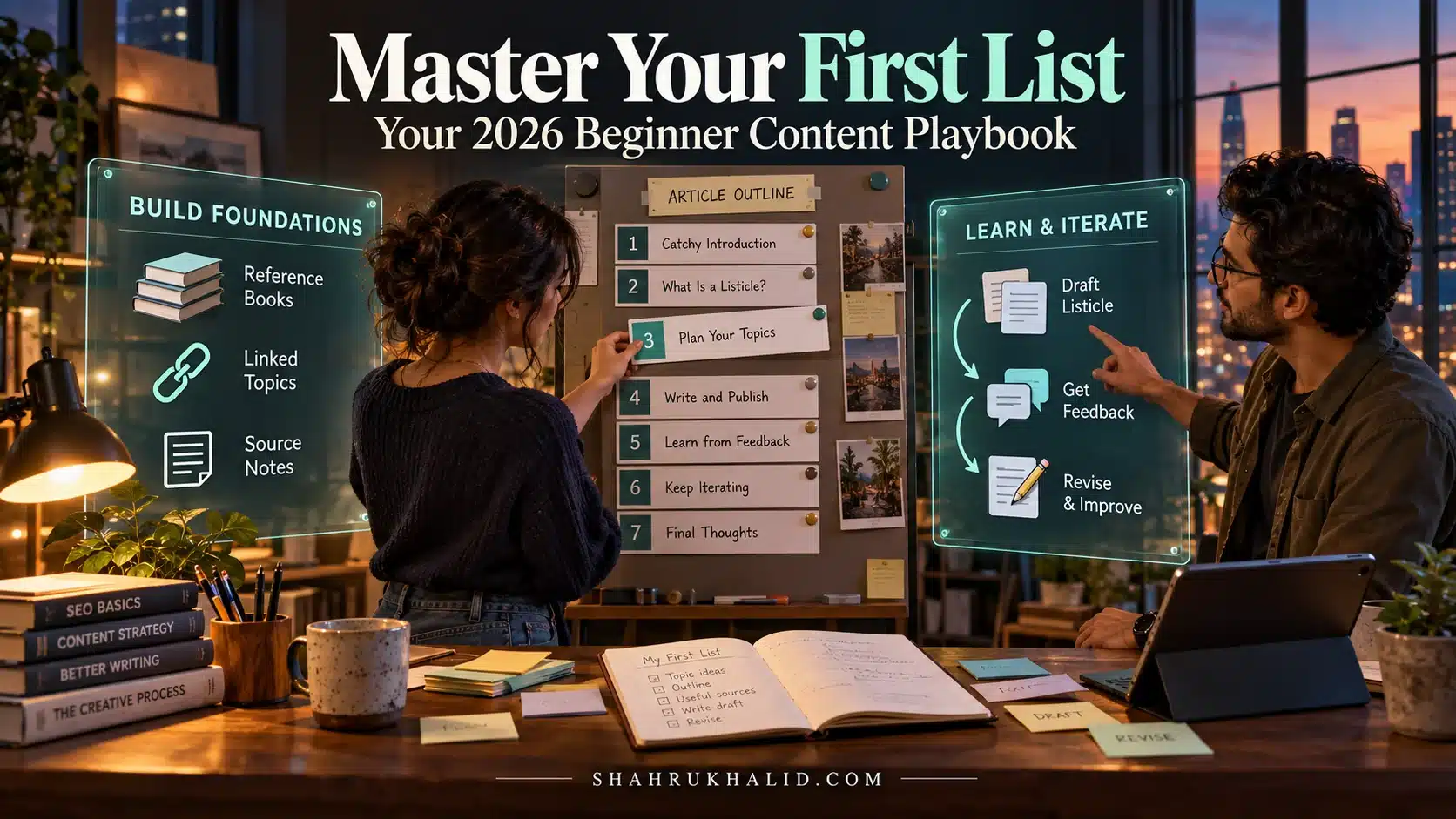
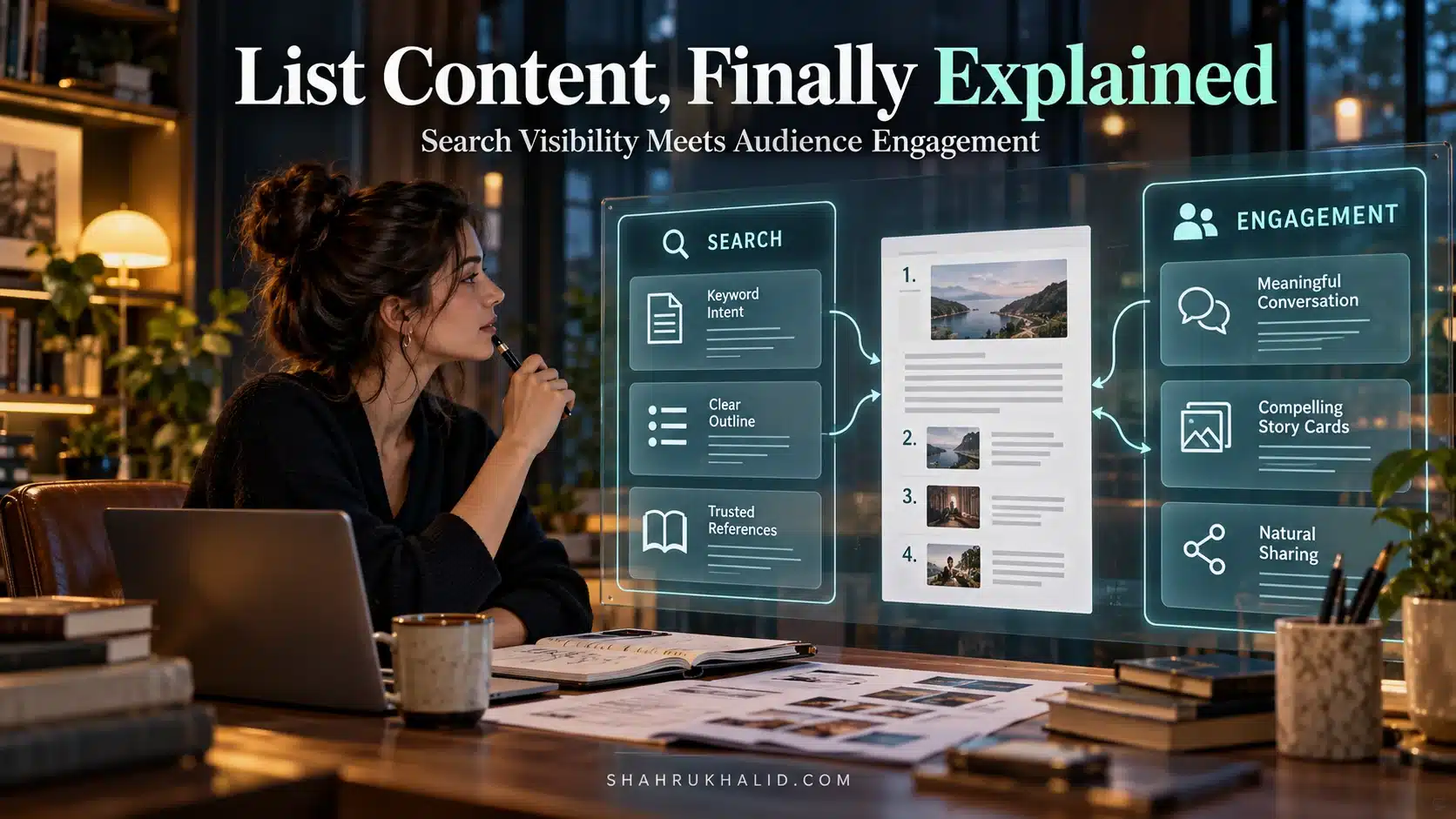
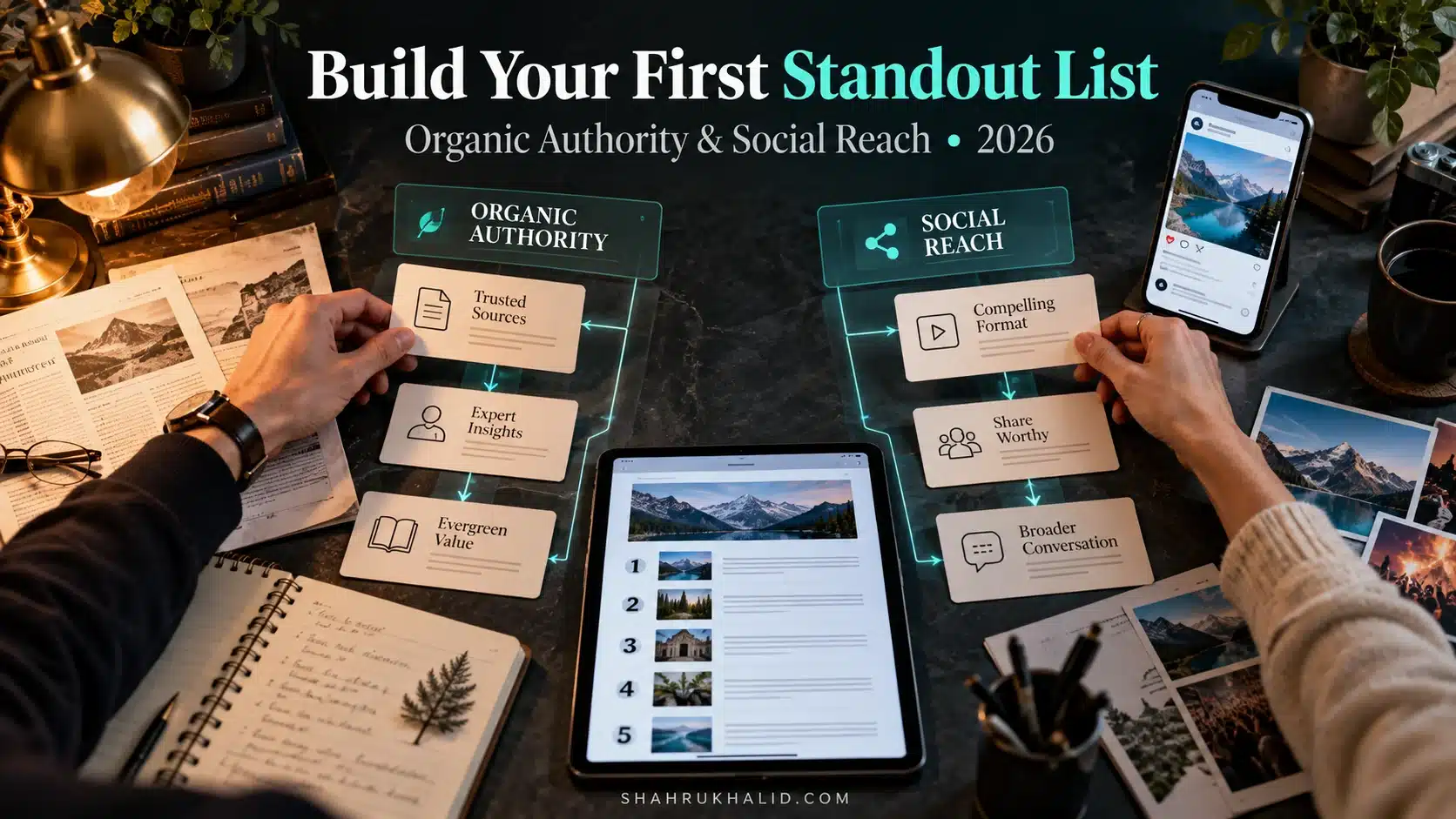
2026s Easiest Win: Beginners Step-by-Step to Viral Lists That Rank High
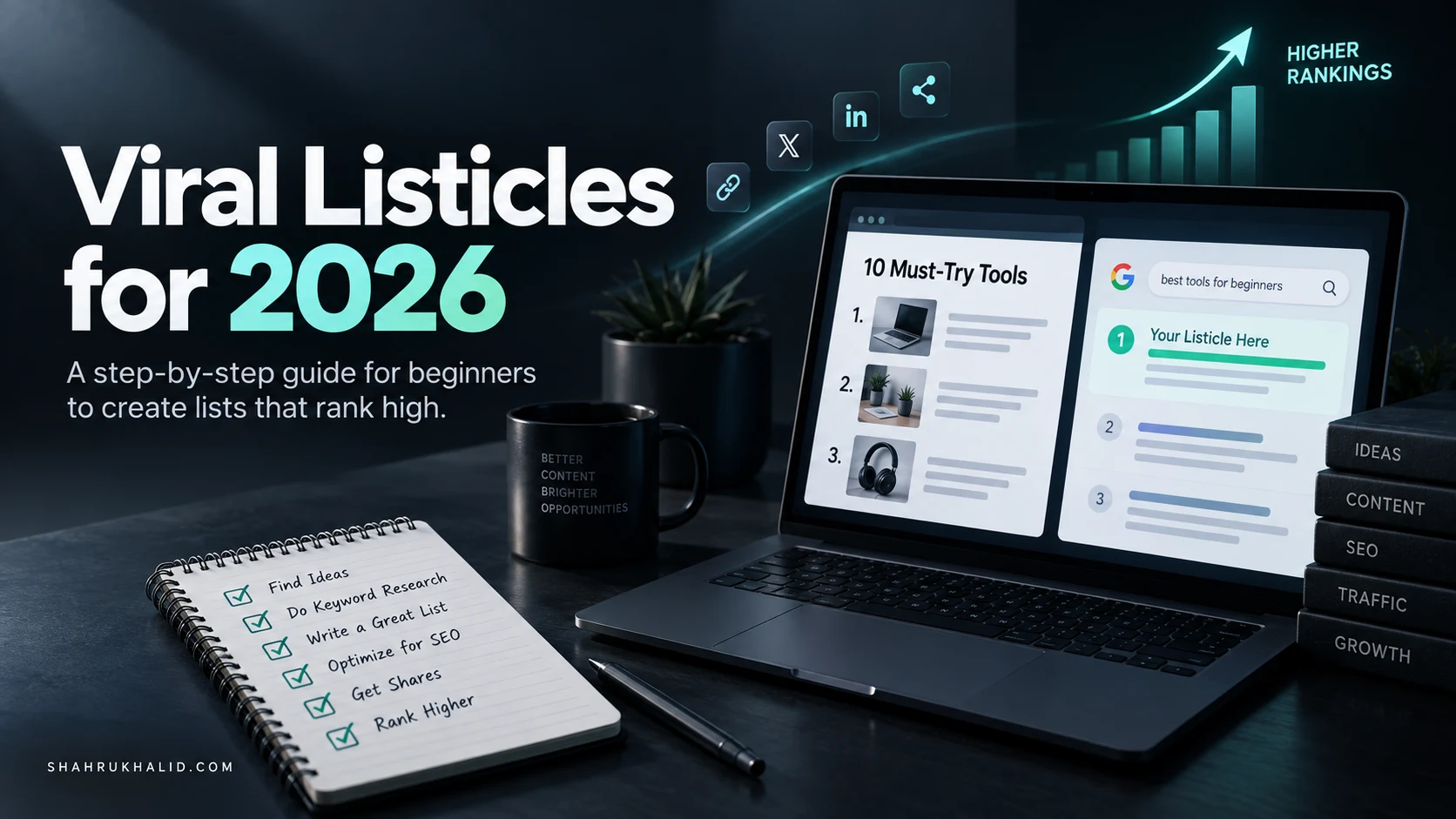
But then I discovered a secret weapon. It’s a format so powerful, so adaptable, and so perfectly aligned with how both humans and search engines think, that it feels like a cheat code. I’m talking about the humble listicle. And in 2026, with the web evolving faster than ever, mastering the art of the viral, high-ranking listicle isn’t just a good skill—it’s the single easiest and most impactful win you can give yourself.
So, can a beginner really create viral list content that ranks on the first page of Google? Absolutely. And this guide is the exact, step-by-step playbook I wish I had when I started. We’re going to demystify everything, from the psychology of a click to the technical SEO that makes Google love your content. Let’s get started.
Comprehensive Foundations & Concept Primer

Before we dive into the nuts and bolts, let’s lay a solid foundation. I want you to understand the why behind this strategy, because once you grasp the core principles, the how becomes incredibly intuitive. Think of this module as our shared language, the key that unlocks everything else we’ll discuss.
Why Listicles are Your Secret Weapon in 2026
Imagine walking into a library. In one section, books are piled randomly on the floor. In another, they’re neatly organized on shelves, with clear labels and categories. Which section are you going to use? The organized one, of course.
That’s a listicle.
In a world drowning in information, a listicle is a promise of order. It tells the reader, “I’ve done the hard work of sorting through the chaos for you. Here is a clear, digestible, and predictable path to the knowledge you seek.” This psychological contract is incredibly powerful.
In 2026, this is more critical than ever. Search engines, especially with the rise of AI-driven experiences like Google’s SGE (Search Generative Experience), are no longer just indexing keywords; they’re trying to understand intent and structure. They are actively looking for well-organized content that directly answers a user’s query. As you’ll see, the very structure of a listicle—a clear heading, numbered or bulleted items, and concise explanations—is a perfect match for what these advanced systems are designed to favor. It’s like you’re building your content on a framework that Google is already primed to love. This is the core of a successful beginner content strategy.
The “Value-Virality-Visibility” (VVV) Trinity
For years, people have talked about “viral content” and “SEO content” as if they were two different species. They’re not. They are two sides of the same coin, and the most successful content lives at the intersection of three key concepts. I call this the VVV Trinity:
- Value: This is the non-negotiable core. Does your content solve a problem, answer a question, or entertain the reader in a meaningful way? If you list “10 Tools for Productivity,” does the reader actually walk away with a tool that will make their life better? Without genuine value, nothing else matters. Your content becomes a hollow shell, and both readers and Google will see right through it.
- Virality: This is the social engine. Value makes content useful, but virality is what makes it shareable. Virality is triggered by emotion: surprise (“I never knew that!”), humor (“This is hilarious, my friend has to see this”), identity (“This listicle about introverts is SO me”), or utility (“My team needs to see this list of tools”). A key
content virality techniqueis to build these emotional triggers directly into your list items. - Visibility: This is the long-term engine. Virality can be a flash in the pan, a huge spike of traffic that dies in 48 hours. Visibility, driven by Search Engine Optimization (SEO), is what gives your content a permanent home on the first page of Google. It’s what brings you a steady, predictable stream of traffic month after month, long after the initial social buzz has faded. This is what turns a one-hit-wonder into a valuable digital asset.
A truly successful viral list strategy doesn’t just chase one of these. It strategically weaves all three together. We create immense Value, package it in a way that encourages Virality, and optimize it for long-term Visibility. That’s the whole game.
Eliminating the Jargon: A Simple Glossary
The world of content and SEO is filled with jargon that’s designed to make things sound more complicated than they are. Let’s clear the air.
- Listicle: Just a fancy word for an article written as a list. “Top 10s,” “7 Ways to,” “The 21 Best…”—they’re all listicles.
- SEO (Search Engine Optimization): The process of making your content easy for search engines like Google to find, understand, and show to users. It’s not black magic; it’s about clarity and structure.
- Keyword: The word or phrase a person types into Google. If you’re selling running shoes, your keyword might be “best running shoes for beginners.”
- Ranking: Your content’s position in Google’s search results for a specific keyword. #1 is the goal.
- CMS (Content Management System): The software you use to write and publish your content. WordPress is a famous one. It’s like the digital filing cabinet and publishing press for your website.
See? Not so scary. Throughout this guide, anytime we encounter a new term, we’ll break it down just like this. My promise to you is that you will never be left behind. You can absolutely do this.
Prerequisites & Complete Environment Setup

Before a chef starts cooking, they lay out their ingredients and tools—their mise en place. Before a developer writes a line of code, they set up their development environment. We’re going to do the same. Our “environment” isn’t about complex software installation; it’s about creating a streamlined, organized workflow for generating brilliant ideas and turning them into polished, high-ranking listicles.
Step 1: The Idea Incubator (Your Digital Notebook)
Viral ideas rarely strike like lightning while you’re sitting at your desk. They bubble up while you’re reading an article, listening to a podcast, or in the middle of a conversation. Your first task is to create a system to catch these fleeting thoughts before they disappear. This is your Idea Incubator.
- What it is: A single, central place to dump every single content idea you have, no matter how half-baked.
- Your Tools:
- Good: Google Keep, Apple Notes, or a physical notebook. These are simple and always with you.
- Better: Trello or Asana. These allow you to move ideas through stages, like “Idea,” “Researching,” “Writing,” and “Published.”
- Best (My Recommendation): Notion. It’s a free, incredibly flexible tool that acts like a database for your ideas.
Action Step: Set Up a Notion Content Database
- Go to
notion.soand create a free account. - Create a new page and call it “Content Idea Incubator.”
- Choose the “Table” database view.
- Create the following columns (properties):
Idea Name(Text): The working title of your listicle.Status(Select): Create options like “💡 Idea,” “🔬 Researching,” “✍️ Drafting,” “✅ Published.”Potential Keywords(Text): A place to jot down initial keyword thoughts.Source of Idea(URL/Text): Where did you get this idea? A link to an article, a note from a conversation, etc.Priority(Select): Create options like “High,” “Medium,” “Low.”
Now, whenever an idea strikes, your job is to open your Incubator and capture it. This simple habit is the foundation of a sustainable content engine.
Step 2: The Research Hub (Your SEO & Data Toolkit)
You wouldn’t build a house without a blueprint, and you shouldn’t create a listicle without data. Your Research Hub is a collection of free and “freemium” tools that give you an “x-ray” view into what people are searching for and what Google wants to rank.
Action Step: Bookmark These Tools
- Google Trends (
trends.google.com): Your best friend for understanding the relative popularity and seasonality of a topic. Is “productivity apps” more popular now than it was last year? Is there a spike in searches for “gift ideas” every December? Google Trends tells you. - Ahrefs Free Keyword Generator: Go to Ahrefs’ website and find their free generator. You type in a seed idea (e.g., “AI tools”), and it spits out dozens of related phrases people are searching for, like “
easy ways for beginners to create viral lists“. This is gold for understanding user language. - Ubersuggest (by Neil Patel): The free version gives you a limited number of daily searches, but it’s fantastic for analyzing competitor pages. You can enter the URL of a top-ranking listicle and see what keywords it ranks for.
- AnswerThePublic: This tool visualizes the questions people are asking around a keyword. It’s a goldmine for finding the exact long-tail queries and questions to answer in your post, like “
how to get list content to rank high“.
Your task isn’t to become a master of these tools overnight. It’s simply to have them ready in your digital toolkit. We’ll use them in Module 4.
Step 3: The Writing Canvas (Your Content Management System)
This is where your words will live. You have several options, each with trade-offs.
- Simple Publishing Platforms (e.g., Medium, Substack):
- Pros: Extremely easy to use, no technical setup, built-in audience potential.
- Cons: You don’t own the platform, limited control over SEO and design, and you’re building your brand on rented land.
- All-in-One Website Builders (e.g., Squarespace, Wix):
- Pros: Beginner-friendly, drag-and-drop interfaces, decent design options.
- Cons: Can be more expensive, SEO capabilities are often less robust than dedicated systems, and you can feel “locked in” to their ecosystem.
- Self-Hosted WordPress:
- Pros: The industry standard. You have complete control, a massive ecosystem of plugins for SEO and functionality, and you own your content outright.
- Cons: A steeper learning curve. You’re responsible for hosting, security, and updates.
- Headless CMS + Static Site Generator (The Pro Approach):
- Pros: This is the architecture we often advocate for on platforms like
shahrukhalid.com. It offers unparalleled performance, security, and flexibility. Your content (the “head”) is separate from your presentation layer (the website), which is a modern, robust approach. - Cons: Traditionally, this has been the most technically demanding option, requiring developer knowledge.
My Recommendation for a Beginner: Start with a simple, self-hosted WordPress site. The learning curve is manageable, the community support is enormous, and it gives you the perfect balance of control and ease of use to implement every strategy in this guide.
Step 4: “CLI Verification” – Your Environment Readiness Checklist
In development, after setting up an environment, we run a command like node -v to verify the installation. This is our version of that. Before moving to Module 3, confirm you have the following ready:
- [ ] Idea Incubator: You have a Notion database (or equivalent) set up and have captured at least one initial idea.
- [ ] Research Hub: You have bookmarked Google Trends, Ahrefs Keyword Generator, Ubersuggest, and AnswerThePublic.
- [ ] Writing Canvas: You have decided on your publishing platform (even if you haven’t set it up yet).
- [ ] Visual Asset Kit: You have bookmarked
Canva.comfor creating graphics andPexels.comorUnsplash.comfor free, high-quality stock photos.
Once you can check these boxes, your mise en place is complete. You are officially ready to build.
Core Implementation Architecture

Now we get to the fun part: the blueprint. We’re going to architect the perfect listicle. Forget about writing for a moment and think like an engineer. A viral, high-ranking listicle isn’t just a collection of tips; it’s a carefully constructed system designed to guide a reader’s attention, deliver value, and signal quality to search engines.
The Skyscraper Skeleton: Anatomy of a Perfect Listicle
Imagine your listicle as a skyscraper. It needs a solid foundation to stand on, a compelling entryway, a well-designed core structure, and a penthouse with a view that makes the journey worthwhile.
- Foundation: The Keyword & Title
- Ground Floor: The Hooking Introduction
- Main Floors: The List Items (The Core Value)
- Penthouse: The Conclusion & Call-to-Action (CTA)
- Building Systems (Plumbing & Electrical): Internal Linking, Formatting, and SEO Signals
Let’s break down each component.
Foundation: The Killer Title Formula
Your title has two jobs:
- Intrigue a human: Make them click.
- Inform a search engine: Tell it what your page is about.
A weak title means even the best content will never be read. After analyzing thousands of high-performing listicles, a clear formula emerges.
The Formula: [Number] + [Adjective] + [Keyword Phrase] + [Promise/Benefit]
Let’s deconstruct it:
- [Number]: Odd numbers tend to perform slightly better psychologically (e.g., 7, 11, 21). They feel more specific and less generic than a round “10.” For
high ranking listicles, larger numbers (e.g., “47”) can signal comprehensiveness. - [Adjective]: This is your emotional hook. Words like “Effortless,” “Essential,” “Surprising,” “Game-Changing,” “Underrated.”
- [Keyword Phrase]: This is the core topic you researched in Module 2. It must be here.
- [Promise/Benefit]: What’s in it for the reader? This answers the “so what?” question. Examples: “…That Will Save You 10 Hours a Week,” “…for a Higher Ranking in 2026,” “…You Can Implement Today.”
Example Breakdown
- Weak Title:
Tips for SEO - Good Title:
10 SEO Tips - Killer Title:
11 Actionable SEO for list posts Tips That Will Double Your Traffic in 2026
See the difference? The killer title is specific, makes a bold promise, and uses the exact language a search engine can understand.
Ground Floor: The Hooking Introduction
You have about five seconds to convince a reader to stay. Your introduction must do this heavy lifting. Don’t waste it with “In this article, I will show you…” Start with a hook. A great model for this is AIDA:
- Attention: Grab them with a relatable problem, a surprising statistic, or a bold statement.
- Example: “You’ve spent weeks crafting the perfect blog post, hit publish… and heard nothing but crickets. What if I told you the problem isn’t your content, but its packaging?”
- Interest: Briefly explain why this problem is important and build empathy. Show them you understand their pain.
- Example: “It’s a frustrating feeling that every creator knows. But the gap between obscurity and a viral hit is often smaller than you think.”
- Desire: Paint a picture of the “after” state. What will their life look like after reading your list?
- Example: “Imagine your content being shared across social media, climbing the Google ranks, and bringing a steady stream of new readers to your site every single day. That’s the power of a strategic listicle.”
- Action: Tell them what’s about to happen. This is the transition into the list itself.
- Example: “In this guide, we’ll break down the 9 essential techniques to make that happen. Let’s start with the most crucial one…”
This entire intro should be short, punchy, and no more than 4-5 paragraphs.
The Core Structure: Visual Card Grids for List Items
This is the heart of your skyscraper—the main floors where the value is delivered. Do not make the mistake of just listing items. Each list item must be a self-contained, valuable “mini-article.”
I want you to visualize each item as a “card” in a grid. This mental model helps ensure consistency and value.
The Visual Card Structure
| |
| [High-Quality Image / GIF / Video] |
| |
+—————————————————+
| |
<div class="sk-table-container" style="overflow-x:auto; margin:28px 0;"><table class="sk-markdown-table" style="width:100%; border-collapse:collapse; font-size:14px; border:1px solid rgba(255,255,255,0.12); border-radius:8px; overflow:hidden;"><thead style="background:rgba(255,255,255,0.05);"><tr><th style="padding:12px 16px; font-weight:700; text-align:left; border-bottom:2px solid rgba(255,255,255,0.15); color:#f8fafc;"><h3>[Item Number]. [Clear, Descriptive Heading]</h3></th></tr></thead><tbody><tr><td style="padding:11px 16px; text-align:left; border-bottom:1px solid rgba(255,255,255,0.08); color:#cbd5e1;"><p><strong>[Bolded Core Concept]:</strong></td></tr><tr><td style="padding:11px 16px; text-align:left; border-bottom:1px solid rgba(255,255,255,0.08); color:#cbd5e1;">A detailed, yet concise explanation of the</td></tr><tr><td style="padding:11px 16px; text-align:left; border-bottom:1px solid rgba(255,255,255,0.08); color:#cbd5e1;">item. Explain the what, why, and how. Use</td></tr><tr><td style="padding:11px 16px; text-align:left; border-bottom:1px solid rgba(255,255,255,0.08); color:#cbd5e1;">analogies. Provide real-world context. This</td></tr><tr><td style="padding:11px 16px; text-align:left; border-bottom:1px solid rgba(255,255,255,0.08); color:#cbd5e1;">is where you deliver the core value. </p></td></tr><tr><td style="padding:11px 16px; text-align:left; border-bottom:1px solid rgba(255,255,255,0.08); color:#cbd5e1;"></td></tr><tr><td style="padding:11px 16px; text-align:left; border-bottom:1px solid rgba(255,255,255,0.08); color:#cbd5e1;"><p><em>Actionable Tip:</em> A single, easy-to-</td></tr><tr><td style="padding:11px 16px; text-align:left; border-bottom:1px solid rgba(255,255,255,0.08); color:#cbd5e1;">implement takeaway the reader can use right</td></tr><tr><td style="padding:11px 16px; text-align:left; border-bottom:1px solid rgba(255,255,255,0.08); color:#cbd5e1;">away. This makes your content practical, not</td></tr></tbody></table></div>
| just theoretical. </p>
<figure class="tech-card">
<img src="https://shahrukhalid.com/wp-content/uploads/illustrations/diagram-4930-2026s-easiest-win-beginners-step-by-step-to-viral-lists-that-rank-high.webp" alt="Technical Architecture and Workflow Specification for 2026s Easiest Win: Beginners Step-by-Step to Viral Lists That Rank High" width="1200" height="675" loading="lazy" class="tech-inline-diagram-img" />
<figcaption>
<strong>Architecture & Execution Specification.</strong> Blueprint schematic detailing core layers, processing components, and operational benchmarks for 2026s Easiest Win: Beginners Step-by-Step to Viral Lists That Rank High.
</figcaption>
</figure>
|
| |
+—————————————————+
Why this structure works
- Visually Scannable: The image and
<h3>heading allow users to quickly scan the list and find what’s relevant to them. - SEO-Friendly: Using proper heading tags (
<h3>for list items, assuming your main title is an<h1>and module titles are<h2>) creates a clear hierarchy for Google. It’s a criticallisticle SEO tip. - Value-Packed: The combination of explanation and an actionable tip ensures you’re not just informing, but empowering the reader.
When deciding on the order of your list, you have a few strategic options:
- Ascending Importance (The “Climax” Method): Start with good tips and build up to your best, most impactful tip at the end. This encourages readers to go through the whole list.
- Descending Importance (The “Inverted Pyramid”): Put your absolute best tip first. This immediately proves the value of your content and hooks readers who are short on time.
- Categorical: Group similar items together under subheadings. This is great for longer lists (e.g., “25 Productivity Tools,” grouped by “Time Tracking,” “Project Management,” etc.).