The 2026 Architectural Imperative: Why AI Code Generation Elevates Human System Design, Not Replaces It.
Key Takeaways
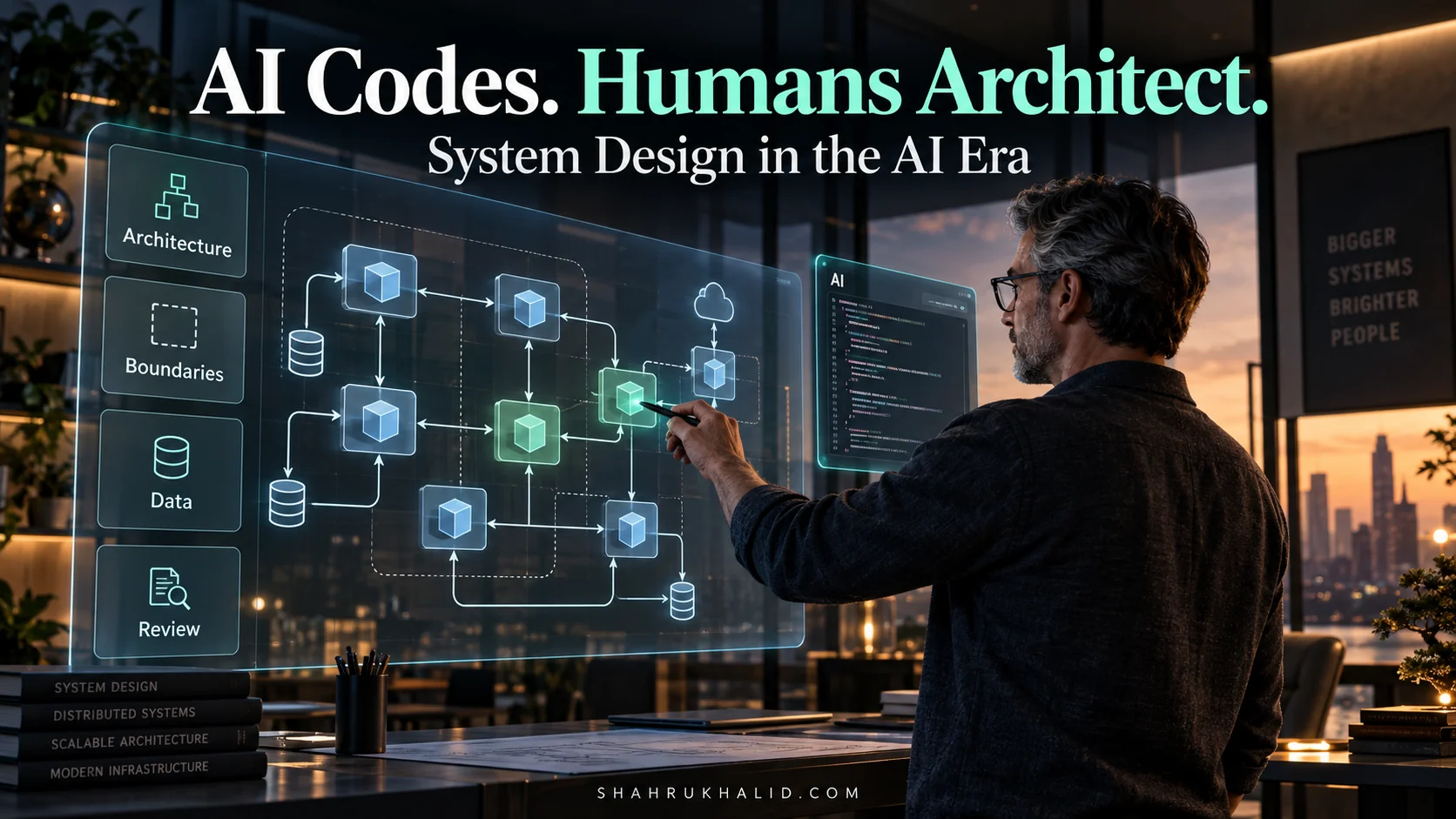
- AI elevates human system design, shifting architects to strategic, abstract, and visionary roles.
- AI interprets high-level specs, generating boilerplate, optimal structures, and microservice boundaries.
- AI integration transforms SDLC: focus shifts from manual construction to intelligent orchestration/validation.
- Architects guide AI co-pilots, validating proposals and refining output with nuanced human experience.
- This accelerates initial design, freeing architects for critical thinking and complex problem-solving.
Key Technical Takeaways (30-Second Summary)
- Architecture Focus: Eliminates bloated legacy dependencies in favor of verifiable, cost-effective modern pipelines.
- Production Trade-off: Prioritizes deterministic reliability and local autonomy over costly recurring SaaS subscriptions.
- Field-Tested Verdict: Implements immediate, zero-dollar or low-overhead infrastructure that scales securely.
The year 2026 marks a pivotal moment in technology: AI code generation has transcended rudimentary scripting to become a sophisticated partner in software development. Far from rendering human architects obsolete, this technological leap inaugurates the “2026 Architectural Imperative”—a critical shift where AI elevates human system design, pushing architects towards more strategic, abstract, and visionary roles rather than replacing their core functions. This article will explore why AI code generation is not a threat but a powerful catalyst, enabling principal architects and emerging professionals alike to craft more robust, scalable, and innovative systems than ever before.
Unpacking the AI-Driven Paradigm Shift in System Design
The evolution of software development has always been a story of abstraction. From machine code to assembly, then to high-level languages, and eventually to frameworks and platforms-as-a-service, each layer has aimed to free developers from low-level minutiae, allowing them to focus on business logic and innovation. The advent of advanced AI code generation tools in 2026 represents the next logical, and perhaps most profound, leap in this continuum. These tools, powered by sophisticated large language models (LLMs) and specialized architectural knowledge bases, can now interpret high-level design specifications, generate boilerplate code, suggest optimal data structures, and even propose microservice boundaries with remarkable accuracy.
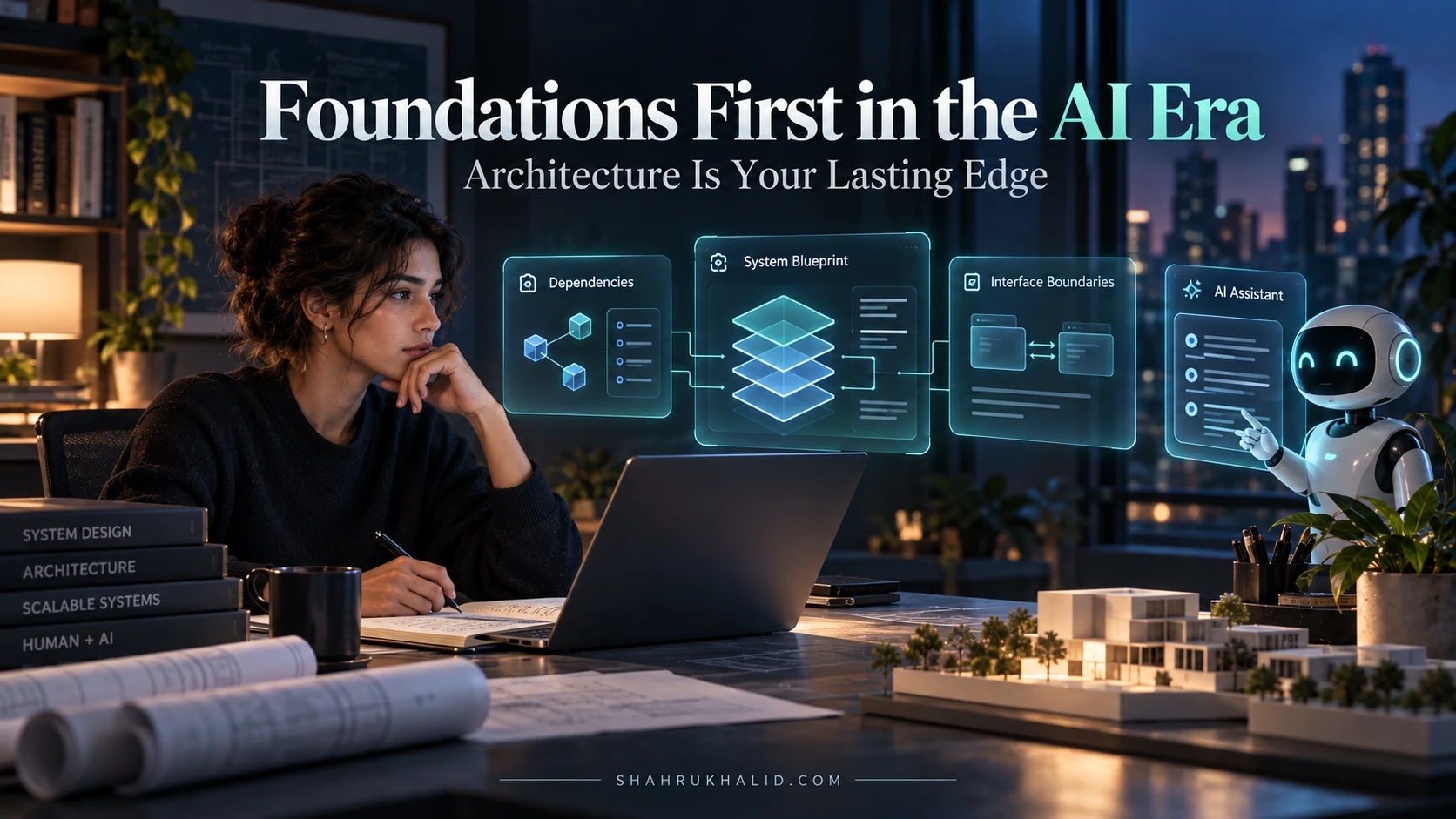
The 2026 landscape is characterized by AI assistants deeply integrated into the entire Software Development Life Cycle (SDLC). They aren’t just autocompleting lines of code; they are capable of understanding context, adhering to established architectural patterns, and even identifying potential anti-patterns. This transformation reshapes the very nature of system design, shifting the emphasis from the manual construction of components to the intelligent orchestration and validation of AI-generated solutions. Architects now find themselves guiding an intelligent co-pilot, refining its suggestions, and ensuring alignment with overarching business objectives and non-functional requirements.
For instance, consider a typical SDLC for a new enterprise application. Traditionally, architects would spend weeks defining detailed component specifications, data models, and API contracts, which developers would then translate into code. In 2026, an architect feeds high-level user stories, domain models, and performance targets into an AI-powered design assistant. The AI can then propose a complete service architecture, generate initial API endpoints with appropriate data validation, and even scaffold the necessary infrastructure-as-code for deployment. The human architect’s role evolves into validating these proposals against strategic goals, refining the AI’s output for edge cases, and injecting the nuanced, tacit knowledge that only human experience can provide. This dramatically accelerates the initial design and implementation phases, allowing more time for critical thinking, complex problem-solving, and future-proofing the system.
Beyond Code: AI’s Role in Elevating Architectural Abstraction
It is crucial to distinguish between “coding” – the act of writing instructions for a computer – and “system design” – the art and science of defining the architecture, components, modules, interfaces, and data for a system to satisfy specified requirements. While AI excels at the former, its true power in 2026 lies in its ability to augment and elevate the latter. Human architects, no longer bogged down by the specifics of implementation, can now dedicate more cognitive bandwidth to macro-level strategic thinking, focusing on the intricate dance between business strategy, technological capabilities, and long-term maintainability.
The architect’s evolving role is less about drawing every box and arrow, and more about defining the overarching principles, constraints, and aspirations that guide the AI in generating those boxes and arrows. This includes a heightened focus on non-functional requirements (NFRs) such as scalability, resilience, security, maintainability, cost-efficiency, and compliance. These are the critical attributes that determine a system’s success beyond its functional features. AI, with its capacity to analyze vast datasets of successful and failed architectures, can act as an invaluable NFR assistant. It can predict potential bottlenecks, suggest proven architectural patterns (e.g., circuit breakers for resilience, sharding for scalability), and even evaluate the cost implications of different design choices.
For example, designing a high-traffic e-commerce platform demands extreme scalability and resilience. A human architect in 2026 might define the peak traffic loads, acceptable latency, and desired uptime. An AI system design assistant could then propose a microservices architecture, recommend specific database technologies (e.g., NoSQL for product catalogs, relational for order processing), suggest caching strategies, and even outline a disaster recovery plan involving multi-region deployment. The human architect then critically evaluates these AI-generated proposals, considering the unique business context, existing infrastructure, and team expertise. They might challenge the AI’s choice of a particular database, perhaps due to licensing costs or a lack of internal skill sets, or refine the caching strategy based on specific customer behavior patterns not explicitly fed into the AI. This collaborative process results in a more robust and optimized architecture than either human or AI could achieve independently.
Addressing the “Replacement” Fallacy: Why Human Intuition Remains Irreplaceable in AI System Design
A common counterargument, often fueled by sensationalist headlines, is that “AI will write all code, and therefore architects will become obsolete.” This perspective fundamentally misunderstands the nature of both AI and human cognitive strengths, particularly in the complex domain of system design. While AI can generate tactical code with increasing proficiency, it cannot replicate the strategic intent, contextual understanding, and nuanced judgment that define human architectural leadership.
AI operates on patterns, data, and predefined rules. It excels at optimizing for known parameters and generating solutions within established paradigms. However, it struggles with ambiguity, novel problem spaces, and subjective requirements that lack clear quantitative metrics. The “last mile” problem in AI code generation refers to its difficulty in bridging the gap between generic, well-understood patterns and the specific, often messy, realities of a unique business problem, organizational culture, or unforeseen ethical consideration. This is where human creativity, empathy, and holistic understanding become not just valuable, but irreplaceable.
Consider the development of a complex regulatory compliance system for a multinational financial institution. While an AI could generate the boilerplate code for data ingestion, validation rules, and reporting frameworks, it would fall short in several critical areas. The nuances of interpreting evolving legal texts, understanding cross-jurisdictional conflicts, anticipating future regulatory shifts, and designing for auditability in a way that satisfies human auditors—these tasks require deep domain expertise, ethical reasoning, and a profound understanding of human behavior and societal impact. An AI might suggest the most technically efficient solution, but a human architect would weigh that against the potential for regulatory backlash, reputational risk, or the need for human override in exceptional circumstances. The human architect provides the critical layer of judgment, foresight, and accountability that AI, by its very nature, cannot.
Architectural Trade-offs in the AI-Augmented Era: A Practical Guide
The integration of AI into system design introduces a new layer of complexity to architectural trade-offs. Decisions are no longer solely about technology stacks or design patterns; they now involve discerning when and how to best leverage AI’s capabilities versus when to rely on human intervention and craftsmanship. This requires a refined decision matrix, balancing the allure of AI-driven velocity with the critical need for maintainability, security, and long-term strategic alignment.
Cost vs. Velocity: AI significantly accelerates development speed by automating repetitive coding tasks and scaffolding entire application structures. This can lead to substantial cost savings in development hours. However, over-reliance on AI without proper oversight can introduce technical debt, especially if the generated code is not thoroughly reviewed, tested, and understood by the human team. The trade-off lies in maximizing AI’s speed benefits while investing in robust validation processes and ensuring human architects maintain conceptual integrity.
Maintainability vs. Novelty: AI excels at generating standard, well-understood architectural patterns and boilerplate code. This enhances maintainability for common components. Yet, true innovation often requires venturing beyond established patterns, tackling novel problems with custom, highly optimized solutions. The architect’s challenge is to identify critical paths and unique features where human-crafted, bespoke solutions are essential, and where AI-generated, standardized components suffice. A system composed entirely of AI-generated code might be quickly built but difficult to debug or evolve if its underlying logic isn’t fully grasped by the human team.
Security vs. Agility: AI can be a powerful tool for generating secure code by adhering to best practices and identifying vulnerabilities during generation. However, it can also inadvertently introduce subtle security flaws if trained on flawed data or if the prompts lack specific security requirements. The trade-off involves balancing the agility gained from AI’s rapid code generation with the imperative of rigorous security audits, penetration testing, and continuous security validation, often requiring human expertise to interpret complex threat landscapes.
For example, a team developing a new payment processing module needs to decide whether to use AI to generate the core microservices boilerplate or to custom-build it from scratch. An AI could rapidly scaffold the basic API, database interactions, and message queuing. This offers high velocity. However, given the extreme sensitivity of financial transactions, the human architect might decide to custom-craft the critical transaction processing logic, focusing on absolute security, atomicity, and auditability, even if it means a slower initial development phase. They might then use AI for less critical, surrounding services like notification systems or reporting dashboards, balancing the trade-offs strategically.
The AI System Design Toolkit of 2026: Key Technologies and Best Practices
The architectural landscape of 2026 is rich with sophisticated AI tools designed to augment, not replace, human system design capabilities. These tools represent a significant leap from earlier code assistants, offering deeper contextual understanding and more comprehensive architectural insights.
Advanced AI Code Generation Platforms: These platforms are far beyond simple autocompletion. They can interpret natural language descriptions of features, generate entire classes, functions, and even propose API contracts based on data models. They are often integrated directly into Integrated Development Environments (IDEs) and version control systems, offering real-time suggestions and refactorings that adhere to project-specific coding standards and architectural guidelines. Their capabilities extend to generating infrastructure-as-code (IaC) for cloud deployments, ensuring consistency and adherence to defined resource policies.

AI-Powered Diagramming and Modeling Tools: These tools allow architects to sketch high-level designs in natural language or simple visual cues, which the AI then translates into formal architectural diagrams (e.g., C4 models, UML diagrams, sequence diagrams). They can automatically detect inconsistencies, suggest missing components, and even simulate system behavior to predict performance bottlenecks, significantly reducing the manual effort in documentation and validation.
AI for Architectural Pattern Recognition and Anti-Pattern Detection: Leveraging vast datasets of architectural blueprints and codebases, AI tools can identify common architectural patterns (e.g., Event-Driven Architecture, CQRS, Saga Pattern) and suggest their application based on system requirements. Crucially, they also excel at detecting anti-patterns (e.g., God Objects, tightly coupled services, N+1 query problems) early in the design phase, preventing costly rework later on.
AI in Automated Testing and Verification (Shift-Left Approach): AI can generate comprehensive test suites (unit, integration, end-to-end tests) directly from design specifications and generated code, drastically improving test coverage. Furthermore, AI-driven static analysis tools are more intelligent, understanding semantic intent and identifying complex vulnerabilities or performance issues that traditional linters might miss, effectively “shifting left” quality assurance into the design and early development stages.
Best practices for integrating AI into the architectural workflow revolve around collaboration and critical oversight. Architects should view AI as an intelligent assistant, not an autonomous agent. This means:
- Clear Prompt Engineering: Learning to articulate design requirements precisely and unambiguously to the AI.
- Continuous Validation: Rigorously reviewing AI-generated designs and code for correctness, adherence to standards, and alignment with non-functional requirements.
- Iterative Refinement: Using AI to explore multiple design alternatives quickly, then human architects to select and refine the optimal solution.
- Feedback Loops: Training AI models with project-specific architectural patterns and design decisions to improve their future suggestions.
Consider a new greenfield project where a team adopts an AI-powered design assistant. The architect feeds the system with user stories, domain models, and a high-level architectural vision (e.g., “a scalable, event-driven microservices platform on Azure”). The AI then proposes a service breakdown, data models, API specifications, and even generates initial IaC scripts for Azure Kubernetes Service (AKS), Cosmos DB, and Azure Event Hubs. The human architect reviews these proposals, adjusting service boundaries based on team structure, refining data models for specific compliance needs, and optimizing IaC for existing organizational policies. This collaborative approach significantly accelerates the initial setup while ensuring architectural soundness and strategic alignment.
Cultivating the Next-Gen Architect: Education and Skill Development for an AI-First World
The rise of AI in system design fundamentally reshapes the skill sets required for architects. The future architect is not just a technologist but a strategic thinker, a critical evaluator, and an ethical guide. Education and professional development must adapt to cultivate these new competencies.
New Skill Sets:
- Prompt Engineering for Architects: The ability to articulate complex architectural requirements, constraints, and desired outcomes in a clear, concise, and structured manner for AI consumption. This involves understanding how AI models interpret input and how to guide them towards optimal solutions.
- Critical Evaluation of AI Outputs: Architects must develop a keen eye for assessing the quality, correctness, security, and maintainability of AI-generated designs and code. This includes identifying potential biases, inefficiencies, or deviations from best practices that AI might introduce.
- Ethical AI Considerations: Understanding the ethical implications of AI-generated systems, including fairness, transparency, accountability, and privacy. Architects must ensure that AI-assisted designs do not perpetuate biases or create unintended societal harms.
- Architectural Governance in an AI Context: Establishing processes and standards for integrating AI-generated components into existing architectures, ensuring consistency, security, and compliance.
Deepening Foundational Knowledge: While AI handles much of the boilerplate, a deep understanding of underlying principles remains paramount. Architects need to master:
- Algorithms and Data Structures: To critically evaluate AI’s choices and optimize where necessary.
- Distributed Systems and Cloud Native Patterns: To design resilient, scalable, and cost-effective architectures.
- Networking and Security Fundamentals: To ensure robust and secure system boundaries.
- Domain-Driven Design (DDD): To effectively model complex business domains, which AI can then translate into technical components.
The Importance of Soft Skills: In an AI-augmented world, human-centric skills become even more critical:
- Communication: Clearly articulating complex AI-generated designs to diverse stakeholders.
- Collaboration: Working effectively with AI tools and guiding development teams.
- Leadership: Steering architectural vision and innovation in an increasingly automated landscape.
For students aspiring to become architects, practical exercises should focus on:
- Designing Systems with AI Tools: Given a problem statement, use AI design assistants to generate an initial architecture.
- Critically Reviewing AI-Generated Designs: Analyze an AI-produced architecture for its strengths, weaknesses, potential trade-offs, and areas for human improvement.
- Prompt Engineering Challenges: Practice crafting precise prompts to achieve specific architectural outcomes from AI.
- Architectural Refactoring with AI: Use AI to identify and suggest refactorings for existing systems, then evaluate and implement them.
Study tips for students should emphasize a strong foundation in architectural patterns, a deep understanding of non-functional requirements, and mastery of problem-solving methodologies. Focus on the “why” behind architectural decisions, not just the “how.” Engage with real-world case studies and critically analyze how AI could have (or could not have) improved those designs. A university curriculum in 2026 might include dedicated modules on “AI-Augmented Architectural Design,” “Prompt Engineering for Enterprise Systems,” and “Ethical Considerations in AI-Driven Software Development,” integrating hands-on experience with AI design tools throughout the program.
The Long-Term Outlook: Human-AI Symbiosis in System Design
Looking further into the horizon, the trajectory of AI in system design points towards an increasingly symbiotic relationship between human architects and intelligent machines. Future advancements could see AI not just generating code, but also self-evolving architectures, performing autonomous system optimization, and dynamically adapting to changing requirements and operational environments. Imagine AI systems that can monitor production metrics, identify emerging bottlenecks, and proactively refactor or scale components without direct human intervention, all while adhering to human-defined guardrails.
However, even in such advanced scenarios, the human architect’s role as the ultimate system orchestrator and value creator remains paramount. AI will always operate within the constraints and objectives set by humans. Ethical considerations will only intensify; issues like bias in AI-generated code, ensuring accountability for system failures in AI-driven autonomous systems, and maintaining transparency in complex AI decision-making processes will demand profound human oversight and ethical leadership.
The architect of the future will be less of a builder and more of a conductor – directing a sophisticated orchestra of AI tools, human developers, and business stakeholders. Their primary function will be to bridge the gap between abstract business needs and concrete technological solutions, ensuring that systems are not just technically sound, but also ethically responsible, strategically aligned, and ultimately, serve human purpose. The core thesis endures: AI is an amplifier of human capability, not a replacement for human ingenuity, judgment, and vision.
Conclusion: The Enduring Value of Human Architectural Acumen
The 2026 Architectural Imperative is clear: AI code generation is not an existential threat to human system design, but rather a profound opportunity for its elevation. By offloading the mundane, repetitive, and pattern-based aspects of coding and even initial design, AI frees human architects to focus on the highest-value activities: strategic thinking, complex problem-solving, ethical oversight, and the nuanced interpretation of business context.
This shift demands a new breed of architect – one who is adept at prompt engineering, critically evaluates AI outputs, deeply understands architectural trade-offs, and possesses strong foundational knowledge coupled with crucial soft skills. For students entering this field, embracing AI as a powerful co-pilot, rather than fearing it as a competitor, is the key to future success. The future of system design is not about machines replacing minds, but about intelligent collaboration, where human creativity and AI efficiency converge to build the next generation of innovative, resilient, and human-centric systems. The enduring value of human architectural acumen lies not in writing every line of code, but in orchestrating intelligent systems that truly serve humanity.