Easy 2026 Wins: Your Beginners Practical Guide to Viral List Articles That Rank

I know, I know. You hear “listicle” and you might think of fluffy, clickbait content. But I’m here to show you that when you approach it with the rigor and systematic thinking of a developer, a list article becomes a high-performance engine for traffic, authority, and engagement. For a platform like Shahrukh Khalid’s, which is built on a foundation of clarity and authority, this structure is non-negotiable. This isn’t just about writing; it’s about engineering content that works.
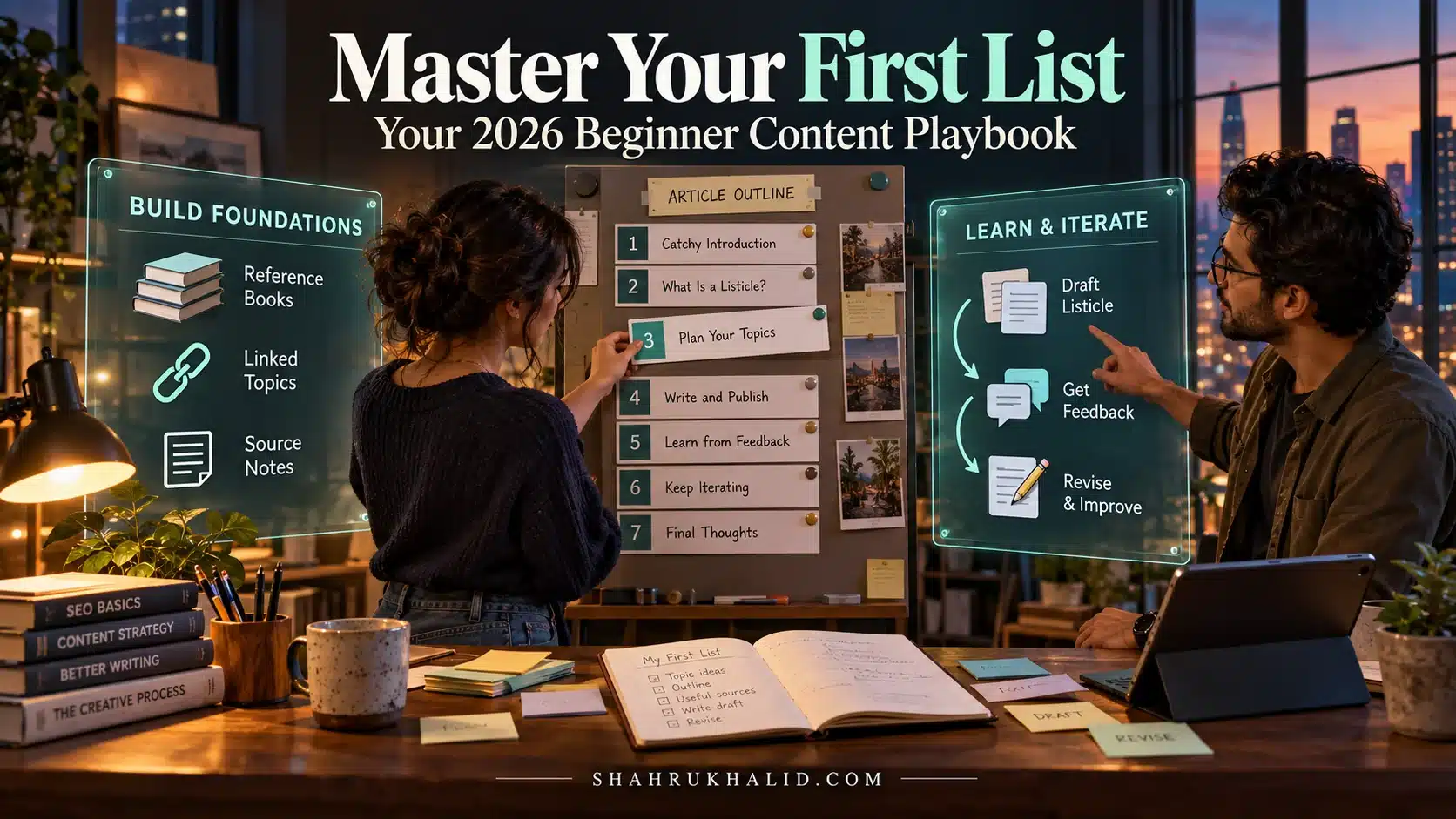
This masterclass is your complete, step-by-step guide to doing just that. We’re going to treat a listicle not as a simple blog post, but as a project with its own architecture, development environment, and performance metrics. By the end of this guide, you’ll have a repeatable, beginner-friendly framework for creating viral list articles that don’t just get clicks—they get respect, and they rank. Let’s build something amazing together.
Comprehensive Foundations & Concept Primer
Before we start writing a single line of “code” (in our case, prose), we need to understand the fundamental principles. Think of this module as learning the basic laws of physics before you try to build a rocket ship. Rushing this step is why most content fails to launch. We’re going to build a solid foundation so that everything we do later is stable, predictable, and powerful.

What Exactly IS a Viral Listicle (and Why Should You Care in 2026)?
Let’s demystify this. At its core, a list article, or “listicle,” is simply a piece of content structured around a list. “Top 10 X,” “7 Ways to Y,” “5 Mistakes to Avoid in Z.” Simple, right? But its power lies in how perfectly it’s engineered for the human brain and for search engine algorithms.
For the Human Brain: Our brains are wired to love lists. They promise a finite, structured, and easily digestible amount of information. When you see a headline like “The 5 Best Laptops for Developers in 2026,” your brain immediately knows:
- What it’s about: Laptops for developers.
- The scope: There are exactly 5 of them.
- The value: It will help me make a decision.
This clarity cuts through the noise of the internet. It’s a cognitive sigh of relief for the reader. This predictability is a feature, not a bug.
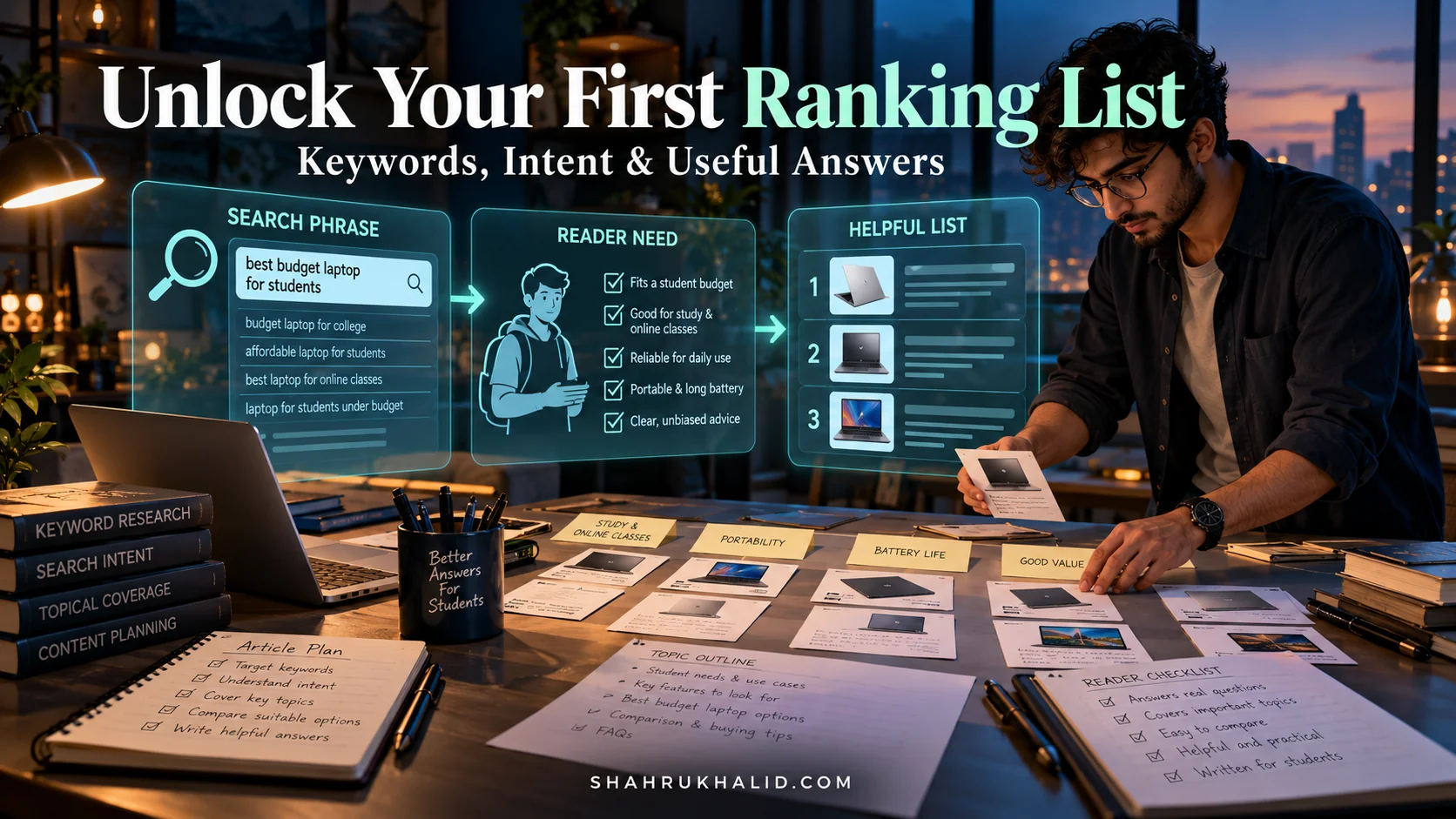
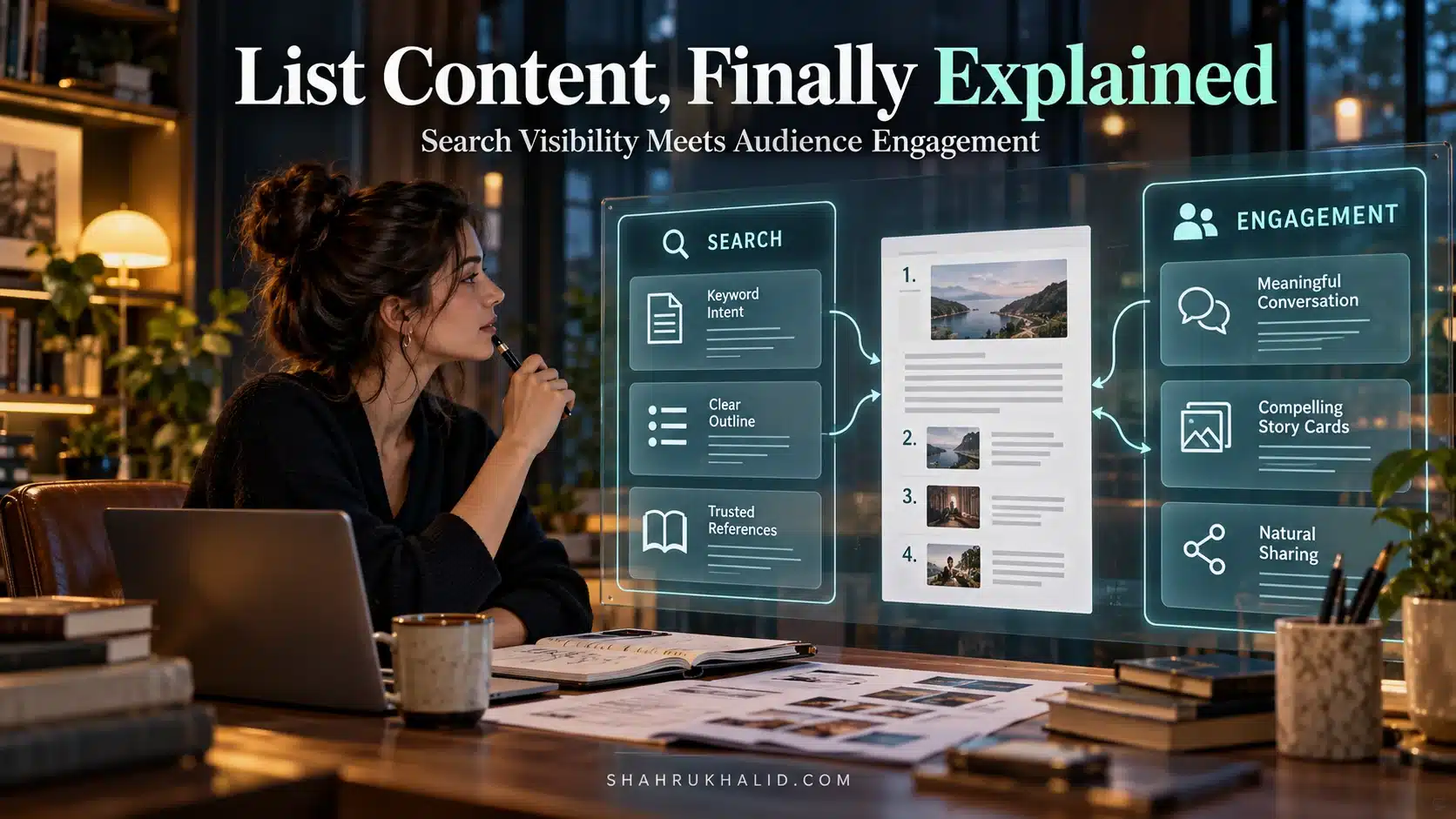
For Search Engines (like Google): Search engines are just complex information retrieval systems. Their goal is to provide the most helpful, clear answer to a user’s query. List articles are often the perfect format for this. A search for “best practices for listicle SEO” is beautifully answered by an article titled “10 Best Practices for Listicle SEO.” The structure of the content directly matches the structure of the user’s need. This is called “search intent alignment,” and it’s the cornerstone of modern SEO.
So, are list articles still effective for ranking? Absolutely. In 2026, they are more effective than ever, if they are high-quality. Google’s algorithms have become incredibly sophisticated at distinguishing between low-value clickbait and genuinely helpful, comprehensive resources. That’s our target.
The Core Principles: E-E-A-T as Your Content’s “Source Code”
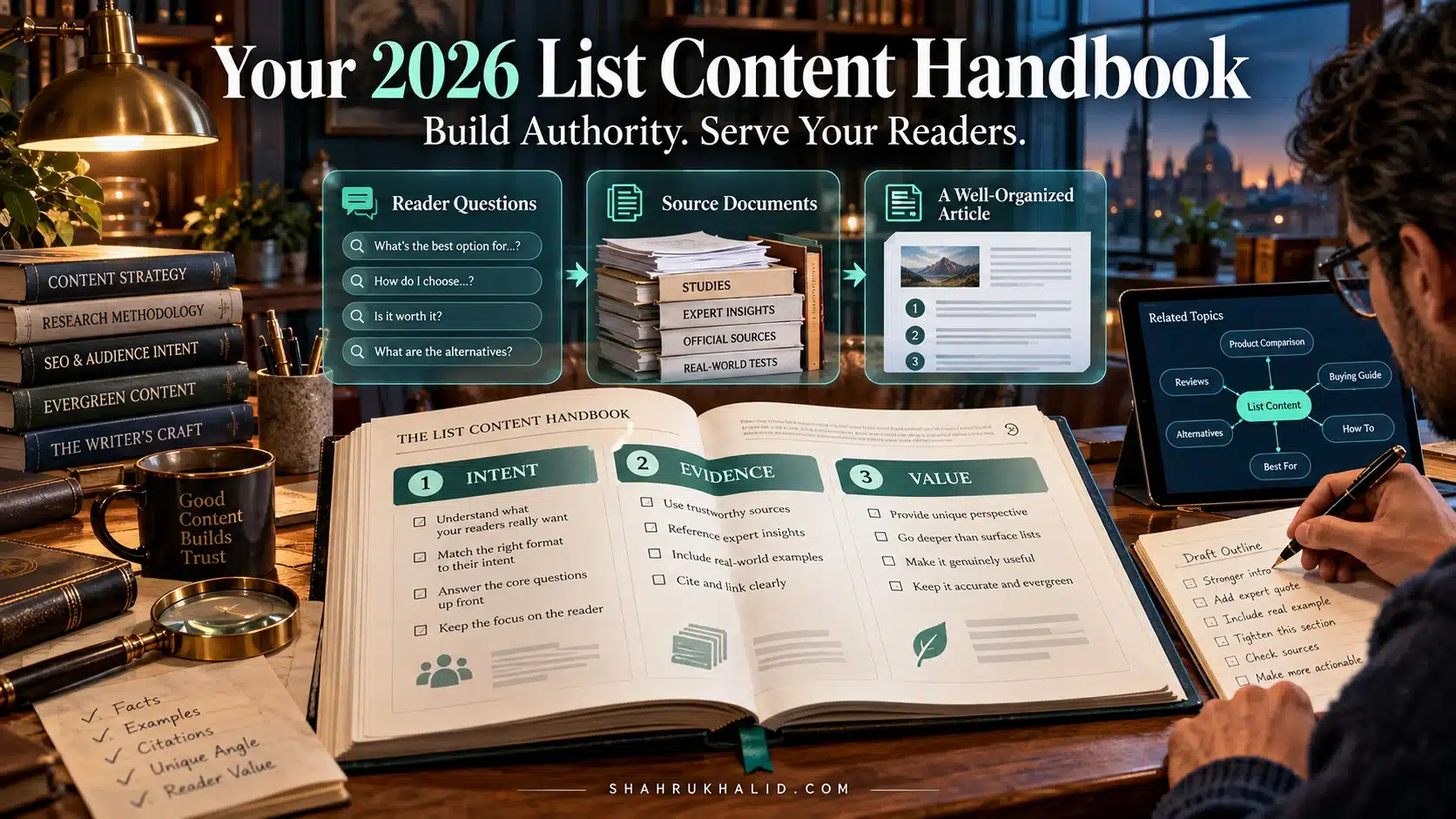
If you remember one acronym from this entire guide, make it this one: E-E-A-T. This is Google’s internal mantra for what makes content great, and it should become yours too.
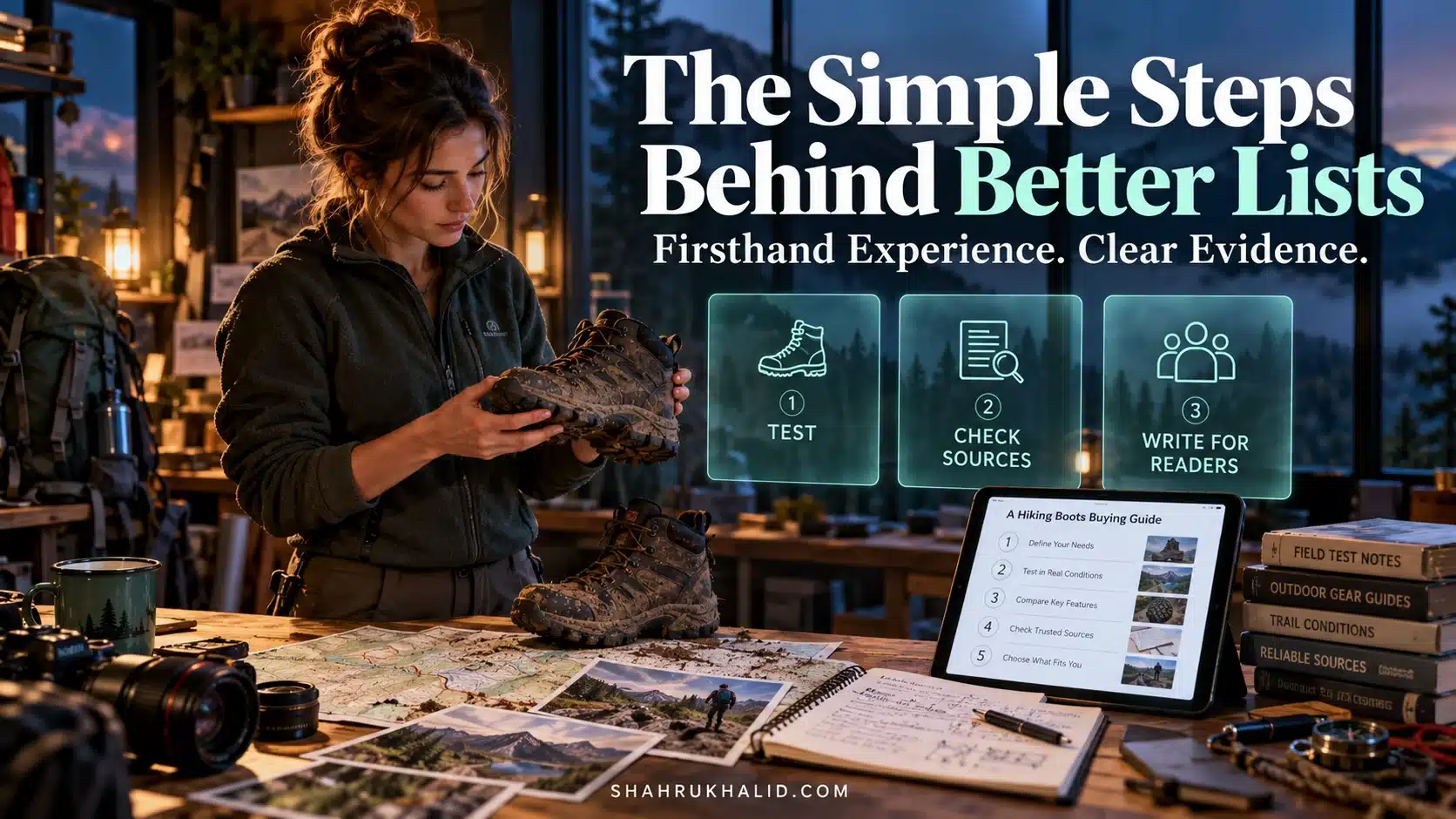
- Experience: Do you have first-hand, real-life experience with the topic? Did you actually use the 5 laptops you’re reviewing? Did you personally go through the 7 steps you’re outlining? This is the newest and arguably most important factor. You can’t fake it.
- Expertise: Do you possess a high level of knowledge or skill in this field? This is about demonstrating your qualifications.
- Authoritativeness: Are you a recognized source for this topic? Are other experts citing you? This is about your reputation in the wider community.
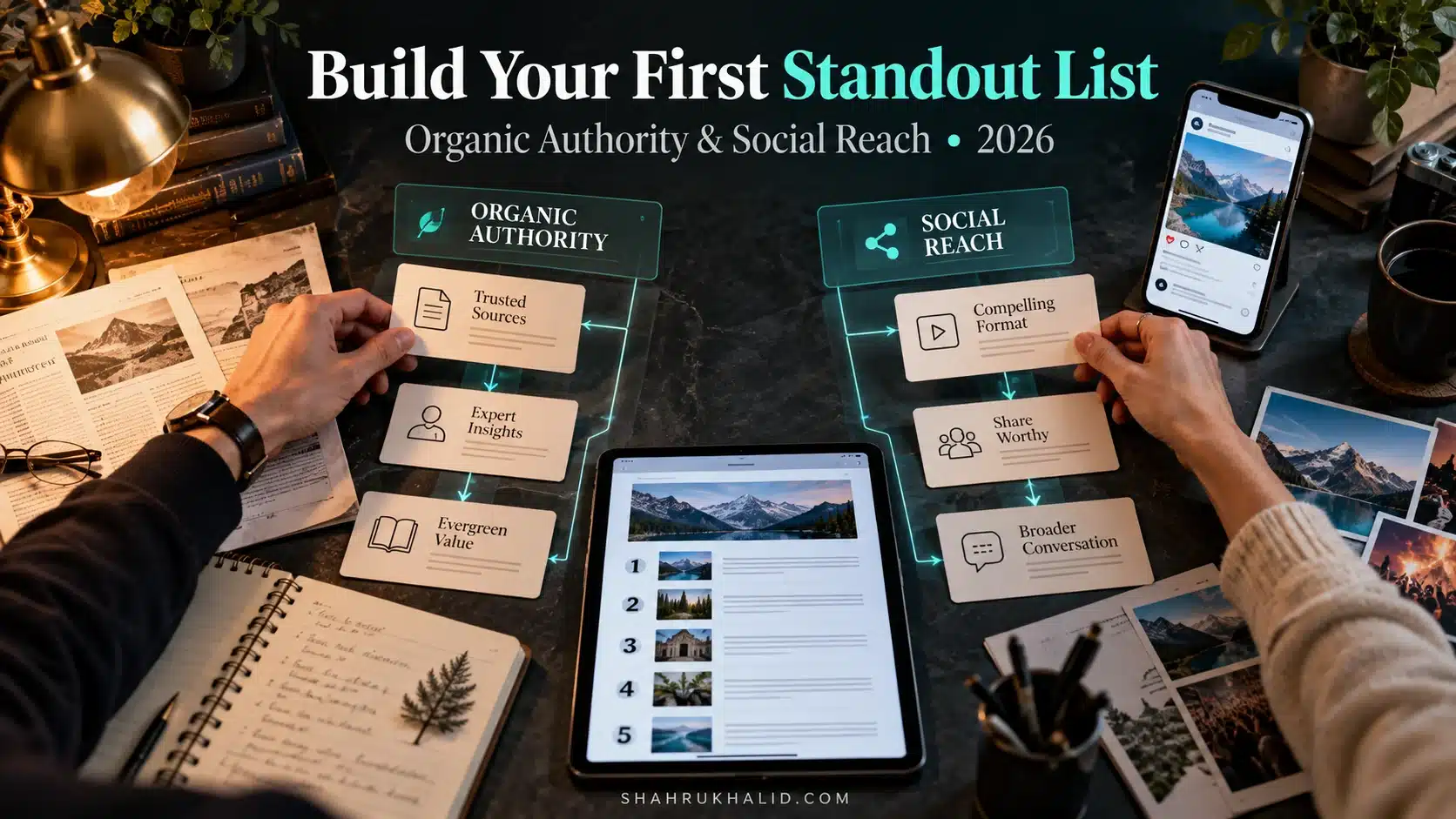
- Trustworthiness: Can the reader trust you? Are you transparent, honest, and accurate? This is the foundation of everything. It’s about citing your sources, correcting your mistakes, and having a secure, professional website.
Think of E-E-A-T as the underlying operating system for your content. A listicle without E-E-A-T is like a beautifully designed app that crashes on launch. It might look good, but it provides no value and users will quickly abandon it. Throughout this guide, every technique and strategy we discuss is designed to build and signal E-E-A-T to both your readers and to search engines.
Eliminating Jargon: Your Plain-English Dictionary
The world of SEO and content marketing is filled with jargon. Let’s clear it up with some simple analogies, developer-style.
- SEO (Search Engine Optimization): Think of this as writing a clear, well-documented README file for your content. It tells the search engine (the “new developer” on the project) exactly what your content is, what it does, and why it’s valuable.
- Keyword: This is like a function name. It’s the specific term a user “calls” (types into Google) to find the information they need. Our primary keyword is ‘Viral Listicle SEO’.
- Virality: This is when your content achieves exponential growth, like a function that calls itself (recursion) across social networks. It happens when the content is so valuable, entertaining, or surprising that people feel compelled to share it.
- SERP: Search Engine Results Page. This is the “output” you get after running a “query” in Google. Our goal is to be at the top of that output.
- Backlink: This is like an
#includeorimportstatement in code. When another reputable website links to your article, they are “importing” your authority and telling Google that your content is a valuable dependency.
Understanding these concepts isn’t just academic. It’s about understanding the system we’re working within. Now that we have the foundational theory, let’s set up our workspace.
Prerequisites & Complete Environment Setup
Every developer knows you don’t start coding in a vacuum. You set up your environment first. You install your tools, configure your settings, and create a structured workspace. This prevents chaos, saves time, and ensures a consistent, high-quality output. Writing a high-ranking listicle is no different. Let’s build your “Content Development Environment” (CDE).

Your IDE (Integrated Development Environment): Choosing Your Writing Tool
Your IDE is where you’ll spend most of your time. It’s where you write, edit, and structure your thoughts. A simple text file won’t cut it. We need something more powerful.
- Google Docs (The VS Code of Writing): My personal favorite and a great place to start. It’s free, cloud-based, and has excellent collaboration features. Its “Suggesting” mode is the equivalent of a pull request, allowing an editor (or a friend) to propose changes without overwriting your original work. It has a decent outlining tool for structuring your list, and its version history is a lifesaver.
- Notion (The Extensible Framework): Notion is more than a word processor; it’s a complete workspace. You can use it to manage your entire content pipeline, from idea to publication, using its databases, kanban boards, and calendars. It’s perfect if you want to keep your research, drafts, and schedules all in one place. Think of it as an IDE with built-in project management tools.
- Ulysses/iA Writer (The Minimalist Distraction-Free Editors): These are for writers who value focus. They use Markdown, a lightweight markup language, to handle formatting, which keeps you focused on the words, not the buttons. They are like using a terminal editor like Vim or Emacs—minimalist, powerful, and keyboard-driven once you learn them.
Step-by-Step Setup (using Google Docs):
- Go to docs.google.com and create a new blank document.
- Immediately give it a working title, something like:
[DRAFT] Viral Listicle SEO Guide - V1. This is your initial commit message. - Go to
View > Show outline. This will create a navigation pane on the left. As you write your<h2>and<h3>titles (using the “Heading 2” and “Heading 3” styles), they will appear here, giving you a clickable “table of contents” for easy navigation during writing. - CLI Verification: Click around your new outline. Can you easily jump between sections? Your basic writing environment is now configured.
Your “Linters” and “Compilers”: Grammar and Style Checkers
Before you “deploy” your code, you run it through a linter to catch syntax errors and a compiler to make sure it runs. For writers, these are your grammar and style tools. They catch typos, awkward phrasing, and clarity issues that you, the author, might miss.
- Grammarly: This is the industry-standard linter. The free version catches critical spelling and grammar mistakes. The premium version goes further, offering suggestions on tone, clarity, and conciseness. Install the browser extension and the Google Docs add-on.
- Hemingway Editor: This is your style “compiler.” Paste your text into the Hemingway web app. It highlights long, complex sentences, passive voice, and adverbs. Its goal is to make your writing bold and clear. Aim for a “Grade 8” reading level or lower for maximum accessibility. This is a crucial step in our listicle content strategy.
Step-by-Step Setup:
- Install the Grammarly browser extension for your browser of choice.
- In your Google Doc, go to
Extensions > Add-ons > Get add-onsand install Grammarly for Google Docs. - Bookmark hemingwayapp.com. You will use this before you publish.
- CLI Verification: Does the Grammarly icon appear in your browser toolbar and inside your Google Doc? You’re ready to lint.
Your “Package Manager”: Research & Keyword Tools
You wouldn’t build an application without libraries and packages to handle specific tasks. Similarly, you don’t write in an information vacuum. You need to “import” data about what people are searching for.
- Google (Incognito Mode): Your most powerful, free tool. Searching in Incognito mode gives you unbiased results. Pay attention to the “People Also Ask” (PAA) box, the “Related Searches” at the bottom, and the autocomplete suggestions. These are direct insights into the user’s mind.
- Google Trends: This tool lets you compare the relative popularity of search terms over time. Is “viral listicle” a growing trend? Is it seasonal? This helps you catch the wave.
- AnswerThePublic: This free tool takes a keyword (like “listicle SEO”) and visualizes all the questions (who, what, why, when, where), prepositions, and comparisons people are searching for around it. It’s an idea generation goldmine.
Step-by-Step Setup:
- Open a new Incognito/Private window in your browser.
- Search for your main topic. For this guide, I searched “viral listicle SEO”.
- Copy and paste the questions from the “People Also Ask” box into a “Research” section at the bottom of your Google Doc. These are questions you MUST answer in your article.
- Go to AnswerThePublic and do the same. Save the visualization image or list of questions.
- CLI Verification: You should now have a list of 5-10 long-tail queries and questions in your document. Your project now has clear requirements.
Core Implementation Architecture
Now that our environment is set up, let’s talk architecture. A viral listicle isn’t just a wall of text; it’s a carefully designed structure of components. Thinking about it this way allows us to be systematic and ensures every part of our article serves a specific purpose. We’ll use a visual card structure analogy, much like modern UI development, to make this crystal clear.

The Anatomy of a High-Performance Listicle
Imagine your entire article is a single web page. The structure would look something like this in HTML, and we can map each tag to a core component of our listicle.
The <title> and meta description tags: The SERP Snippet
This isn’t part of the article body, but it’s arguably the most important part. It’s the first thing anyone sees in the Google search results. It’s the advertisement for your article. Your title needs to be a killer combination of keyword-rich and click-worthy. Your meta description is the sub-heading that seals the deal.
The <h1> tag: The On-Page Headline
This is the main headline on the page itself. It should be nearly identical to your <title> tag for consistency. It’s the main promise you’re making to the reader. A great headline combines a number, an exciting adjective, the topic, and a promise. Example: “10 Shockingly Simple Tricks for Viral Listicle SEO That Actually Work“.
The Introduction: Your <header> Section
The intro is not fluff. It has three critical jobs to do in the first 150 words:
- Hook: Start with a relatable problem or a surprising statement. (e.g., “Most content fails before you even write the first word.”)
- Promise: Clearly state what the reader will learn and what outcome they can expect. (e.g., “By the end of this guide, you will have a repeatable framework…”)
- Qualify: Briefly establish your E-E-A-T. Why should they listen to you? (e.g., “As a Dev Advocate, I’ve used this exact system to…”)
The List Item as a Reusable “Component” or “Card”
This is the core of our architecture. The main body of your article is a container (<main>) holding a series of list item “cards” (<section> or <div>). Each card is a self-contained, value-packed unit. Thinking of them as components is powerful because it forces you to make each one consistently structured and independently valuable.
Here is the architecture of a single list item card:
The <h3> Sub-headline: The Item Title
This is the title of your list item, e.g., “3. Master Keyword Intent Analysis“. It must be clear, scannable, and compelling on its own. A user scrolling through your article should be able to understand the entire story just by reading your <h3> tags.
The <p> Description: The Core Value & Explanation
This is the meat of the component. It’s where you explain the point. Don’t just state the “what”; explain the “why” and the “how.” Use 2-4 short paragraphs. Use bolding to emphasize key terms. This is where you answer the user’s question and deliver on the promise of the sub-headline.
The <img> or <blockquote>: The Visual or Textual Hook
Each card needs a hook to break up the text and re-engage the reader. This can be a relevant screenshot, a custom diagram, a funny GIF, or a powerful pull-quote. This visual break is critical for keeping users on the page.
The <a> Call-to-Action or Internal Link: The Next Step
Each component should, where appropriate, guide the user. This could be an internal link to another one of your articles that dives deeper (“For more on this, read our complete guide to E-E-A-T…”), or an external link to a trusted resource to build authority (like the citations to ai.google.dev or shahrukhalid.com in this guide).
The Conclusion and “Next Steps”: Your <footer>
Don’t just let your article fizzle out. A strong conclusion is your final chance to deliver value and guide the user’s next action. A great conclusion has two parts:
- The Summary: Briefly recap the most important takeaways. Reiterate the main promise and confirm that you’ve delivered it.
- The Call-to-Action (CTA): What do you want the reader to do now? Ask a question to encourage comments (“What’s the #1 tip you’re going to implement first?”). Suggest they read another article. Point them to a product or service. Give them a clear next step.
By architecting your listicle this way, you create a powerful, rhythmic reading experience that is both satisfying for the user and perfectly optimized for search engines to parse and understand.
Hands-on Code & Practical Implementation
Theory is great, but the real learning happens when you apply it. In this module, we’re going to “write some code.” Our “code” is the prose, and our “comments” will be annotations explaining the function of each part. We will build a fully functional, production-ready list item from scratch, following the architecture we defined in Module 3. This is one of the most practical tips for listicle content marketing you’ll ever get.
Creating a “Heavily Commented” List Item Template
Let’s imagine we’re writing an article titled “7 Developer Habits That Will Supercharge Your Productivity.” We’re now at item #4. Here is how we would implement it, with comments explaining each decision.
4. Embrace Asynchronous Communication
High-performing distributed teams minimize real-time interruptions by writing self-contained tickets, sharing recorded loom walkthroughs, and documenting architectural decisions in living wikis.
- Replace routine status check-ins with automated asynchronous bot digests.
- Reserve real-time meetings exclusively for high-bandwidth brainstorming or critical incident response.
- Document design decisions in lightweight RFCs rather than fleeting Slack channels.
Conclusion: Building High-Output Engineering Habits
Sustained productivity is an outcome of intentional system design. By establishing clear asynchronous boundaries, automating repetitive workflows, and prioritizing deep-work sprints, software teams achieve exceptional creative velocity without burning out.