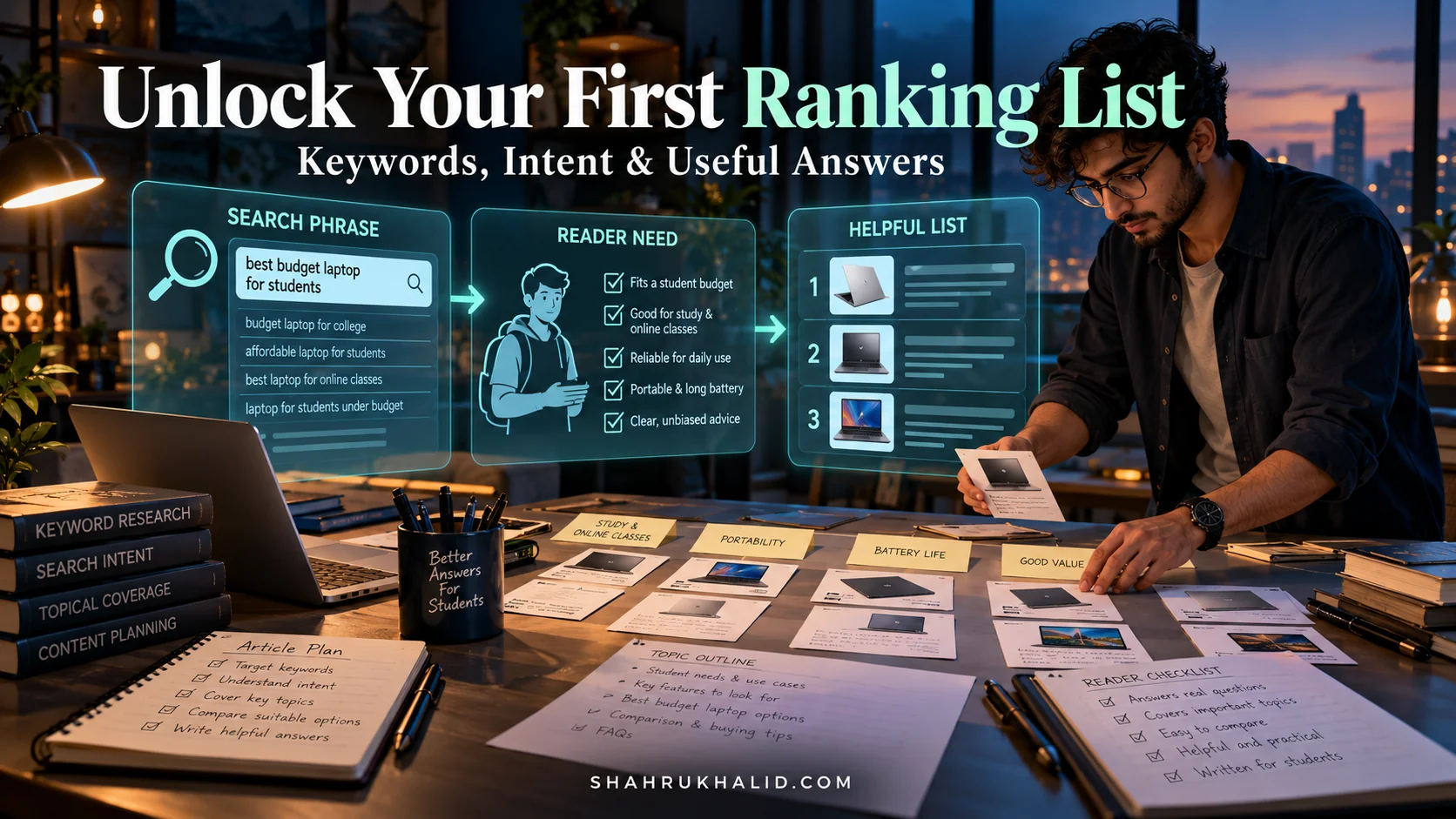
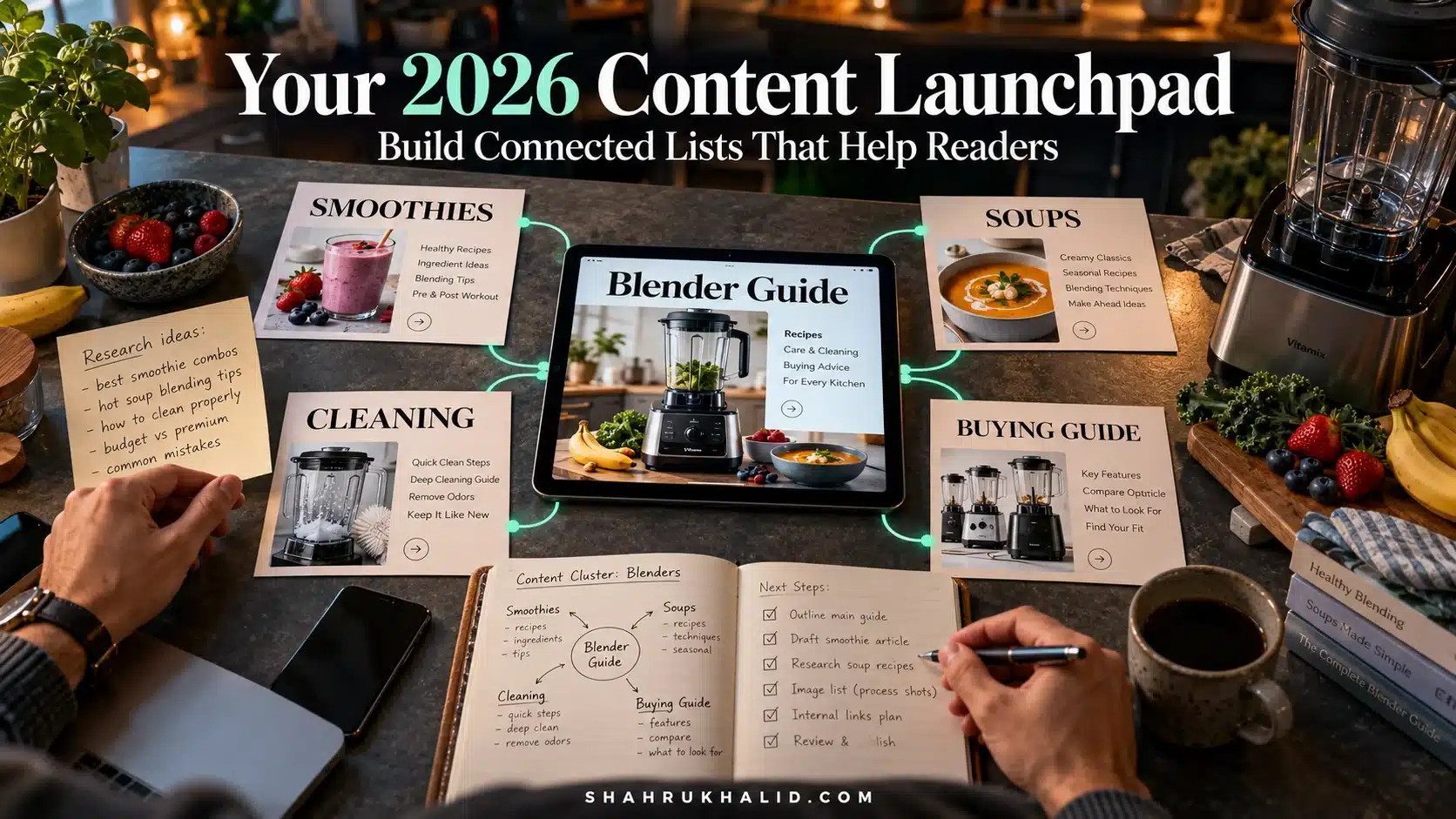
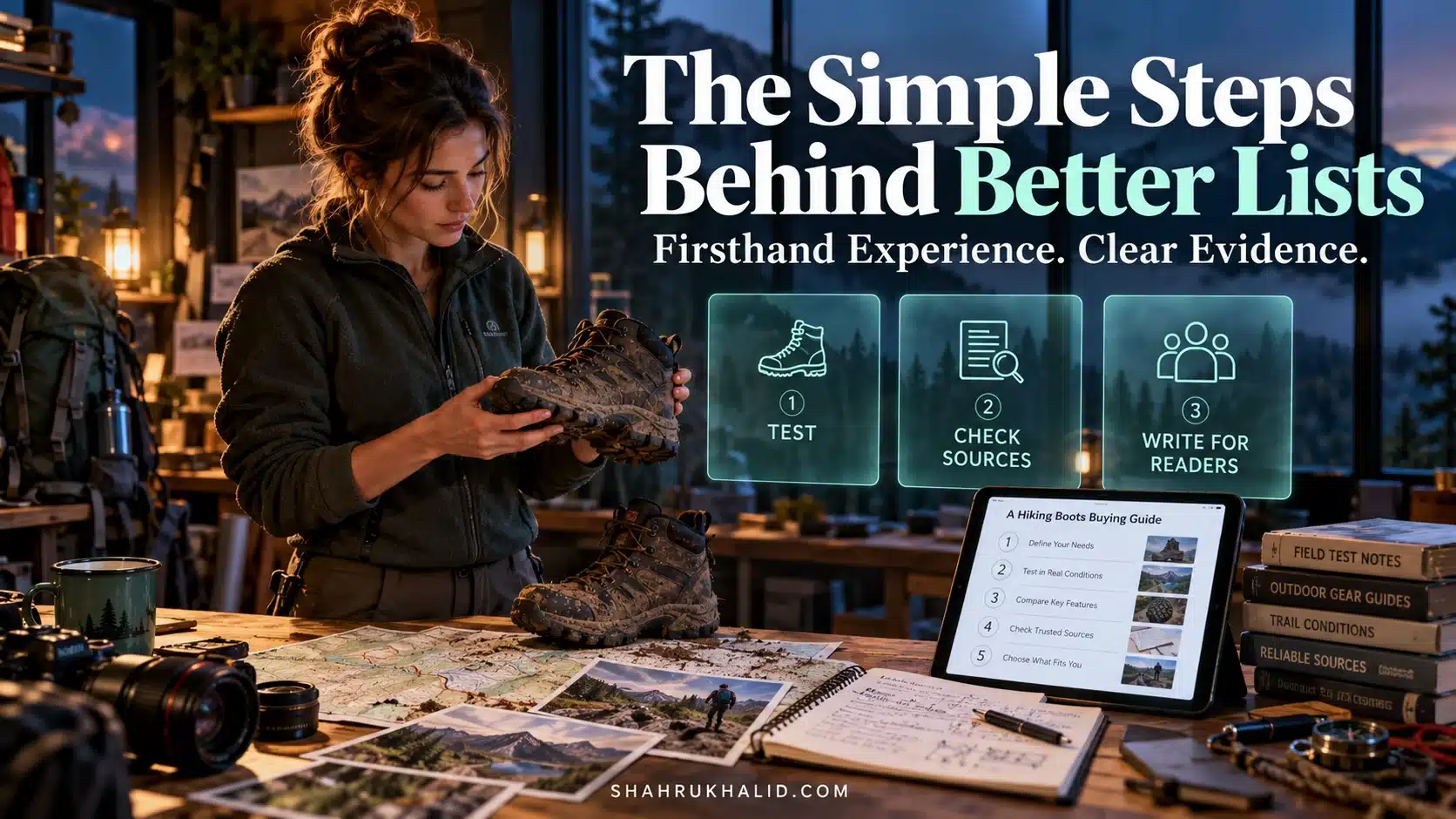
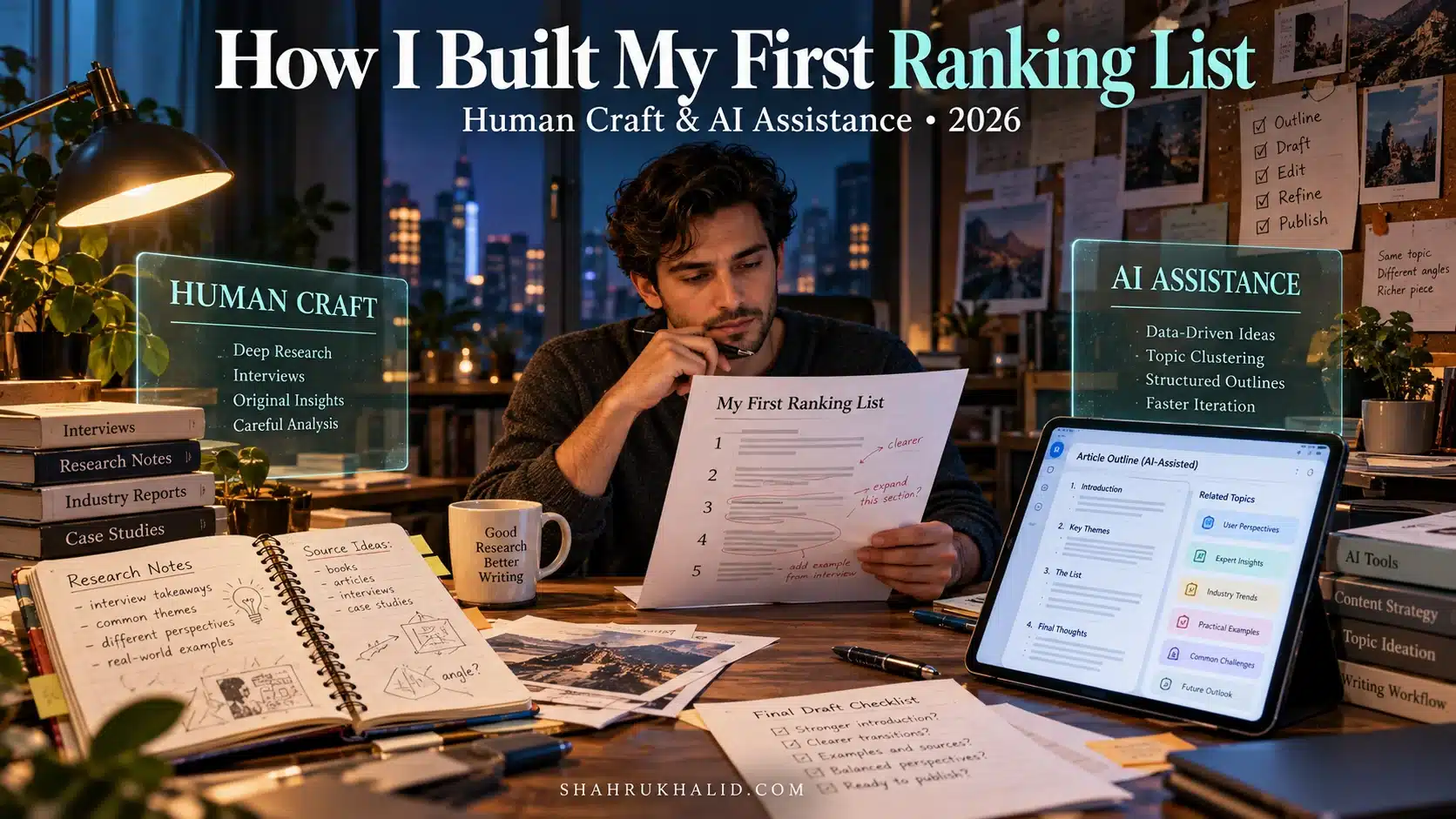
From Zero to Search #1: The Beginner’s 2026 Practical Guide to Creating High-Ranking List Articles That Go Viral
That’s why I’m so excited to write this for Shahrukh Khalid’s platform. Today, we’re not building a microservice or deploying a container. We’re building something just as powerful: a piece of content engineered to perform. We’re going to architect a high-ranking, viral list article from the ground up. This isn’t about “content hacks” or “magic formulas.” This is a masterclass in engineering virality and search dominance through methodical, repeatable steps. By the end of this guide, you’ll have a practical, beginner-friendly blueprint for how to create viral listicles that not only capture attention but also climb to the coveted #1 spot on Google in 2026 and beyond. Let’s get started.
Comprehensive Foundations & Concept Primer
Before we write a single line or configure any tools, we need to establish our foundational understanding. Think of this as the “Hello, World!” of content engineering. Why are we focusing on list articles, or “listicles,” in 2026? Because they are, in essence, the most human-compatible and machine-readable format for information transfer on the internet. They are the APIs of knowledge.

Why Listicles are the APIs of Content
When I work with a new API, like those documented on ai.google.dev, I appreciate a few key things: predictable structure, clear endpoints (the functions I can call), and well-defined responses. A listicle works the same way for a reader and for a search engine.
- Predictable Structure: The reader knows what they’re getting. “10 Ways to…” promises ten distinct points. This manages expectations and reduces cognitive load. It’s a user-friendly interface.
- Clear Endpoints: Each numbered item in your list is an “endpoint.” It’s a self-contained unit of value. A reader can scan the headings (the endpoint names) and jump directly to the information they need most.
- Well-Defined Responses: The content under each heading is the “response.” It delivers on the promise made by the heading.
Google’s crawlers and ranking algorithms love this structure for the same reason. It’s easy to parse, understand the hierarchy of information, and determine the article’s core topic and value. This inherent clarity is a cornerstone of any good listicle SEO strategy and is a primary reason why well-crafted list posts often achieve top rankings.
The Psychology of Virality: Why Do List Articles Go Viral?
A common question I hear is, “How do list articles go viral?” It’s not magic; it’s a combination of psychology and strategic execution. Virality happens when content taps into fundamental human drivers.
- Curiosity Gap: Titles like “7 Surprising Mistakes…” or “The #1 Thing You’re Doing Wrong…” create a gap between what the reader knows and what the article promises to reveal. They click to close that gap.
- Emotional Resonance: Listicles often evoke strong emotions: awe (“15 Most Beautiful Places on Earth”), humor (“21 Dogs Who Are Having a Worse Day Than You”), or utility (“9 Life-Changing Productivity Apps”). Emotion drives sharing.
- Social Currency: Sharing a smart, helpful, or entertaining listicle makes the sharer look good. It signals they are in-the-know, helpful, or have a great sense of humor.
- Digestibility: In a world of information overload, a listicle is a finite, easily consumable package of knowledge. It feels less intimidating than a dense academic paper, making it more likely to be read and shared.
Our goal in this guide is to engineer content that leverages these psychological triggers while being grounded in a technically sound SEO framework. This is the essence of a modern viral content creation guide.
Eliminating Jargon: E-E-A-T Explained for Beginners
You’ll hear the acronym E-E-A-T a lot. It’s not just jargon; it’s Google’s core philosophy for quality content. Let’s break it down like we would a technical spec.
- Experience: Have you actually done the thing you’re writing about? If you’re writing “My 5 Favorite Laptops for Coding,” have you actually used them? This first-hand perspective is now a critical ranking factor. It’s about showing, not just telling.
- Expertise: Do you have the knowledge and skills in this area? This is about demonstrating your qualifications. For a developer, it might be your GitHub profile or technical certifications. For a content creator, it’s the depth and accuracy of your information.
- Authoritativeness: Are you a recognized source of information on this topic? This is built over time. When other respected sites link to your content, it’s a vote of confidence that builds your authority.
- Trustworthiness: Is your content accurate, honest, and safe? Can users trust you with their time (and potentially their money or data)? This is about citing sources, being transparent, and having a secure, professional website.
Think of E-E-A-T as the quality assurance (QA) process for your content. Throughout this guide, every step we take will be designed to build and signal these four crucial elements.
Prerequisites & Complete Environment Setup
Just like you can’t start coding without a proper development environment, you can’t create high-ranking content without the right setup. This isn’t about expensive, complicated software. It’s about establishing a workflow and having the right, mostly free, tools at your disposal. Let’s configure our “Content Development Environment.”
Your Integrated Development Environment (IDE) for Content
Your primary tool is your Content Management System (CMS). This could be WordPress, Ghost, or a custom-built platform like the one we use at shahrukhalid.com. This is where you’ll write, edit, and publish. For a beginner, I recommend a simple setup:
- A Clean Text Editor: Before you even touch your CMS, write your draft in a distraction-free editor. This could be Google Docs, Notion, Ulysses, or even the default Notepad. The goal is to separate the act of writing from the act of formatting.
- A Grammar & Style Checker: Install Grammarly or use the Hemingway App. Think of this as your linter and code formatter. It catches syntax errors (typos), suggests better variable names (word choices), and improves code readability (clarity and flow).
Essential “Command Line” Tools for Keyword Research
Keyword research is the process of finding the exact phrases people are typing into Google. This is non-negotiable. It’s like reading the API documentation before you start coding; it tells you what the user (and the system) expects. Here are your starter tools:
- Google Search Itself (Your Primary CLI): This is your most powerful tool. Type in your primary topic, like “healthy breakfast ideas.”
- Autocomplete: See what Google suggests as you type. These are popular, related queries.
- “People Also Ask” (PAA): This is a goldmine of questions your audience has. Your listicle should aim to answer these directly.
- “Related Searches”: At the bottom of the page, Google gives you a list of LSI (Latent Semantic Indexing) keyphrases. These are conceptually related terms you should include in your article.
- AnswerThePublic: A free tool that visualizes search questions around a keyword. It’s like a graphical interface for the “People Also Ask” section, showing you questions, prepositions, and comparisons.
- Google Keyword Planner: If you have a Google account, you can access this for free. It gives you rough search volume data and helps you discover new keyword ideas. Don’t obsess over the exact numbers; focus on the relative popularity and the intent behind the keywords.
Directory Layout: Structuring Your Research & Drafts
Stay organized from the start. Create a simple folder structure for each article you plan to write. This is your project directory.
└── /10-best-productivity-apps-2026/
├── 01_research_and_keywords.md
├── 02_outline_and_structure.md
├── 03_draft_content.md
├── 04_images_and_media/
│ ├── app1_screenshot.jpg
│ └── app2_screenshot.jpg
└── 05_final_published_version.txt
This simple organization prevents chaos. It ensures you have a clear, repeatable process for every single article, which is a key part of any professional’s beginner’s strategy for viral list content.
Verification Step: Your “Environment Is Ready” Check
Before moving to the next module, confirm the following:
- You have chosen a distraction-free writing tool.
- You have a grammar/style checker ready.
- You have bookmarked or know how to access your keyword research tools.
- You have created a parent folder for your content projects.
If you’ve checked these four boxes, your environment is configured and you’re ready to start architecting your content.
Core Implementation Architecture
Now we move from setup to architecture. This is where we design the blueprint for our listicle. A viral listicle isn’t just a random collection of points; it’s a carefully constructed journey that guides the reader from curiosity to satisfaction. We’ll visualize this using a “card” structure.

The Anatomy of a High-Ranking Listicle
Think of your entire article as a container. Inside this container, you have several key components that must be perfectly engineered to work together. This is the fundamental mechanic of how to rank list articles.
Visual Diagram of a Listicle’s Architecture:
Purpose: Generate curiosity, state the value proposition, establish E-E-A-T.
Purpose: Deliver on the promise of the title, item by item.
- H2/H3 Heading (The Endpoint)
- Image/Media (Visual Proof/Engagement)
- Body Text (The Response/Value Delivery)
- Internal/External Link (Building Authority/Trust)
- …
- …
Purpose: Summarize value, encourage engagement/action, provide next steps.
Architecting the Hook: The Title and Introduction
Your title is the single most important element. It’s the API endpoint name that gets called from the Google search results page. It must be compelling and accurate.
- Formula: [Number] + [Adjective] + [Topic/Keyword] + [Promise/Benefit]
- Bad Title: “My Favorite Apps”
- Good Title: “11 Powerful Productivity Apps That Will Save You 5+ Hours a Week”
- 2026-Ready Title: “The 9 Best AI-Powered Productivity Apps I Actually Use in 2026” (Adds number, specificity, keyword, benefit, and E-E-A-T’s “Experience” signal).
Your introduction must then immediately validate the title’s promise. In the first 1-3 sentences, tell the reader what they will learn and why it matters to them. This is where you answer the “What’s in it for me?” question and set the stage for your content marketing for listicles.
Designing the “Value Cards”: The Core of Your List
Each item in your list is a “Value Card.” It’s a modular, self-contained unit of information. This is where many beginners fail; they create a list of items with only a sentence or two for each. This is “thin content,” and Google dislikes it. Your goal is to make each card a mini-resource in itself.
Anatomy of a Perfect Value Card:
- The Heading (H3): This must be descriptive and keyword-rich. Instead of “1. Trello,” use “1. Trello: The Ultimate Visual Kanban Board for Team Projects.”
- The Media: A picture is worth a thousand words. Include a high-quality, relevant image, screenshot, or even a short video clip. This breaks up the text, increases engagement, and provides visual proof.
- The Body: This is where you deliver the value. Don’t just describe what Trello is. Explain why it’s on your list. How does it solve a problem? What’s a pro-tip for using it? Share your personal experience (E-E-A-T!). Aim for at least 150-300 words per card.
- The Link: Link to the official product page (external link) and, if relevant, link to another article on your own site (internal link). For example, if you have an article on “How to Manage Projects,” link to it from the Trello section. This builds a web of context and authority.
By architecting your listicle this way, you’re not just writing an article; you’re building a structured, valuable resource. This methodical approach is a key part of any practical guide to ranking list articles #1.
Hands-on Code & Practical Implementation
Theory and architecture are essential, but now it’s time to get our hands dirty. In this module, we’ll “write the code” for our listicle. I’ll provide a fully-commented, production-ready template that you can use for every list item you create. This is the practical implementation of the “Value Card” we designed in the last module.
The Listicle Item Template: Your Reusable Component
Think of the following as a reusable function or component in your content library. You’ll call this “function” for every item on your list, filling in the parameters with your specific content. This ensures consistency, quality, and hits all the necessary SEO and engagement marks.
Here is the heavily commented “source code” for a single listicle item:
<!– START: LISTICLE ITEM COMPONENT (VALUE CARD) –>
<!– ================================================== –>
<h3>
<!–
COMMENT: The H3 Tag is crucial for SEO and scannability.
- It should contain the item number and a descriptive title.
- Include your target keyword or a variation if it fits naturally.
- Example: "3. Notion: The All-in-One Workspace for Notes and Planning"
–>
[Item Number]. [Descriptive Item Name]: [Benefit or Key Feature]
</h3>
<!–
COMMENT: The "Why It Made the List" paragraph.
- Immediately follow the heading with a bolded summary sentence.
- This hooks the reader for this specific item and is great for featured snippets on Google.
–>
<p><strong>Why it's on the list:</strong> [Provide a 1-2 sentence summary of why this item is exceptional and deserves its place on your list.]</p>
<!–
COMMENT: The Media Element.
- A high-quality, relevant image is non-negotiable.
- The 'alt' attribute is CRITICAL for accessibility and image SEO. Describe the image accurately.
- Bonus points for original screenshots or photos (signals Experience in E-E-A-T).
–>
<img
src="path/to/your/image.jpg"
alt="[Detailed description of the image, e.g., 'Screenshot of the Notion dashboard showing a weekly planner and a database.']"
style="width:100%; max-width:600px; height:auto; border-radius:8px;"
>
<!–
COMMENT: The Core Value Proposition (The Body).
- This is the main content for the item. Aim for 2-4 paragraphs.
- Use the "What, Why, How" structure.
- WHAT is it? Briefly describe the item.
- WHY is it great? Explain its benefits and unique features. This is where you share your expertise.
- HOW do you use it? Share a personal tip, a mini-case study, or a practical application. This is your "Experience" signal.
–>
<p>[Paragraph 1: What the item is and who it's for.]</p>
<p>[Paragraph 2: Deep dive into 2-3 key features and why they matter. Use bullet points for clarity if needed.]</p>
<p>[Paragraph 3: Share your personal experience or a pro-tip. "When I was working on Project X, this feature saved me by…"]</p>
<!–
COMMENT: The Link Block.
- Provide clear, useful links. This builds Trustworthiness.
- An external link to the official source is standard practice.
- An internal link to your own related content is a powerful SEO strategy.
–>
<div style="background-color:#f0f4f8; padding:15px; border-left: 4px solid #4a90e2; margin: 20px 0;">
<strong>Check it out:</strong>
<ul>
<li><a href="[Official Website URL]" target="_blank" rel="noopener noreferrer">Visit the official [Item Name] website</a></li>
<li><a href="[Your Internal Link URL]">Related: [Title of Your Other Article]</a></li>
</ul>
</div>
<!– ================================================== –>
<!– END: LISTICLE ITEM COMPONENT –>
<!– ================================================== –>
Step-by-Step Configuration for a Live Example
Let’s take this template and apply it to a real-world example. We’re writing a listicle called “The 7 Best Free Tools for Aspiring Developers in 2026.” Our first item is “Visual Studio Code.”
- Fill in the H3:
<h3>1. Visual Studio Code: The Ultimate Free Code Editor</h3> - Write the “Why” summary:
<p><strong>Why it's on the list:</strong> VS Code offers a perfect balance of powerful features, an enormous extension ecosystem, and high performance, all for free, making it the undisputed king of code editors for beginners and pros alike.</p> - Prepare the Media: Take a clean screenshot of your own VS Code setup. Save it as
vscode-interface-2026.jpg. Write the alt text:alt="Screenshot of the Visual Studio Code editor showing Python code, with the file explorer and terminal visible." - Write the Body Content:
- Paragraph 1 (What): Explain that VS Code is a free source-code editor made by Microsoft that runs on all major operating systems.
- Paragraph 2 (Why): Detail its key features: IntelliSense (code completion), the built-in debugger, and most importantly, the Extensions Marketplace. Mention 2-3 essential extensions like “Python” or “Prettier.”
- Paragraph 3 (How): Share a personal anecdote. “I spend 90% of my coding day in VS Code. My favorite trick is using the ‘Remote – SSH’ extension to code directly on a remote server, which is a game-changer for cloud development. It’s a workflow I teach to all junior developers I mentor.”
- Configure the Links:
- External: Link to the official
code.visualstudio.comwebsite. - Internal: If you have an article titled “My Top 10 VS Code Extensions,” link to it here.
- External: Link to the official
By following this “code,” you’re not just listing an item; you’re providing a comprehensive, valuable, and E-E-A-T-rich micro-article for each point. This is one of the most critical steps to make listicles go viral in 2026, as it provides immense value that encourages both sharing and high search rankings.
Real-World Use Cases & Practical Applications
The best way to understand an architecture is to see it in action. In this module, we’ll walk through two detailed case studies, showing how our framework can be applied to different topics and audiences. This will take you from a blank page to a fully conceptualized, high-potential listicle.

Case Study 1: The Technical Niche – “10 Essential Google Cloud Services for Startups in 2026”
This is a classic B2B/technical listicle. The goal is not necessarily to go “viral” on Facebook, but to rank #1 for a high-value search term and become a go-to resource for developers and founders.
- Target Audience: Startup founders, CTOs, and backend developers. They are technically savvy and looking for practical, cost-effective solutions.
- Primary Keyword: “Google Cloud services for startups”
- User Intent: The user wants to know which GCP services are most relevant and cost-effective for a new business. They are in the consideration/decision-making phase.
- E-E-A-T Angle: We’ll lean heavily on Expertise and Experience. The author (me, in this case) is a developer advocate who works with these tools daily.
End-to-End User Journey & Implementation Plan:
- Title Brainstorming:
- Initial Idea: “Top GCP Services” (Too generic)
- Better: “1
Frequently Asked Questions