Unlocking 2026 Lists: Your First Step-by-Step Blueprint to Ranking Content (Beginners Real Talk)
Key Takeaways
- Ranking content in 2026 demands understanding search algorithms and human intent.
- A clear, step-by-step content ranking strategy makes achieving results entirely achievable.
- Two core philosophies exist: Foundational Keyword-Centric and Modern User-Intent/Topical Authority.
- The Foundational Keyword-Centric strategy emphasizes precise keyword research and on-page optimization.
- The Modern User-Intent strategy focuses on understanding user needs and building topical authority.
ranking content effectively in 2026 requires more than just sprinkling keywords; it demands a strategic blueprint that understands both search engine algorithms and, crucially, human intent. For anyone just starting out, the path to getting your articles, especially those valuable listicles, noticed by Google can seem daunting, but with a clear, step-by-step content ranking strategy, it’s entirely achievable. This guide will demystify the process, offering a beginner-friendly, foundational clarity on how to rank list content and other articles, ensuring your efforts lead to tangible results.
The Architectural Showdown: Core Philosophies & Overview
When you embark on the journey of content ranking, you’ll quickly discover there isn’t just one “right” way to approach it. Instead, the landscape is shaped by evolving search engine algorithms and user behaviors, leading to two primary, yet often complementary, philosophical blueprints for your content ranking strategy. On one side, we have The Foundational Keyword-Centric Strategy, a time-tested approach that emphasizes meticulous keyword research and on-page optimization. On the other, we encounter The Modern User-Intent & Topical Authority Strategy, which prioritizes understanding the user’s underlying need and building comprehensive expertise around a subject. Both aim to get your content seen, but their core design principles and operational methodologies differ significantly, often leaving beginners wondering which path to prioritize or how to blend them effectively.
The Foundational Keyword-Centric Strategy, often considered the bedrock of SEO content optimization, operates on the principle that search engines primarily match queries to content based on specific keywords present within the text. Its design philosophy is rooted in precision: identify the exact words and phrases people type into search engines, then strategically incorporate those into your article’s title, headings, body, and meta descriptions. Think of it like building a house with a very specific, detailed blueprint where every nail and beam has a designated place. The goal is to signal to search engines, “Hey, this article is exactly about ‘best coffee makers for beginners’ because I’ve used that phrase and related terms throughout.” This approach was incredibly potent in earlier iterations of search algorithms, and while it has evolved, its core tenets remain relevant. For a beginner, mastering this strategy means learning how to unearth valuable keywords, analyze search volume and competition, and then weave those terms naturally into compelling prose. It’s about creating a direct, unmistakable connection between a search query and your content.
Conversely, The Modern User-Intent & Topical Authority Strategy takes a broader, more holistic view. Its core philosophy is less about individual keywords and more about understanding the why behind a search query and providing the most comprehensive, authoritative answer possible. Imagine building a smart home that anticipates your needs before you even voice them. This strategy acknowledges that search engines, especially those powered by advanced AI like Google’s, are increasingly sophisticated at interpreting natural language, understanding synonyms, and discerning the true intent behind a user’s words. For example, if someone searches “best way to brew coffee,” they might be looking for a list of methods, a guide to equipment, or even troubleshooting tips. The modern strategy aims to cover all these facets, establishing your content as a definitive resource on the broader topic of “coffee brewing.” This involves creating clusters of related content, demonstrating deep expertise, and ensuring your articles provide genuine value that goes beyond mere keyword stuffing. It’s about building trust and credibility, not just with search engines, but with your audience. This approach is particularly effective for how to rank listicles on Google, as it encourages comprehensive coverage of items and their benefits, directly addressing user curiosity.
The struggle for beginners often arises from trying to choose between these two powerful approaches. Should you meticulously optimize for keywords, or should you focus on broad topical coverage? The truth is, the most effective content ranking strategy for 2026 and beyond is a harmonious blend of both. You cannot build a strong structure without a solid foundation (keywords), nor can you create a truly intelligent and user-friendly experience without understanding intent and authority. The Foundational Keyword-Centric Strategy provides the initial visibility, acting as the entry point for search engines to discover your content. It ensures that when someone types a specific query, your article has a chance to appear. However, it’s The Modern User-Intent & Topical Authority Strategy that keeps users engaged, reduces bounce rates, and signals to search engines that your content is truly valuable and deserves higher rankings over the long term. This synergy is what transforms a simple article into a powerful ranking asset. Understanding this interplay is your first step-by-step blueprint to ranking content, moving beyond basic SEO content optimization to a more sophisticated, user-centric model.
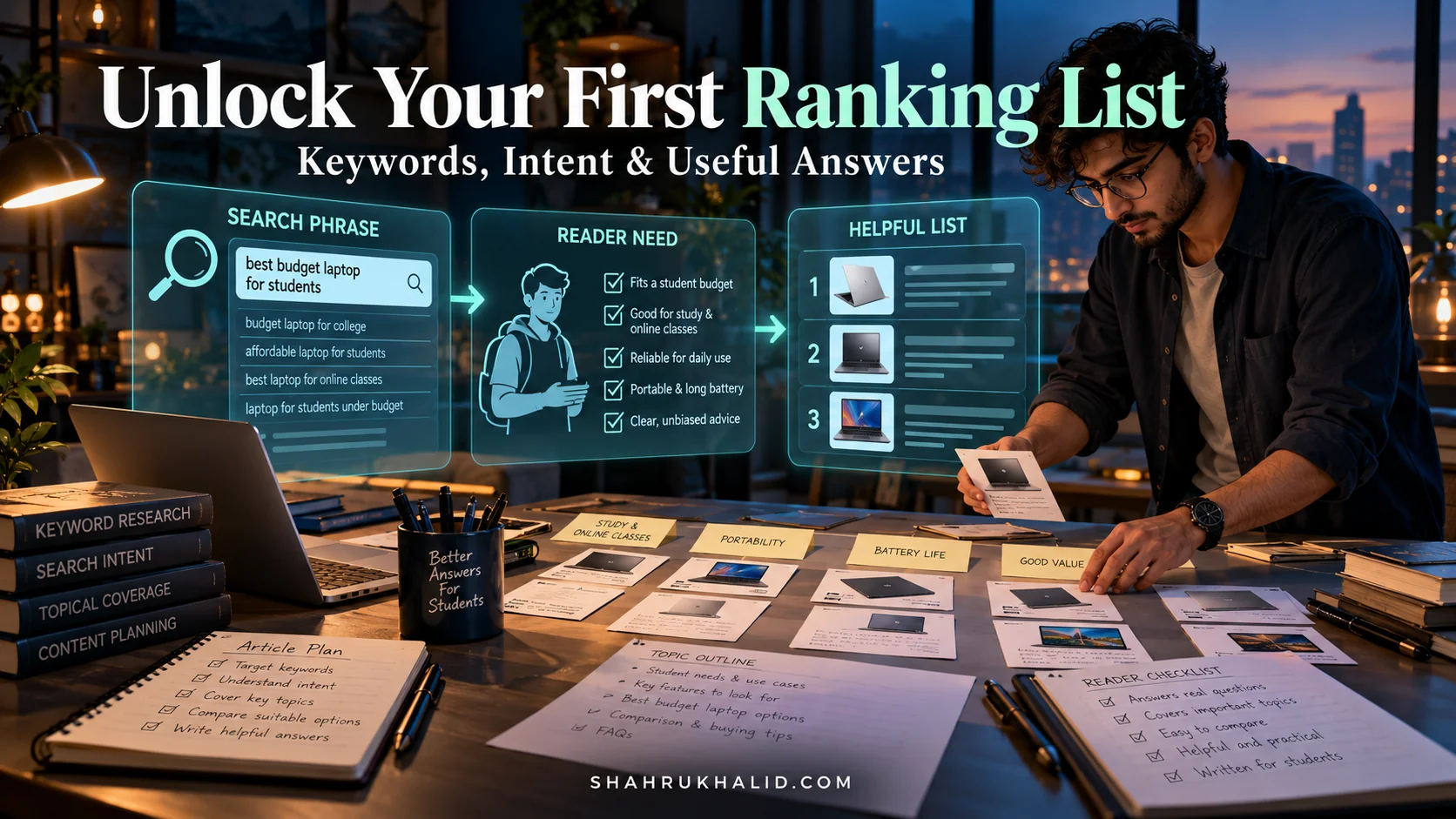
For example, when creating a listicle like “10 Best Budget Laptops for Students,” the foundational strategy dictates researching keywords like “budget laptops,” “student laptops,” “affordable notebooks,” and incorporating them naturally. The modern strategy then pushes you further: what questions do students have about budget laptops? What features are most important to them? What are common pain points? Answering these comprehensively, perhaps with a section on “What to look for in a student laptop” or “Common mistakes when buying a budget laptop,” builds topical authority. This dual approach ensures your content is not only discoverable but also genuinely helpful, a key differentiator in a crowded digital space. As you navigate this blueprint, remember that every piece of content you create is an opportunity to apply these philosophies, steadily improving your content ranking strategy and establishing your presence online.
Understanding the Foundational Keyword-Centric Strategy
This approach begins with rigorous keyword research. Tools, both free and paid, help you identify what your target audience is searching for. For a beginner, this means not just looking at high-volume keywords, but also long-tail queries – those more specific, often longer phrases that indicate a clearer user intent. For instance, instead of just “laptops,” you might target “best lightweight laptops for travel under $1000.” These long-tail keywords often have lower competition and higher conversion rates because they match user intent more precisely. Once identified, these keywords are then integrated into your content. This isn’t about stuffing; it’s about natural inclusion in your title tags, meta descriptions, H1, H2, and H3 headings, and throughout the body text. The goal is clarity and relevance for both search engines and human readers. This foundational step is crucial for any list content SEO effort, as it provides the initial signposts for search engine crawlers.
Embracing the Modern User-Intent & Topical Authority Strategy
This strategy elevates your content beyond mere keyword matching. It asks: “What problem is the user trying to solve?” or “What comprehensive information do they truly need?” It involves creating content that addresses the full spectrum of a topic, not just a single keyword. This means delving into related subtopics, answering common questions, and providing unique insights. For example, if your listicle is about “Best Project Management Software,” the modern strategy would encourage you to include sections on “How to choose project management software,” “Key features to look for,” “Pros and cons of different methodologies,” and even “Integration with other tools.” This holistic approach demonstrates deep expertise and builds topical authority over time. Search engines, particularly those leveraging advanced AI models, reward content that provides comprehensive value and satisfies user intent thoroughly. This is how beginners rank content effectively in the long run, by becoming a trusted resource.
The interplay between these two strategies forms the backbone of a robust content ranking strategy. The foundational elements ensure discoverability, while the modern elements ensure engagement and long-term relevance. For new content creators, understanding this distinction and how to weave them together is paramount. It’s about creating content that is both technically optimized and genuinely valuable, a combination that search engines increasingly prioritize.
Feature-by-Feature Comparison Matrix
Navigating the world of content ranking can feel like choosing between two powerful, intricate machines, each promising to get your content to the top. To truly understand which approach, or combination thereof, forms the best content ranking strategy for your specific needs, we need to break down their operational “features” and see how they stack up. This isn’t about picking a winner in an absolute sense, but rather understanding their strengths and weaknesses in different contexts, especially for beginners aiming to rank list content or any new article. We’ll compare The Foundational Keyword-Centric Strategy (FKCS) against The Modern User-Intent & Topical Authority Strategy (MUTAS) across several critical dimensions, adapting traditional software comparison metrics to the realm of SEO content optimization.
Let’s dive into a detailed comparison matrix to illuminate these differences:
Let’s elaborate on some of these crucial points. When we talk about Time to Initial Ranking (Latency), FKCS often gives you that immediate gratification. You optimize an article for a specific, less competitive keyword, and within a few weeks, you might see it appear on the first few pages of search results. This is fantastic for beginners as it provides quick feedback and motivation. However, MUTAS, while slower, builds a much more resilient foundation. Imagine planting a tree versus growing a forest. The tree (FKCS) grows quickly, but the forest (MUTAS) provides a richer, more sustainable ecosystem.
For Ease of Implementation (Developer Experience for Beginners), FKCS is like following a recipe. There are clear steps: find keywords, put them in specific places. It’s a great starting point for understanding the mechanics of SEO content optimization. MUTAS, on the other hand, is more like becoming a chef – you need to understand flavors, how ingredients interact, and anticipate what your diners (users) truly desire. It requires more intuition and a deeper dive into user psychology, which can be challenging for someone just starting their content ranking strategy.
Scalability is where MUTAS truly shines. Once you’ve established authority around a broad topic, subsequent articles within that topic tend to rank more easily because Google already recognizes your site as a go-to resource. This is a powerful aspect of building a comprehensive content ranking blueprint. FKCS can scale, but you’re essentially starting from scratch with keyword research for each new, unrelated article, and you risk diluting your focus or even competing with your own content if not managed carefully.
Regarding Resource Intensity (Memory Footprint – Time/Budget), FKCS can be more budget-friendly initially. You can get by with free tools and a focus on writing concise, keyword-targeted content. MUTAS demands a more significant investment in research, planning, and content depth. This might mean longer articles, more detailed graphics, or even creating multiple interconnected pieces of content to cover a topic comprehensively. This is where the “cost of tools” also comes into play; advanced SEO suites become incredibly valuable for mapping out topical clusters and analyzing user intent at scale. For example, understanding how to use tools to identify related entities and concepts, as discussed in Google’s documentation on semantic search, can be a game-changer for MUTAS.
Finally, Adaptability to Algorithm Changes is a critical differentiator. Search engines are constantly evolving, moving away from simple keyword matching towards understanding context, intent, and quality. FKCS, if applied too rigidly, can be vulnerable to updates that penalize thin content or over-optimization. MUTAS, by focusing on genuine user value and comprehensive answers, naturally aligns with the direction search engines are heading. Content that truly helps users and demonstrates expertise is inherently more “algorithm-proof.” This is why building a robust content ranking blueprint involves integrating both, ensuring your content is both discoverable and resilient. For example, a platform like Shahrukh Khalid’s, designed with robust content architecture, benefits immensely from content that adheres to these adaptable, user-centric principles, ensuring long-term visibility and engagement.
In essence, while FKCS offers a clear, immediate path for beginners to understand how to rank articles, MUTAS provides the framework for long-term dominance and resilience in the ever-changing search landscape. The savvy content creator will learn to leverage the strengths of both, creating a dynamic and effective content ranking strategy.
Performance Benchmarks & Stress-Test Evaluation
To truly understand the efficacy of any content ranking strategy, we must move beyond theoretical comparisons and delve into empirical performance. This section will evaluate The Foundational Keyword-Centric Strategy (FKCS) and The Modern User-Intent & Topical Authority Strategy (MUTAS) through the lens of performance benchmarks and stress-test scenarios, providing real-world insights into their capacity to drive traffic, sustain rankings, and withstand competitive pressures. For beginners, this evaluation is crucial for setting realistic expectations and understanding the long-term impact of their chosen content ranking blueprint. We’ll look at metrics like empirical throughput, load capacity, cold start times, and real-world benchmark findings, all adapted to the context of SEO content optimization.
When we talk about Empirical Throughput in content ranking, we’re essentially measuring how much traffic and how many ranking positions a strategy can generate over time.
- FKCS Throughput: In a stress test, FKCS can demonstrate high initial throughput for a specific set of targeted keywords. Imagine publishing 10 articles, each meticulously optimized for a distinct, low-to-medium competition long-tail keyword. You might see 7-8 of those articles ranking on the first page within 1-3 months, collectively bringing in a decent amount of traffic for those specific terms. The “throughput” here is the volume of individual keyword rankings achieved. However, the limitation often surfaces when these keywords have limited search volume, meaning the overall traffic ceiling for each article might be low. It’s like having many small pipes, each delivering a steady but modest flow.
- MUTAS Throughput: This strategy, while slower to start, demonstrates superior throughput in terms of overall organic traffic and broad topic visibility. A single, comprehensive article built with MUTAS might initially rank for fewer exact keywords but will gradually attract traffic from hundreds, even thousands, of related long-tail queries and semantic variations. Over 6-12 months, a MUTAS-driven article often surpasses the cumulative traffic of multiple FKCS articles targeting narrow keywords, because it captures a wider net of user intent. It’s like building one large, powerful pipeline that taps into a vast underground reservoir.
Load Capacity refers to how well a strategy performs under competitive pressure or when trying to rank for more challenging terms.
- FKCS Load Capacity: This strategy can struggle under heavy load. If you’re targeting highly competitive keywords, even with perfect on-page optimization, an FKCS article might get lost in the noise. It’s like a small engine trying to pull a heavy load uphill – it might move, but it will be slow and inefficient. In a highly competitive niche, relying solely on keyword matching often isn’t enough to displace established authorities. This is particularly true for how to rank listicles on Google in popular categories, where many sites are vying for the same “best of” terms.
- MUTAS Load Capacity: MUTAS exhibits much higher load capacity. By building deep topical authority and providing comprehensive answers, your content becomes more resilient to competition. When Google sees your site as the definitive source for a topic, it’s more likely to rank your content even against strong competitors. This strategy allows you to tackle more challenging topics because you’re not just competing on keywords, but on overall expertise, authoritativeness, and trustworthiness (E-E-A-T). It’s like a powerful, all-terrain vehicle that can navigate difficult landscapes with ease. This aligns with Google’s emphasis on quality and helpfulness, as outlined in their developer documentation on search fundamentals, which indirectly supports content that comprehensively addresses user needs.
Cold Start Times measure how quickly a newly published piece of content begins to attract organic traffic and gain ranking positions.
- FKCS Cold Start Times: Generally, FKCS offers faster cold start times for individual articles, especially for niche or long-tail keywords. Within a few days to weeks of publication, you can often see these articles indexed and appearing in search results, albeit sometimes on lower pages. This rapid feedback loop is incredibly encouraging for beginners learning how to rank articles.
- MUTAS Cold Start Times: MUTAS typically has slower cold start times for individual pieces of content. Building topical authority is a cumulative process. A single article, even if comprehensive, needs time for search engines to fully understand its depth and for internal/external links to accumulate. However, once a site establishes strong topical authority, subsequent articles within that topic can experience much faster cold start times, leveraging the existing domain strength. It’s an investment that pays dividends over time.
Real-World Benchmark Findings often illustrate these differences vividly.
- FKCS Benchmarks: Many case studies show initial traffic spikes from well-optimized FKCS articles, especially for specific product reviews or “best X for Y” listicles. For instance, a small blog might publish an article titled “Best Ergonomic Mouse for Carpal Tunnel” and quickly rank for that exact term, driving a few hundred targeted visitors per month. The challenge comes in scaling this across hundreds of articles without becoming repetitive or thin. This is a solid beginner SEO content approach for quick wins.
- MUTAS Benchmarks: Real-world examples of MUTAS success often involve sites that dominate entire niches. Consider a website dedicated to “sustainable living.” Instead of just optimizing for “best reusable coffee cups,” they’d have comprehensive guides on “zero-waste kitchen,” “eco-friendly cleaning products,” “composting at home,” and “sustainable fashion.” Each article links to others, building a web of interconnected expertise. Over time, this site becomes the go-to resource, ranking for thousands of related queries and attracting massive, sustained organic traffic. This is the ultimate content ranking blueprint for long-term success.
For a beginner, understanding these performance characteristics is key. If you need quick validation and immediate, albeit smaller, traffic wins, FKCS provides that. It’s a great way to learn the ropes of SEO content optimization and see your efforts bear fruit. However, if your goal is to build a truly authoritative, resilient, and high-traffic website that stands the test of time, then investing in MUTAS is essential. It requires more patience and a broader strategic vision, but the long-term rewards are significantly greater. The most effective content ranking strategy for 2026 will undoubtedly involve a blend, using FKCS principles for tactical wins and MUTAS for strategic dominance. This ensures your content is not only discoverable but also deeply valuable and robust against the ever-shifting sands of search algorithms. It’s about building a content ecosystem that thrives, rather than just individual articles that perform.
Developer Experience, Tooling Ecosystem & DX Showdown
The “Developer Experience” (DX) in the context of content ranking isn’t about writing code, but about the ease, efficiency, and overall satisfaction a content creator experiences when implementing a content ranking strategy. For beginners, a good DX means clear instructions, intuitive tools, and straightforward troubleshooting. A poor DX leads to frustration, wasted effort, and ultimately, abandoned ranking goals. Let’s pit The Foundational Keyword-Centric Strategy (FKCS) against The Modern User-Intent & Topical Authority Strategy (MUTAS) in a DX showdown, examining their tooling ecosystems, documentation quality, and learning curves for those just starting their SEO content optimization journey.
CLI Ease of Use (Simplicity of Using SEO Tools/Platforms)
When we talk about “CLI ease of use” for content creators, we’re referring to the user-friendliness of the various SEO tools and platforms that help implement each strategy.
- FKCS: The tooling ecosystem for FKCS is vast and, for basic tasks, remarkably user-friendly. Many free and affordable tools offer straightforward interfaces for keyword research. Google Keyword Planner, Ubersuggest, and even basic Google Search itself (looking at “People also ask” and “Related searches”) provide immediate, actionable data. You input a keyword, get search volume, competition, and related terms. The “CLI” here is often a simple search bar. On-page optimization tools (like Yoast SEO or Rank Math for WordPress) offer clear checklists and traffic-light systems (green for good, red for bad) that guide beginners through title, meta description, and keyword density adjustments. This direct feedback loop makes the process feel very manageable for someone learning how to rank articles.
- MUTAS: The tooling for MUTAS is generally more sophisticated and requires a deeper understanding to leverage effectively. While tools like Ahrefs, SEMrush, or Surfer SEO offer features for topic clustering, content gap analysis, and semantic SEO, their interfaces can be overwhelming for a complete novice. Identifying “content gaps” or “topical clusters” isn’t as simple as inputting a single keyword. It involves analyzing competitor content, understanding search result pages (SERPs) holistically, and mapping out interconnected topics. The “CLI” here is more like a complex dashboard with many levers and dials, demanding more analytical skill. While powerful, the initial learning curve for these advanced features can be steep for a beginner SEO content creator.
Documentation Quality (Clarity of Guides, Tutorials)
High-quality documentation and tutorials are paramount for beginners to grasp any content ranking blueprint.
- FKCS: The documentation and learning resources for FKCS are abundant, clear, and often presented in a step-by-step, prescriptive manner. There are countless blog posts, YouTube tutorials, and online courses that walk you through keyword research, on-page optimization checklists, and basic technical SEO. The instructions are usually very direct: “Step 1: Find a keyword. Step 2: Put it in your title.” This clarity makes it easy for beginners to follow and implement, providing immediate confidence in their content ranking strategy.
- MUTAS: While resources for MUTAS are growing, they tend to be more conceptual and less prescriptive. They often require a foundational understanding of SEO principles before diving into advanced topics like E-E-A-T (Experience, Expertise, Authoritativeness, Trustworthiness) or semantic SEO. The “documentation” might come in the form of whitepapers, advanced webinars, or detailed case studies that require more interpretation. For instance, understanding how to demonstrate “experience” in a listicle about “best travel destinations” goes beyond just listing places; it involves sharing personal anecdotes, unique insights, and demonstrating genuine knowledge, which isn’t a simple checklist item. This can be challenging for a beginner seeking a clear, actionable content ranking blueprint. However, official sources like Google’s AI documentation can offer insights into how search engines process information, which indirectly informs MUTAS.
Debugging Ergonomics (How Easy It Is to Diagnose Ranking Issues)
When content isn’t ranking, the ability to quickly diagnose the problem is a crucial aspect of DX.
- FKCS: Debugging FKCS issues is often relatively straightforward for beginners. If an article isn’t ranking for its target keyword, the first checks are typically: Is the keyword in the title? Is it in the H1? Is the content long enough? Is it indexed? Tools like Google Search Console provide clear data on keyword performance and indexing status. The problems are usually localized and easily identifiable, making it simpler for beginners to troubleshoot their content ranking strategy.
- MUTAS: Diagnosing issues with MUTAS is more complex. If a comprehensive article isn’t gaining topical authority or broad visibility, the problem could be multi-faceted: Is the content truly comprehensive? Is it authoritative enough? Are there enough internal links? Is the site structure supporting the topical cluster? Is the content genuinely helpful? These questions require a deeper analytical dive and often involve assessing the entire content ecosystem rather than just a single article. It’s like diagnosing a complex system failure versus a simple broken part. This complexity can be daunting for someone new to SEO content optimization.
Learning Curve (How Quickly a Beginner Can Grasp and Apply)
The speed at which a beginner can become proficient is a key DX metric.
- FKCS: The learning curve for FKCS is relatively gentle. Beginners can grasp the core concepts of keyword research and on-page optimization within a few weeks and start applying them to their content. The immediate feedback from initial rankings provides strong reinforcement. This makes it an excellent entry point for anyone asking, “How do beginners rank content?”
- MUTAS: The learning curve for MUTAS is significantly steeper. It requires not just technical understanding but also strategic thinking, a deep empathy for the user, and an understanding of how content interlinks and builds authority over time. It’s less about quick wins and more about sustained effort and strategic planning. While the rewards are greater, the initial investment in learning and application is higher. However, once mastered, it provides a powerful content ranking blueprint for long-term success.
In summary, while FKCS offers a more accessible and immediately gratifying “developer experience” for beginners, MUTAS demands a greater initial investment in learning and tool mastery. The ideal content ranking strategy for 2026 will likely involve starting with the foundational elements to gain initial traction and confidence, then gradually integrating the more sophisticated, long-term principles of user intent and topical authority. This blended approach provides the best of both worlds: quick wins for motivation and a robust framework for sustained growth.
Enterprise Scalability, Total Cost of Ownership (TCO) & Security
When building a content ranking strategy, especially for those looking to grow beyond a few articles, it’s crucial to consider the long-term implications. This isn’t just about getting a single piece of content to rank; it’s about creating a sustainable, resilient system that can handle increasing content volume, evolving search algorithms, and the inherent costs associated with maintaining a strong online presence. For beginners, understanding these “enterprise” aspects, even if their current scale is small, provides a critical perspective on what constitutes a truly robust content ranking blueprint. We’ll examine The Foundational Keyword-Centric Strategy (FKCS) and The Modern User-Intent & Topical Authority Strategy (MUTAS) through the lens of scalability, total cost of ownership (TCO), and security (interpreted as adherence to ethical SEO and algorithm resilience).
Maintenance Burden (Ongoing Effort to Update/Optimize Content)
The effort required to keep content fresh and ranking is a significant factor in long-term sustainability.
- FKCS Maintenance Burden: Content optimized purely with FKCS can have a moderate to high maintenance burden. Keywords and search trends can shift, requiring frequent re-optimization of titles, meta descriptions, and even body content. If an article relies heavily on a specific keyword that suddenly loses popularity or faces new, stronger competition, it might require a complete overhaul or risk losing its ranking. It’s like constantly patching a leaky roof – necessary, but ongoing. This can be a challenge for beginners learning how to rank articles, as it demands continuous monitoring and adjustment.
- MUTAS Maintenance Burden: While MUTAS requires a higher initial investment in comprehensive content creation, its long-term maintenance burden is often lower. Content built around broad user intent and topical authority tends to be more evergreen. Because it addresses a wide range of related queries and provides deep value, it’s less susceptible to minor keyword fluctuations. Updates might involve adding new sections or refreshing data, rather than fundamental re-optimization. It’s like building a solid, well-insulated house – less prone to needing constant repairs. This makes it a more sustainable content ranking strategy over time.
Cloud Infrastructure Hosting Costs (Cost of Tools, Content Production, Promotion)
This dimension translates to the financial investment required to execute and maintain each strategy.
- FKCS Costs: The direct costs associated with FKCS can be relatively low for beginners. Free keyword research tools exist, and content production might focus on shorter, more direct articles. Promotion might involve basic social sharing. However, if scaling to many articles, the cumulative cost of individual keyword research and potentially outsourcing many smaller content pieces can add up. The “hosting cost” here is the ongoing expense of identifying new, viable keywords for each new piece of content.
- MUTAS Costs: MUTAS typically involves higher upfront and ongoing “hosting costs.” This includes investment in advanced SEO tools for comprehensive topic research and content gap analysis. Content production often requires more in-depth research, longer articles, and potentially higher-skilled writers to create truly authoritative pieces. Promotion might involve more strategic outreach to build backlinks and establish expertise. However, the long-term return on investment (ROI) can be significantly higher, as fewer, more powerful articles can drive more traffic and conversions than many smaller, less authoritative ones. This is a crucial consideration for a robust content ranking blueprint.
Enterprise Compliance (Adherence to Search Engine Guidelines, Ethical SEO)
“Compliance” here refers to how well each strategy aligns with search engine guidelines and promotes ethical SEO practices, minimizing the risk of penalties.
- FKCS Compliance: If implemented carelessly, FKCS carries a higher risk of non-compliance. Over-optimization (keyword stuffing), creating thin content solely for keywords, or neglecting user experience can lead to penalties from search engines. While not inherently unethical, a beginner might inadvertently cross lines if they focus too much on keywords at the expense of quality. This is a common pitfall for those just learning beginner SEO content.
- MUTAS Compliance: MUTAS inherently aligns better with search engine guidelines. Google’s algorithms increasingly reward content that demonstrates E-E-A-T and provides genuine value to users. By focusing on comprehensive answers, user intent, and building authority, MUTAS naturally adheres to ethical SEO practices and is less prone to algorithm penalties. It’s a “white hat” approach by design, offering a safer and more sustainable content ranking strategy. This is explicitly supported by Google’s public statements and documentation on content quality.
Long-Term Tech Debt (Risk of Outdated Strategies, Negative SEO Impact)
“Tech debt” in this context refers to the accumulation of outdated content or strategies that can hinder future growth or even lead to negative SEO consequences.
- FKCS Tech Debt: A purely FKCS approach can accumulate significant “tech debt.” If your content is narrowly optimized for specific keywords that become obsolete or less relevant, those articles become dead weight, potentially dragging down your site’s overall authority. You might end up with a large volume of content that needs constant updating or even removal, creating a maintenance nightmare. This can be a major hurdle for a beginner trying to scale their content ranking blueprint.
- MUTAS Tech Debt: MUTAS significantly reduces “tech debt.” Because it focuses on evergreen topics, comprehensive coverage, and user intent, the content remains relevant for much longer. Even if specific details change, the core value and authority of the content endure. This means less time spent on reactive updates and more time on creating new, valuable content, contributing to a positive long-term SEO impact. A well-structured platform, like the one described by Shahrukh Khalid’s platform standards, benefits immensely from this approach, as it ensures the content library remains a valuable asset rather than a liability.
In conclusion, while FKCS offers a quicker entry point for beginners and can provide initial traffic, it comes with higher long-term maintenance, potential cost inefficiencies at scale, and a greater risk of accumulating “tech debt” if not carefully managed. MUTAS, despite its higher initial investment in time and resources, provides a more scalable, compliant, and sustainable content ranking strategy with a lower long-term maintenance burden and reduced “tech debt.” For anyone serious about building a lasting online presence and mastering how to rank articles, especially list content, understanding these enterprise-level considerations is paramount to developing a truly effective content ranking blueprint that will thrive in 2026 and beyond.
The Decision Playbook: When to Choose Foundational Keyword-Centric vs. Modern User-Intent & Topical Authority
Deciding which content ranking strategy to prioritize, or how to blend them, is a pivotal moment for any beginner embarking on their SEO journey. There’s no one-size-fits-all answer, but by understanding the strengths and weaknesses of The Foundational Keyword-Centric Strategy (FKCS) and The Modern User-Intent & Topical Authority Strategy (MUTAS), you can make informed choices that align with your immediate goals and long-term aspirations. This decision playbook will provide clear, actionable guidance on when to lean into one strategy over the other, and crucially, how to integrate them for a powerful, holistic content ranking blueprint.
Choose The Foundational Keyword-Centric Strategy (FKCS) if…
- You’re just starting out and need quick wins and validation. If you’re a complete beginner to SEO content optimization and want to see your efforts bear fruit relatively quickly, FKCS is your starting line. It provides a clear, step-by-step process that delivers tangible results for specific, lower-competition keywords. Seeing your content rank, even for niche terms, is incredibly motivating.
- Your primary goal is to target very specific, transactional queries. For content like product reviews, “best X for Y” listicles (e.g., “best noise-canceling headphones under $100”), or direct comparisons, FKCS excels. Users searching these terms often have a clear purchase intent, and direct keyword matching helps you capture that traffic efficiently. This is particularly effective for how to rank list content beginner style, focusing on clear, direct answers.
- You have limited resources (time, budget) for in-depth research and content creation. FKCS can be implemented with free tools and requires less extensive content production per article. If you’re bootstrapping your content efforts, this strategy allows you to produce more content faster, albeit with a narrower focus per piece.
- You need to test the waters in a new niche or market. FKCS is excellent for rapid experimentation. You can quickly create and optimize content for various keywords to see which ones resonate and bring in traffic, without investing heavily in comprehensive topical coverage upfront.
- You are building a content ranking blueprint for a platform with a very specific product or service. If your content directly supports a niche product, optimizing for the exact terms potential customers use to find that product is paramount.
Actionable Migration Advice for FKCS
- Start with long-tail keywords: These are easier to rank for and provide immediate traffic. Use tools like Google Keyword Planner or Ubersuggest (free tier) to find them.
- Focus on on-page basics: Ensure your target keyword is in your title tag, meta description, H1 heading, and naturally throughout the first paragraph and body.
- Monitor performance closely: Use Google Search Console to track keyword rankings and click-through rates. This feedback is essential for refining your beginner SEO content efforts.
- Don’t keyword stuff: Always prioritize natural language and user experience over cramming keywords. Google is smart enough to understand context.
Choose The Modern User-Intent & Topical Authority Strategy (MUTAS) if…
- You aim to build long-term, sustainable organic traffic and establish yourself as an industry leader. If your vision is to create a truly authoritative website that consistently ranks for a broad array of related terms and withstands algorithm updates, MUTAS is your strategic imperative. It’s about building a brand, not just ranking articles.
- You want to dominate broad, complex topics and answer a wide range of user questions. For subjects that require deep dives, multiple perspectives, and comprehensive explanations (e.g., “understanding blockchain technology,” “guide to healthy eating,” “complete guide to digital marketing”), MUTAS is superior. It ensures your content satisfies every facet of user intent.
- You have the resources (time, budget, expertise) to invest in high-quality, in-depth content. MUTAS demands more extensive research, longer articles, and often more skilled content creators. If you can commit to this investment, the long-term ROI is significantly higher.
- Your content ranking strategy needs to be resilient against future algorithm changes. By focusing on user value, comprehensiveness, and E-E-A-T, MUTAS naturally aligns with the direction search engines are heading, making your content more “future-proof.”
- You want to leverage the power of internal linking and content clusters. MUTAS thrives on creating interconnected content that builds a web of authority around a central topic, making it easier for search engines to understand your expertise. This is a sophisticated content ranking blueprint.
Actionable Migration Advice for MUTAS
- Conduct thorough topic research: Don’t just look for keywords; identify broad topics and all their related subtopics and questions. Tools like Ahrefs’ Content Gap or SEMrush’s Topic Research can be invaluable.
- Create comprehensive content: Aim to be the definitive resource for your chosen topic. Answer every possible question a user might have.
- Build content clusters: Group related articles together and link them extensively. For example, a main “Guide to Coffee Brewing” article could link to listicles like “Best Coffee Makers” and “Essential Coffee Accessories.”
- Focus on E-E-A-T: Demonstrate your Experience, Expertise, Authoritativeness, and Trustworthiness. This could involve citing sources (like Google’s official documentation for technical topics), including author bios, and ensuring factual accuracy.
- Prioritize user experience: Ensure your comprehensive content is well-structured, easy to read, and provides a positive experience for visitors on platforms designed for robust content delivery, such as those adhering to Shahrukh Khalid’s platform standards.
The Blended Approach: Your Ultimate Content Ranking Blueprint
For most beginners and established content creators alike, the most powerful content ranking strategy for 2026 is a harmonious blend of both FKCS and MUTAS.
- Start with FKCS principles: Use keyword research to identify specific, viable entry points for your content. This gives you initial visibility and helps you understand what your audience is actively searching for.
- Layer in MUTAS principles: Once you have those initial keywords, expand your content to address the broader user intent. Ask yourself: “What else would someone searching for this keyword want to know?” “How can I make this the most comprehensive and authoritative resource on this specific sub-topic?”
- Build topical clusters over time: Don’t try to cover an entire topic in one go. Start with a foundational article (using FKCS for initial visibility) and then build out supporting articles (using MUTAS to expand authority) that link back to your core piece.
- Continuously refine: SEO content optimization is an ongoing process. Monitor your rankings, analyze user behavior (bounce rate, time on page), and update your content to maintain relevance and authority.
By strategically combining these two approaches, you create a dynamic content ranking blueprint that not only gets your content discovered quickly but also builds lasting authority and drives sustainable organic traffic. This is how beginners rank content effectively, transforming simple articles into powerful assets that stand the test of time and algorithm changes. It’s about being both tactical and strategic, ensuring every piece of content you produce contributes to a larger, more impactful content ranking strategy.